


 Suomi
Suomi  English (UK)
  Русский
  العربية
  日本語
日本語  한국어
한국어  Magyar
  Türkçe
  Español
  Čeština
  Svenska
  Português
  Ελληνικά
  Nederlands
  Română
  Italiano
  Français
  Polski
  Українська
  Deutsch
  简体中文
简体中文  Slovenčina
 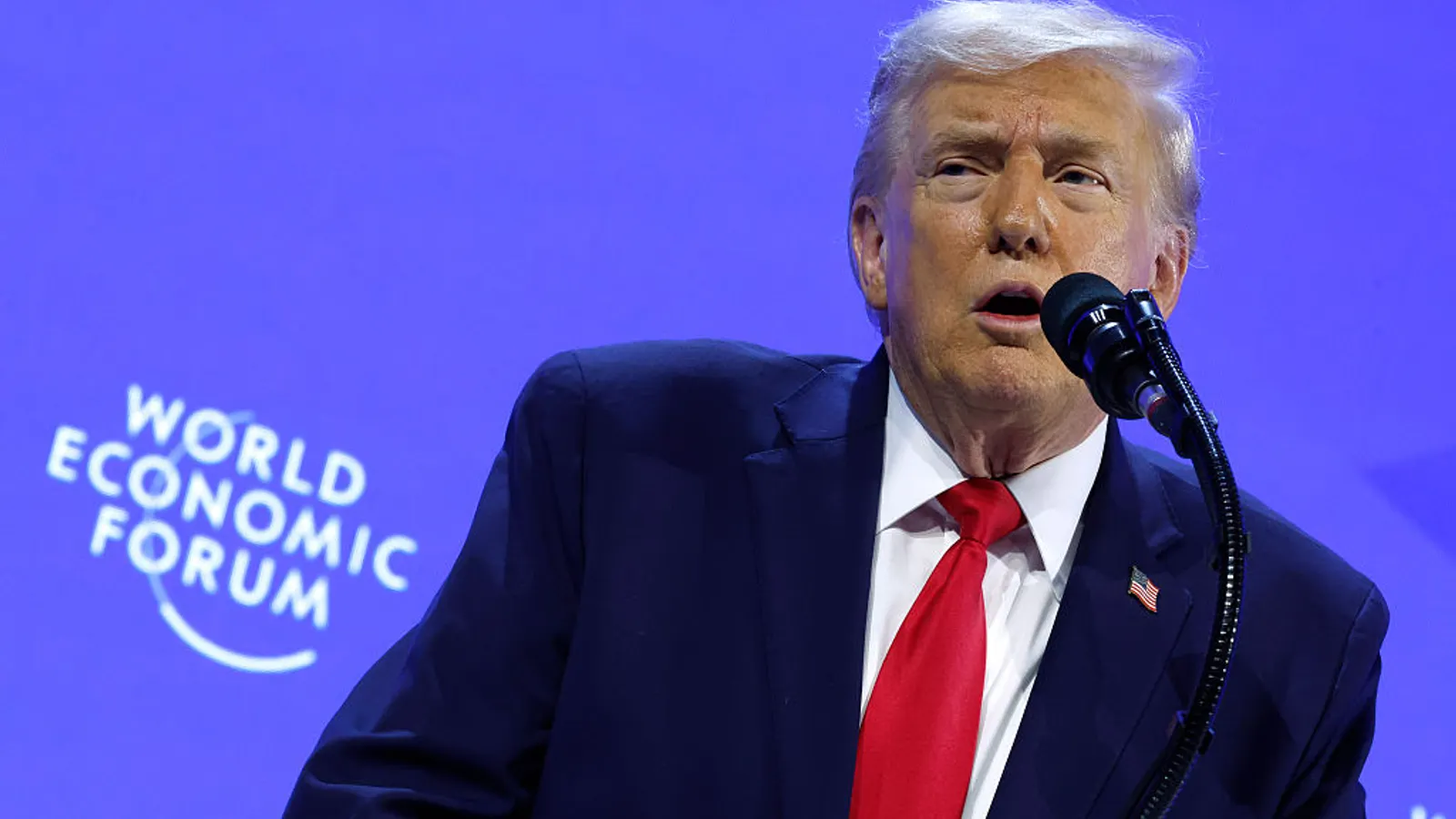 Trump Drops Planned EU Tariffs Following NATO Agreement on Greenland">

This piece explains the decision by U.S. President Donald Trump to cancel planned tariffs on eight European countries after a NATO-related framework over Greenland emerged, and what that could mean for logistics and international trade.
What changed — the headline in plain terms
President Donald Trump announced that the 10% tariffs set to begin on February 1 would not be imposed on eight European nations after he and NATO leadership reached a framework for future cooperation over Greenland and the wider Arctic. The move came shortly after the Euroopan unioni voted to suspend a trade-deal framework with the U.S. that had been negotiated amid earlier tariff threats.
Key facts at a glance
| Kohde | Original Plan | Current Status |
|---|---|---|
| Tariff rate (Feb. 1) | 10% on goods from 8 nations | Cancelled |
| Tariff escalation (June 1) | Would rise to 25% if purchase not reached | Unclear / dependent on final framework |
| Affected countries | Denmark, Sweden, France, Germany, Netherlands, Finland, United Kingdom, Norway | No levies imposed as announced |
| Framework topic | Negotiations on Greenland and Arctic defenses (concepts like the “Golden Dome”) | Framework announced; details pending |
Who was involved
The public announcement credited talks between President Donald Trump and NATO leadership, including comments attributed to the NATO secretary general. The EU’s decision to suspend the trade framework was a parliamentary action reflecting concerns about prior U.S. tariff threats tied to Greenland negotiations.
Where the uncertainty remains
There was no detailed, public breakdown of the framework. References to a conceptual missile-defense shield, labeled by some as the Golden Dome, were cited as reasons for U.S. interest in Greenland for strategic and national security considerations. How those security discussions translate into trade policy or permanent tariff relief is not yet clear.
Logistics and supply chain implications
Tariffs, even when they are threatened rather than enacted, ripple through transport networks. Shippers, freight forwarders, and carriers hedge risk by redirecting routes, adjusting contract terms, or increasing inventory buffers. Here’s how this particular volte-face could matter to logistics operators:
- Short-term stability: Immediate cancellation of the February tariffs reduces the risk of sudden cost spikes, which would have affected import pricing and carrier invoices.
- Contract renegotiations: Forwarders and importers who had started to reroute or file contingency plans may pause or reverse changes, creating administrative churn.
- Customs and documentation: Tariff uncertainty often increases the volume of customs queries and reclassification requests — a drag on processing times.
- Vehicle and auto parts flows: The previously discussed 15% or 25% levies on cars and parts would have hit automotive supply chains hard; shelving those plans helps the just-in-time supply model breathe easier.
- Insurance and risk premiums: Cargo insurers and freight insurers may still price in political risk until a durable agreement is published.
Practical actions for logistics managers
Think like a dispatcher planning for a storm: have contingency lanes, flexible carrier contracts, and clear communication with customers. A short checklist:
- Review contracts for force majeure or tariff clauses.
- Communicate any changes in landed cost estimates to customers.
- Hold off on expensive rerouting unless the framework proves temporary.
- Monitor customs guidance for any retroactive adjustments.
Trade mechanics — the numbers and agreements
The suspended EU-U.S. framework had contingency measures that included reciprocal tariffs and market-access swaps: a proposed U.S. tariff on EU imports (15% in some drafts), reciprocal removal of tariffs on certain industrial goods, preferential access for some food exports, and a specific auto-parts tariff proposal. Whether the bilateral pause responds to genuine strategic alignment over Greenland or political optics is hard to tell from public statements alone.
Impacts by sector (summary)
- Autoteollisuus: Avoided tariff rates would spare margins and supply-chain lead times.
- Agriculture and food exports: Preferential access in a formal deal would have pushed volumes; that remains an open door.
- Heavy and bulky goods: Shipping of large equipment and containers benefits from tariff stability, reducing the chance of re-routing by sea or rail.
Quick scenario table
| Scenario | Likely logistics reaction |
|---|---|
| Tariffs reinstated | Surge in rerouting, higher freight costs, inventory hoarding |
| Framework ratified with clear terms | Normalization of trade lanes, contract stabilization |
| Ongoing ambiguity | Elevated insurance premiums, cautious procurement |
Why it matters to businesses moving goods
Even if the immediate tariff threat has been paused, the episode underlines how geopolitical moves can upend freight and distribution plans overnight. Logistics providers that keep flexible lane options, transparent pricing, and strong carrier relationships will be the ones best positioned to absorb shocks. As the saying goes, “ships that can tack change course quicker.” That’s exactly the kind of nimbleness logistics teams should aim for.
Highlights of what’s most interesting: the reversal shows how strategic talks — here centered on Greenland and Arctic defenses — can quickly reshape trade postures; even the strongest policy signals can be temporary, and the downstream consequences for freight, cargo routing, and pricing can be immediate. Yet, no aggregate of reviews and second-hand analysis beats boots-on-the-ground experience: testing routes, checking carriers, and seeing how timelines hold up in real life is invaluable. On GetTransport.com, you can order your cargo transportation at the best prices globally at reasonable prices. This empowers shippers to trial options without overspending, comparing offers for office moves, bulky shipments, vehicle relocations, and international container hauls to make the most informed choice. Start planning your next delivery and secure your cargo with GetTransport.com. Book now GetTransport.com.com
In summary, the decision to cancel the February tariffs removes an immediate tax on trade that would have affected freight costs, shipment routing, and customs processing for affected EU countries and Norway and the U.K. The U.S.-EU bargaining over tariffs, cars, and industrial access remains a leverage tool tied to broader security talks about Greenland and the Arctic. For logistics and transport professionals, the event is a reminder that political developments can alter the economics of shipping, forwarding, haulage, courier services, distribution, and international moving almost overnight. Reliable planning, flexible carriers, and transparent platforms make all the difference — and services like GetTransport.com can simplify booking cargo, pallet, container, bulky-item shipments, and cross-border relocations with competitive rates for global, international, and domestic deliveries.