


 Suomi
Suomi  English (UK)
  Русский
  العربية
  日本語
日本語  한국어
한국어  Magyar
  Türkçe
  Español
  Čeština
  Svenska
  Português
  Ελληνικά
  Nederlands
  Română
  Italiano
  Français
  Polski
  Українська
  Deutsch
  简体中文
简体中文  Slovenčina
 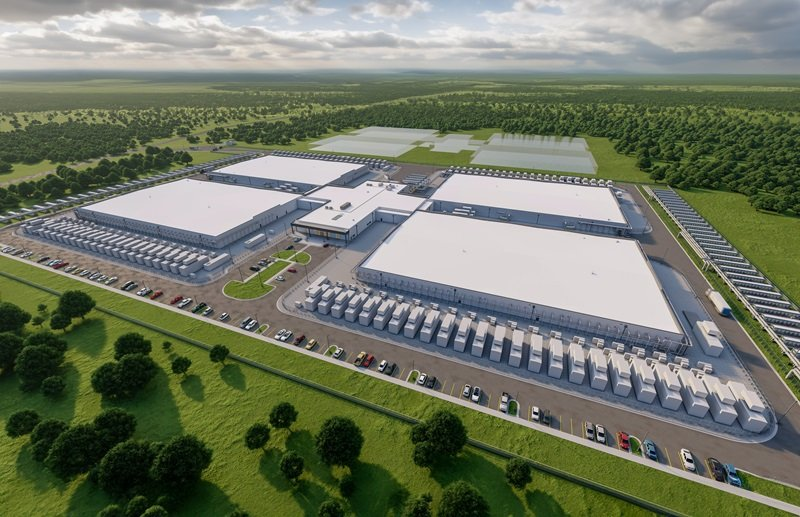 The Rising Power Needs of Hyperscale Data Centers and Their Impact on Modern Grid Infrastructures">

The Growing Energy Appetite of Data Centers
Data centers today are absolute energy beasts. While microgrids accounted for about 0.3% of US power generation in 2024, data centers consumed a chunk of roughly 4.4% of the US power—a figure eying a climb to 12% by 2030. This surge is propelled by the race to develop cutting-edge frontier AI models, which demand massive computational muscle. Running these models involves power-hungry hardware like GPUs, TPUs, and CPUs working overtime, gobbling electricity in the process.
These energy requirements aren’t just background noise; they shape how hyperscalers—those giant cloud service companies driving AI and other digital services—operate. The long wait times traditionally tied to accessing grid power don’t cut it anymore when you’re looking at data centers that can sip 1.2 gigawatts (GW) of juice, like the Stargate project under construction in Abilene, Texas. This is no small potato; Stargate aims for a nationwide 10 GW power commitment backed by $500 billion in investments.
Hyperscalers as Their Own Utilities
Because traditional power suppliers move at a snail’s pace compared to the breakneck speed that hyperscalers demand, these companies are turning into vertically integrated power providers. Crusoe Energy, which is spearheading the Stargate flagship campus, exemplifies this trend by developing both the power plants and the data center infrastructure. By controlling the whole chain—from generation to data center setup—they slash the typical years-long timeline to just months, making sure their massive and growing demand for power doesn’t hit a wall.
The Regulatory Maze Around New Grid Architectures
When it comes to microgrids and hypergrids, regulation is a tangled web. The Federal Energy Regulatory Commission (FERC) stepped in with Order No. 2023 to ease the bottleneck for new power generators by enforcing a “First-Ready, First-Served” approach and introducing deadlines backed by financial penalties for failing utilities. This reform focuses on generators—think wind, solar, gas, and nuclear plants—but not on big electricity consumers like data centers.
Here lies the rub. Data centers, as massive loads on the grid, are mostly regulated by state Public Utility Commissions (PUCs), not FERC. So while FERC fast-tracks power generation connections, it leaves load interconnections in the slow lane, causing multi-year delays that frustrate hyperscale projects. Even when data centers’ microgrids qualify to sell power back to the grid, they navigate a blurry split jurisdiction between state and federal oversight, complicating progress.
The Department of Energy’s Role and the Ongoing Challenges
The US Department of Energy has called on FERC to clear up this murky regulatory environment by crafting rules specifically for large power loads—usually any load over 20 MW—which clearly includes data centers. But as of late 2025, this remains a work in progress. The uncertainty around who’s in charge and under what rules poses a real challenge for the energy infrastructure of hypergrid-scale data center projects.
Utilities and the Hypergrid Interconnection Problem
Utilities, on the surface, welcome the big business data centers represent. However, these hyperscale customers aren’t your average Joe when it comes to grid demands: they require aggressive timelines and enormous power supplies. Currently, many utilities aren’t equipped to satisfy these time-sensitive, large-scale energy needs, creating a mismatch in expectations and capabilities.
The Stargate project is a prime illustration. This massive initiative, a joint venture involving OpenAI, Oracle, and SoftBank, is hinged on overcoming the power access bottleneck. Crusoe Energy manages Stargate’s flagship site in Abilene, aiming for a power capacity of 1.2 GW, by controlling everything from power generation to data center roll-out. This integrated approach means sites can be operational in mere months instead of years—a game-changer in hyperscale infrastructure development.
Table: Comparison of Traditional vs Hyperscale Data Center Power Strategies
| Aspect | Traditional Data Centers | Hyperscale Data Centers |
|---|---|---|
| Power Supply Source | Utility Grid | Own Generation + Grid |
| Interconnection Regulation | State PUC Focused | Mixed State & Federal Jurisdiction |
| Power Capacity | Megawatts to low Gigawatts | Gigawatts (1+ GW per site) |
| Projektin aikajana | Several Years | Months |
| Energianhallinta | External Utilities | Vertical Integration (Generation to Deployment) |
The Logistics Link: What This Means for Freight and Shipment
The electrification and ever-expanding scale of data centers don’t just change the energy landscape—they ripple through global logistics as well. For one, the timelines for building hyperscale facilities impact the supply chains that deliver equipment, modules, and other bulky cargo items directly supporting these infrastructures. The pressure for rapid deployment requires efficient haulage, specialized freight handling, and reliable courier services focused on large shipments.
Moreover, as data centers spread and grid innovations evolve, coordination between power generation sites and construction hubs becomes essential. The ability to move heavy machinery, modular building units, and palletized equipment seamlessly can make or break a project schedule. This demand underscores why reliable transport platforms like GetTransport.com are indispensable. With their vast network enabling affordable, global cargo transportation for large and bulky goods—including vehicle transport, office relocations, and cargo deliveries—they simplify the logistical jigsaw hyperscale projects present.
Key Takeaways and Industry Impact
- Data centers’ energy consumption is booming due to AI frontier models, driving demand from 4.4% of US electricity to a projected 12% by 2030.
- Hyperscalers are becoming power producers themselves by integrating power generation and data center operations to accelerate project deliveries.
- Regulatory uncertainty remains a key bottleneck, with a division between federal and state authority still unresolved, especially for large loads.
- Utilities struggle to keep pace with the aggressive timelines and massive power capacities that hyperscale centers require.
- Logistics and freight movements aligned with these projects require specialized, fast, and reliable transport solutions to meet construction and operational deadlines.
Choosing Smart and Affordable Transport Solutions for Large-Scale Projects
The complexity and scale of hyperscale data center projects make logistics a major player behind the scenes. While reading reviews and understanding technical challenges are important, nothing beats firsthand experience when coordinating cargo shipments. That’s where platforms like GetTransport.com shine, offering transparency, flexibility, and affordability on a global scale. Whether it’s moving bulky construction equipment, transporting modular data center parts, or relocating office facilities, GetTransport.com provides tailored transport options to fit tight schedules and budgets, making logistics a breeze.
With GetTransport.com, customers gain access to a whopping array of transport services for bulky items, vehicles, pallets, and international shipments—all at the best prices available. This empowers businesses to avoid unnecessary expenses and headaches while ensuring smooth delivery and relocation processes. Book now to unlock the ease and reliability you need for your next big cargo move by visiting GetTransport.com.
Outlook on Global Logistics and Hyperscale Power Development
While the emergence of hypergrids driven by massive data centers may not overhaul global logistics overnight, it does signal important shifts. Local supply chains will feel the strain and opportunity as rapid data center deployments necessitate quick and voluminous freight movements. At GetTransport.com, staying ahead of such shifts is key to continuing to offer unmatched convenience and cost-efficiency in cargo transportation.
Aloita seuraavan toimituksen suunnittelu ja varmista rahtisi GetTransport.comin avulla.
Päätelmä
The unprecedented power demands of hyperscale data centers are pushing the boundaries of traditional grid architecture, ushering in integrated approaches like hypergrids where companies become power producers themselves. Regulatory landscapes evolve slowly but must catch up to accommodate these giant loads. Meanwhile, the ripple effect on logistics is profound, requiring sophisticated freight, haulage, and shipping solutions to meet rapid timelines. Platforms specializing in diverse and reliable transportation options, such as GetTransport.com, perfectly align with these needs by offering affordable, global shipment services for cargo of all shapes and sizes. As the future of data center energy and logistics unfolds, leveraging such platforms ensures efficient, cost-effective, and hassle-free transport solutions for the demands of tomorrow.