


 Suomi
Suomi  English (UK)
  Русский
  العربية
  日本語
日本語  한국어
한국어  Magyar
  Türkçe
  Español
  Čeština
  Svenska
  Português
  Ελληνικά
  Nederlands
  Română
  Italiano
  Français
  Polski
  Українська
  Deutsch
  简体中文
简体中文  Slovenčina
 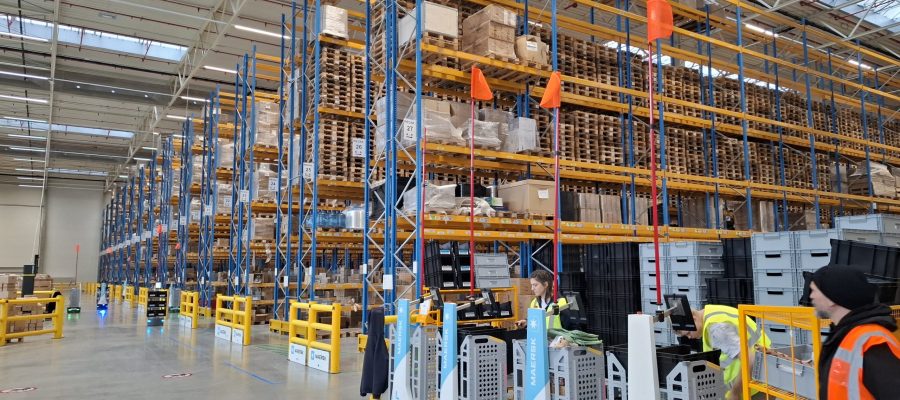 Mobile robots and flexible RaaS transform Flying Tiger’s European fulfilment hub">

Wrocław operation at a glance
The 5,700 sqm Maersk distribution centre in Wrocław handled 230,908 parcels in 2023, rose to 392,980 in 2024 and was forecasting over 528,000 for 2025 after Locus Robotics went live in May 2023. The facility manages roughly 2,800–3,500 SKUs and serves as Flying Tiger’s central European e‑commerce hub, shipping across the EU from a single site with a 12.2 m height limit and no major structural changes allowed.
High-growth under pressure
Before automation, pickers averaged about 40 order lines per hour, walked up to 20,000 steps daily, and faced aisle congestion, heavy trolleys and long onboarding times. Q4 volumes could spike to five times the average, and Maersk faced a strict 22‑week window to deploy a scalable solution that avoided heavy CapEx and fit the existing warehouse footprint.
Operational pain points
- Low manual productivity (≈40 lines/hour)
- Excessive walking and fatigue (up to 20,000 steps/day)
- High onboarding time (three days)
- Seasonal volatility driven by social media and promotions
Bots to the rescue: RaaS and rapid deployment
Maersk chose a mobile, person‑to‑goods Robots‑as‑a‑Service model from Locus Robotics. The decision leaned on five criteria: flexibility, rapid deployment, low upfront cost, ease of integration, and skaalautuvuus. By avoiding fixed automation and heavy CapEx, Maersk could scale the robot fleet up or down to match influencer-driven spikes and seasonal surges.
Timeline and commercial model
- Decision to go‑live: 16–18 weeks
- Commercial model: Robot fleet as a service (pay for capacity as needed)
- Deployment environment: brownfield installation, no conveyors required
How the system actually works
The core technology is the Locus Origin autonomous mobile robot paired with the LocusONE orchestration platform, integrated with Maersk’s INFOR WMS. Robots travel between aisles carrying multiple totes while associates remain in their pick zones; the platform dynamically clusters tasks, optimises pick paths and balances workloads across the floor.
| Komponentti | Rooli | Hyöty |
|---|---|---|
| Locus Origin robots | Carry totes, present picks | Reduce walking, support multi‑order picking |
| LocusONE platform | Orchestration, WMS integration | Optimise routes, balance workload |
| Proprietary AI | Navigation and fleet management | Avoids congestion, scales in minutes |
Robots feature multilingual displays, tote position indicators and built‑in scanning. Locus’s auto‑identification switches screen language based on proximity, a practical advantage in a multicultural labour pool near the Czech and Slovak borders.
Transformational results on the floor
Measured performance after deployment shows clear step changes:
| Metrinen | Before (manual) | After (robot‑assisted) |
|---|---|---|
| Order lines/hour | ~40 | ~140 |
| Onboarding time | 3 days | 20 minuuttia |
| Walking distance/day | ~20,000 steps | ~8,000 steps |
| Packing stations | 16 active | 40 active |
| 24‑hour parcel shipments | Lower share | 60–100% shipped within 24 hrs |
Financially, Maersk reports a 33% reduction in pick process cost even after robot service fees, with a projected further 24% reduction for full‑year 2025. Safety and morale improved as well: zero push‑and‑pull injuries recorded, sick leave down 15% and retention up 8% — the kind of soft wins that compound over time.
Workflow flexibility
- Support for batch picking, pick‑and‑pass, and point‑to‑point transport
- Scale from dozens to hundreds of robots with no structural changes
- Ability to operate across multiple shifts or 24/7
Flexibility and scale: why this matters to logistics
Unlike fixed automation, the Locus RaaS model enables rapid capacity adjustments — perfect for retailers like Flying Tiger whose demand is volatile. The platform’s architecture supports extreme throughput in other sites: >25,000 units/hour and 150,000 lines in a single day in proven deployments, meaning the Wrocław hub can grow throughput without being bottlenecked by legacy layout constraints.
European blueprint and replication
Wrocław is treated as a repeatable template. The modular installation shows that automation can be layered onto existing buildings, cutting lead times and avoiding the need for purpose‑built facilities. For Maersk and 3PLs, that lowers the barrier to adopting robotics across their network and speeds up rollouts to meet retail growth.
Key replicable elements
- RaaS commercial flexibility
- Brownfield compatibility
- Fast implementation timelines
- Scalable orchestration via LocusONE
Operational implications for shippers and 3PLs
Faster fulfilment windows, reduced labour strain and lower per‑pick costs have direct knock‑on effects for logistics partners. Shorter cut‑off dates for Christmas, more parcels shipped within 24 hours and the ability to absorb viral demand spikes all improve customer satisfaction and reduce returns. In short, the robotics layer strengthens distribution resilience and makes haulage planning and carrier pickups more predictable.
Käytännön vinkkejä logistiikan suunnittelijoille
- Plan capacity buffers around robot scalability, not fixed equipment
- Use orchestration data to smooth carrier dispatch windows
- Factor reduced labour variability into peak season forecasts
On GetTransport.com, you can order your cargo transportation at the best prices globally at reasonable prices. This setup matters because streamlined fulfilment narrows delivery windows and reduces freight management complexity; the platform’s versatility — from office and home moves to moving bulky items like furniture or vehicles — complements an automated fulfilment network by offering affordable, global cargo solutions. Provide a short forecast on how this news could impact the global logistics. If it’s insignificant globally, please mention that. However, highlight that it’s still relevant to us, as GetTransport.com aims to stay abreast of all developments and keep pace with the changing world. For your next cargo transportation, consider the convenience and reliability of GetTransport.com. Book now GetTransport.com.com
Highlights: a 250% productivity jump (40 → 140 lines/hour), major reductions in onboarding and walking, increased packing capacity and a clear path for scaling throughput — yet nobody can replace firsthand experience. Even the best reviews can’t beat going on site or trying the service yourself. On GetTransport.com, you can order your cargo transportation at the best prices globally at reasonable prices. That empowers shippers and SMEs to test solutions and make informed choices without overspending or unpleasant surprises. Book your Ride GetTransport.com.com
In summary, the Maersk–Locus implementation at Flying Tiger’s Wrocław hub demonstrates how mobile robotics and a RaaS model can convert a constrained brownfield site into a high‑throughput fulfilment engine. The tangible gains — faster shipments, lower pick costs, improved safety and flexibility — ripple through the logistics chain, improving distribution planning, shipment reliability and haulage efficiency. For cargo, freight and parcel planners, the lesson is clear: combine scalable automation with flexible transport and forwarding partners to keep pace with international e‑commerce growth and make relocation, moving and bulky item deliveries both reliable and cost‑effective.