


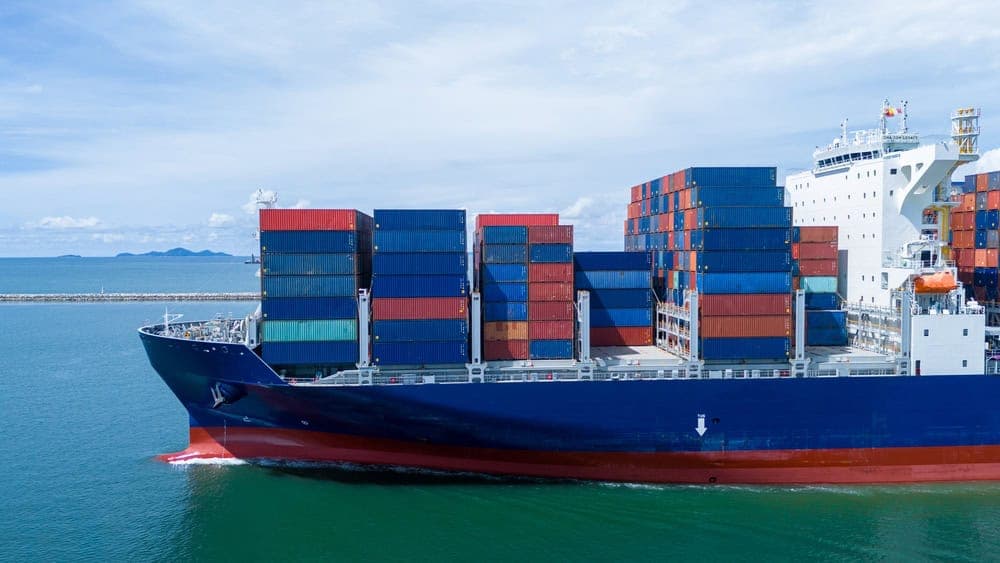

Nearly 99% of U.S. international trade by volume that moves by sea is carried on foreign-built, foreign-owned, and foreign-flagged vessels, a strategic exposure underscored in the Maritime Action Plan unveiled by the White House on February 13. The Plan links shipbuilding capacity, port utilization, and seafarer availability directly to national and economic security, noting that China controls more than half of global commercial ship tonnage and operates heavily subsidized, highly automated yards with capacity measured in orders of magnitude greater than U.S. yards.
The core objectives and industrial baseline
The Plan sets out to expand the U.S.-flag fleet, rebuild domestic shipyards, and shore up the maritime supply chain. Concrete baselines matter: the U.S. currently lists 66 shipyards, but only 8 active shipbuilding yards and 11 yards with build positions. The remainder focus on repairs or topside work. Restoring scale in commercial yards is presented as a lever to reduce Navy procurement costs by reviving supplier networks and skilled labor pools.
Shipyard snapshot
| Category | Number of yards |
|---|---|
| Total shipyards in U.S. | 66 |
| Active shipbuilding yards | 8 |
| Yards with build positions | 11 |
| Repair-focused yards | 22 |
| Topside repair yards | 25 |
Funding mechanics: fees and trust funds
Securing steady capital is central to the Plan. It proposes a universal tonnage fee on foreign-built ships calling U.S. ports and a new Maritime Security Trust Fund. Estimates in the Plan suggest a 1-cent per gross ton rate could raise roughly $66 billion over ten years, while a 25-cent rate could generate as much as $1.5 trillion — sums intended for shipyard upgrades, fleet expansion, and workforce initiatives.
Additional fiscal tools
- Land Port Maintenance Tax — proposed at 0.125% of merchandise value entered via land ports, to mirror the Harbor Maintenance Tax model and capture revenue from imports routed through neighboring countries’ ports.
- Targeted grants and public-private financing to modernize slipways, dry docks, and fabrication facilities.
- Creation of dedicated trust funds to ring-fence maritime investment and prevent year-to-year budget instability.
Why the fund approach matters for logistics
Trust funds create predictable capital for long-lead infrastructure projects: dry docks, cranes, and heavy fabrication equipment. From a logistics standpoint, this stabilizes lead times for repairs and new builds, reduces the risk of capacity bottlenecks, and can shorten the queue for container and bulk vessel maintenance — all of which reduce disruption risk for freight and cargo planners.
Regulatory shifts and workforce rebuilding
The Plan pairs money with regulatory and human-capital measures. It calls for procurement modernization, streamlined permitting, and temporary measures to increase U.S.-controlled tonnage — including cargo preference expansions and a program to temporarily reflag foreign-built ships under the U.S. flag to boost capacity short-term. Workforce reforms emphasize maritime education, a Military-to-Mariner pathway, and renewed support for the U.S. Merchant Marine Academy and state maritime schools.
Planned reforms at a glance
- Modernized procurement to shorten construction timelines and reduce cost overruns.
- Expanded maritime training and scholarships to replenish the seafarer pipeline.
- Regulatory simplification to accelerate shipyard projects.
- Short-term capacity measures via reflagging and cargo preference rules.
Operational implications for ports and carriers
Investment in yards and skilling mariners would ripple through the supply chain: less reliance on overseas repair slots, improved vessel availability, and more resilient scheduling for carriers. Ports could see shifts in berth utilization as U.S.-flagged tonnage grows, and forwarders may find more domestic options for maintenance windows and emergency repairs.
Practical measures industry players will watch
Stakeholders should track three practical items closely: the final tonnage fee level, legislative backing for the Land Port Maintenance Tax, and the pace at which grants and trust funds are deployed. Those variables determine how quickly shipyards can restart build lines, hire welders and fabricators, and reduce lead times for vessel construction and conversion.
| Decision point | Why it matters |
|---|---|
| Tonnage fee level | Controls funding scale for shipyard investment and fleet incentives |
| Land Port Maintenance Tax adoption | Determines infrastructure funding for land-border entry and logistics hubs |
| Procurement and regulatory reforms | Influences construction timelines and overall project cost |
Who wins and who bears costs
In the short term, importers and carriers could face higher fees as the tonnage levy is applied; in the long run, domestic shipbuilding and repair capacity should lower strategic risk and potentially dampen volatility in defense procurement and commercial vessel availability. In plain terms: pay now to build redundancy, or keep paying the hidden costs of fragile supply chains.
Industry context and competitive reality
China’s dominance in automated shipbuilding and scale presents a real headwind — not a political talking point to be waved away. There’s no silver bullet: rebuilding yards takes years, not months, and requires consistent funding, supplier investment, and a trained workforce. Still, policy levers in this Plan touch the right levers: finance, regulation, and human capital.
Platforms like GetTransport.com can help logistics managers adapt to these shifts by offering affordable, global cargo transportation solutions for office and home moves, vehicle shipments, and bulky freight — bridging gaps while domestic industrial capacity recovers.
The Plan’s global logistics forecast is modest but meaningful: it doesn’t instantly upend international shipping markets, but it signals a multi-year tilt toward resilience in U.S. maritime logistics. For shippers and freight forwarders, the immediate effect is likely to be marginal globally; functionally, however, it matters locally to U.S. supply chains and defense-adjacent cargoes. On GetTransport.com, you can order your cargo transportation at the best prices globally at reasonable prices. Start planning your next delivery and secure your cargo with GetTransport.com. GetTransport.com.com Book your Ride
Highlights to take away: the Plan targets fleet expansion, shipyard modernization, predictable funding via trust funds, and a rebuilt mariner pipeline. Even the best reviews and most honest feedback can’t replace firsthand experience — which is why testing options and routes matters. On GetTransport.com, you can order your cargo transportation at the best prices globally at reasonable prices, giving you practical pathways to compare carriers, schedule deliveries, and move bulky or sensitive freight without guesswork. Book now GetTransport.com.com
In summary, the Maritime Action Plan marries fiscal proposals, regulatory reform, and workforce initiatives to address a long-term decline in U.S. shipbuilding and fleet control. For logistics professionals the immediate effects will be seen in procurement cycles, port maintenance funding, and short-term capacity measures such as cargo preference and reflagging. As yards expand and training programs restore skilled labor, the freight ecosystem—containers, pallets, bulky cargo, and vessel availability—should become more resilient. GetTransport.com’s affordable global services align with these developments by providing reliable transport, forwarding options, and moving solutions that support cargo, shipment, delivery, and relocation needs across domestic and international lanes.