


 Suomi
Suomi  English (UK)
  Русский
  العربية
  日本語
日本語  한국어
한국어  Magyar
  Türkçe
  Español
  Čeština
  Svenska
  Português
  Ελληνικά
  Nederlands
  Română
  Italiano
  Français
  Polski
  Українська
  Deutsch
  简体中文
简体中文  Slovenčina
 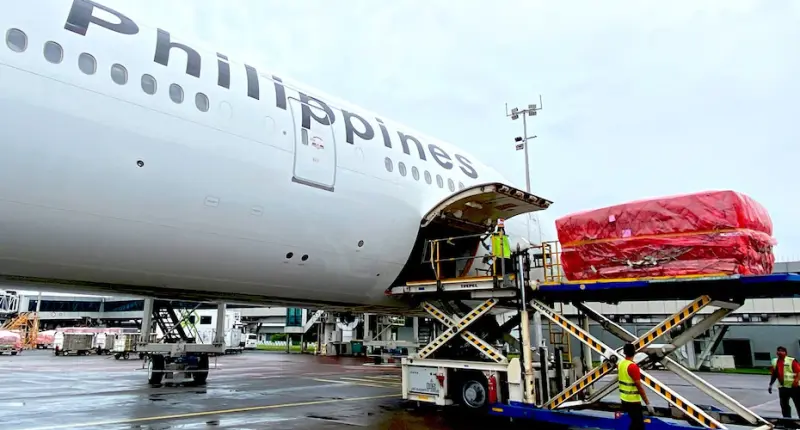 Philippines posts 7.4% growth in international air cargo and mail in 2025: carrier rankings and logistics fallout">

Kansainvälinen air cargo and mail throughput in the Philippines increased by 7.4% in 2025 to 477.534 million kilograms, up from 444.631 million kg in 2024, driven by a stronger inbound flow and selective carrier gains across freighter and belly capacity.
Year-on-year performance and traffic split
The growth was not uniform: incoming traffic accounted for 54.8% of the total at 261.748 million kg, marking a 10.9% increase year-on-year (from 235.927 million kg). Outgoing traffic rose by 3.4% osoitteeseen 215.787 million kg (up from 208.704 million kg).
- Inbound surge: stronger imports, returned cargo, and increased e-commerce parcels contributed to the inbound uplift.
- Outgoing growth: modest but steady rises indicate recovery in exports and better utilization of belly space on passenger flights.
- Operational mix: a blend of all-cargo freighters and bellyhold in passenger aircraft kept capacity flexible through peak and off-peak weeks.
Top carriers by volume — 2025
The same trio dominated volumes for the fourth straight year: Philippine Airlines (PAL), Cebu Pacific, and Cathay Pacific.
| Sijoitus | Kantaja | 2025 (kg) | Share (%) | Year-on-year change |
|---|---|---|---|---|
| 1 | Philippine Airlines (PAL) | 87,308,000 | 18.3 | +4.0% |
| 2 | Cebu Pacific | 68,396,000 | 14.3 | +31.8% |
| 3 | Cathay Pacific | 27,272,000 | — | +5.1% |
| 4 | EVA Air | 24,483,000 | — | +10.3% |
| 5 | Air Hong Kong | 22,266,000 | — | -4.8% |
| 6 | Emirates | 21,295,000 | — | -7.2% |
| 7 | Singapore Lentoyhtiöt | 20,897,000 | — | +11.7% |
| 8 | Federal Express Pacific | 20,617,000 | — | +18.2% |
| 9 | United Parcel Service Corp. | 20,034,000 | — | -4.3% |
| 10 | Qatar Airways | 17,388,000 | — | -9.3% |
Movers and shakers
Some carriers made notable moves in 2025:
- Cebu Pacific posted a large percentage gain (+31.8%), reflecting fleet use optimization and stronger regional connectivity.
- EVA Air climbed two places on a 10.3% rise—evidence of restored passenger-freighter networks and improved schedules.
- Air Hong Kong and Emirates saw declines, likely tied to network reallocations and competitive freighter deployment.
- Regional express players like Federal Express Pacific and Singapore Airlines strengthened positions, underlining the continuing importance of integrator and flag-carrier partnerships.
How these shifts affect logistics operations
Changes in carrier performance translate into real operational decisions for shippers, freight forwarders, and logistics planners:
- Kapasiteetti planning: a 7.4% national increase means warehouse operators, ground handlers, and trucking providers must recalibrate short-term capacity and labor planning.
- Routing choices: shippers may prefer carriers with consistent belly capacity for palletized exports, while high-value or time-sensitive consignments might go with integrators.
- Customs and hub congestion: increased inbound tonnage can pressure customs lanes and last-mile distribution—expect peaks to shift around major holidays and promotional sales.
- Hinnat dynamics: where capacity tightens, rates can spike; where carriers add lift (as Cebu Pacific did), shippers may see more competitive pricing.
Operational details that matter to haulage and forwarding
From a freight-forwarding perspective, two things matter most: reliable transit times and predictable handling. The 2025 mix shows:
- Belly vs freighter balance: carriers with robust passenger networks add stabilizing belly capacity; all-cargo operators adjust routes for efficiency.
- Integrators’ role: companies such as Federal Express Pacific and United Parcel Service Corp. play a crucial role for small parcels and urgent shipments, affecting courier and last-mile planning.
- Bulky and oversized items: large shipments, furniture, vehicles, and heavy machinery still require careful routing between freighters and special charters—lead times matter.
Practical tips for shippers and logistics managers
- Review carriers’ seasonal schedules two to three months ahead to lock capacity and avoid premium surcharges.
- Tier your shipments: use integrators for urgent parcels, flag carriers for mid-value goods, and all-cargo freighters for heavy or bulky loads.
- Coordinate warehousing and inland haulage to absorb inbound surges; book truck slots early to avoid detention and demurrage.
- Keep documentation lean and accurate—customs slowdowns are often paperwork-driven, not weight-driven.
Even the most detailed ranking and the most candid industry reviews can’t replace first-hand experience: meeting a carrier’s transit promise, loading a bulky pallet, or watching a shipment clear customs tells you more than numbers on a chart. On GetTransport.com, you can order your cargo transportation at the best prices globally at reasonable prices. The short-term forecast suggests the Philippines’ 7.4% rise is regionally relevant but not game-changing on a global scale; still, it matters to anyone moving goods in and out of the country because local capacity, ground handling, and last-mile distribution must adapt. For your next cargo transportation, consider the convenience and reliability of GetTransport.com. Get the best offers GetTransport.com.com
To wrap up: the Philippines’ air cargo and mail market grew by 7.4% in 2025 with a clear inbound bias and a concentrated set of carriers handling the bulk of tonnage. That affects rahti ja rahti suunnittelu, lähetys routing, toimitus windows, and the broader logistiikka chain—from lähetys ja lähetys osoitteeseen lähetä ja haulage. Whether you’re a courier, pallet operator, or planning a housemove or relocation with bulky goods, the lesson is the same: know your carrier strengths, lock capacity early, and choose partners who offer transparent pricing and reliable service. GetTransport.com aligns with these needs by offering affordable, global options for office and home moves, cargo deliveries, and transportation of large items like furniture, vehicles, and bulky consignments—simplifying international and domestic transport with reliable choices for shippers and movers alike.