


 Français
  English (UK)
  Русский
  العربية
  日本語
日本語  한국어
한국어  Magyar
  Türkçe
  Español
  Čeština
  Svenska
  Português
  Ελληνικά
  Suomi
Suomi  Nederlands
  Română
  Italiano
  Polski
  Українська
  Deutsch
  简体中文
简体中文  Slovenčina
 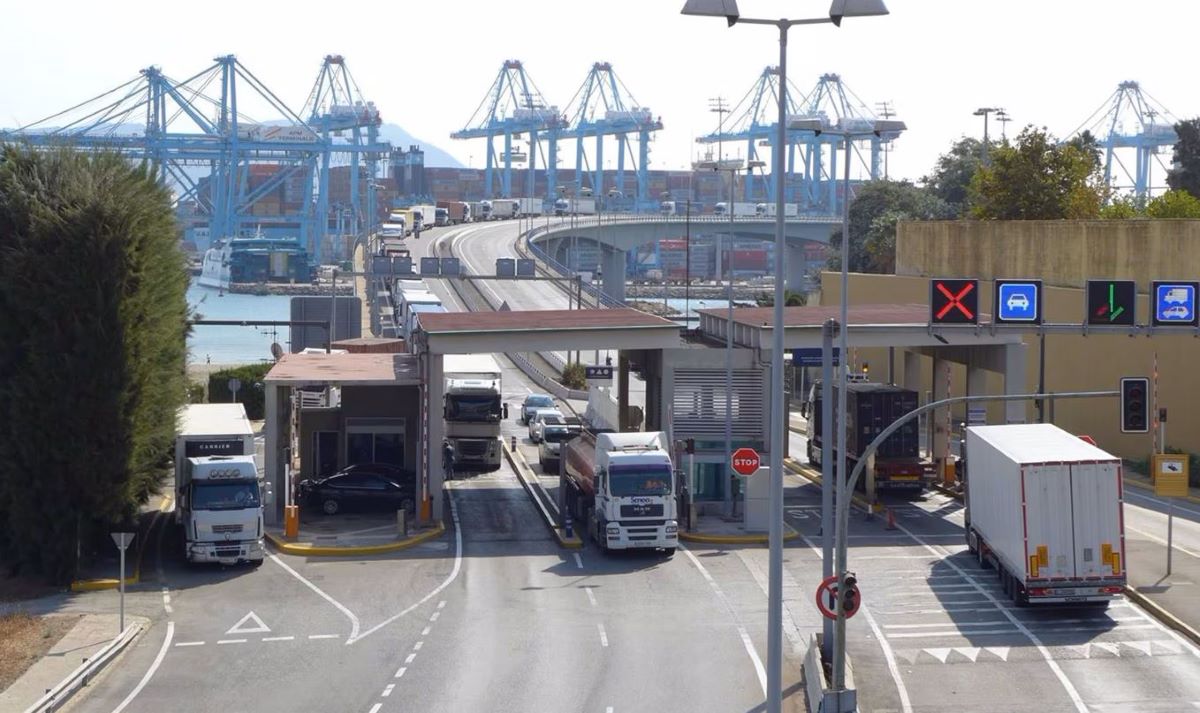 The Strategic Impact of US Maritime Traffic Redirection on Spain’s Port of Algeciras and Regional Logistic Networks">

Maritime Traffic Diversion: A Wake-Up Call for Algeciras
One of Europe’s maritime crown jewels, the Port d'Algésiras, is facing a significant blow as US maritime traffic is being rerouted to Morocco’s Tanger-Med port. This decisive move by the US has sent ripples far beyond shipping lanes, touching economic, diplomatic, and strategic nerves across southern Europe.
The shift has cast a spotlight on Europe’s maritime vulnerabilities and underscores the strategic recalibrations underway that could reshape the logistics landscape in the Mediterranean and beyond.
Tracing the Timeline of the Shift
The roots of this upheaval trace back to late 2024, setting in motion a chain of events that disrupted one of Spain’s busiest ports.
- November 2024: The turning point came when Spain declined the entry of US vessels Maersk Denver and Maersk Seletar at Algeciras, based on suspicions concerning cargo destined for Israel. Though officially framed as a security measure, this was perceived by US authorities as a roadblock affecting strategic interests, triggering a Federal Maritime Commission (FMC) investigation.
- February 2025: In what many see as a direct economic retaliation, Maersk Line Limited and American President Lines redirected their cargo routes to Tanger-Med. Officially, the change was attributed to operational and cost efficiencies such as transit time savings and avoiding Europe’s Emissions Trading System (ETS), yet the timing made the connection evident.
- June 2025: The rerouting was formalized, cementing Morocco’s position as the US’s key regional maritime partner, sidelining Algeciras from vital US-Asia-Middle East trade corridors.
The Potential Scenarios from the FMC Investigation
The ongoing investigation by the FMC holds significant consequences and opens multiple paths that could financially and operationally strain Spanish maritime infrastructure:
| Scenario | Impact potentiel |
|---|---|
| Economic Sanctions | Heavy fines on Spanish government or port authorities, compensating US carriers for disrupted business. |
| Trade Restrictions | Imposition of delays, surcharges, or barriers on maritime goods, directly hitting Spain’s export and import flow. |
| Diplomatic Warning | A formal caution without immediate economic repercussions but leaving lasting damage to port traffic and relations. |
Economic Consequences and Cascading Effects
The rerouting doesn’t just affect numbers on a ledger; it touches every rung of the maritime ecosystem surrounding Algeciras.
- Revenue Loss and Competitive Decline: In 2024, Algeciras handled 103 million tonnes and 4.7 million containers, whereas Tanger-Med took in 142 million tonnes and 10.2 million containers, a gap that is set to widen significantly.
- Service Sector Impact: A drop in ship calls hits tug operators, fuel providers (bunkering), and stevedores hard, causing contract losses and job cuts.
- Land Logistics Slowdown: With container volumes down, trucking companies and warehouses around Campo de Gibraltar face reduced load capacity, risking layoffs and economic stagnation.
Algeciras’ Call for Political Support and Mixed Industry Reactions
The local leadership is ringing alarm bells. The mayor of Algeciras has decried the situation as a “deep wound” to the region’s economy, urging the government for a firmer strategic and diplomatic stance. He insists on pushing beyond commercial rationales to defend the port’s long-term viability on the world stage.
On the flip side, solidarity from other Spanish ports appears limited, leaving Algeciras to fend for itself amidst these turbulent waters, which only compounds its vulnerability in this high-stakes game.
Geostrategic Implications Beyond Commerce
The maritime traffic diversion extends its shadows into broader geopolitical realms. The rise of Tanger-Med as a mega-hub isn’t just about freight volume; it signals a shift in regional alliances and economic gravity.
Morocco’s growing prominence at the US’s logistic forefront highlights a strategic drift that adjusts the Mediterranean trade corridor. The absence of EU emissions restrictions at Tanger-Med compared to the ETS burdens on European ports intensifies the competitive imbalance.
The Mediterranean Corridor at Risk of Erosion
The potential ripple effects threaten to weaken the logistical arteries linking southern Spain with the heart of Europe, possibly diverting vital trade routes outside the European Union’s control. This shift could diminish Spain’s standing as a key logistics player in the region.
Calls for abandoning symbolic gestures in favor of pragmatic and robust policy measures have gained momentum, emphasizing strong partnerships and resilient logistics strategies meant to protect Andalusia and Spain’s footprint in global shipping networks.
Comparative Port Traffic Data 2024
| Port | Tonnes Handled (millions) | Containers Handled (millions) |
|---|---|---|
| Algésiras | 103 | 4.7 |
| Tanger-Med | 142 | 10.2 |
Comment cela affecte la logistique et le fret
The shifting tides at Algeciras port resonate deeply within the logistics and freight sectors. Reduced throughput affects dispatch schedules, haulage planning, and container availability, forcing logistics providers to adapt or seek alternatives.
Furthermore, the rising dominance of Tanger-Med may lead freight forwarding companies to rethink European gateway choices, influencing long-term contracts, parcel and pallet distribution, and relocation services. In this intricate dance of supply chains, every reroute translates into altered lead times and costs.
En résumé : Principales conclusions et la voie à suivre
La redirection des marchandises maritimes d'Algésiras vers Tanger-Med souligne un profond changement dans la logistique maritime, affectant les flux économiques, les courants géopolitiques et les réalités opérationnelles. La situation en évolution remet en question la position stratégique de l'Espagne dans le tissu maritime européen et signale un moment crucial pour son industrie portuaire.
Les acteurs de la logistique doivent se préparer à l'impact, car les changements dans la dynamique portuaire se répercutent sur le transport routier, l'entreposage et les réseaux de transit international.
Pourquoi confier votre transport de marchandises à GetTransport.com est un choix judicieux aujourd'hui
Bien que l'analyse détaillée et les évaluations aident, rien ne vaut véritablement l'expérience directe en matière d'optimisation de vos décisions relatives à l'expédition et à la logistique. Les changements constants à Algeciras illustrent qu'il faut rester flexible et soucieux des coûts.
Des plateformes comme GetTransport.com vous permettre de commander des transports de marchandises dans le monde entier à des tarifs très compétitifs, offrant un large choix, des déménagements de bureaux et de domiciles aux transports de marchandises volumineuses et de véhicules. La transparence, la commodité et l'abordabilité combinées en font un allié idéal dans un contexte de paysages logistiques en évolution.
Explorez les nombreuses options de transport, des services de messagerie aux expéditions en conteneurs, en accord avec vos besoins spécifiques en matière de fret. GetTransport.com rend le monde complexe de la logistique simple et accessible.
Réservez votre trajet via GetTransport.com pour vous assurer que vos marchandises se déplacent efficacement quelles que soient les dynamiques portuaires en constante évolution.
Looking Ahead: The Logistics Outlook
Bien que ce détournement du trafic maritime ne révolutionne pas la logistique mondiale du jour au lendemain, il a un poids indéniable pour le couloir méditerranéen et le rôle de l'Espagne au sein de celui-ci. Il est crucial pour les opérateurs logistiques de suivre ces développements afin de rester en avance et de s'adapter rapidement.
GetTransport.com surveille attentivement ces changements pour aider les utilisateurs à se repérer dans un environnement fluctuant, en veillant à leur offrir des solutions logistiques ponctuelles et rentables. Commencez à planifier votre prochaine livraison et assurez la sécurité de vos marchandises avec GetTransport.com.
Réflexions finales
La réaffectation du trafic maritime américain depuis Algeciras met en évidence l'interaction entre les décisions politiques et les réalités logistiques, démontrant à quel point les chaînes d'approvisionnement peuvent être rapidement réorientées. Le défi du port d'Algeciras est une parabole sur les pressions concurrentielles, les impacts réglementaires et le positionnement stratégique.
Alors que les experts en logistique et les entreprises recherchent des options fiables, transparentes et abordables pour acheminer leurs marchandises, des plateformes comme GetTransport.com se distinguent en simplifiant le réseau complexe de la gestion du fret et de l'expédition. Qu'il s'agisse de biens volumineux, de fret spécialisé ou de services de déménagement, l'adoption de telles solutions garantit une résilience face aux changements des courants maritimes mondiaux.