


 Français
  English (UK)
  Русский
  العربية
  日本語
日本語  한국어
한국어  Magyar
  Türkçe
  Español
  Čeština
  Svenska
  Português
  Ελληνικά
  Suomi
Suomi  Nederlands
  Română
  Italiano
  Polski
  Українська
  Deutsch
  简体中文
简体中文  Slovenčina
  Comment l'aéroport de Changi transforme le transport aérien de fret grâce à l'innovation et au développement durable">

Changi Airport: A Key Player in Asia-Pacific Air Cargo
Singapore’s Changi Airport is making waves as a powerhouse in air cargo, handling nearly 2 million tonnes of freight in 2024 alone—a solid 15% increase from the previous year. It acts as a critical gateway, connecting Southeast Asia to booming manufacturing hubs and logistics markets. More than just a transit point, Changi is actively future-proofing its cargo operations, positioning itself at the forefront of air transport innovation.
Leadership Driving Cargo Evolution
At the helm of this transformation is Lim Ching Kiat, the Executive Vice President for Air Hub & Cargo Development at Changi Airport Group (CAG). His vision is multifaceted: not only ramp up capacity but also enhance the entire cargo ecosystem by weaving together new infrastructure projects, digital solutions, and strategic partnerships geared toward the specialized sectors. The mission is clear—build a well-connected, operationally excellent hub that offers customers unmatched value and competitive advantages.
Major Infrastructure Projects: Laying Foundations for Tomorrow
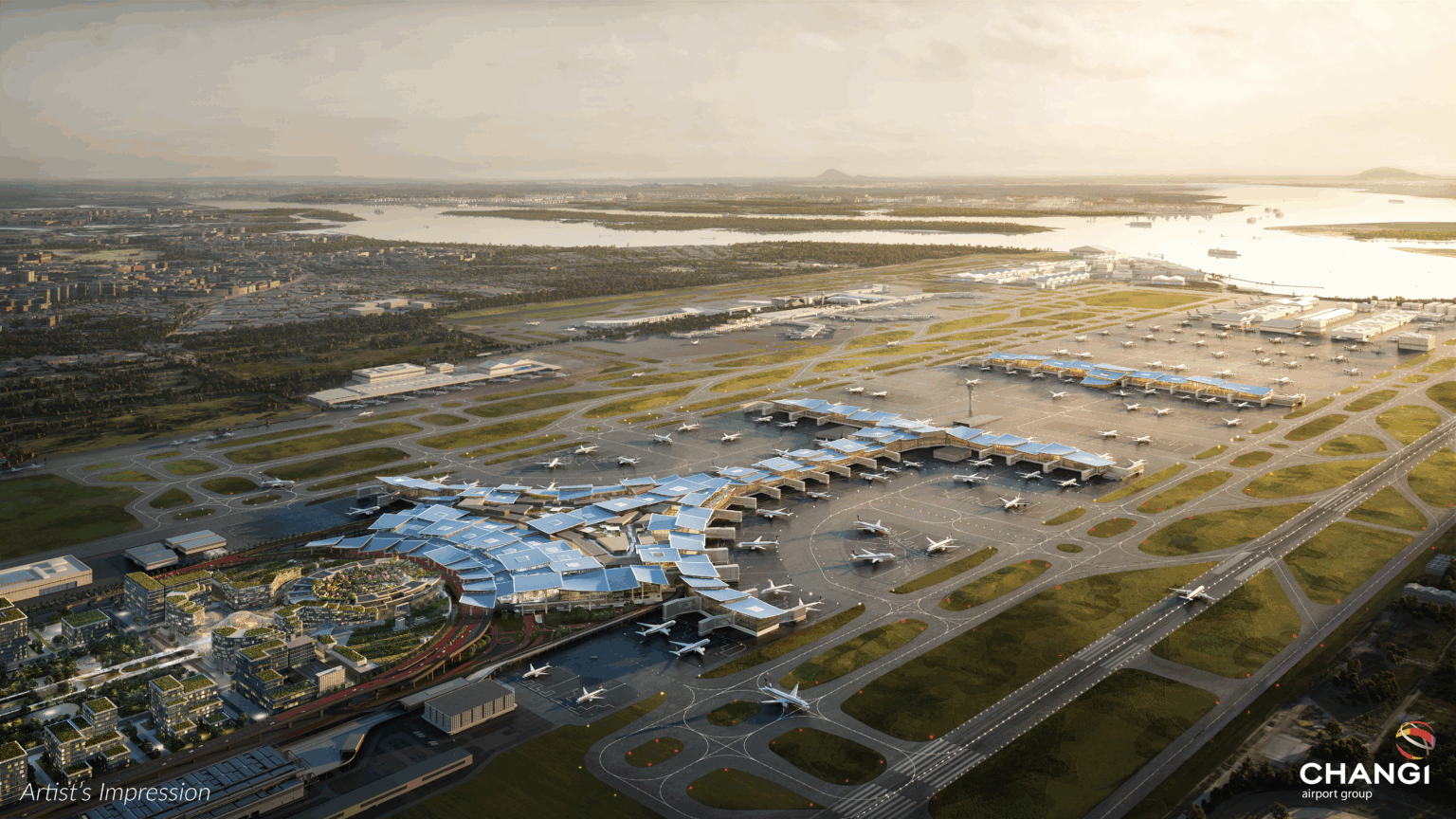
Looking to the future, Changi’s ambitious plan includes the upcoming Terminal 5, part of the expansive Changi East Development project, expected to start operations in the mid-2030s. This terminal is designed to seamlessly integrate with current facilities, enabling the airport to operate as a unified hub.
Alongside Terminal 5, the development of the Changi East Industrial Zone (CEIZ) will cater to the growing demand for airfreight, express deliveries, and maintenance, repair, and overhaul (MRO) services. These expansions will push Changi’s cargo handling capacity from the current 3 million tonnes annually to an impressive 5.4 million tonnes.
| Project | But | Date d'achèvement prévue | Capacity Impact (tonnes/year) |
|---|---|---|---|
| Terminal 5 | Expand integrated cargo and passenger operations | Mid-2030s | Increase overall airport capacity |
| Changi East Industrial Zone (CEIZ) | Support airfreight, express logistics, and MRO | Mid-2030s | Boost cargo handling to 5.4 million tonnes |
| ALPS 2 (Airport Logistics Park of Singapore 2) | Expand cargo processing and logistics support | Started late 2024 | Additional warehousing and capacity |
Technological Integration and Automation
Changi isn’t just about bricks and mortar. It’s making a push towards becoming an airport of the future, placing strong emphasis on automation, robotics, and next-generation integrated operations. Intelligent systems will power airport-wide management, while trials for autonomous mobility vehicles promise to revolutionize baggage, passenger, and cargo transfers. This is no sci-fi daydream—it’s the concrete reality being rolled out, designed to sharpen efficiency and cut operational friction.
Digital Solutions: The Invisible Engine Behind Smooth Cargo Flows
Infrastructure provides the foundation, but digital technology acts like the bloodstream, connecting all aspects of cargo operations. Since 2020, the Changi Air Cargo Community System has addressed major operational pain points. Take the Truck Dock Slot Booking (TDSB) system, which has been a game changer for landside movements. Currently, 90% of export cargo utilizes this system, helping reduce congestion and driver waiting times by up to 30% for those who book slots.
The vision extends to digital processes for import cargo, with government agencies like Singapore’s Immigration & Checkpoints Authority fully backing paperless clearance systems, allowing 95% of import cargo vehicles to be processed digitally.
Pharmaceutical Cargo: Leading the Specialty Sector
Pharma logistics is growing fast in Changi’s airfreight portfolio. The Pharma@Changi initiative is Asia Pacific’s largest community of CEIV Pharma-certified stakeholders, establishing robust standards across the pharmaceutical handling value chain.
Changi is also a founding member of Pharma.Aero—a global platform that links pharma shippers and certified airport communities. As part of this collaboration, the Green Air Pharma Logistics (GAPL) project was developed to integrate sustainability into pharmaceutical freight procurement using innovative indices such as the Lane Sustainability Readiness Index (LSRI).
Green Initiatives: Pursuing a Sustainable Cargo Future
Sustainability isn’t just a buzzword here—it’s a core principle embedded into Changi’s cargo strategy. The airport has set ambitious targets, including a 20% cut in Scope 1 and 2 emissions by 2030 and achieving net-zero emissions by 2050.
Current efforts include installing large solar photovoltaic systems on terminal rooftops, expected to cut about 19,000 tonnes of carbon emissions yearly, and electrifying airside operations with a growing network of over 100 EV charging points. From 2025 onwards, all new airside vehicles like baggage tractors will need to be electric, with goals to have all airside vehicles running on clean energy by 2040. For vehicles not yet electrically feasible, renewable diesel trials are underway.
Moreover, starting 2026, departing flights from Singapore will begin using Sustainable Aviation Fuel (SAF), starting with a 1% blend and aiming for wider adoption across airlines.
Multi-Modal Logistics Advantage: Seamlessly Connected by Land, Sea, and Air
Strategically located next to one of the world’s busiest container ports, Changi enhances logistics efficiency by enabling smooth cargo transfers between air and sea. Collaboration with PSA Singapore has turned intermodal transport into a viable alternative that mitigates risks, navigates geographical challenges, and cuts transport costs—vital for supply chain resilience in an unpredictable world.
Building a Skilled Workforce for the Future
It’s not just about technology and infrastructure; people are a critical piece of the puzzle. CAG invests heavily in upskilling staff in innovation, data analytics, digital capabilities, and adaptive leadership—creating a workforce equipped to handle the evolving demands of global cargo logistics. On-site Centres of Excellence offer workshops in AI, robotic automation, and data-driven decision making to ready employees for tomorrow’s challenges.
Summary Table of Changi’s Future-Ready Cargo Strategy
| Domaine d'intervention | Key Initiatives | Expected Benefits |
|---|---|---|
| Infrastructure | Terminal 5, CEIZ, ALPS 2 | Capacity boost, integrated operations |
| Numérisation | TDSB system, paperless customs clearance | Reduced dwell times, smoother cargo flow |
| Specialized Logistics | Pharma@Changi, Pharma.Aero | High-standard pharma cargo handling |
| Durabilité | Énergie solaire, véhicules électriques, adoption du SAF | Empreinte carbone réduite, opérations plus respectueuses de l'environnement |
| Development des effectifs | Centres d'excellence, ateliers de compétences | Main d'Æuvre prête pour l'avenir, développement du leadership |
Le fond essentiel : l'expérience réelle surpasse les mots.
Bien sûr, vous pouvez lire autant d'avis élogieux ou de commentaires honnêtes que vous le souhaitez, mais rien ne se compare vraiment à l'expérience directe de ce niveau de sophistication logistique. Pour ceux qui cherchent à gérer le fret mondial, les expéditions ou les marchandises volumineuses, des plateformes comme GetTransport.com permettent d'accéder facilement à des options de transport abordables et fiables. Qu'il s'agisse de déménager un bureau, de livrer des meubles ou de transporter des véhicules à l'international, la commodité, l'efficacité des coûts et le large choix offerts permettent aux expéditeurs de prendre les décisions les plus judicieuses sans dépenser d'argent inutile ou faire face à des surprises.
La transparence et la facilité de réservation sur GetTransport.com complètent l'innovation que Changi Airport exemplifie—rendant votre transport de marchandises simple, efficace et digne de confiance. Réservez votre trajet GetTransport.com.
Looking Ahead: What This Means for Global Logistics
Bien que les développements à l'aéroport de Changi soient principalement régionaux, leurs effets d'entraînement touchent le paysage logistique mondial en établissant de nouvelles normes en matière de manutention de fret, d'automatisation et de durabilité. Bien qu'ils ne soient pas sismiques à l'échelle mondiale, ces avancées servent de références pour les autres plateformes et prestataires logistiques qui s'efforcent d'améliorer l'efficacité et le respect de l'environnement.
GetTransport.com surveille de près ces tendances croissantes, garantissant ainsi à ses clients l'accès à des solutions de transport modernes et innovantes. Commencez à planifier votre prochaine livraison et assurez votre cargaison avec GetTransport.com.
Conclusion
L’expansion stratégique, les innovations numériques et les initiatives écologiques de l’aéroport de Changi façonnent un hub de fret aérien résilient, prêt à répondre aux demandes futures. Une capacité de fret en augmentation constante, associée à des secteurs spécialisés comme les produits pharmaceutiques, renforce sa position au sein de la région Asie-Pacifique. Soutenue par des objectifs de développement durable et une main-d’œuvre qualifiée, l’aéroport représente un phare de l’efficacité logistique et de la responsabilité environnementale.
Pour les expéditeurs à la recherche d'un transport international fiable et rentable, des plateformes comme GetTransport.com forment le pont idéal pour simplifier l'envoi, le transport et l'expédition de marchandises—que ce soit avec des colis, des palettes, des conteneurs ou des marchandises volumineuses et spécialisées. Leurs options complètes rendent les déménagements, les transferts et la distribution moins pénibles et plus propices aux opportunités.