


 Français
  English (UK)
  Русский
  العربية
  日本語
日本語  한국어
한국어  Magyar
  Türkçe
  Español
  Čeština
  Svenska
  Português
  Ελληνικά
  Suomi
Suomi  Nederlands
  Română
  Italiano
  Polski
  Українська
  Deutsch
  简体中文
简体中文  Slovenčina
 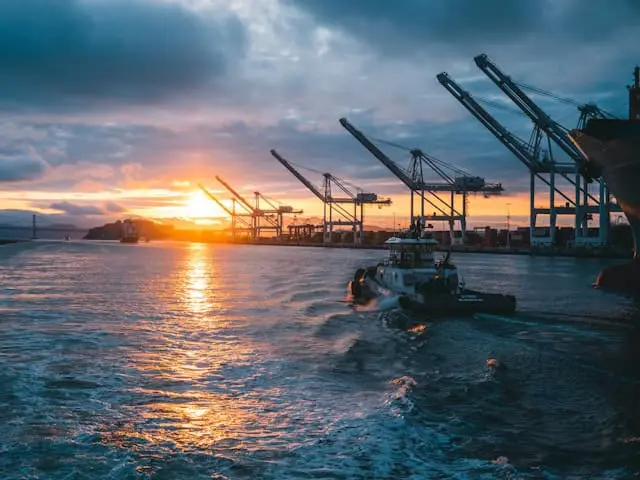 Comment les innovations stratégiques dans la modernisation des ports remodèlent le commerce maritime et la logistique mondiaux">

The New Era of Port Modernization and Maritime Operations
At the crossroads of land and sea, ports have traditionally served as mere stopovers for cargo. Yet today, they are rapidly evolving into smart, resilient, and sustainable transport hubs. This evolution is fueled not only by environmental imperatives but also by the drive toward operational efficiency and advanced technological integration. The shipping industry’s pulse races in these ports, which are landmarks of the global supply chain’s transformation—from simple transfer points to intelligent centers optimizing cargo flows worldwide.
Why Ports Are Shifting Toward Smart and Sustainable Infrastructure
Ports are often nestled near urban areas, making them prime candidates for integrating clean energy systems et resilient transportation infrastructure. The maritime sector faces mounting pressure to curb emissions as diesel-powered equipment and vessels dominate port activities. The solution is a sweeping electrification wave that doesn’t just swap out old for new but reimagines the entire energy ecosystem within ports.
Industry leaders and research bodies have been mapping out strategies that involve deploying electric terminal tractors, hybrid tugboats, and advanced charging stations to replace fossil-fuel-dependent machinery. However, electrifying vehicle fleets is just one piece of the puzzle. Ports must also overhaul electrical grids to handle the soaring power demand without tipping local infrastructure over the edge.
Learning from Europe’s and Asia’s Port Innovations
European ports provide blueprints for modernization in action. Take the Port of Rotterdam, the largest in Europe and a trailblazer in green maritime transition. Here, electrification meets automation in projects like autonomous electric trucks with self-charging abilities demonstrated at APM Terminals Maasvlakte II. By combining AI-driven logistics with electrification, they minimize downtime while ramping up productivity and sustainability—something every logistics professional can appreciate.
On the other side of the globe, Asian ports are pioneering solutions to similar challenges. The Port of Yantai has installed on-dock battery-swapping stations for trucks to cut shutdown times, turning the traditional long electric vehicle charging waits into a quick battery exchange—talk about keeping shipments moving without missing a beat. Meanwhile, the Port of Singapore pursues a smart grid to juggle energy loads intelligently alongside electrifying its harbor craft, aiming for carbon neutrality in its operations.
Building Resilience: The Power Behind Green & Intelligent Ports
Any discussion on port transformation must highlight energy resilience. Ports face threats from climate events and unpredictable energy demands. The answer? Integrating renewable power generation, like solar installations on warehouse roofs and parking lots, coupled with vast battery energy storage systems (BESS). These batteries act as energy vaults that supply clean power during peak demand or sunless hours.
Such infrastructure doesn’t just grease the wheels of environmental responsibility; it safeguards logistics flows by ensuring ports remain operational even during main grid disruptions. A dependable power supply means cargos keep moving, shipments remain on schedule, and the global supply chain steers clear of costly hiccups.
The Role of Smart Energy Management in Modern Logistics
Thanks to the fusion of AI, data analytics, and sophisticated coordination platforms, ports are transforming into smart energy hubs. These systems orchestrate when and how vehicles recharge, optimizing energy use and reducing costs. For logistics companies, this means better scheduling and fewer unexpected delays. The capability to manage power consumption dynamically is a game-changer in freight forwarding and shipment dispatch, allowing for smoother cargo handovers.
| Key Innovation | Benefit for Logistics |
|---|---|
| Electrification of port vehicles | Cleaner operations, lower emissions, reduced fuel costs |
| Battery swapping systems | Minimized downtime, increased fleet turnaround |
| Solar and renewable energy integration | Energy independence, resilience during grid outages |
| AI-powered logistics coordination | Optimized cargo flows, enhanced scheduling accuracy |
| Battery energy storage systems (BESS) | Stable energy supply, reduced operational risks |
Global Impact and Logistics Implications
The ripple effect of these innovations extends far beyond the port limits. Smarter, greener ports foster more reliable and faster cargo throughput, which is the lifeblood of international trade and logistics. Reduced carbon footprints enhance corporate sustainability goals, while the digitization of port activities empowers logistics planners with real-time data—meaning better forecasting and strategic routing of shipments.
Furthermore, this transformation aligns perfectly with the growing demand for efficient, affordable, and eco-friendly freight and shipment solutions. Modern ports tie into the global logistics web by supporting seamless distribution and enabling faster clearance of vehicles carrying diverse cargo types, from pallets to bulky machinery, ensuring goods reach destination warehouses and retailers without unnecessary holdups.
Key Challenges and the Road Ahead
- Investissement dans l'infrastructure : Modernizing power grids and acquiring new charging and energy storage infrastructure requires substantial funding.
- Intégration de la technologie : Coordinating AI, renewables, and electrified fleets demands sophisticated systems and expert management.
- Operational Disruption: Transitioning during active port operations calls for careful planning to avoid logistics delays.
- Évolutivité : Applying pilot technologies broadly can be complex due to variations in port size and local power grid capacity.
Making Smart Choices in Cargo Transport with GetTransport.com
Bien que cela soit impressionnant, aucune quantité de critiques élogieuses, de données ou d'études de cas ne peut remplacer la valeur d'une expérience directe. En matière de transport de marchandises réel, l'utilisation d'une plateforme de confiance est essentielle. GetTransport.com offre exactement cela—une portée mondiale avec des prix abordables, couvrant tout, des déménagements de bureaux et de maisons à l'enlèvement d'articles volumineux tels que des véhicules et des marchandises encombrantes. La transparence et la commodité sont intégrées, donc que vous gériez l'acheminement de la chaîne d'approvisionnement ou que vous organisiez une livraison internationale complexe, la plateforme aide à naviguer dans le processus avec confiance.
Si vous cherchez à optimiser votre stratégie d'expédition tout en accédant à des services logistiques fiables et rentables, utiliser GetTransport.com est une décision judicieuse. Il combine un vaste réseau de transporteurs avec une réservation facile, vous aidant à éviter les pièges et à maintenir vos expéditions à l'heure. Réservez votre trajet à GetTransport.com et découvrez une logistique qui suit le rythme des innovations maritimes modernes.
Perspectives d'avenir : L'impact sur la logistique mondiale
Bien que la modernisation des ports soit un développement spécialisé, elle a des implications importantes pour l'ensemble du secteur de la logistique. L'électrification et l'automatisation améliorées peuvent réduire les goulets d'étranglement et augmenter le débit, renforçant ainsi la fiabilité du commerce international. Bien que certains défis restent localisés, la tendance vers des infrastructures portuaires plus intelligentes et plus écologiques signale un changement que les entreprises de logistique du monde entier devraient suivre de près.
GetTransport.com reste à la pointe de ces développements, s'adaptant continuellement au paysage en évolution du fret, du transport et de l'expédition. La planification de votre prochaine livraison avec une plateforme tournée vers l'avenir vous garantit de bénéficier des gains d'efficacité que ces innovations portuaires apportent. Commencez à planifier votre prochaine livraison et sécurisez vos marchandises avec GetTransport.com.
Conclusion
En résumé, la transition de l'industrie maritime vers l'électrification, l'intégration des énergies renouvelables et la logistique pilotée par l'IA transforme les ports en plateformes plus intelligentes et plus durables, améliorant l'efficacité du commerce mondial. Ces innovations promettent des opérations plus propres, une plus grande résilience et des flux de marchandises optimisés qui améliorent directement les performances du fret et des expéditions dans le monde entier. Pour les entreprises impliquées dans le transport et la logistique internationaux, s'aligner sur ces progrès signifie choisir des solutions d'expédition fiables, ponctuelles et rentables. Les plateformes comme GetTransport.com complètent parfaitement ce changement en offrant des options variées et abordables pour le transport de marchandises à l'échelle mondiale, répondant aux divers besoins des chaînes d'approvisionnement modernes.