


 Français
  English (UK)
  Русский
  العربية
  日本語
日本語  한국어
한국어  Magyar
  Türkçe
  Español
  Čeština
  Svenska
  Português
  Ελληνικά
  Suomi
Suomi  Nederlands
  Română
  Italiano
  Polski
  Українська
  Deutsch
  简体中文
简体中文  Slovenčina
 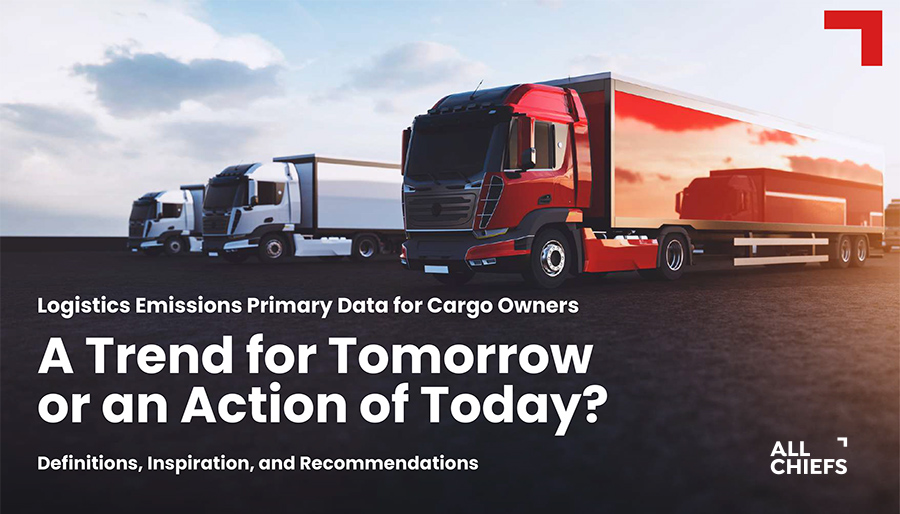 Déverrouiller la puissance des données primaires pour stimuler la durabilité dans la logistique">

Understanding the Role of Primary Data in Sustainable Logistics
As the global spotlight on cutting emissions intensifies, logistics companies are feeling the heat to deliver greener operations. Relying on primary data—that is, concrete, measured information from actual transport activities—has become a game changer for businesses aiming to slash their carbon footprint effectively and transparently.
Historically, many firms have approximated their emissions using general factors like the transport mode, shipment volume, origin, and destination. While this approach provides a rough estimate, it often misses the nuanced realities of real-world logistics. Primary data dives deeper, capturing specifics such as exact fuel use, vehicle types, and load efficiency, offering a much clearer window into the emissions puzzle.
Primary vs. Secondary Data: What’s at Stake?
To grasp why primary data matters so much, it’s helpful to distinguish it from secondary data. Standards like ISO 14083 and the GLEC Framework classify emissions data into three categories:
- Primary data: Directly measured figures from real transport or hub activities—fuel consumption, trip distances, or average emission intensities are all fair game here.
- Modeled data: Calculations based on blending primary data with emission factors, creating an informed estimate.
- Default data: Industry averages or database values that serve as a fallback when more detailed info isn’t available.
For example, road freight emissions calculated using primary data often unveil substantial discrepancies compared to estimates—sometimes showing emissions thrice as high or just half the predicted amount—because the real factors like route deviations, vehicle loading, and empty runs are accounted for.
Why Embrace Primary Data? Benefits Beyond the Numbers
Switching to primary data isn’t just about bragging rights for accuracy. It’s a strategic lever that empowers logistics players to make smarter investments, reduce emissions, and boost operational efficiency. Here’s how:
- Precision in emissions tracking lets companies identify hotspots and opportunities for improvement more effectively than blanket estimates.
- Enhanced partner performance comparisons make choosing greener carriers easier, creating a ripple effect throughout supply chains.
- Efficacité opérationnelle gains arise from better route planning and improved vehicle loading, squeezing out waste and cutting costs along with carbon emissions.
- Accountability in sustainability claims becomes credible. When emission reductions from strategies like switching to efficient trucks or consolidating shipments are backed by real data, businesses can prove their green efforts with confidence.
Table 1. Advantages of Using Primary Data in Logistics Emissions Management
| Aspect | Bénéfice |
|---|---|
| Précision | Captures actual fuel use and operational metrics |
| Decision-making | Informs more targeted investments and improvements |
| Partner comparisons | Allows for selecting low-emission carriers |
| Rentabilité | Optimizes load rates and route planning |
| Transparence | Supports credible sustainability reporting |
Facing the Challenges: Data Collection and Sharing Hurdles
Despite its clear perks, moving toward primary data usage comes with its share of headaches. Digital data collection takes a tech-savvy infrastructure, often out of reach for smaller players. Plus, coordinating and verifying shipment-level data across multiple carriers—especially on global, multimodal networks—is like herding cats.
Technical glitches add fuel to the fire: inconsistent data formats, patchy data quality, and the need to train staff complicate the effort. And let’s not even get started on the competitive concerns—revealing detailed fuel consumption can feel like handing over trade secrets to neighbors or clients, making many players hesitant to share.
Common Obstacles in Primary Data Adoption
- Lack of uniform digital infrastructure among logistics entities
- Complexities of aggregating data across multiple carriers and transport modes
- Issues around data format diversity and verifying accuracy
- Confidentiality worries over revealing operational efficiency and margins
Innovations and Market Solutions Driving Change
Fortunately, progress is gaining pace. Industry initiatives and digital tools are paving the way for easier, more standardized data exchange. Programs like iLEAP from Smart Freight Centre aim to streamline emissions data sharing, while specialized platforms like IATA’s CO2 Connect offer shipment-specific carbon footprints for air cargo.
Ocean freight is not left out—with initiatives such as Smart Freight Centre’s Clean Cargo project supplying detailed carrier emissions data. On the national level, the US Environmental Protection Agency’s SmartWay program promotes benchmarking and road freight efficiency improvements. European countries have their own innovation efforts, like the Netherlands’ Basic Data Infrastructuur and Data in Logistics projects, boosting multimodal data collaboration.
The direction is clear: granular, real-world data tied directly to fuel consumption unlocks the most truthful picture of logistics emissions, crucial for any effective decarbonization strategy.
Why It All Matters for the Logistics Industry
Achieving sustainable logistics hinges on accurate and transparent emissions tracking. Primary data provides the foundation for this by enabling businesses to target emissions where they truly occur, optimize transport efficiency, and take ownership of their environmental impact. It’s not about chasing perfection overnight—rather, companies should aim for “good enough” data that propels effective sustainability decisions.
A Practical View at a Glance
- Transparency builds responsibility: Sharing emissions data encourages accountability across the entire logistics network.
- Efficiency leads to savings: L'optimisation du carburant et des itinéraires, alignée sur les informations tirées des données, réduit les coûts et diminue l'empreinte carbone.
- La collaboration est essentielle : Les normes et outils industriels simplifient l'échange de données et favorisent les progrès collectifs.
Takeaway Insight & How GetTransport.com Steps In
À la fin de la journée, aucune quantité de critiques élogieuses ou de rapports détaillés ne se compare aux connaissances acquises grâce à l'expérience pratique. Que vous gériez des transports internationaux, des marchandises volumineuses ou des déménagements complexes, l'accès à des données premières précises permet de cartographier des itinéraires logistiques plus intelligents et des solutions de transport plus respectueuses de l'environnement.
GetTransport.com comprend l'importance de la transparence, de l'abordabilité et du choix dans le transport de marchandises. Répondant aux besoins d'expédition mondiaux—des déménagements de bureaux, de maisons, aux gros chargements de marchandises comme les meubles ou le transport de véhicules—il offre une plateforme pratique pour réserver des services de transport fiables à des tarifs compétitifs, permettant ainsi des décisions logistiques qui correspondent à la fois aux budgets et aux objectifs de durabilité. Réservez votre fret et découvrez par vous-même comment la logistique rationalisée et l'expédition respectueuse de l'environnement convergent.
Commencez à planifier votre prochaine livraison et sécurisez votre cargaison avec GetTransport.com.
Wrapping It Up: The Future Moves With Primary Data
La durabilité dans la logistique n'est plus qu'un mot à la mode—c'est une nécessité. La précision dans la mesure des émissions via des données primaires façonne la voie à suivre pour une gestion du fret et de l'expédition plus intelligente et plus écologique. Cette approche affinée des données favorise non seulement l'efficacité opérationnelle et les économies de coûts, mais renforce également la confiance entre les propriétaires de marchandises et les transporteurs en rendant les efforts de durabilité visibles et mesurables.
En fin de compte, l’exploitation de ces données riches ouvre un avantage concurrentiel et s’aligne sur les appels mondiaux croissants en faveur de la responsabilité environnementale. Des plateformes comme GetTransport.com s’intègrent parfaitement ici, offrant un moyen accessible et rentable de gérer vos besoins logistiques, de la distribution et du déménagement au transport de charges lourdes et aux services de messagerie, tout en soutenant des pratiques d’expédition plus durables. Grâce à ces outils et ces informations à portée de main, l’industrie de la logistique est mieux équipée que jamais pour favoriser un changement significatif sur la voie de la décarbonisation.