


 Français
  English (UK)
  Русский
  العربية
  日本語
日本語  한국어
한국어  Magyar
  Türkçe
  Español
  Čeština
  Svenska
  Português
  Ελληνικά
  Suomi
Suomi  Nederlands
  Română
  Italiano
  Polski
  Українська
  Deutsch
  简体中文
简体中文  Slovenčina
  How Wabash’s Trailer-as-a-Service innovations reshape trailer availability and logistics efficiency">

Flexible Trailer Access Without the Burden of Ownership
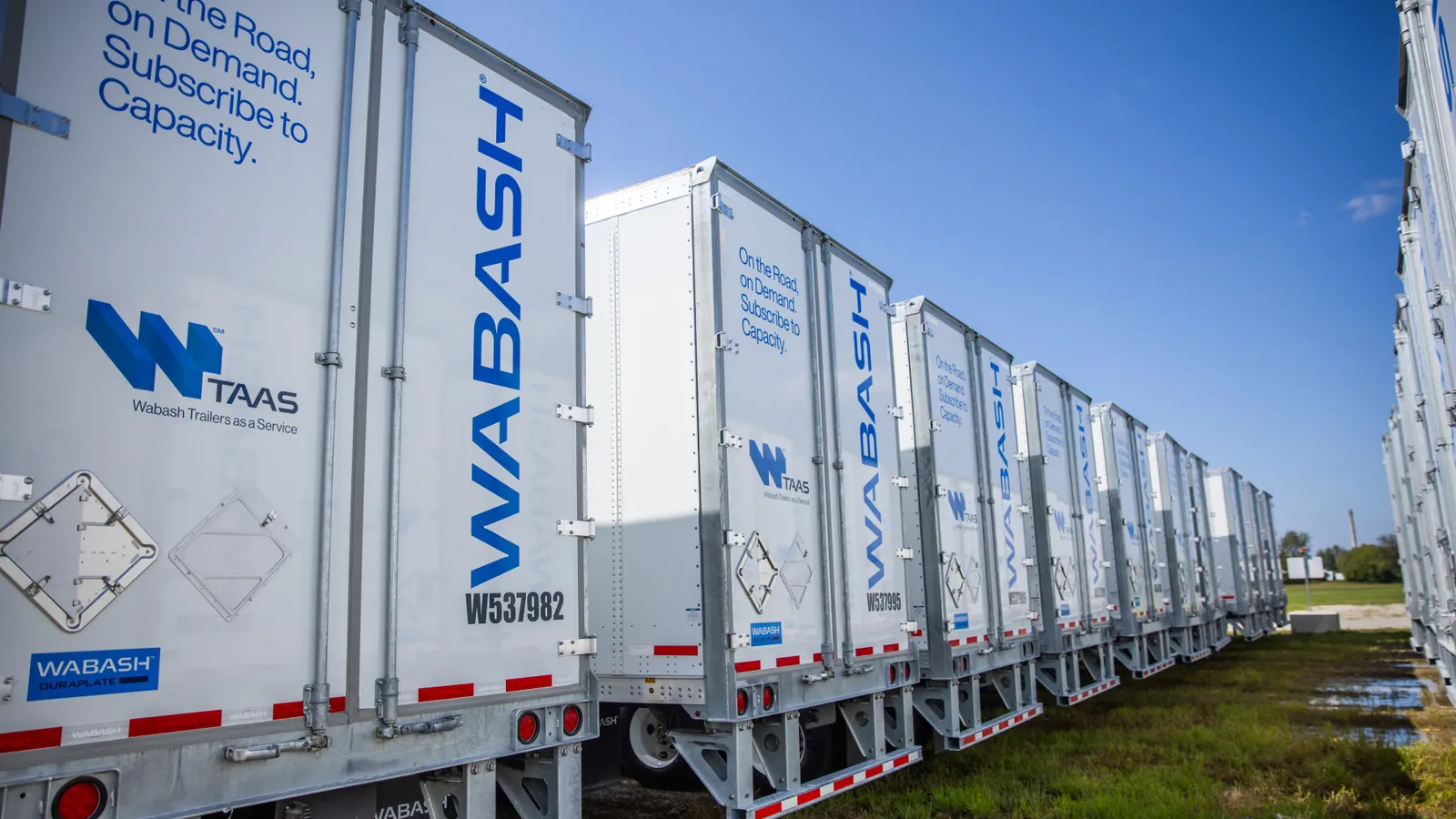
In a shifting logistics environment where equipment ownership costs and market uncertainty weigh heavily on shippers, carriers, and 3PLs alike, Wabash steps up with innovative trailer-as-a-service (TaaS) offerings designed to ease these pressures. Amid falling trailer orders and rising input costs, these new services seek to give the transportation ecosystem a leg up by providing trailer capacity on demand, sidestepping the commitment and capital tied to owning physical assets.
Understanding Wabash’s Trailer-as-a-Service Models
Wabash introduces two key solutions aimed at different stakeholders within the freight and shipping arena:
- TaaS Pools: This service allows shippers nationwide to tap into a shared pool of trailers. By doing so, it aims to reduce detention and dwell times while enhancing the consistency of trailer availability on a broad scale.
- TaaS Plus: Targeted at third-party logistics providers (3PLs) and brokers, this option lets them operate much like asset carriers, yet without the financial and maintenance obligations of owning the trailers outright.
Both approaches are part of an ongoing effort to optimize trailer availability with cost efficiency and operational agility at the forefront.
The Industry Shifts Behind the Move to Trailer-as-a-Service
The trucking and logistics industry is feeling the squeeze to “do more with less,” a phrase that rings true in today’s economic climate. Shippers and logistics providers are pressed to expand capacity and service quality while managing costs tightly and avoiding the pitfall of long-term capital lockups tied to equipment ownership.
Orders for trailers have notably declined, with recent data highlighting a 19% year-over-year drop in net trailer orders across the U.S. market. This downturn stems mainly from economic uncertainties and escalating tariffs on critical materials such as steel, aluminum, and copper, which have increased manufacturing input costs, shrinking margins and driving market consolidation.
| Facteur | Impact on Trailer Market |
|---|---|
| Decline in Trailer Orders (YoY) | -19% |
| Material Tariffs (Steel, Aluminum, Copper) | Input costs rise, margins shrink |
| Market Consolidation | Increased pressure on smaller owners |
| Demand from Shippers & 3PLs | Increased for on-demand trailer capacity |
Complementary Industry Moves
Wabash’s initiative reflects broader industry trends. ITS Logistics, for example, expanded its DropFleet trailer service as more shippers pursued hybrid capacity solutions. This indicates a growing appetite for services that boost operational flexibility without the baggage of full asset management.
Ce que cela signifie pour les opérations de logistique et de fret
Trailer-as-a-service redefines trailer availability, especially for businesses wary of long-term investment risks. Given the pressure to reduce dwell time and maintain fluid supply chains, such solutions can be game-changers. They provide a safety net for fleeting capacity needs and can adapt quickly to shifting market demands, something rigid ownership models struggle to offer.
From a logistics standpoint, this translates to improved shipment turnaround, more efficient distribution networks, and ultimately, better freight delivery reliability. It’s not just about having trailers—it’s about having the right trailers at the right time, without the headaches of storage, maintenance, or depreciation.
Répercussions potentielles en cascade sur la logistique mondiale
While the direct impact on global logistics may be somewhat contained due to the niche nature of trailer equipment services, ripple effects include more streamlined last-mile delivery and regional freight movements. By freeing up capital and lowering fixed costs, logistics providers can allocate resources toward improving service quality and scaling operations smarter.
Platforms like GetTransport.com embody this agile approach by offering a range of cargo and freight transportation options globally at affordable rates. Whether it’s moving office equipment, shipping bulky goods, or relocating homes, the logistics chain benefits from more flexible transport asset availability.
Credibility Beyond Reviews: The Power of Experience and Smart Choices
Even the most insightful reviews or transparent feedback can’t quite match the clarity gained from firsthand experience. That’s why having the option to test flexible trailer services or various freight transport solutions without hefty investments is invaluable. It empowers logistics players to make informed decisions without overcommitting or risking operational disruptions.
With GetTransport.com, users gain access to some of the best cargo transport rates worldwide, combined with a platform that champions transparency and ease of use. The extensive choices available help freight professionals and businesses alike to find the perfect fit — whether moving parcels, pallets, vehicles, or bulky containers.
Réservez votre trajet conveniently and affordably via GetTransport.com.
Summary: Bringing Trailer Flexibility to the Forefront of Logistics
L'introduction de la Wabash’s trailer-as-a-service offerings signals a move toward smarter, more adaptable trailer access that answers key challenges faced by shippers, carriers, and 3PLs. It combats the growing pains of declining trailer orders, rising material costs, and the complexities of ownership.
By offering TaaS Pools et TaaS Plus, Wabash facilitates reliable trailer availability without tying clients down with costly, inflexible equipment ownership. This approach benefits logistics operations by enhancing fleet responsiveness, cutting unnecessary expenses, and supporting smoother freight dispatch and distribution.
This shift aligns seamlessly with modern logistics demands — emphasizing moving, relocation, and global shipping needs in an increasingly dynamic market. Digital platforms like GetTransport.com reinforce these trends by simplifying shipping logistics, offering extensive transport solutions for everything from bulky items to international freight, all at competitive prices.
In essence, the new Wabash initiative, paired with versatile marketplaces, exemplifies how logistics innovation can drive efficiency and reliability, serving freight forwarders, couriers, and transporters in an ever-demanding world.