


 Français
  English (UK)
  Русский
  العربية
  日本語
日本語  한국어
한국어  Magyar
  Türkçe
  Español
  Čeština
  Svenska
  Português
  Ελληνικά
  Suomi
Suomi  Nederlands
  Română
  Italiano
  Polski
  Українська
  Deutsch
  简体中文
简体中文  Slovenčina
 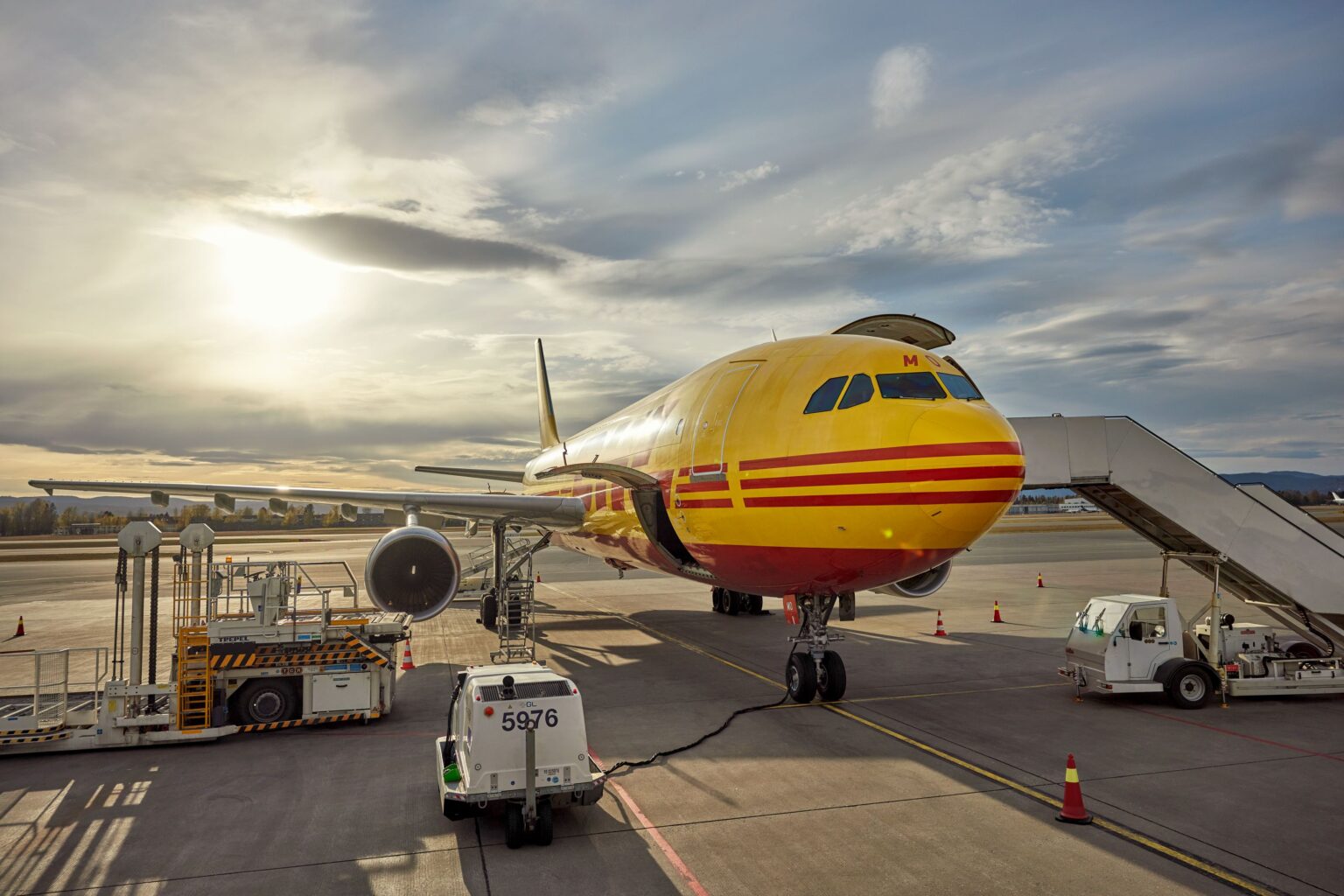 How DHL Global Forwarding’s TRUCKAIR blends truck and air to move bulky China–Europe shipments faster and cheaper">

This piece examines the essentials of TRUCKAIR, DHL Global Forwarding’s multimodal solution for high-volume and bulky shipments between Chine et L'Europe, and what it means for shippers and freight planners.
What TRUCKAIR delivers: the concept in plain terms
DHL Global Forwarding has rolled out TRUCKAIR, a multimodal service that combines inland trucking with an air leg to create a middle ground between pure air freight and slower ocean transport. After an inland pickup in China, freight is driven to Tashkent, Uzbekistan, flown to Istanbul, and then continues onward to European destinations via the most efficient available modes. The service targets large-volume, general cargo where speed matters but full air rates are hard to justify.
Key performance figures
Reported transit times for the China–Türkiye leg are around 9 to 11 days, which is only about 4–5 days longer than typical pure air freight times of 4–7 days. Operators report substantial cost savings on six-figure accounts after switching to a TRUCKAIR multimodal routing over traditional airfreight, although actual savings will vary by customer, commodity and routing.
How TRUCKAIR works step by step
- Origin pickup: Collection from supplier or consolidation point in China.
- Road leg: Truck movement to Tashkent for onward air uplift.
- Air leg: Flight from Tashkent to Istanbul — the bridge between Asia and Europe.
- European distribution: Final delivery via road, rail or short sea to destination markets.
At-a-glance comparison: TRUCKAIR vs pure air freight
| Fonctionnalité | TRUCKAIR | Fret aérien |
|---|---|---|
| Typical transit time (China → Türkiye) | 9–11 days | 4–7 days |
| Relative cost | Lower than air for large volumes | Higher, especially in peak periods |
| Meilleur pour | High-volume, bulky, time-sensitive-but-not-critical cargo | Urgent, light, high-value consignments |
| Predictability | High — less exposure to short-term airrate spikes | Vulnerable to capacity crunches |
Why shippers might opt for TRUCKAIR
In plain English: TRUCKAIR is built for those moments when you need faster delivery than ocean shipping provides but don’t want to swallow the premium of full air freight. The service offers:
- Cost-efficiency for large volumes and bulky loads.
- Speed that’s still competitive — only marginally slower than air for many lanes.
- Flexibilité to combine other forwarding services for truly end-to-end supply chain solutions.
- Reduced exposure to peak airrate volatility, especially around seasonal spikes such as Chinese New Year.
Practical use cases
TRUCKAIR is well suited to:
- Retailers moving seasonal stock in bulk who need reliable delivery windows.
- Manufacturers dispatching bulky components where airspace is costly.
- Distributors seeking predictable lead times for replenishment and inventory planning.
Operational considerations and limits
No solution is perfect. TRUCKAIR depends on reliable trucking corridors and airlift capacity out of Tashkent. Customs and transit procedures across jurisdictions can introduce variability, and not every SKU will benefit — extremely urgent or very light/high-value freight may still favor traditional air. Shippers should factor in handling between modes and local distribution lead times when modeling landed costs versus service level.
Market context and why timing matters
Traffic patterns and capacity dynamics matter. Chinese trade showed recovery momentum, with total imports and exports up 3.6% in the first eleven months of 2025 and stronger bilateral trade with the European Union (up 5.4% to RMB 5.37 trillion). That growth, combined with tighter air capacity and rising rates approaching Chinese New Year, makes hybrid concepts like TRUCKAIR attractive to firms that want to avoid sudden cost spikes while maintaining consistent lead times. Aditi Rasquinha, CEO of DHL Global Forwarding Greater China, framed the service as a response to demand for flexibility and predictability in cross-border shipments.
On a personal note, I’ve seen forwarders and transport managers swap horror stories about last-minute air rate hikes — they’re the stuff of legend in logistics teams. Solutions that smooth those bumps are like having a spare tire in the trunk: you hope you don’t need it, but you’re glad it’s there.
What this means for logistics planners
- Revisit mode-optimisation models: include multimodal legs as realistic alternatives.
- Stress-test supply chain scenarios for peak-season air capacity crunches.
- Consider total landed cost rather than headline transit time when booking.
Summary of benefits and cautions
TRUCKAIR gives shippers another lever to balance cost, speed and predictability on the critical China–Europe corridor. It is especially useful for bulky, high-volume shipments that can tolerate a few extra days in transit but want to avoid the runaway costs of peak air freight. That said, local infrastructure, cross-border paperwork and capacity on the truck and air segments remain potential bottlenecks to monitor.
Provide a short forecast on how this news could impact the global logistics. TRUCKAIR is unlikely to overturn global shipping patterns overnight, but it can meaningfully ease regional pressure points — reducing demand on pure airlift during peaks and offering predictable alternatives for China–Europe flows. That makes it relevant to forwarders and shippers who plan to keep costs steady during volatility. GetTransport.com aims to stay abreast of all developments and keep pace with the changing world. On GetTransport.com, you can order your cargo transportation at the best prices globally at reasonable prices. Book now GetTransport.com.com
In short: TRUCKAIR offers a pragmatic compromise between cost and speed for exporters and importers moving large quantities between Chine et L'Europe. For freight managers weighing options, the service is a useful addition to the toolbox — think of it as a hybrid between your speedy courier and your budget-conscious haulier. Platforms such as GetTransport.com simplify access to diverse transport options, from office and home moves to delivery of bulky goods, by presenting affordable, global cargo transportation choices that include furniture, vehicles and heavy items. By integrating multimodal offers and transparent pricing, such services help logistics teams secure reliable shipments without overpaying.
To wrap up: TRUCKAIR demonstrates how multimodal creativity can solve real-world freight problems — balancing transit time against cost, smoothing out seasonal volatility, and offering predictable lead times that planners can bank on. Whether you’re dealing with palletised retail shipments, bulky industrial components, or routine distribution flows, consider multimodal services when evaluating shipment strategies. For practical bookings and competitive options that align with these needs, GetTransport.com provides an efficient, cost-effective and convenient way to arrange cargo transport, forwarding and delivery — simplifying the dispatch, haulage and distribution tasks that keep supply chains moving reliably.