


 Français
  English (UK)
  Русский
  العربية
  日本語
日本語  한국어
한국어  Magyar
  Türkçe
  Español
  Čeština
  Svenska
  Português
  Ελληνικά
  Suomi
Suomi  Nederlands
  Română
  Italiano
  Polski
  Українська
  Deutsch
  简体中文
简体中文  Slovenčina
  9 tendances qui façonnent l'avenir de la fabrication électronique">

Recommendation: audit cases across lines, form an enterprise task force, and set a measurable target for the future. This approach turns complexity into visible steps, letting teams see where cycles can be cut and where boards and components flow in different ways. Try a small pilot with a kawasaki vehicle prototype to validate automation steps and confirm the plan can be easily scaled across different lines ahead. Several suppliers announced new modular options, and the team should capture learnings from those cases to refine the playbook.
Across nine trends, concrete gains emerge: flexibility and data analytics drive better decisions. In commercial settings, highly automated lines push throughput, while real-time signals help teams see and fix defects quickly, improving lives of operators on the shop floor. Adoption went from isolated pilots to full-scale deployments in several plants. Companies are seeing new collaboration across supplier ecosystems, and standard interfaces that connect boards and sensors enable a more accessible pace of new line launches. Several players announced modular options tailored for different product families, helping teams stay ahead into the future.
To capitalize on these shifts, implement a concise roadmap with measurable targets: achieve 98% machine uptime, defect rate under 50 ppm on critical assemblies, and a 20% reduction in changeover time within six months. Create a data backbone that unifies MES, ERP, and supplier feeds so teams access a single source of truth. Deploy AI-powered inspection and automated test rigs to reduce rework, and standardize interfaces so new lines can be brought online within weeks. Treat cycles on boards and PCBs as cases controlled by a common task list, and pilot one product family in a connected ecosystem to demonstrate completely automated quality loops. By coordinating between enterprise, contract manufacturers, and in-house teams, programs stay aligned and risks drop as you move ahead.
Industry Frontiers in Electronics Manufacturing
Adopt autonomously coordinated production cells with an omni data layer to cut defects by 20-25% in six months and raise line uptime. This approach allows humans to focus on value tasks, while operations stay tightly controlled and continuously improved.
- Automation stack: fanuc automation pairs robotics with modular end-effectors and vision systems, enabling them to handle repetitive tasks autonomously; processes are turned toward exception handling and parameter optimization with minimal downtime.
- Omni information integration: connect sensors, machine controllers, MES, and ERP into an omni information layer; information arrives consolidated on dashboards, also enabling actions in minutes and bringing teams together around a single signal.
- Quality and errors management: inline inspection, AI-driven defect detection, and adaptive process control reduce errors and scrap; this enables faster onboarding of new products and yields improvements across several product families, with scrap reductions around 15-30% depending on mix.
- People and collaboration: upskill operators to interpret AI signals; while robots carry out high-volume tasks, humans intervene when signals indicate drift, together improving stability and cycle times. This approach ahead of traditional lines helps prevent bottlenecks.
- Customer transparency: provide customers with secure access to lot status, test results, and lead-time dashboards; this improves planning around disruptions and strengthens trust through visibility.
- Roadmap and metrics: pilot on one line, then expand to several lines and monitor OEE, throughput, and waste; the alert system arrives in real time, enabling proactive maintenance since health signals are interpreted before failures occur.
Implementing these elements today positions factories to adapt to changing product mixes with faster response times and higher predictability, while keeping costs stable and quality front and center.
Cloud-native MES for Real-time Production Visibility
Implement cloud-native MES with real-time production visibility to remove blind spots on the shop floor. Use an API-first platform that streams data from machines, sensors, and controllers to a cloud data lake, delivering live dashboards and event-driven alerts for the factory line. Build material-level traceability and connect it to order status so planning and execution stay aligned. This approach provides a single source of truth across machining, assembly, and testing stations, and this makes data usable across teams.
Deploy edge gateways to pre-aggregate data and reduce cloud churn. Place reflectors on dashboards to show critical statuses: red for fault, amber for warning, green for on track. Cross-board data fusion ties machine state, operator actions, and quality checks to a unified view, speeding response to anomalies. The device layer exposes consistent IDs for machines, tools, and fixtures to keep data aligned.
People and robots work in concert: cloud-native MES supports human-in-the-loop decisions and robot orchestration. Names and roles are stored in a secure registry; the system assigns work to robot arms and to robots. The data include cycle time, scrap rate, and throughput, helping line managers balance workload and reduce changeover time. The lives of workers on the floor rise when safety checks and escalation paths are automated.
Security and stability rely on banking-grade protections, role-based access control, and encryption in transit and at rest. Use a modular implementation that keeps data, analytics, and workflow components decoupled so you can upgrade parts without disrupting the whole. Banking-grade security also eases collaboration with suppliers and contract manufacturers while safeguarding intellectual property across devices and reflectors on the line.
Research-driven adoption follows announced roadmaps from vendors, with cross-board interoperability improving integration with ERP, PLM, and CAD tools. In pilots, we found reductions in downtime and faster containment of quality excursions. For the implementation, map material inputs, define names and IDs for devices, plan machining workloads, and validate data quality before expanding to new lines. Use such pilots to validate the model and refine the rollout, starting with a small cluster of lines and scaling up as order volumes grow and dashboards prove their value.
AI-Driven Quality Assurance and Defect Reduction
Deployed at the workcell, real-time AI-driven defect detection uses edge device and lightweight models, integrated with the MES and open services. This approach reduces errors at the source, lowers rework, and lifts first-pass yield. Start with a five-week pilot on a single line to validate gains, then move to five lines in the second phase.
As scott notes in a whitepaper, this approach couldnt rely on manual inspection alone; when data is well labeled and the model is applied continuously, defect leakage can be reduced by 30-60% across high-variability steps across industries, delivering measurable growth in throughput and quality. The initiative requires investment up front but unlocks ongoing returns as deployment expands to other devices and lines.
This program moved from pilot to scale as readiness and data quality improved.
- Actionable deployment: place a single workcell with an edge device performing precise, real-time checks for surface, alignment, and soldering errors; feed results to the head of QA and the operators (people) for immediate action.
- Data strategy: define five target defect modes, collect diverse samples across that line, and implement a closed loop that moves labeled data back into the model training cycle.
- Model and latency: select lightweight, precise models tuned for the line speed; ensure inference latency stays under the next-cycle decisions to avoid bottlenecks.
- Deployment plan: start with one line, then deploy to additional lines as ready teams scale toward mobility-focused modules; keep the deployment open to integration with other services and platforms.
- ROI and investment: budget for data annotation, hardware, and services; expect payback within nine to twelve months if scrap and rework reductions persist.
- Governance and monitoring: track errors detected, scrap rate, and rework hours; establish dashboards shared across teams to support quick decisions and accountability.
- Applied learning loop: feed AI insights back into product design and process controls to push root causes upstream and reduce future defects on new devices.
Digital Twins for End-to-End Design-to-Factory Lifecycle
Recommendation: Deploy end-to-end digital twins across the design-to-factory lifecycle to touch every step of the boards path, optimizing throughput and quality, aiming for zero defects, and gaining 20-30% faster time-to-market with 15-25% fewer reworks within 12 months.
Real-time twin models fuse CAD, BOM, process parameters, and sensor streams to simulate a product from schematic to line. This thinking helps the manufacturer anticipate bottlenecks, reallocate resources, and respond to design changes before committing cost, reducing physical retries and enabling continuous improvement.
Using emerging data from shop-floor sensors, MES, and supplier feeds, digital twins expand what you can test in a virtual environment. They let you navigate trade-offs between cost, yield, and schedule along the line, so more boards pass first-pass inspection and customers stay satisfied. In america and germany, head of operations report faster decision cycles and stronger alignment between design and manufacturing.
To be effective, establish governance that ensures necessary data quality, model versioning, and cross-functional ownership. The twin model should be updated with every design change and validated by test runs, keeping the certification trail intact for audits across markets.
Connect digital twins with salesforce data streams and CRM signals so customer demand translates into concrete design and process settings. This linkage reduces time-to-market pressure and helps the manufacturer stay ahead of the market, accelerating response to new customer requirements.
Start with a focused pilot: pick a single product family, map the design-to-line workflow, and build the first 3-4 virtual variants; then expand to additional lines, boards, and facilities, using lessons learned to scale in america and europe. This approach keeps momentum and makes optimization a constant capability rather than a one-off project; the team can respond quickly to emerging needs and maintain a competitive edge with more predictable outcomes.
Security, Compliance, and Data Sovereignty in Cloud Environments
Adopt a zero-trust model for cloud-based environments and enforce explicit data sovereignty controls at the edge. Start with a clear policy on who can access data, from which workstations, and across which devices. The program began with a simple data map across the plant, then expanded to regional mappings in Cheongju to reflect local regulations and operational realities.
Map data flows inside the Cheongju factory, identifying which data is operational telemetry from smart devices and which sits in cloud storage. Use the term data categories–operational, IP, and customer records–and build a data catalog with lineage, retention rules, and deletion timelines. Track those flows in real time to catch anomalies during times of peak production, while ensuring the volume of logs and telemetry remains manageable; logs can reach tons daily across MES, PLCs, and reflectors in the line.
Protect data with encryption at rest and in transit (AES-256; TLS 1.2+). Enforce MFA and device posture checks on workstations and edge gateways. Use a centralized KMS or HSM for key management, and rotate keys on a quarterly cadence. Ensure secure boot on edge devices, including reflectors and iiwa robots, so the line remains ready for rapid changes and fast cycles in automotive assembly environments. Allowing secure, fast access requires streamlined authentication that does not slow factory speed.
Control access with role-based access control and audit logging. Align with standards such as ISO/IEC 27001 and SOC 2 Type II, plus cloud provider attestations. Keep logs tamper-resistant and accessible for audits, and segment networks so automotive lines stay isolated from non-production data. For customer data, implement data minimization and a clearly defined retention schedule, using concepts like data classification and policy-driven data erasure.
Data sovereignty demands regional data residency; store sensitive data in regional cloud zones and keep backups in a local disaster recovery site. For a smart automotive line, the control plane can be cloud-based while the control data remains within the local data center. Those policies protect Cheongju facilities and other sites when regulators request access, and support a robust partnership with providers. By mapping terms across regions, teams can maintain compliance while keeping operations seamless and scalable.
Operational guidance emphasizes a disciplined change framework: maintain a living data map, run quarterly security drills, and document every policy revision. The approach relies on a partnership between facilities, IT, and manufacturing engineering, transforming how the factory handles data across workstations, devices, and the iiwa-enabled line. Times to detect and respond to incidents shrink as teams become adept at using reflectors and sensors to validate security controls, with teams ready to act at speed.
| Zone | Action | Métrique |
|---|---|---|
| Identity & Access | Zero-trust + MFA, device posture checks for workstations and edge devices | Pourcentage d'appareils conformes ; délai moyen de révocation d'accès compromis |
| Gestion et résidence des données | Chiffrement au repos/en transit ; classification des données ; zones de données régionales | Objectifs RTO/RPO atteints ; pourcentage de données correctement classifiées |
| Conformité et audits | Alignement ISO 27001, SOC 2 II ; pistes d'audit régulières | Constatations d'audit corrigées dans les 14 jours |
| Partenariat Fournisseur et Cloud | Zones cloud avec souveraineté des données ; reprise après sinistre inter-régions | Nombre de fournisseurs avec des zones de données conformes ; temps de basculement |
Collaboration de la chaîne d'approvisionnement et planification résiliente basées sur le cloud
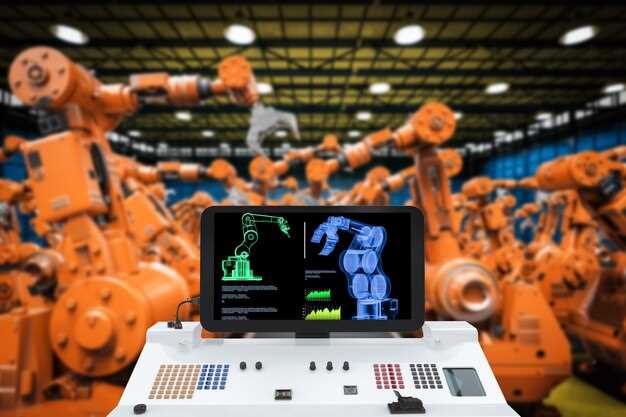
Mettez en place une plateforme de collaboration basée sur le cloud qui relie les données de votre cellule de travail aux réseaux de fournisseurs, aux cartes, aux pièces et aux équipes de clients dans une vue unique. Le statut en temps réel de l'arrivée d'une pièce et la progression des commandes s'éloignent des feuilles de calcul pour aller vers un flux de travail partagé et proactif. Alignez-vous sur une vision claire qui relie l'approvisionnement, la production et la logistique, afin que les équipes puissent agir à l'unisson. Cette configuration se concentre sur les parties les plus importantes du réseau. Cela couvre également le niveau des pièces. Cela permet aux équipes administratives et aux équipes d'atelier de travailler ensemble.
Établissez une boucle de planification résiliente avec des scénarios de simulation pour les variations de la demande, les interruptions de l'approvisionnement et les contraintes logistiques liées aux véhicules. Utilisez une notation des risques basée sur des facteurs SF environnementaux et de gouvernance pour évaluer les fournisseurs et déclencher des alertes automatiques lorsqu'un seuil est franchi. Conservez des caches hors ligne pour les données essentielles afin que l'usine puisse continuer à fonctionner en cas de défaillance de la connectivité. De nombreux fournisseurs proposent des flux de données et des services que vous pouvez intégrer, ce qui réduit la dépendance à une source unique. Le cadre a été validé rapidement lors d'essais pilotes et s'est transformé en un processus reproductible. Ancrez l'approche dans une recherche continue et maintenez la robustesse de l'épine dorsale numérique en intégrant des API dans tous les pans du réseau.
Attribuer un responsable clair pour le programme cloud et appliquer la gouvernance des données à tous les niveaux : personnel, fournisseurs et opérations de l'usine. L'équipe a déjà adopté une approche axée sur le cloud, et la gouvernance reste stricte. Utiliser la logique de Schmitt pour les alertes afin de réduire la fatigue tout en détectant les risques réels. Des équipes produits compétentes examinent l'accès API pour les fournisseurs et garantissent la sécurité. Des caches hors ligne maintiennent les données essentielles disponibles lorsque la connectivité diminue, et des exercices trimestriels valident les plans de reprise.
Mesurez l'impact avec des objectifs concrets : réduisez le délai de commande à la livraison de 20 à 30 % dans les 12 mois, augmentez le taux de livraison dans les délais à 95 % et améliorez la précision des prévisions de 10 à 15 points de pourcentage. Commencez par un projet pilote avec deux fournisseurs et une cellule de travail, puis passez à cinq fournisseurs et plusieurs panneaux dans les six mois. Surveillez la satisfaction de la clientèle et itérez le flux de travail en fonction des commentaires des personnes de l'atelier et du terrain.