


 Français
  English (UK)
  Русский
  العربية
  日本語
日本語  한국어
한국어  Magyar
  Türkçe
  Español
  Čeština
  Svenska
  Português
  Ελληνικά
  Suomi
Suomi  Nederlands
  Română
  Italiano
  Polski
  Українська
  Deutsch
  简体中文
简体中文  Slovenčina
  Key Benefits of Warehouse Management Analytics – Efficient Operations">

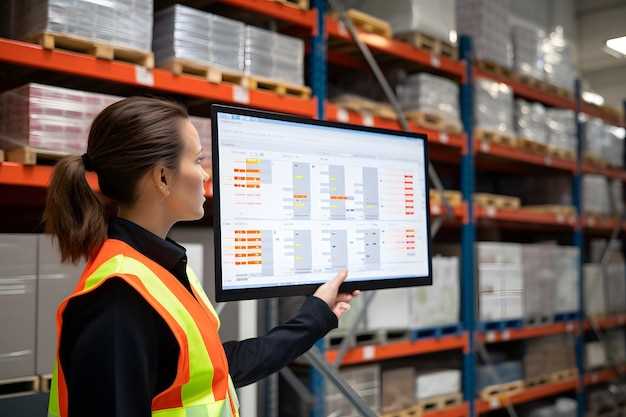
Implement a real-time KPI dashboard to analyse throughput, cycle time, and pick accuracy, and set automatic alerts to trigger actions within minutes. This delivers immediate visibility into where bottlenecks appear and enables operations to respond before stock deltas or mispicks accumulate, keeping lines flowing and docks ready for the next load.
With this foundation, the fonctionnalité expands beyond basic counts to précision-level insights across zones, lanes, and carriers. Users can drill down by location, order, or picker, enabling targeted improvements. Additionally, the system enhances transparence across receiving, put-away, and outbound processes, so supervisors see performance without chasing paperwork. A headless analytics layer decouples data from presentation, enabling rapid rollout of new dashboards for different roles.
Additionally, adopt standardized data-quality practices: define common units, timestamp conventions, and event tagging, and run nightly reconciliations to catch drift. This reduces ambiguity and helps analyse performance trends with consistent metrics across sites, warehouses, and partners.
Where enabling transparence matters, analytics inform staffing plans, replenishment timing, and zone-by-zone prioritization, helping accommodate peak periods without delaying orders. thanks to clear visibility, teams coordinate more closely, cut late deliveries, and improve service levels for customers.
Enhancements in display and workflows keep it accommodating for shift teams and warehouse managers. Headless analytics layers separate data from presentation, letting IT deliver new dashboards without touching core systems. Additionally, enhancements to alerts and dashboards improve responsiveness.
Plan properly: choose a single source of truth, map data sources, and train users on interpreting charts. Things like cycle-time targets, accuracy benchmarks, and exception handling routines should be codified in practices and reviewed quarterly. This approach supports companys goals of reducing waste, improving throughput, and strengthening customer trust–thanks to consistent, real-time insights.
Warehouse Management Analytics: Benefits for Operations and Growth
Adopt a centralized analytics integration across all sites to consolidate movements and align with growth goals.
Make a clear investment in a unified data model within your WMS to turn disparate data into actionable insights for current operations and forecasting.
Consolidate data across inventory, orders, and movements by linking components through scalable integrations and modern tech, boosting availability and uptime across sites.
Forecasting informs staffing, dock scheduling, and space allocation, enabling scale and longer planning horizons across distribution centers, and helping you manage peak periods after spikes.
Real-time monitoring reduces vandalism risk and protects assets, while providing visibility into movements that matter for operations.
Adoption of analytics is indispensable for management, aligning data-driven decisions with goals and governance across sites.
Plan the investment roadmap by mapping current gaps, prioritizing integration opportunities, and aligning with your goals to sustain growth.
Track metrics such as fill rate, on-time deliveries, and system availability to quantify impact and guide ongoing improvements.
Key Benefits of Warehouse Management Analytics: From Streamlined Operations to Scalable Growth Planning
Implement a hosted analytics layer that could plug into your ERP-based WMS and related applications. It leverages data from receiving, putaway, replenishment, picking, packing, and shipping to measure item-level accuracy and processing times. This setup reduces stockouts and excess inventory by 15-25% within 90 days and cuts dock-to-stock time by 20-30%.
Set up alerts for exceptions such as low stock, late arrivals, or mis-picks. Alerts should include concrete response steps so staff can act within minutes. A headless analytics layer decouples the data from the presentation, so some teams in the organization can access signals via any application.
Global networks benefit from consistent metrics across sites irrespective of location. The solution leverages real-time processing to compare performance across warehouses, identify inefficiency in travel paths, and minimize wasted movements.
For scalable growth planning, run what-if analyses to evaluate adding a new facility, adjusting staffing, or shifting seasonality. These scenarios rely on detailed data and ERP-based connectors to maintain data quality. By modeling demand, you can optimize slotting and labor deployment, reducing capital lock-in and improving response times.
Advice: start with a 6- to 8-week pilot in one region, verify data accuracy, appoint a cross-functional owner in the organization, and choose between on-premises controls or a hosted option for speed and scale. Build a short list of KPIs, establish explicit breach-response steps, and document a data-processing map to support compliance and audits.
How to measure inventory visibility improvements and cycle-count accuracy

Set a baseline by configuring a central, cloud-connected visibility score and run a 4-week measurement plan to gauge inventory visibility and cycle-count accuracy. Start with a 98% cycle-count accuracy target and a 92% item-record completeness score, with data latency under 15 minutes for most high-volume SKUs. Use a unified system and automation to collect data from warehousing operations, and lets teams compare before/after across fulfillment centers. Ensure the plan covers both smaller regional sites and full enterprise networks.
To measure inventory visibility improvements, track data latency (time from a transaction to the system update), data completeness (percent of records with location, status, item, and batch/lot), and item-level location accuracy. Establish a standard visibility score by calculating: visibility score = (records with valid location and status and item) / total records × 100. Monitor forecasts by comparing forecasts to actuals for high-volume items, aiming for a 10–15% mean absolute percentage error (MAPE) within 60–90 days. Measure fulfillment performance and throughput through order-cycle time and dock-to-ship time to show how improvements streamline execution. Use cloud-based dashboards to give executives and operations a central view and to support ongoing optimization. A patel integration can accelerate data ingestion from WMS, TMS, and scanners, keeping the system lean and scalable toward full enterprise usage. Consider whether improvements hold across warehouses with varying volume and layout.
To measure cycle-count accuracy, run weekly cycle counts for high-volume or fast-moving items and monthly counts for slower stock. Define cycle-count accuracy as: correct counts / total cycle counts × 100. Track discrepancy categories (location error, SKU mislabeling, bulk packaging confusion) and time-to-adjust the system after a discrepancy. Record the time to reconcile and the resulting update to stock-on-hand values. Use automation to route count exceptions to the central inventory team and to trigger updates in the cloud repository. Keep the plan aligned given data quality constraints to minimize unresolved variances and risks.
Towards practical adoption, create a streamlined governance model that ties visibility gains to enterprise KPIs, and train staff to interpret dashboards. Use automation to push alerts when the cycle-count variance exceeds thresholds, and document risks and mitigations for the central team. For firms to grow from a smaller pilot, move towards full enterprise adoption with consistent data policies, cloud backups, and ongoing reconciliation. This approach supports growth, reduces risks, and improves fulfillment accuracy across the warehousing network.
Using real-time dashboards to reduce inbound/outbound delays and increase throughput
Implement a real-time dashboard that flags inbound delays over 5 minutes and outbound delays over 7 minutes, and reallocates resources to the next available dock. This user-friendly front-end provides full visibility for operators, supervisors, and frontline staff, helping move goods with speed and accuracy. The platform pulls data from WMS, TMS, and ERP to deliver a unified view that benefits enterprises and retailers alike. Thanks to this visibility, teams reduce handling errors and boost throughput, turning delays into decisive action.
Track inbound and outbound dwell times, queue lengths, on-time rates, and carrier utilization. In pilots, delay reductions of 15-30% and throughput gains of 10-25% were observed. These advantages come from rapid root-cause insights, clear alerts, and a front-end that surfaces drill-downs by dock, carrier, or product, letting teams act efficiently. The dashboard includes thresholds and drill-downs that helps monitor impacts across shifts and functions, so you can optimize use of resources and move workloads more smoothly.
Developing this capability hinges on a unified platform that connects WMS, TMS, ERP, and supplier feeds. The front-end should offer core functions such as alerting, scheduling, and resource balancing, and include mobile access for on-floor staff. The result is a visual, intuitive interface that enhances coordination and reduces handling delays, enabling faster decision cycles and smoother operations.
Enterprises across industries, retailers in particular, benefit from collaboration between warehousing, transportation, and customer service teams. Unified signals help move assignments, allocate labor, and sequence pick/pack processes to boost speed and throughput while lowering carry costs. The approach includes role-based views, standardized workflows, and analytics you can reuse in developing further processes; this unity drives additional improvements and reinforces platform-wide advantages.
To start, run a 60-day pilot in a single distribution center, set clear thresholds for inbound and outbound delays, and measure changes in dwell times, queue lengths, and on-time shipments. Scale to additional sites, align with carriers, and train staff on the new front-end. Thanks for embracing this approach–the gains in speed, throughput, and overall efficiency can be realized quickly with disciplined execution.
Which metrics reveal labor productivity and space utilization opportunities
Recommendation: measure labor productivity and space utilization with a dedicated dashboard on your warehouse platforms, and run a pilot to validate gains before scaling. Track units processed per hour, lines picked per shift, and zone dwell times to quantify work rate, while monitoring space across shelves and aisles to reveal bottlenecks. Set clear goals and ensure the right data supports accommodating changes in process flow.
Labor productivity metrics include units per hour, picks per hour, cycle time per order, touches per unit, and idle time. Pair these with accuracy and rework rates to form a complete logic for improvement. Use forecasting to anticipate peak periods and align staffing plans with demand; this reduces bottlenecks and hindering delays, while highlighting where training and tooling can boost efficiencies across teams.
Space utilization metrics cover slotting efficiency, zone utilization, travel distance per pick, pick density by location, and dock-to-stock time. A high slotting efficiency score indicates items with high turnover sit closer to pick paths, which shortens travel and increases capacity. Track asset occupancy and aisle congestion to identify inefficiencies, then align space with product demand to gain more usable area without expanding square footage.
Les fondations de données nécessitent d'intégrer les entrées provenant des systèmes WMS, ERP, de capture de la main-d'œuvre et des inventaires dans des analyses modulaires. Définissez les exigences relatives à la fraîcheur des données, à la granularité et aux règles de réconciliation, puis déployez des modules que vous pouvez réutiliser dans différents marchés et entrepôts. Une approche de plateforme solide permet de maintenir la qualité des données, d'activer des prévisions plus fiables et des cycles de décision plus rapides.
Plan pilote : sélectionner des familles de produits ayant un chiffre d'affaires variable, établir une base de référence de deux semaines, mettre en œuvre des modifications ciblées (attribution des emplacements, routage, consolidation des tâches) et surveiller les activités et les inefficacités nuisibles en temps réel. Comparer les gains pré- et post-pilote en termes de débit, de temps de parcours et d'utilisation de l'espace afin de quantifier l'impact et de justifier un déploiement plus large.
Les résultats sont directement liés aux objectifs et aux marchés : des rendements plus élevés réduisent les coûts d'exploitation, améliorent l'expérience des employés et libèrent des capacités de croissance. Maintenez l'attention sur les besoins tels que la formation, la disponibilité des équipements et l'alignement interfonctionnel afin de garantir des gains continus et une optimisation des actifs dans l'entrepôt.
Guider l'encastrement, les itinéraires de sélection et les investissements en automatisation grâce à des informations basées sur les données

Commencez par un audit des données des performances de prélèvement actuelles et de la densité des emplacements afin d'établir une base de référence. La détection à partir des flux vidéo, des données des capteurs et des journaux WMS révèle les zones qui sous-performent et les références SKU qui bénéficient de la proximité. Au sein des entrepôts, unifiez les données dans un tableau de bord intégré et convivial qui affiche les coûts d'aujourd'hui, les niveaux de service et les opportunités de réduire les déplacements. L'ajout de données de cross-docking ajoute du contexte et aide les équipes à cibler des gains rapides.
- Établir une base de référence transparente et des objectifs.
- Model slotting et chemins de sélection pour impact
- Planifier les investissements en automatisation avec un ROI basé sur les données
- Créer une feuille de route de mise en œuvre intégrée
- Surveiller, ajuster et optimiser continuellement
Capturer les indicateurs clés de performance : distance de parcours par commande, prélèvements par heure, temps de cycle et taux de réapprovisionnement. Les outils qui unifient les données du WMS, de la main-d'œuvre et des actifs réduisent les angles morts. Définir des objectifs tels qu'une réduction de 15-25% du parcours, une augmentation de 2-3 points du taux de remplissage et 10-20% de réapprovisionnements en moins. Cela garantit une voie d'exécution mesurable et réduit les conjectures. L'intégration de la validation vidéo renforce la confiance dans les données aujourd'hui.
Effectuer des analyses de simulation sur les zones et les familles de SKU pour identifier les mises en page qui permettent de réduire au minimum les congestions et d'optimiser les trajets de picking. Privilégier les zones proches de l'emballage ou de l'expédition afin de minimiser les transferts de main, et maintenir les articles à forte rotation dans des cellules accessibles. Utiliser les résultats pour optimiser les trajets de picking et l'allocation des emplacements ; cela permet d'obtenir une liste d'options que vous pouvez appliquer à tous les entrepôts, avec un score favorable pour chaque option et des prochaines étapes claires pour la mise en œuvre. Des pilotes préliminaires valident les hypothèses en utilisant des extraits vidéo en direct et des commentaires sur le terrain.
Traduire les résultats d'allocation en besoins d'automatisation : voies de tri, convoyeurs, modules de prélèvement robotisés et comptage automatisé. Élaborer un modèle de coûts qui couvre les CAPEX, l'installation et la maintenance continue, ainsi que les économies de main-d'œuvre et les améliorations du service prévues. Les données financières intégrées permettent de comparer les scénarios et de choisir des options qui maximisent le ROI favorable tout en respectant le budget. Le plan minimisera les perturbations tout en s'adaptant progressivement, ce qui réduit les risques et garantit un solide dossier commercial dès aujourd'hui.
Définir un déploiement par phases avec des jalons, des responsabilités pour les propriétaires et des vérifications de données. L'ordre du jour répertorie les activités critiques : sélection des fournisseurs, intégration avec la pile technologique existante, tests pilotes et montée en charge. Définir des indicateurs précoces tels que l'amélioration de la précision, la réduction des déplacements et le rendement au premier passage, puis ajuster le cap si nécessaire pour maintenir l'élan.
Établir un rythme d'examen hebdomadaire qui suit la qualité de la détection, l'efficacité du chemin et les performances de l'automatisation. Utiliser des tableaux de bord que les opérateurs trouvent conviviaux ; cela permet de maintenir les gains et de garantir que les équipes peuvent agir sur de nouvelles informations. L'optimisation continue permettra d'augmenter le débit tout en minimisant les risques et les coûts, garantissant ainsi que l'opération reste réactive aux besoins changeants.