




Start with a decentralized blockchain pilot to track every batch from origin to plate. Place the investment in a tightly scoped product like olive oil and run the program for 8–12 weeks to measure improvements in safety, information availability, and product value before scaling across the supply chain.
In practice, blockchain creates a single source of truth. By recording every handoff on a decentralized ledger, retailers can verify provenance in minutes rather than days, ensuring information is complete and available to the right stakeholder, over time. This transparency improves safety checks and reduces waste, with pilots showing recall reductions around 40% and spoilage decreases of about 25% in the first weeks after deployment.
For consumer trust, the value of data lies in accessibility. A simple QR tag tied to the blockchain lets a shopper see the product journey and critical safety notes, increasing confidence and perceived value. A celebrity endorsement alone cannot substitute for verifiable data, while accessible information about origin and handling increases loyalty and willingness to pay more for quality.
Developing a scalable, interoperable system raises challenges such as data input accuracy, cross-network standards, and cost. To address them, establish a right governance framework, adopt common data schemas, deploy automated data capture at critical control points, and pilot the network with a defined set of suppliers for a fixed period. This approach, in developed markets, lets you experiment while reducing risk and long-term investment exposure.
Next steps: map critical control points, choose a scalable platform, and develop data quality rules. Train suppliers, set up incentives so information sharing improves safety, and measure outcomes such as recall time, waste reduction, and customer trust. As the network grows, the system becomes more robust and valuable to every participant in the place, ensuring sustained value creation.
Blockchain in the Food Industry: Practical Insights and Case Studies
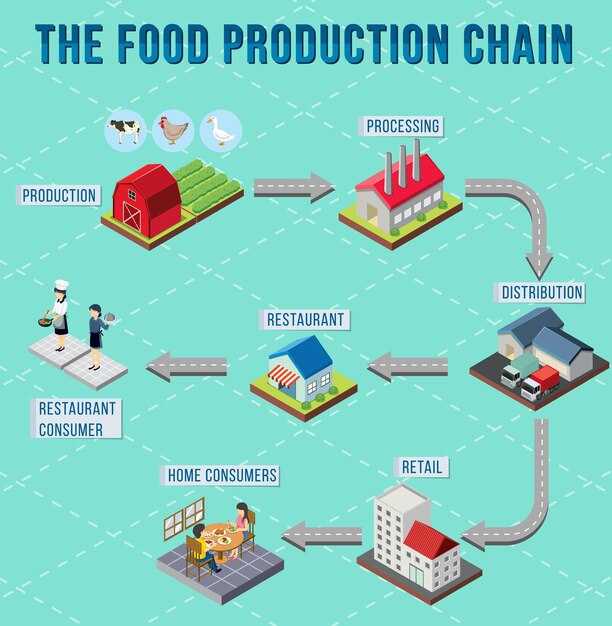
Start a pilot with one product line–tuna–across five suppliers, recording harvest, processing, packaging, shipping, and sale events on a private blockchain contained within one region, and measure outcomes after 90 days.
We started with this scope to validate data quality and user adoption, then plan expansion to additional products and markets.
Immutability on the ledger boosts trust among americans and brands. Online access to the traceability data lets retailers endorse claims with confidence while consumers verify authenticity at the point of purchase. Endorsements from third-party auditors can appear on records to reinforce accountability across the chain.
Collaboration across growers, processors, distributors, and retailers reduces issues and minimizes the risk of scandals. Clear data standards and simple entry tools keep information consistent, while a modular ledger approach–lego‑like blocks–lets the system grow without breaking existing records.
To prepare for the future, maintain straightforward data governance, protect privacy where needed, and implement a clear rollback policy for incorrect entries. A staged rollout helps teams assess cost savings and trust gains without disrupting ongoing supply.
| Case | Focus | Outcome | Key Data Points |
|---|---|---|---|
| Walmarts Leafy Greens (US) | Blockchain-backed traceability across farm-to-store using IBM Food Trust; scaled to 10 suppliers | Traceability time dropped from days to seconds; recall response speed and data visibility improved; cost of data reconciliation reduced | 2.2 seconds to trace a batch; 7+ days previously; 10 suppliers; 1,000 SKUs |
| Carrefour France | Poultry and produce pilots with 25 suppliers | Recall time cut by 50–70%; data accuracy improved | 50–70% faster recalls; 25 suppliers; pilot duration 6 months |
| Just Tuna | End-to-end tuna supply chain verification; catch origin | Traceability time reduced from days to hours; audit costs down 30–40% | 2 days to 1 hour; 4 ports; 40% audit cost reduction; data discrepancies down 30% |
| Consortium of brands | Cross-brand data sharing for seafood (americans‑led) | Improved issue detection; data completeness; consumer trust | 20 suppliers; 60% faster issue detection; 120% more data points |
End-to-End Traceability for Fresh Produce with IBM Food Trust
Implement IBM Food Trust now to achieve end-to-end traceability for fresh produce. Map product paths from origins to table, onboarding growers, packers, distributors, retailers, and foodservice partners through a single, auditable ledger. Use blockchain-backed contracts to enforce data sharing and approvals across them, reducing manual reconciliation and errors.
IBM Food Trust uses a permissioned blockchain to record tamper-evident events along the chain: harvest, packing, transport, cold storage, and point-of-sale disclosures. Companies can query histories quickly, verify provenance, and generate consumer labels that show sources and certifications. The platform supports GS1-compliant data, including lot numbers, expiry dates, and temperature logs, making verification quite straightforward.
Pilot results show tangible gains: recall times decreased from days to hours, and traceability data accuracy rose toward near 99.5%. Onboarding suppliers and sharing audit results cuts cycle times by 40–60%. These reductions come from automatic data capture, shared contracts, and consistent standards. imagine the impact when a contamination alert is raised–reaching managers and retailers in minutes, and protecting both people and the table of consumers. For sea foods, produce, or even a beefburger supply line, the data model stays the same and supports fast decision-making.
Implementation steps for fast results: align data with GS1 and define smart contracts to automate verifications and payments linked to shipments. Next, integrate ERP, inventory, and supplier portals so data enters the ledger automatically. Use a controlled pilot across sea foods, produce, and beefburger to test data quality and resolve discrepancies quickly. Establish governance, data ownership, and access controls to them.
Business impact and sustainability: end-to-end visibility reduces waste and spoilage, supports sustainable sourcing, and builds trust with customers at the table. Consumers see origins and certifications, boosting loyalty. Thanks to the platform, the company helped many brands optimize operations and reduce recall exposure. This is revolutionizing how products connect with customers, enabling faster responses and safer choices for everyone.
Could be a practical path forward: organizations could start with a focused pilot on sea foods, produce, or beefburger, then scale to multi-category. The approach is quite pragmatic: define data contracts, map ownership, implement APIs, and train staff, all while tracking reduction in waste and time-to-insight. People across the network gain access to everything needed to act quickly, building quite robust trust across suppliers, retailers, and consumers.
What Best Describes a Blockchain: Core Concepts for Food Data

Define a data model centered on provenance and an immutable ledger to track origins from creation to consumer; this approach reduces tampering risk and helps face recalls with confidence, thus building trust across the supply chain. Without such controls, a supply chain can be plagued by tampering and data silos.
Blockchain acts as a distributed ledger that stores events in blocks linked to the last one. Each entry is validated through a consensus process, which ensures that recorded information becomes a trustworthy picture of what happened, where, and when.
- provenance and origins: capture each event–the creation, handling, processing, packaging, and transport–so the full chain of custody is stored and auditable. The result is a transparent picture that follows products through every step.
- stored and accessible data: store critical data on-chain if it is small and high‑value; keep larger files off-chain with a hashed reference, so the information remains verifiable through a simple follow of the hash chain.
- legos metaphor: think of each block as legos that lock into a larger wall; together they form a stable record that becomes harder to tamper as more events are added and reach consensus over time.
- provenance through standards: adopt common data models, such as batch IDs, GTINs, and facility codes, to enable cross-border sharing and easier integration for Americans and global partners alike; this reaches across borders and boosts confidence across business networks.
- retail and consumer insight: retailers like Carrefour run pilots to verify product history, and latest news from these efforts shows growing acceptance among shoppers who want credible information about origins.
- trust and access: implement permissioned access so different roles can view or contribute data with privacy controls; thus the system remains useful to producers, distributors, and retailers without exposing sensitive details.
Implementation steps to get started:
- map your data needs: define fields for product, batch, origins, processing steps, temperature, and quality checks; align with a common picture across partners.
- decide storage and privacy: determine what data stays on-chain and what is stored off-chain; design proofs that prove stored data without revealing sensitive details.
- choose governance: set who can add events, who validates them, and who can view data; use a permissioned network to match corporate risk profiles.
- integrate sources: connect ERP, WMS, LIMS, and IoT devices through APIs; ensure events flow in real time or near real time when possible.
- run a controlled pilot: partner with a supplier network and a retailer such as Carrefour; track metrics like recall speed, dispute rate, and data completeness to measure impact.
- scale with metrics: monitor data completeness, time-to-verify provenance, and participant engagement; iterate on data standards to reduce redundancy and friction.
Bottom line: a clear focus on provenance, a pragmatic storage approach, and governance suited to food networks makes blockchain a practical tool for improving transparency, traceability, and trust in today’s complex food system. The approach is designed to be adaptable, potentially reducing costs and accelerating recalls or recalls-related actions by providing auditable records that last and are trusted by consumers and businesses alike.
Raw Seafoods and Partners Join IBM’s Food Trust Blockchain
Recommendation: Activate IBM Food Trust across all raw seafood suppliers within 90 days, starting with fish caught from known origins, linked to lab samples, processing details, and transport events via standardized contracts; ensure data capture occurs at packing so histories load in seconds when queried.
There will be a beautiful, verifiable story of origins as customers scan codes, strengthening trust for retailers and consumers alike.
- Onboard 4–6 key partners in a 60‑day sprint to lock in fields: catch date, origin, species, vessel ID, weight, processing plant, packaging, and lot code; attach samples to each batch for audits.
- Implement QR or RFID scanning at reception and packing to auto-record events; require data to be shared with the company and IBM Food Trust for real-time visibility.
- Draft contracts that specify data sharing, verification steps, recalls workflows, and joint action plans; align with marketing programs and customer communication.
- Link every lot to verified origins and lab results; allow traceability in seconds from harvest to retail; flag issues early to prevent widespread recalls.
- Establish safety triggers: if a test result or external audit flags a problem, initiate targeted recalls to stores and distributors; minimize disruption and waste.
- Foster collaboration across the network, including beverage and meat partners, to standardize data schemas and accountability; together improve risk management.
- Communicate clearly to customers and retailers; use the database to support celebrity endorsements and trust-building marketing with transparent origins and safety data.
- Cross-category potential: the same contracts and data flow can extend to beefburger and horse meat suppliers, enabling a unified safety and traceability framework across proteins there.
Metrics to track: percentage of lots with complete data; time to locate a product's origins; average recall window; number of recalls mitigated; growth in consumer confidence tied to marketing transparency.
Overcoming Major Challenges in the Food & Beverages Sector with Blockchain
Launch a phased blockchain program starting with lettuce and parmesan to establish traceability within six months and then scale to fruit and other categories. This investment should focus on the right data standards, compatible software, and onboarding of key suppliers. Keep the scope tight and progress measurable, as this approach is quite focused and yields early wins.
The challenges facing the food and beverage sector include data quality gaps, legacy systems, and scandals that erode trust. A blockchain software platform creates a tamper-evident ledger across them and across the supply network, ensuring that what is recorded is exactly what is read, reducing manipulation risk. The halo around claims fades when data are verifiable by all parties; recent audits and pilots show higher degrees of confidence in product history.
Implementation steps include mapping critical control points, onboarding suppliers, and adopting a common data model. For each product category, exactly capture origin events–farm, batch, harvest time, and transit conditions–using barcode scans, RFID, or QR tags aligned with reliable software interfaces. Teams talking to QA and retailers can verify inputs in real time, data were captured at each key event, and data consistency across partners improves with every submission. The result makes lettuce, parmesan, and fruit move through the chain with auditable histories that are hard to falsify.
From a business standpoint, run a 3-6 month pilot, then scale to additional categories. The promising ROI comes from faster time to recall, lower audit costs, and reduced product loss. In recent deployments, time to trace drops from days to seconds, and the cost of root-cause investigations declines as data become clearer. Look to integrate supplier incentives with input quality requirements and automate data capture to avoid human error. Investment in training and process changes amplifies benefits over time.
Looking ahead, this approach scales beyond lettuce and parmesan to other fresh categories, baked goods, and beverages. It brings trust across partners, logistics providers, and regulators, turning risk into measurable performance. The result is less wasted product, tighter recalls, and a stronger reputation across the industry–one that is known by executives and customers alike.
IBM Food Trust's Role in Addressing Recurring Supply-Chain Gaps
Launch IBM Food Trust now to establish end-to-end tracking of key products; begin with fresh mangoes and leafy greens to catch this recurring data-gap, and require data capture at every handoff from farm to retailer to reduce latency and increase trust.
The platform directly addresses known gaps: fragmented records, manual reconciliation, and delayed recalls. By providing a single, shared ledger for every product batch, you gain a complete picture of provenance and reduce blind spots that face customers today.
Concrete results from pilots show time-to-trace drops from days to minutes, with a reduction in recall windows by up to 90% in some cases. This operational improvement translates into faster containment and happier customers, who can verify freshness before purchase.
IBM Food Trust's software creates a trusted data layer that links suppliers, processors, distributors, retailers, and customers, turning scattered records into a coherent creation of provenance. This known approach ensures data quality and accelerates onboarding of new partners. Soon, the same data model scales to other categories and geographies, extending end-to-end visibility across the board.
To unlock value quickly, start with a controlled case: select a single product family (mangoes or other fresh items), map the critical tracking events (harvest, packing, transfer, cold chain, receipt), and pilot IBM Food Trust with a limited set of suppliers. This contained scope keeps time-to-value short and allows the team to refine data standards before expansion.
In practice, the end-to-end data feed gives customers confidence: they see a transparent journey from farm to store, recognize the freshness of a product, and can catch a tampering signal before it spreads. A recall scenario becomes a case study: once a contamination alert appears, you can isolate affected lots, notify stores, and provide a fast picture of affected SKUs to reduce disruption.
Beyond recalls, this approach lowers operational risk by improving data completeness, reducing duplicate records, and enabling proactive quality checks. With these routines in place, your team faces fewer unknowns, and the system becomes a reliable repository for audit trails and regulatory reporting.
To keep momentum, document a 90-day roadmap: expand from mangoes to other fruits, integrate with at least three new suppliers, standardize data entry at the first mile, and measure time, reduction, and containment metrics. The result is an adaptable, promising platform that helps your company deliver on trust while demonstrating a clear return on investment to customers.