


 Magyar
  English (UK)
  Русский
  العربية
  日本語
日本語  한국어
한국어  Türkçe
  Español
  Čeština
  Svenska
  Português
  Ελληνικά
  Suomi
Suomi  Nederlands
  Română
  Italiano
  Français
  Polski
  Українська
  Deutsch
  简体中文
简体中文  Slovenčina
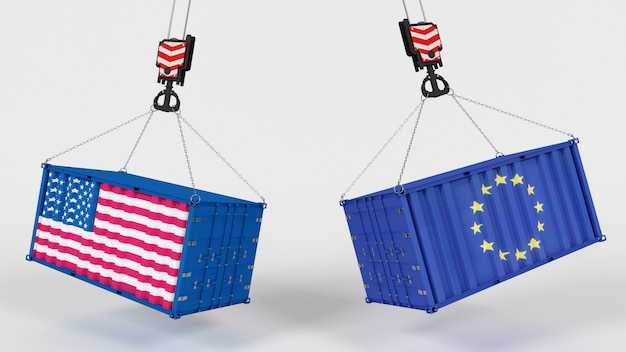
Shift 15% of eu-us volume to southeast consolidation hubs within 60–90 days to correct immediate capacity gaps after the policy announced by US authorities; market indicators show asia-europe spot rates up 22% month-on-month while eu-us lanes report 14% increases and higher air premiums for time-sensitive categories including electronics and perishables.
Adopt three simple tactics now: consolidate LCL into weekly FCL at southeast hubs, redesign packaging to reduce volumetric weight, and deploy sea-air for urgent lanes. These tactics cut landed cost per SKU by an estimated 6–12% and speed delivery by 4–7 days for the majority of shipments; optimise pack patterns and cube utilisation to reach those targets quickly.
Correct forecasting windows and understand lead-time variance by category before you change routing. Reclassify inventory into A/B/C categories, move A-category buffer stock closer to consumption in Europe while staging B/C at southeast pools, and renegotiate carriers for fixed slots plus capacity credits to avoid higher spot surges.
Track three KPIs weekly: volumetric weight (target −8–12%), percentage of shipments avoiding expedited air (target +30%), and landed cost per unit (target −10% within 90 days). Use detention days and on-time delivery metrics to validate savings and adjust tactics across lanes.
If teams execute these recommendations within 60–90 days, you can offset roughly 65% of the announced tariff-driven cost pressure and stabilise flows across asia-europe and eu-us lanes within four months while preserving service levels and reducing exposure to further increases.
Immediate impact on Asia–USA ocean freight flows
Reallocate 20–30% of scheduled asiausa box capacity from Ningbo to Vietnam gateways (Cat Lai, Cai Mep, Haiphong) within 14 days to preserve on-time deliveries and keep a seamless handoff between vessel and inland transport.
Negotiate a firm agreement with your lead forwarders and local agents to secure alternative routing; expect reroutes to add 1–3 days door-to-door for rerouted cargo while remaining Ningbo sailings may see a 2–5 day delay. Planned blank sailings currently represent an estimated 6–12% of sailings from key Asia hubs, which will concentrate activity at fewer strings and raise short-term rates by roughly $300–$700 per FEU on diverted routings.
Adjust operational budgets for higher bunker and terminal fees: energy volatility tied to ukraine developments has pushed regional bunker surcharges up 5–12% month-on-month, so build a contingency allowance of $150–$250 per TEU. Add $50–$120 per shipment for increased brokerage and customs handling to receive reliable customs clearance and avoid demurrage exposure.
Execute this checklist throughout the chain: 1) confirm slot allocations and agreed contingency windows with forwarders, 2) update carrier routing instructions and export documentation to meet new port requirements, 3) expand driver and drayage coverage via short-term contracts to maintain pickup cadence, 4) increase brokerage retainer to speed customs release, and 5) monitor berth and yard activity at Ningbo and Vietnam ports hourly for capacity shifts.
Measure impact with three KPIs for the next 30 days: transit time variance (target <+3 days for rerouted loads), booking acceptance rate (aim >85% with alternate carriers), and cost delta per TEU (track to keep incremental spend under $900). These steps deliver a reliable, good-performing supply chain while securing capacity across the two port worlds most affected by the policy change.
How will the policy alter carrier capacity allocation on Asia–USA routes?
Reallocate 20-25% of deep-sea slot capacity from larger, less frequent loops to more frequent small-vessel sailings serving West Coast hubs, while adding direct East Coast strings equal to roughly 10% of current transpacific capacity; this mix absorbs time-sensitive imports valued at around $300 billion annually and trims average transit times by 1.5–3 days.
Segment capacity into clear components and options: maintain full deep-sea strings for heavy or bulk product, expand feeder rotations for regional distribution, and grow airport/airlines lift by 12–15% for high-value SKUs. Shift select asia-europe assets temporarily into transpacific loops where slot agreements exist, and use agreed slot charters to smooth peaks.
Plan for a dynamic ramp-up: carriers will incur higher ballast miles and additional port calls initially, raising operating costs an estimated $50–80 per TEU on re-routed strings; increased demurrage risk requires tighter timing control. Optimise schedules using importer production calendars and inventory turn targets to regain margin and reduce dwell; align vessel arrival windows with agreed berth allocations to cut turn times.
Adopt short-term commercial steps: price premium lanes for urgent loads, offer multi-modal bundles that combine vessel and airports capacity, and provide flexible contract options (short-term charters, slot exchanges) to american shippers. Coordinate with port operators on coast rotations and with nato or government shippers for priority lanes where needed. Measure performance weekly and reallocate capacity every 4–6 sailing cycles based on load factors and realised lead times.
Projected short-term rate changes by lane and container type
Shift 10–15% of China-origin 40′ dry TEU to 40′ HC or LCL consolidation for the next 4–8 weeks to limit exposure to a projected 8–12% transpacific increase on asia-us lanes.
-
Asia-US (china main, transpacific) – Spot rates for 40′ HC are likely to rise 8–12% and 20′ boxes by 6–9% as strong imports and tightened regulatory inspections push capacity into premium services. Recommendation: secure forward capacity now, push some non-urgent shipments into 60–90 day contracts, and use multi-origin consolidation to keep per-cbm delivery costs sufficient for margin targets.
-
Asia-US (southeast origins) – Southeast origin rates should climb 4–7% for 40′ and 3–5% for 20′ as feeder constraints reroute volumes through larger hubs. Recommendation: route smaller parcels and time-sensitive customer parcels on air where transport time outweighs rate premium; otherwise prioritize 40′ consolidated loads handled via regional hubs.
-
Asia-Europe (via suez) – Expect a 5–9% increase for 40′ reefers and HCs and a 3–6% rise for standard 40′ dry on certain destinations as carriers reprice to cover longer transit risk. Recommendation: consider port rotation to secondary northern European ports or use short-sea legs from Mediterranean gateways as a cost option for non-perishable imports.
-
Intra-Asia (southeast to south / intra-regional) – Rates should be stable to +3% for most box types, with occasional spikes (up to +6%) on congested south ports. Recommendation: deploy regional pooling and cross-docking tactics, using LCL where volumes fall below a full TEU, and confirm sufficient lead times with customers.
-
Latin America / southbound – Expect +6–10% on FCL lanes to major south American ports for 40′ and +4–7% for 20′. Recommendation: shift some long-tail SKUs to consolidation services and evaluate rail-first options within the destination country to reduce port dwell charges.
Additional tactical actions:
- Buy staggered contracts: split volumes into 30% spot, 70% short-term contract to capture upside protection while keeping flexibility.
- Use dual sourcing and multi-origin consolidation to reduce single-country concentration risk, especially for china imports destined for multiple US customers.
- Prioritize bookings on services with documented dwell-time performance; label high-urgency parcels and refrigeration loads to be handled at loading and destination.
- Leverage alternative routings for some lanes–transloading via secondary hubs or routing asia-us cargo through Panama/Southern transshipment points can be a short-term option when transpacific premium peaks.
- Factor regulatory hold probabilities into landed-cost models: add a 1–3% buffer for lanes with recent policy changes and adjust delivery promises to customers where inspections may extend transit by several days.
If capacity tightens further, switch select lanes from FCL to LCL consolidation or ocean+rail intermodal where available; some shippers will find this option reduces cash outlay while keeping inventory flow steady. Monitor weekly rate indices and coordinate with carriers on how urgent parcels and sensitive reefers are handled at origin to preserve service quality.
Ports likely to face congestion: indicators to monitor
Cselekedj most: set automated alerts when vessel wait time exceeds 12 hours, average truck turn time rises above 90 minutes, or gate throughput falls under 30 moves per hour – these thresholds reliably predict port stress within 24–72 hours.
Vessel queues and berth waits: track the number of vessels anchored outside the port and total anchored tonnage; a sustained queue of >6 vessels or aggregate wait time >72 hours signals systemic delay. Monitor fleet utilization: if powered vessels assigned to berthing exceed 85% of local tug capacity, expect speed reductions and schedule knock‑on effects.
Gate operations and entry-queues: measure entry-queue length, hourly gate throughput and truck turn distribution. Flag when entry-queues exceed 150 trucks or when the 90th percentile truck turn exceeds 180 minutes. A fall in gate moves from 40 to 28 moves/hr over two shifts indicates an operational bottleneck that could require overtime or additional labor implementation.
Volumes and total throughput: compare week-over-week TEU volumes and total import/export moves. Escalating volumes above a 15% weekly increase, or an absolute rise of +10,000 TEU at a single terminal, should trigger contingency routing. Track container mix by classifications (reefers, HC, dangerous goods); a sudden rise in reefer share >10 percentage points increases handling complexity and dwell time.
Policy and customs impact: monitor number of customs inspections and classification backlogs. New US policy on inspections could increase physical checks by 20–35% at ports servicing transpacific trades; if inspection count tops 500 shipments at a major terminal, allocate extra customs brokers and prioritize release lanes to avoid cascading delay.
Hinterland and coast constraints: watch rail ramp dwell and barge windows on the coast. Rail dwell >24 hours or barge call cancellations along the south feeder corridor often precede terminal congestion. Track shifts in liner calls from hong routes to nearby ports; even a 2–3 weekly call diversion raises throughput pressure at alternate south terminals.
Operational scarcity signals: log chassis shortages, empty container imbalances and pilotage slot cancellations. If chassis pools drop by 20% while empty returns stall, implement pooled chassis options and prioritize export stuffing. Monitor tug and pilot availability; repeated slot cancellations indicate capacity stress that could force slower berth rotations and higher detention fees for your customers.
Rapid response strategy: combine digital tracking with scenario runs (use Gemini or comparable analytics) to model diversion options, extra shifts and port pair re-routing. Businesses should pre‑book alternative berths, lock flexible rail windows and test an option to redirect high‑priority shipments. This approach converts congestion signals into tactical opportunities and limits total dwell increases to under 10% in most cases.
Changes in sailing schedules and blank sailings: what shippers should track
Cselekedj most: reconfirm high-priority bookings 10–14 days earlier than your standard window and secure a 15% capacity buffer to reduce exposure from last-minute blank sailings.
Carriers implemented large-scale schedule cuts in Március, and data showed schedule reliability fell to roughly 62% that month; a óriás carrier network removed multiple strings, leaving the majority of impacted services covered by transshipment options rather than direct calls.
Track four measurable dimensions daily: confirmed vessel departures, announced blank sailings, port-call changes at key kikötők, and rolling ETA adjustments that carriers publish. A one-point drop in schedule reliability typically forces immediate rebooking for priority cargoes and made routing changes costlier within 48–72 hours.
Monitor labour calendars and industrial actions: ongoing strikes és munka disputes are prompting carriers to postpone port calls or consolidate strings, postponing deliveries and creating port congestion that can plague inland networks for weeks. Stay alert for notices that carriers will not receive or roll equipment at specific terminals.
Evaluate specific options: shift certain containers to alternate ports; split loads across multiple sailings; reserve premium guaranteed space for time-sensitive SKUs; or move a small share to air to avoid multi-week delays. Quantify advantages of each choice by comparing added transport cost vs. inventory carrying cost and potential demurrage fines.
Cost signals matter: blank sailings compressed capacity and helped carriers recover revenue, a dynamic that made freight rates spike and added up to the billion-dollar range across major trades. For every route, calculate a one-week delay’s cash impact to decide if expedited options yield a net cost-saving.
Operational actions to implement now: require carriers to confirm space 10–14 days before ETA, demand written notice for any postponing of port calls, set automated alerts to receive blank-sailing advisories, and add contract language covering re-routing costs and compensation. Audit bills for detention and demurrage against the day-of-arrival recorded in carrier systems.
Use intelligence beyond schedules: analyze carrier blank-sail patterns (which strings they are expanding or contracting), map which kikötők are most often covered by consolidations, and assign internal prioritás codes to SKUs so planners can reroute the majority of inventory with minimal disruption. Certain lanes will remain volatile for months; treat every upcoming sailing as tentative until you receive final carrier confirmation.
For a ready email template to carriers and a checklist for port alternatives, contact minh; these tools will help your team stay proactive and limit the operational force of further schedule shocks.
Airfreight spillover: when to switch mode and cost thresholds
Switch to intermodal when landed air cost per shipment exceeds intermodal door‑door by 25% and you can accept an extra 7 days of transit; for high-volume consignments use a 15% threshold. Apply this rule immediately for planned replenishments and for spot buys when contracts expire.
Use a cubic-to-weight conversion of 1 CBM = 167 kg to decide costing: compute air charge = max(actual kg rate, volumetric rate) × chargeable kg; convert intermodal quotes to $/CBM to compare apples-to-apples. Example: if air = $6.00/kg and shipment = 2.0 CBM (334 kg chargeable) air cost ≈ $2,004; if intermodal door-door = $1,400, air exceeds intermodal by 43% → switch.
Apply three quick triggers in practice: (1) Cost trigger: air > intermodal + 25% (or >15% for repeated lanes with traction for rail); (2) Time trigger: extra lead time available ≥7 days; (3) Risk trigger: exposure to port congestion or special handling is low. Use them together – cost alone does not justify mode change if lead time or security requirements do not align.
Contracts and procurement: insert a clause that allows planned mode substitution when air premiums breach the cost-saving threshold for two consecutive sailings. Negotiate short notice rights to receive intermodal capacity and require carriers to provide alternate ports and schedules in writing. Some carriers will provide a “mode‑switch” code in booking systems; capture that code in your EDI so operations can turn bookings automatically.
Operational measures: map preferred ports (example pairs: Singapore → Charleston via transpacific ocean + rail) and keep one back‑up port on traction routes. They should maintain at least a 5% contracted uplift with inland hauliers to absorb spikes. Special measures for security‑sensitive cargo: check nato code or equivalent clearance early – conventionally those shipments still require air and do not qualify for cost‑saving mode swaps.
| Scenario | Volume (CBM) | Air charge ($/kg) | Lead‑time slack (days) | Recommendation | Estimated cost‑saving |
|---|---|---|---|---|---|
| Urgent spare part | 0.05 | $12.00 | 0 | Keep air – urgency trumps cost | 0% |
| Planned replenishment | 3.0 | $5.50 | 10 | Switch to intermodal (ocean+rail) | ~30% ($1,650 → $1,150) |
| High‑volume non‑critical | 20.0 | $4.00 | 21 | Always intermodal if contracts in place | ~45% |
Choosing lanes: track lane‑level traction and container dwell at key ports; measure days‑to‑clear at Singapore and Charleston weekly and adjust thresholds when dwell increases by >48 hours. Use historical practice data from your industry to tune the 25% rule – after three exceptions lower the switch threshold by 5% to keep cost-saving traction.
Risk control: quantify exposure by computing value at risk = (air rate − intermodal rate) × shipment probability of delay. If that exposure exceeds your insurance retention, maintain air. Otherwise, schedule planned intermodal windows and do small pilot runs to validate lead-time assumptions; they will show whether planned substitution does what it does on paper.
Customs documentation adjustments required for re-routed cargo

Update customs declarations immediately to reflect the re-route: record new ports, transshipment points, correct HS classifications and tariff codes, and the final carrier and terminal.
- Mandatory field updates
- Origin, export country and final destination entries – list every transshipment point with port codes.
- HS classifications and product codes – confirm 6–10 digit codes match export paperwork; incorrect codes trigger delays and fines.
- Gross weight and volumetric weight – declare both; use volumetric weight (kg) = L(cm) × W(cm) × H(cm) ÷ 6000 for air freight and vendor-specific divisors for surface.
- Package counts and container numbers – update serials, seals and container capacity (TEU/FEU) if offloaded or consolidated.
- Fuel surcharge codes and transport mode – note fuel adjustments and changed transportation mode (air/sea/road) to optimise duty and billing.
- Timing and filing
- Submit amended manifests to the destination authority and broker within 24 hours of route confirmation, and always prior to arrival at the alternate terminal.
- For asia-us or south-bound re-routes, update the import security filing or advance cargo information as required by the receiving country; confirm electronic cutoffs with carriers.
- Value and threshold handling
- Recalculate CIF value and split duties for shipments near duty thresholds (example: US de minimis often cited at $800) and document any value adjustments clearly on the commercial invoice.
- If volumetric weight significantly exceeds gross weight, mark billing weight and include carrier reference to avoid disputes over expensive re-billing.
- Operational coordination
- Notify the receiving terminal and carrier when announcing the reroute; request confirmation of terminal capacity and gate windows to choose the fastest onward movement.
- Inform customs broker and local import agent; provide a single corrected packet (invoice, packing list, bill of lading/air waybill, certificates) to minimise back-and-forth.
- Risk controls and compliance
- Flag controlled goods and check export controls and nato or national advisories if cargo content touches defense or dual-use classes.
- Retain an audit trail for every documentation update (timestamped emails, amended declarations, electronic submission receipts) for at least the destination country’s retention threshold.
- Practical checklist to implement now
- Run HS code verification and update tariff codes.
- Recompute weights (gross and volumetric) and correct invoice values.
- Send amended manifest to carrier and customs broker within 24 hours.
- Confirm terminal capacity and berth/yard instructions for the south or alternate terminal.
- Log confirmations and attach them to the customs packet before arrival.
Apply these steps for every re-routed shipment to reduce inspections, avoid expensive penalties, and optimise transit time along routes like asia-us or south transits; review and update internal SOPs after each incident to keep codes and thresholds current.
Supply chain resilience and network reconfiguration
Re-route 30% of Asia–Europe container volume from single-origin ports in china to two alternative gateways within 21 days and establish a 14-day inventory buffer at three regional hubs to protect service levels and reduce surge exposure.
Adopt a predictable operational practice: run 24-hour monitoring for vessel ETA shifts, measure loaded TEUs against vessel dimensions before departure, and publish a 24-hour response protocol so teams can correct mis-shipments within 48 hours.
Require certificates and pre-clearance passage documentation at least 72 hours before arrival to cut port dwell by a target of 36 hours; map customs timing per trade lane and adjust cut-offs accordingly.
Negotiate flexible capacity buys and short-term swaps with carriers; form two contingency alliances for slot coverage so you remain competitive amidst spot-market volatility and sudden quota changes.
Set concrete customer commitments: publish revised ETA windows in days and 24-hour format, offer graded remedies when delivery exceeds 72 hours, and push proactive notifications when timing shifts more than 12 hours.
Measure implementation with daily KPIs: on-time deliveries, average dwell, capacity utilization and loaded/empty ratios. Targets to be implemented in the first 60 days: raise on-time by 5 percentage points, cut average dwell by 36 hours, and free 8% additional capacity through rerouting and faster passage approvals.
Apply these steps particularly to high-value trades and markets where timing and certificates drive customer retention; see route selection criteria below and prioritize lanes with proven berth availability and compatible vessel dimensions.