


 Magyar
  English (UK)
  Русский
  العربية
  日本語
日本語  한국어
한국어  Türkçe
  Español
  Čeština
  Svenska
  Português
  Ελληνικά
  Suomi
Suomi  Nederlands
  Română
  Italiano
  Français
  Polski
  Українська
  Deutsch
  简体中文
简体中文  Slovenčina
 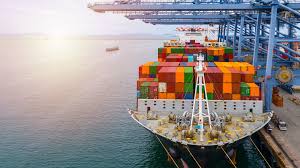 A teherszállítási ipar növekedési előrejelzései és a logisztikai következmények 2031-ig">

Unpacking the Cargo Shipping Market Growth Forecast
The cargo shipping market is on an impressive growth trajectory, with the global industry projected to nearly double in value, reaching approximately $4.2 trillion by 2031. This surge represents a robust compound annual growth rate (CAGR) of about 7% from 2022 onward, reflecting the essential role ocean freight plays in global trade and logistics networks.
Efficiency and Environmental Edge Bolster Market Expansion
One cannot overlook the efficiency that cargo shipping brings compared to other transport modes. Freight shipping boasts lower emissions per tonne-kilometer than road, rail, or air, which makes it a greener choice in the logistics chain. Consider the vast capacity of container ships that might carry around 10,000 items per voyage. For perspective, a few car carriers can transport nearly 7,600 vehicles in one go, a feat that would otherwise require expansive trucking fleets or rail lines winding for miles.
This combination of capacity and environmental efficiency acts as a powerful catalyst, driving the industry’s rapid expansion while aligning with growing sustainability concerns in logistics operations.
Cargo Types and Ship Variants Driving Demand
The cargo shipping market broadly splits into three types of cargo:
- Liquid cargo – including edible, non-edible, hazardous and non-hazardous liquids like chemicals and oil;
- Dry cargo – bulk materials such as coal, minerals, and grain;
- General cargo – a diverse group ranging from manufactured goods to retail items.
Among these, liquid cargo stands out, thanks to increasing global demands for chemicals, gases, and oil products. This demand spike encourages the development and deployment of specialized tanker vessels, supported by strengthening trade agreements worldwide.
| Rakomány típusa | Growth Drivers |
|---|---|
| Liquid Cargo | Global increase in chemical and oil trade; demand for safer, stronger tankers. |
| Dry Cargo | Bulk commodity trade expansion; agricultural and mineral exports. |
| Általános rakomány | Growth in manufacturing and retail sectors; diversified shipment needs. |
Ship Types Leading the Charge
Various ship types are tailored for specific cargo needs. Key players include:
- Bulk carriers for loose materials;
- Container ships for packaged goods;
- Tankers for liquids;
- Reefer ships for temperature-controlled freight;
- and other specialized vessels.
New ship designs and government-backed initiatives are fueling innovations, helping operators meet growing trade volume with better efficiency and compliance.
Government Support and Industry Challenges
Infrastructure upgrades at ports worldwide, driven by government programs and investments by shipping companies, form the backbone enabling sea freight growth. Advances in inland waterway transport and expanded port facilities also offer lucrative prospects, widening the logistical reach and improving connection points for maritime shipments.
Regulatory and Environmental Hurdles
Of course, every rose has its thorn. Stricter environmental and safety standards are reshaping the industry’s operating landscape. These regulations, while essential for sustainable growth, present hurdles in terms of compliance costs and operational adjustments. Shipping companies must navigate these waters carefully as they innovate toward greener and safer technologies.
Opportunities Amid Urbanization and Spending Trends
Rapid urbanization, lifestyle changes, and rising consumer spending worldwide are opening fresh avenues for cargo shipping growth. As cities expand and industries flourish, demand for timely, reliable freight services intensifies, offering a promising runway for freight forwarders and logistics providers.
Impact of COVID-19 on Cargo Shipping and Supply Chains
The pandemic certainly shook up international maritime trade. With complex crew changes and port operation delays, the sector faced unprecedented challenges. Yet, it prompted accelerated funding, fostering new technological developments and operational practices aimed at resilience. Competitive players pivoted quickly to meet shifting global demand patterns, underpinning the market recovery and positioning it for future growth.
Key Growth Highlights
- Liquid cargo expected to lead in near-term expansion;
- Specialized ships and newer vessel segments gaining prominence;
- Manufacturing industries driving increased cargo volumes;
- Regions like LAMEA (Latin America, Middle East, and Africa) projecting highest CAGR.
Table: Notable Cargo Shipping Market Players
| Cég | Szerepvállalás |
|---|---|
| A.P. Moller-Maersk Group | Industry leader in container shipping |
| CMA CGM S.A | Global freight forwarding and logistics |
| COSCO Shipping Co., Limited | Major carrier with broad global reach |
| DB Schenker, DHL Global Forwarding | Leading freight logistics and supply chain management |
| Ocean Network Express Pte. Ltd. | Comprehensive maritime transport services |
The Bigger Picture: Cargo Shipping’s Role in Logistics
Sea freight is the backbone of international logistics, efficiently moving a vast array of goods across continents. The scale and scope of maritime cargo transport are pivotal for supply chains, warehouse management, and delivery networks worldwide. Its dominant environmental efficiency means shipping will continue to hold a critical place in the cargo distribution equation.
Innovations like larger vessels, port automation, and sustainable fuels are transforming logistics, improving turnaround times and reducing carbon footprints. In a world where consumer demands evolve quickly and supply chains must adapt, maritime shipping’s flexibility is a mighty advantage.
Future Outlook and Technological Developments
Technological advances will continue to steer the cargo shipping market’s rise. Digital forwarding solutions, tracking systems, and enhanced ship designs promise smoother operations and less downtime. Increased inland waterway freight traffic expands the channels for distribution, tying maritime shipments more tightly into the global logistics web.
Why Personal Experience Beats Even the Best Reviews
While market analysis and expert insights shine a light on current trends, nothing replaces the “hands-on” experience of managing real shipments. Each delivery presents unique challenges and learning opportunities that shape the trusted judgement of logistics professionals. Thankfully, platforms like GetTransport.com make ordering cargo transportation straightforward, affordable, and transparent, empowering shippers to make informed choices without breaking the bank.
Whether you’re moving office equipment, shipping bulky furniture, or coordinating international freight, GetTransport.com offers a global network of reliable carriers at competitive prices. This allows businesses and individuals alike to tap into versatile transport options tailored to their specific needs.
Book your cargo transportation with the best offers at GetTransport.com.
Forecasting Cargo Shipping’s Impact on Global Logistics
Globally, the cargo shipping boom will sustain and fuel the logistics sector’s growth, streamlining freight distribution and supporting burgeoning trade routes. Though fluctuations and regulatory changes remain part of the game, the industry’s sturdy growth underlines its integral role in connecting markets.
This evolution is highly relevant to GetTransport.com, which stays on the pulse of all developments to provide customers with secure, efficient, and cost-effective freight forwarding solutions. Start planning your next delivery and secure your cargo with GetTransport.com.
Összefoglalva
The cargo shipping industry is charting a steady course toward a $4.2 trillion valuation by 2031, powered by its unmatched efficiency, rising global trade, and growing demand for diverse cargo movements. Advances in ship technology, government-backed infrastructure developments, and environmentally-aware regulation shape a competitive, evolving market landscape.
As this freight powerhouse grows, it plays an ever more crucial role within worldwide logistics networks, ensuring goods keep flowing smoothly from factories to consumers. For businesses and movers alike, tapping into this global freight network through reliable platforms like GetTransport.com can turn complex shipment logistics into a hassle-free experience—with cost-effectiveness and transparency thrown in for good measure.
GetTransport.com’s extensive network and user-friendly platform allow customers to handle shipments of all sizes—whether office relocations, palletized cargo, bulky freight, or vehicle transportation—making it an excellent partner in a dynamic and expanding cargo shipping world.