


 Magyar
  English (UK)
  Русский
  العربية
  日本語
日本語  한국어
한국어  Türkçe
  Español
  Čeština
  Svenska
  Português
  Ελληνικά
  Suomi
Suomi  Nederlands
  Română
  Italiano
  Français
  Polski
  Українська
  Deutsch
  简体中文
简体中文  Slovenčina
 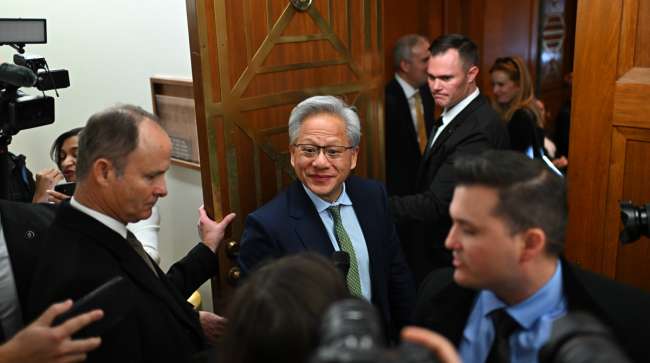 China Declines Nvidia H200 AI Chips as Focus Shifts to Domestic Semiconductor Growth">

China’s Strategic Shift Away from Nvidia’s H200 AI Chip
In a surprising move, China has decided to reject Nvidia’s H200 AI chips even after they received export approval from the United States. This decision clearly illustrates China’s ongoing determination to boost self-sufficiency in the semiconductor industry rather than relying on foreign technology. It’s a tale of two giants: while the U.S. aims to trade its advanced AI chips into China’s vast tech market, China prefers to lean on homegrown solutions, underscoring a larger theme of technological independence.
The Context Behind the Chip Rejection
Back in early December 2025, U.S. authorities greenlit the export of Nvidia’s H200 chips to China. This was part of a broader strategy to bring American tech competition directly into China’s backyard, potentially weakening local champions such as Huawei. However, according to insights from U.S. officials, China has caught on to this play and is pushing back by focusing on domestic chip production instead of accepting imported technology.
The H200 chip, introduced by Nvidia in 2023 and shipping to customers since last year, represents advanced AI processing power but still lags behind Nvidia’s most recent Blackwell and upcoming Rubin series. While the U.S. administration hoped to capitalize on this “lagging” tech as a compromise, the Chinese government’s response suggests they have eyes wide open on protecting their own industry growth.
Why China Is Saying “No” to Nvidia’s H200
Several factors fuel China’s rejection of these chips:
- Self-Reliance Ambitions: China is doubling down on building its own semiconductor industry, with incentives reportedly worth up to $70 billion to support local chipmakers.
- Support for Local Champions: Huawei and other domestic tech firms receive robust backing, which helps shield them from foreign competitors, even when those competitors are allowed in.
- Equally Capable Alternatives: Chinese AI platforms, like Huawei’s Cloud Matrix 384 system, reportedly offer comparable AI performance by combining many processors to offset any shortcomings in single-chip capability.
These elements paint a picture of a market not just passively rejecting imports but actively fostering indigenous innovation and shielding its core tech sectors from outside influence.
Impact on Nvidia and the Global Semiconductor Landscape
Nvidia had forecasted China’s data center market as a $50 billion revenue opportunity, with analysts estimating about $10 billion potential in H200 sales alone. With China shutting the door, Nvidia faces the challenge of recuperating revenue that was once expected to flow richly from that region.
The company continues to collaborate with U.S. authorities on managing export licenses and insists that the broad export controls previously imposed on them have inadvertently helped foreign competitors. This dynamic reveals the complexity of navigating geopolitical tensions in a high-stakes technology sector.
The Logistics Angle: What This Means for Shipping and Transport
This chip saga is more than just a tech story—it carries profound implications for global logistics and supply chains. Semiconductor transport involves careful handling due to the high value and sensitivity of these products. Reduced shipments of Nvidia chips to China could reprioritize freight flows, affecting air, sea, and land cargo routes connecting the U.S. with Asia and beyond.
Moreover, as China invests heavily in local chip manufacturing, logistics networks within China may expand to support new production hubs, reshaping regional freight distribution patterns. This ripple effect could influence everything from container shipping to rapid courier deliveries of components and completed chips.
Table: Key Differences Between Nvidia’s H200 and Chinese AI Chip Alternatives
| Jellemző | Nvidia H200 Chip | Chinese Alternatives (e.g., Huawei Cloud Matrix 384) |
|---|---|---|
| Chip Generation | Hopper generation, introduced 2023 | Domestic designs with multi-processor platforms |
| Performance Strategy | Single-chip AI power, lagging behind latest Nvidia models | Combining hundreds of processors to reach comparable AI capacity |
| Government Support | Limited, reliant on export licenses | Heavy subsidies and incentives (~$70 billion) |
| Market Acceptance in China | Rejected despite U.S. export approval | Actively promoted and defended |
The Big Picture: Insights and Considerations
China’s rejection of Nvidia’s H200 chips highlights a key lesson: even advanced technology can be sidelined if it does not align with a nation’s strategic goals. For logistics professionals, this underscores the importance of understanding political and economic currents behind transportation flows. The story also shows that new policies or trade approvals do not automatically guarantee market uptake or cargo movement.
When it comes to sourcing or shipping high-tech components, costs, routes, and risk assessments must consider not just the physical cargo but the shifting sands of international relations and industrial strategies. In this context, platforms like GetTransport.com become crucial for navigating the complexity of global freight and shipment needs, offering transparent, reliable, and affordable solutions for everything from bulky equipment, vehicles, and office moves to container freight across continents.
While expert opinions and industry reports provide useful overviews, nothing beats firsthand experience in evaluating such a complicated market atmosphere. On GetTransport.com, users can access competitive prices for global cargo transportation, empowering businesses and individuals alike to make informed logistics choices without breaking the bank. This level of transparency and convenience stands out in a world full of uncertainty, making it easier to secure your shipments while keeping an eye on evolving global circumstances. Foglaljon fuvart a címen. GetTransport.com to gain access to the best freight offers worldwide.
Looking ahead, this development might not currently shake the global logistics industry to its core, but it certainly signals how national policy and industrial strategy directly influence the flow of high-value cargo worldwide. Staying on top of such shifts helps logistics providers and customers alike stay a step ahead. The unfolding semiconductor self-reliance in China aligns perfectly with GetTransport.com’s mission to respond swiftly to changing markets and keep freight moving efficiently no matter the challenge.
Következtetés
To sum up, China’s decision to turn away Nvidia’s H200 AI chips despite U.S. export approval reflects a clear move toward semiconductor self-sufficiency and protecting domestic tech leaders. This policy has significant reverberations not only in technology markets but also throughout global freight and logistics networks. As China boosts local production and limits imports, the transport and distribution of semiconductors and related goods will adapt, influencing global supply chains and cargo flows.
For businesses and individuals navigating this landscape, understanding these shifts and securing reliable, cost-effective shipping solutions is key. This is where GetTransport.com shines, offering a versatile platform for international shipment, freight forwarding, large item transport, and relocation—bringing together affordability, transparency, and global reach. As the semiconductor story unfolds, GetTransport.com equips users with the tools to handle complex logistics with confidence and clarity.