


 Magyar
  English (UK)
  Русский
  العربية
  日本語
日本語  한국어
한국어  Türkçe
  Español
  Čeština
  Svenska
  Português
  Ελληνικά
  Suomi
Suomi  Nederlands
  Română
  Italiano
  Français
  Polski
  Українська
  Deutsch
  简体中文
简体中文  Slovenčina
 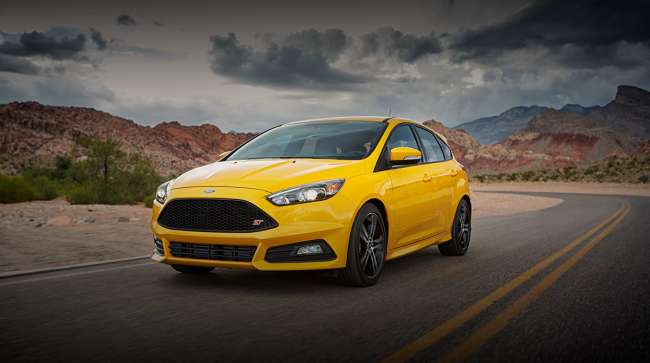 The End of the Ford Focus Era and What It Means for Vehicle Transport Logistics">

Closing the Chapter on a Global Compact Favorite
The production of the Ford Focus has come to an official end, concluding nearly 27 years of continuous manufacturing for one of Ford’s most iconic compact cars. This marks a significant transition not only for the automotive industry but also for the logistics and transportation sector connected to vehicle distribution.
The Last Ford Focus Rolls Off the Saarlouis Line
The final Ford Focus, a white five-door hatchback, was completed this month at the Saarlouis plant in Germany. This plant has been a key location in Ford’s European production network, and its significance is underscored by the end of the Focus era. Over the life of the model, Ford sold more than 12 million Focus vehicles worldwide, signaling its broad appeal and success as a compact car that resonated in several markets across Europe and North America.
Origins and Milestones of the Ford Focus
Introduced in 1998, the Ford Focus was crafted to replace the Escort and unify Ford’s compact car offerings internationally. The model quickly gained traction, earning accolades such as the 1999 European Car of the Year. By late 1999, the Focus was available in North America as a 2000 model, cementing its position as a global success from the outset.
| Év | Milestone | Megjegyzések |
|---|---|---|
| 1998 | Launch in Europe | First generation introduced, replaced Escort |
| 1999 | European Car of the Year Award | Recognition for innovation and design |
| 1999 (Late) | North American Sales Begin | Expanded market reach to U.S. and Canada |
| 2025 | End of Production | Final unit produced in Saarlouis, Germany |
Why Ford Is Moving Away from the Focus Towards Electric and SUVs
This farewell comes amidst a strategic overhaul by Ford aimed at responding to evolving market demands and the growing push for electric vehicles. Profitability and consumer preferences have nudged the automaker towards electrified crossovers and SUVs, with models like the Explorer and Capri taking center stage in Europe. Ford plans to introduce a new crossover roughly the size of the Focus by 2027, aligning with trends favoring electrification and larger vehicles.
What This Means for Logistics and Vehicle Transport
The end of the Focus era signals a shift in how vehicles move through global supply chains. Compact cars like the Focus are traditionally easier to ship and store due to their size, but the rising popularity of electrified SUVs requires adaptation in freight logistics. Bulkier and sometimes heavier vehicles introduce new challenges related to loading, hauling, and warehouse space allocation.
- Transport Equipment Adjustments: Logistics providers must retool handling equipment to accommodate larger and differently configured vehicles.
- Shipment Planning: Increased vehicle dimensions affect container utilization and may necessitate more trips, impacting costs and routing strategies.
- Környezeti megfontolások: As electric vehicles rise, accompanying infrastructure changes in logistics—such as specialized charging capabilities during transit or at hubs—are emerging.
Saarlouis: A Key Logistic Hub in Focus’s Final Chapter
Saarlouis, where the Focus was last produced, is notably an industrial zone with a robust transport infrastructure supporting coal mining, steel production, and manufacturing. Its established road network, proximity to major markets, and connectivity via rail and waterways have made it a strategic location for distribution. These characteristics also help illustrate how automotive shifts ripple through logistics corridors.
The Focus’s Legacy Beyond Production
Globally, the Ford Focus stands as one of the best-selling compact cars, showcasing a long lifecycle that affected wide swaths of the automotive market and related freight operations. From factory to dealership, from showroom floor to consumer driveway, the Focus’s entire journey represents a complex, well-orchestrated flow of freight and transport activity.
A legfontosabb pontok összefoglalása
- Ford has ceased production of the Focus after nearly 27 years.
- The vehicle sold over 12 million units globally, highlighting its importance in Ford’s lineup.
- Its production’s end reflects a shift toward electric vehicles and SUVs.
- Logistics and transport of vehicles face new challenges with changing vehicle sizes and types.
- Saarlouis remains a significant node for freight connected to automotive industry operations.
Personal Experience Versus Reviews in Vehicle and Logistics Choices
While reviews and feedback offer valuable insights into vehicles like the Ford Focus and their logistics implications, nothing quite matches the real-world experience of managing the transport and delivery of goods and vehicles. Platforms such as GetTransport.com offer an indispensable service here, enabling customers to arrange global cargo transportation at competitive rates. Whether moving office equipment, handling bulky furniture, or forwarding vehicles, the platform’s versatility covers a broad spectrum of logistics needs.
By leveraging this platform’s transparency and ease of use, customers can avoid the pitfalls of unexpected costs or logistics headaches, making the cumbersome world of freight and shipment a whole lot simpler. Book your Ride GetTransport.com and enjoy access to affordable, reliable transportation solutions worldwide.
Forecast: How This Automotive Shift Influences Global Logistics
On the grand scale, the ending of a single model’s production, like the Ford Focus, does not drastically shake global logistics. Still, it underscores the continuous evolution automotive manufacturing undergoes, which directly influences freight, haulage, distribution networks, and shipment planning.
Logistics providers and cargo forwarders need to stay bilingual in both traditional vehicle transport and emerging trends such as electric vehicle support. At GetTransport.com, the aim is to keep up with such developments to ensure customers benefit from state-of-the-art logistics solutions that adapt to industry changes.
Kezdje el tervezni a következő szállítást, és biztosítsa rakományát a GetTransport.com segítségével.
Wrapping Up: The Transition of Ford Focus Reflects Broader Shipping and Logistics Shifts
The Ford Focus’s retirement marks more than the end of a beloved compact car; it mirrors a broader move in the automotive industry toward electric, hybrid, and crossover vehicles. This transition triggers new logistical considerations, including changes in shipping dimensions, handling requirements, and supply chain synchronization. The legacy of the Focus will linger in the global freight and distribution environment as stakeholders adapt to evolving vehicle trends and consumer preferences.
GetTransport.com offers a compelling solution for all these transport needs, supporting everything from individual house moves to large-scale freight forwarding, including vehicle transport. With its affordable rates, reliable service, and global reach, it simplifies freight logistics and meets the dynamic demands of shipping varied cargo across borders.