


 Magyar
  English (UK)
  Русский
  العربية
  日本語
日本語  한국어
한국어  Türkçe
  Español
  Čeština
  Svenska
  Português
  Ελληνικά
  Suomi
Suomi  Nederlands
  Română
  Italiano
  Français
  Polski
  Українська
  Deutsch
  简体中文
简体中文  Slovenčina
 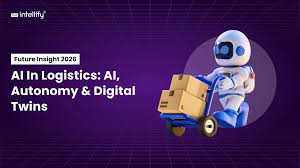 Kulcsfontosságú ellátásilánc-transzformációk 2026-ban: MI-integráció, digitális ikrek és jövőbiztos architektúrák">

Unveiling the Future Landscape of Supply Chains
The rhythm of global supply chains is accelerating, shifting away from reactive strategies towards adaptive, intelligent systems. As 2026 approaches, the landscape is ripe with technological innovations and strategic shifts that promise to redefine how supply chains operate and add value. This transformation reflects not only advances in artificial intelligence and simulation technologies but also a fundamental change in how human talent collaborates with these tools.
AI-Powered Decision Intelligence: The New Heartbeat of Supply Chains
Gone are the days when AI was simply a back-end helper providing data insights; today, decision intelligence powered by AI is becoming the backbone of strategic supply chain management. Instead of merely reacting to past data, organizations now seek foresight—decisions that are faster, clearer, and intrinsically aligned with business goals.
Decision intelligence unites analytics, AI, and decision modeling to automate and improve choices across the board. This evolution means planners spend less time wrestling with mountains of data and more time exploring what-ifs, balancing trade-offs, and steering strategy towards proactive outcomes. It’s like turning on cruise control with a clear map ahead, rather than constantly checking rearview mirrors.
Hogyan befolyásolja ez a logisztikát
For logistics managers, this means shipment planning and freight routing can be optimized in near real-time, reducing bottlenecks and enhancing distribution efficiency. This shift enables dynamic responses to unexpected disruptions—be it a supplier delay or sudden demand spike—minimizing costly interruptions.
Agentic AI and Autonomous Agents: The Rise of Collaborative Automation
One of the standout trends is the emergence of ügynöki mesterséges intelligencia, autonomous systems that go beyond flagging issues to actively reasoning, planning, and acting on behalf of the organization. These intelligent agents handle thousands of micro-decisions, freeing human planners to focus on big-picture strategy and innovation.
Such AI agents diagnose supply chain disturbances, forecast possible outcomes, and even initiate corrective measures. The result? Response times that shrink from days to minutes or even seconds. Imagine a supply chain that doesn’t just alert you to a problem but already works out solutions while you grab a coffee.
Impact on Transport and Freight
From cargo dispatch to load optimization, autonomous agents can streamline operations, reducing human error and accelerating the flow of goods. This has clear implications for vehicles, bulky items, and freight that require precise coordination—areas where nimble, intelligent decision-making delivers tangible benefits.
Augmented Workforce: Where Humans and AI Team Up
The shift isn’t about machines replacing humans—it’s about amplifying human potential with AI. The augmented workforce focuses on removing the tedious data juggling and letting supply chain teams engage more in analysis, strategy, and collaborative problem-solving.
Instead of drowning in spreadsheets, teams now interpret data, ask challenging questions, and co-create solutions with AI. This leads to not only sharper decisions but also greater team confidence and alignment with enterprise strategy. It’s a classic win-win: humans bring creativity and judgment; AI handles the heavy lifting.
Logistics Angle
For logistics professionals, the augmented workforce means better coordination in moving shipments, carrier selection, and problem resolution—leading to smoother house moves, corporate relocations, or large cargo transport. The collaborative approach enhances the ability to meet tight delivery windows and adapt quickly when plans shift.
Composable Architectures: Building Resilience Through Modularity
Volatility in supply chains has exposed the limitations of rigid, monolithic systems. Enter composable architectures: agile, modular platforms that allow organizations to add or swap capabilities without tearing down existing systems. It’s like upgrading your car with new tech gadgets, rather than buying a brand-new vehicle each time.
This design flexibility means firms can incorporate autonomous agents, simulation engines, sustainability tools, and IoT sensors exactly where needed—without risking breakdowns elsewhere. It’s a strategy that turns supply chains into resilient, future-ready ecosystems.
Relevance to Freight and Shipping
In logistics, this modularity allows carriers, couriers, and freight forwarders to integrate cutting-edge tracking or routing solutions rapidly, enhancing shipment visibility and distribution reliability. This adaptability is key when coordinating large-scale or international shipments where conditions can change on the fly.
Scaling with Digital Twins: Simulating the Supply Chain of Tomorrow
Digital twins, virtual replicas of real-world supply chains, have quickly become indispensable tools. These living models enable leaders to simulate disruptions, test constraints, and explore “what-if” scenarios—allowing the practice of the future without the risk of costly mistakes.
Far from sci-fi, these twins pair seamlessly with decision intelligence to translate raw insights into coordinated actions. They offer the ability to predict operational outcomes, reduce downtime, and even drive sustainability by assessing environmental impacts ahead of time.
How Digital Twins Benefit Logistics Operations
Through digital twins, logistics planners can model entire delivery networks, visualizing the effects of delays, route changes, or varying cargo loads. This leads to not only smarter shipment planning but also reduced risk of missed deadlines and improved resource allocation.
Summary of Leading Trends
- Decision intelligence transforms supply chain management into a forward-looking discipline.
- Agentic AI handles routine decisions, empowering human planners to focus on strategic initiatives.
- The augmented workforce promotes collaboration between humans and AI for superior outcomes.
- Composable architectures enable flexibility and resilience in technology integration.
- Digital twins scale forecasting and scenario testing for optimized operations.
The Road Ahead: A New Model for Supply Chain Excellence
These trends collectively point toward supply chains evolving into intelligent, strategic engines — no longer mere cost centers but key business differentiators. Companies that embrace this operating model will be those that think ahead, make bold decisions, and move faster than the market.
The ability to orchestrate decisions with embedded intelligence, supported by adaptable technology platforms and empowered human teams, promises unprecedented agility and value creation.
Embracing These Innovations in Logistics with GetTransport.com
While the global logistics community adjusts to these groundbreaking trends, practical solutions remain essential. Platforms like GetTransport.com stand ready to help move cargo, freight, and bulky goods efficiently across borders and cities. Whether you’re managing office relocations, furniture shipments, vehicle transport, or complex pallet forwarding, leveraging a service rich in choice and affordability streamlines operations.
Reading about these advanced technologies is one thing — experiencing their impact on your logistics operations is quite another. Fortunately, with GetTransport.com, you can tap into a transparent, global network of carriers that reflects the very principles of adaptability, collaboration, and intelligence these trends advocate. This empowers you to make informed transport decisions that avoid costly mistakes or surprises.
Foglaljon fuvart GetTransport.com and experience convenient, reliable freight and cargo solutions that move you forward in the rapidly evolving logistics landscape.
Végső gondolatok
As supply chains embrace AI-driven decision intelligence, agentic AI, and modular architectures supported by digital twins, logistics will experience unprecedented transformation. These advancements champion faster, smarter, and more resilient transport and shipment systems, improving how freight is dispatched, tracked, and delivered worldwide.
Minden áruszállítással foglalkozó vállalkozás számára – legyen szó csomagokról, raklapokról, konténerekről vagy nagyméretű termékekről –, ezek az újítások kiemelik a rugalmas, technológiavezérelt logisztikai partnerek fontosságát. A GetTransport.com globális elérhetősége és változatos szállítási lehetőségei tökéletesen illeszkednek ebbe az új korszakba, megbízható és költséghatékony megoldásokat kínálva az összetett szállítmányozási igényekhez igazítva.
A technológia és az emberi szakértelem integrálásával, valamint az adaptálható szállítmányozási szolgáltatások kiválasztásával magabiztosan navigálhat a globális szállítmányozás, disztribúció és költöztetés komplexitásában. A ellátási lánc és a logisztika jövője intelligens, összekapcsolt és készen áll arra, hogy szállítmányait gyorsabban és okosabban szállítsa, mint valaha.