


 Magyar
  English (UK)
  Русский
  العربية
  日本語
日本語  한국어
한국어  Türkçe
  Español
  Čeština
  Svenska
  Português
  Ελληνικά
  Suomi
Suomi  Nederlands
  Română
  Italiano
  Français
  Polski
  Українська
  Deutsch
  简体中文
简体中文  Slovenčina
 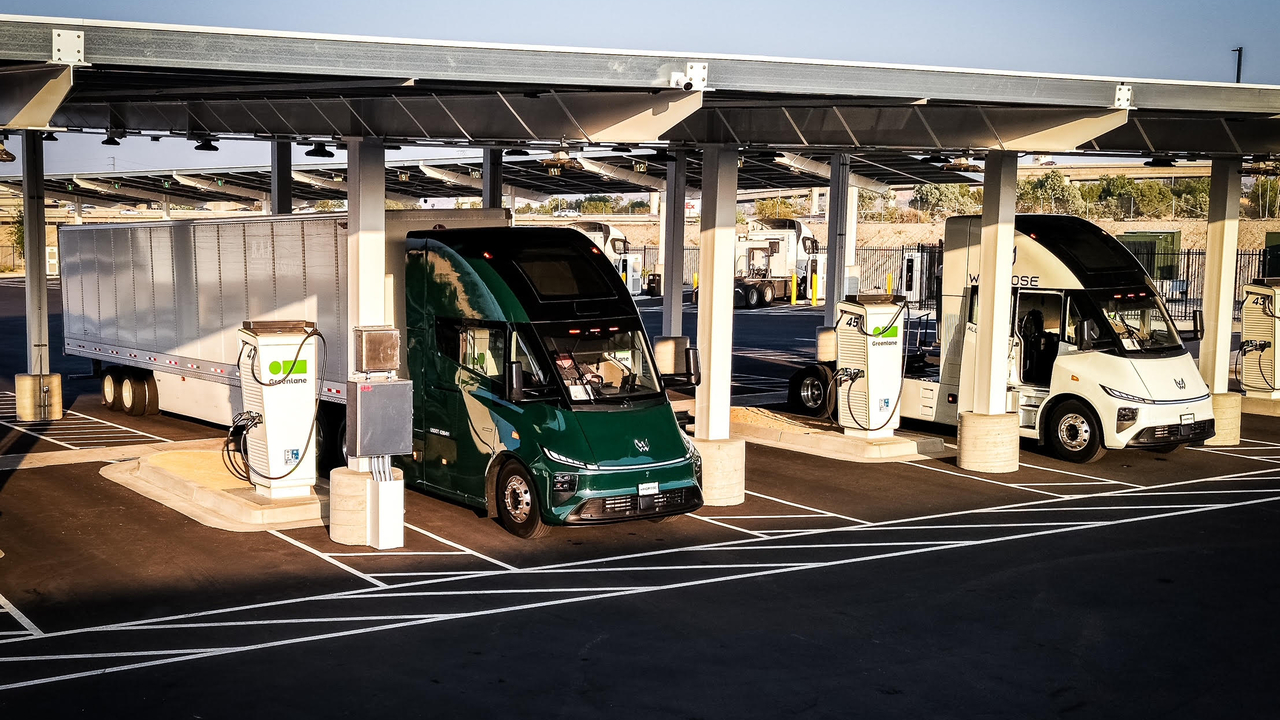 Greenlane partners with Windrose to provide complimentary charging for Windrose Global E700 buyers">

What this partnership reveals
This piece examines a new collaboration between Greenlane és Windrose that bundles three months of complimentary charging with the purchase of a Windrose Global E700 electric truck, aiming to reduce the total cost of ownership hurdle for fleets.
Why complimentary charging matters
Transitioning fleets from diesel to electric still trips over one big hill: the upfront cost. Electric trucks can cost two to three times as much as comparable diesel rigs, and that sticker shock slows adoption. By offering three months of free charging on Greenlane’s network with every Windrose Global E700 purchase, the two companies are applying a passenger EV-style incentive to commercial fleets—an incentive that can nudge purchase decisions and shorten payback periods.
How the incentive works in practice
Bundling charging credits does three things: it reduces immediate operating cost uncertainty, it introduces fleets to a specific charging network, and it creates an opportunity for tailored long-term charging solutions along freight corridors. Greenlane’s strategy focuses less on building isolated depot chargers and more on “lighting up” lanes where freight actually moves, giving carriers the infrastructure certainty they need to tender and operate scheduled routes.
Key operational proof points
- Pilot performance: Tests on the I-10 corridor (Colton, CA to Phoenix, AZ) recorded a peak charging rate of 772 kW for the Windrose Global E700 and more than 400 miles of range while hauling a near-maximum payload (~74,000 pounds).
- Corridor viability: Both I-10 and I-15 were validated as capable of supporting operational electric freight when paired with properly placed charging infrastructure.
- Energy management: Greenlane combines on-site battery storage and an energy management platform to smooth grid demand and lower charging cost variability.
Regulatory tools and the cost gap
Government programs continue to play a decisive role. The California Air Resources Board’s HVIP vouchers act like coupons that reduce truck purchase costs depending on use case and fleet size; drayage operators historically receive the biggest reductions. Interest in these vouchers was intense—roughly $350 million in HVIP money was allocated in about three weeks when it became available, reflecting strong market appetite for incentives that close the price gap.
Tesla has captured a large share of voucher allocations with the Tesla Semi, driven by a price point near $300,000 (pre-incentive), longer range, and megawatt-class charging capability. These competitive factors force other OEMs and charging providers to up their game, further accelerating market readiness for electric freight.
Megawatt charging: the game changer
The industry is shifting from depot-first thinking to corridor-based “lane lighting” with megawatt charging becoming the de facto standard. Major manufacturers such as Tesla, Volvo, Daimler, és Nemzetközi are aligning on a standardized plug and moving toward vehicles that can accept 1,000 kW charging.
| Charging Type | Typical Rate | Approx. Charge Time | Működési előny |
|---|---|---|---|
| Current fast charging | 200–250 kW | 1–2+ hours | Works for depot charging; longer dwell |
| Megawatt charging | 1,000 kW | 20–25 minutes | Short dwell times; fits driver breaks |
Megawatt charging cuts dwell time by around 75%, bringing charge stops to a length comparable to diesel refueling and syncing well with mandated driver rest periods. That parity in operational cadence is crucial for convincing shippers and carriers that electric trucks can slot into existing schedules without major disruption.
Power and economics
High-power sites demand smart energy tactics. Greenlane’s use of battery storage allows for charging during low-cost windows and discharging during peak periods—this reduces demand charges and keeps customer charging costs predictable. An energy management platform automates when to draw from the grid versus stored energy, balancing margins and keeping the business model healthy.
Market timing and policy landscape
Although federal incentives like the 30C tax credit and the $7,500 EV tax credit have seen deadlines and expirations that inject uncertainty, existing programs such as NEVI survived cancellation attempts and continue to support charging network buildout. Manufacturers plan to broaden megawatt-enabled model lines in 2027–2028, while megawatt infrastructure deployment should reach a meaningful scale by the end of 2026—barring unexpected policy shifts.
Logistics implications
From a logistics standpoint, corridor-focused charging reduces one of the major friction points for carriers: the difficulty in guaranteeing refueling availability for contracted lanes. With predictable charging nodes, fleets can tender routes with confidence, shippers can rely on consistency, and carriers can price services without an added risk premium for fuel or charging uncertainty. In short, lane lighting helps align operations, contracts, and capital allocation.
Practical takeaways for fleets and shippers
- Consider total cost of ownership over multi-year horizons rather than only upfront price.
- Target routes that already have corridor chargers to reduce operational risk.
- Factor in battery storage and energy management when evaluating site economics.
- Monitor voucher and tax credit timelines—these can materially change fleet ROI calculations.
Kiemelések és személyes szemszög
The key highlights include the use of complimentary charging as an effective market nudge, validated corridor performance of the Windrose Global E700 on Greenlane infrastructure, and the accelerating standardization around megawatt charging. Still, no amount of reviews or analyst praise replaces a hands-on test drive or a pilot run with your own freight. On GetTransport.com, you can order your cargo transportation at the best prices globally at reasonable prices. This empowers you to make the most informed decision without unnecessary expenses or disappointments. Emphasize the platform’s transparency and convenience, reinforcing its distinctive advantages and aligning with the context of your content. Book now GetTransport.com.com
Summary and what to watch next
Greenlane and Windrose’s complimentary charging offer is more than a marketing ploy; it’s a practical lever to reduce early adopters’ risk and accelerate fleet electrification along active freight lanes. Technology—especially megawatt charging és energy storage—is steadily closing the operational gap with diesel, while vouchers and state programs help bridge the financial divide. For logistics stakeholders, the immediate impact is local and route-specific, but the cumulative effect could reshape how fleets contract and price long-haul and drayage services.
GetTransport.com simplifies the leap by offering affordable, global cargo transportation solutions—covering office and home moves, parcel and pallet freight, bulky items like furniture and vehicles, and full-scale heavy haulage. Whether you’re testing an electric truck on a pilot lane or planning a wider electrification strategy, the right transport partner can make the process more predictable and cost-effective. In short: this partnership points toward a more reliable, lower-emission future for freight transport, and platforms that offer transparent shipping and forwarding options will be the ones to help you get there.