


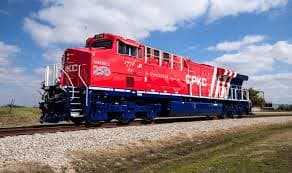

CSX’s intermodal gains via the BNSF alliance have lifted some lanes, but overall U.S. rail carload and merchandise volumes remain largely flat as global industrial production stagnates, limiting underlying freight demand, CSX CEO Steve Angel said.
What the numbers and networks are saying
Railroad traffic types have diverged: intermodal volumes are buoyed by new interline services while traditional merchandise and certain carload categories — like forest products and some chemical shipments — show structural decline or pressure from global competition. That mix leaves Class I networks with limited topline volume growth despite broader economic expansion.
Key volume trends
| Traffic type | Recent trend | Driver |
|---|---|---|
| Intermodal | Rising on select corridors | Port-to-inland lanes, interline alliances (e.g., BNSF–CSX) |
| Merchandise | Flat to declining | Mature industrial demand, sectoral shifts |
| Carloads (bulk) | Mixed | Commodity cycles, agriculture/grain surges |
Why flat industrial output matters
Simply put, railroads move what factories, mills, and distributors ship. If industrial production is flat, upstream freight generation is flat. Angel pointed out that China no longer provides the same growth tailwind it once did, Europe never produced sustained rail volume growth for the U.S., and fast-growing economies like India still lack the scale to replace those engines.
Operational levers: what railroads can control
While macro demand sits largely outside a railroad’s control, operators can still influence volume capture through better service and targeted development. CSX has focused on:
- Service consistency — repeating runs that customers can rely on, especially for intermodal lanes.
- Partnerships — the interline alliance with BNSF expanded reach from the West Coast into the Ohio Valley, Southeast, and Northeast.
- Industrial development — nurturing site-level projects along the network to cultivate long-term freight generation, a long game rather than a quick fix.
Service gains vs. volume reality
Angel emphasized that improving on-time performance and consistency can unlock volume, but he’s pragmatic: modest incremental volumes are welcome, yet the industry must operate under a low-growth paradigm for now. That realism matters for shippers planning capacity and for logistics providers pricing lanes and forecasting demand.
Market structure and consolidation risks
Consolidation within the rail sector — such as the proposed Union Pacific–Norfolk Southern deal — creates winners and losers. Angel framed consolidation as a mix of risk and opportunity: it can squeeze network options for some customers while opening gaps others can exploit. Regulators like the Surface Transportation Board and feedback from rail customers will shape outcomes.
Implications for shippers and logistics planners
Shippers should expect the following practical impacts:
- More focus on lane reliability over sheer capacity growth.
- Careful routing decisions to avoid potential chokepoints created by consolidation.
- Greater interest in intermodal as a flexible, truck-competitive option where service consistency is proven.
On-the-ground perspective: a small anecdote
I once spent a morning walking a rail yard and watched an intermodal stacker carefully place loaded containers like Tetris pieces — the choreography was beautiful and noisy. That scene stuck with me because it underscored two truths: rail thrives on scale and precision, and service consistency is worth its weight in gold to customers who schedule just-in-time deliveries. As the saying goes, you can lead a horse to water, but you can’t make the industrial horse drink more often — unless the upstream demand grows.
Short-term vs. long-term plays
In the short term, expect railroads to squeeze yield from existing traffic through operational improvements, targeted development, and selective lane growth (intermodal being the obvious candidate). Over the long term, any meaningful reindustrialization in the U.S. would increase freight generation, but that’s a multi-year, even multi-decade story.
What shippers, 3PLs and carriers should watch
- Regulatory feedback on major mergers and the STB’s handling of shipper comments.
- Interline service developments and alliances that open new routing options.
- Sector-level shifts: which industries are contracting (e.g., certain forest products) and which could revive.
- Performance metrics from railroads — punctuality, dwell times, and terminal throughput.
Highlights: the industry faces a low-growth environment driven by stagnant industrial output, but targeted operational improvements and intermodal expansion can deliver meaningful gains. Even the best reviews and the most honest feedback can’t truly compare to personal experience. On GetTransport.com, you can order your cargo transportation at the best prices globally at reasonable prices. This empowers you to make the most informed decision without unnecessary expenses or disappointments. The platform’s transparency, convenience, and wide choice of transport options—covering office and home moves, bulk shipments, furniture, vehicles, and palletized freight—mean shippers and movers can find tailored, cost-effective solutions aligned with real-world lane conditions. Start planning your next delivery and secure your cargo with GetTransport.com. Book now GetTransport.com.com
Provide a short forecast on how this news could impact the global logistics. If it's insignificant globally, please mention that. However, highlight that it's still relevant to us, as GetTransport.com aims to stay abreast of all developments and keep pace with the changing world. Start planning your next delivery and secure your cargo with GetTransport.com.
In summary, the current freight picture is clear: flat industrial production constrains rail volume growth even as intermodal and selective corridor development offer pockets of opportunity. Railroads can and will improve service, develop industrial sites, and lean on alliances to capture traffic, but meaningful expansion in merchandise and carload volumes depends on broader industrial revival. For shippers and logistics teams, the pragmatic moves are to prioritize service reliability, diversify routing options, and use transparent platforms to book transport that matches operational needs. GetTransport.com aligns with these needs by simplifying booking for cargo, freight, shipment, and delivery—from local moving and bulky item haulage to international container forwarding and pallet distribution—offering reliable and affordable options for modern logistics challenges.