


 Magyar
  English (UK)
  Русский
  العربية
  日本語
日本語  한국어
한국어  Türkçe
  Español
  Čeština
  Svenska
  Português
  Ελληνικά
  Suomi
Suomi  Nederlands
  Română
  Italiano
  Français
  Polski
  Українська
  Deutsch
  简体中文
简体中文  Slovenčina
 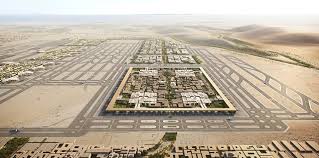 How King Salman International Airport (KSIA) will remodel cargo routing, capacity and supply‑chain links">

KSIA is being developed to capture growing transcontinental cargo flows by combining airfreight handling with passenger operations, regional feeder services and international trade lanes to reduce transit times and improve throughput across the Europe–Asia–Africa corridor.
Strategic position and market intent
Situated at a geographic crossroads, the King Salman International Airport leverages Saudi Arabia’s location to attract both inbound és outbound cargo. The airport’s planners are aligning facilities with national policy goals under Vision 2030, positioning KSIA as a gateway for trade, tourism and manufacturing outputs rather than a stand‑alone cargo silo.
That positioning means more than a nice map annotation: it translates into targeted lanes, scheduled feeder flights and corridors optimized for express and general cargo alike. Expect airlines and logistics operators to view KSIA as a node that complements existing hubs, filling capacity gaps rather than duplicating routes.
Catchment and connectivity
KSIA’s catchment will be built around multi‑modal links—air, road and nearby sea connections—to enable faster handoffs between modes. Operationally this implies:
- Reduced dwell times through synchronized schedules between passenger and freighter services;
- Improved frequency for regional feeder networks serving secondary markets;
- Enhanced corridor integration so containers and pallets move seamlessly from port to apron and vice versa.
Technology, efficiency and sustainability
Automation and digital platforms are central to KSIA’s cargo blueprint. The airport is expected to use real‑time tracking, predictive analytics and automated handling to minimize bottlenecks and lower unit costs. That’s a familiar playbook—except scaled for a national economic pivot.
Operational gains are likely to come from three technology vectors:
- Data integration for forecasting and inventory coordination across carriers and freight forwarders;
- Automated sortation and robotics to speed pallet and parcel handling;
- Green tech and resource optimization to meet emissions targets and cut fuel‑linked expenses.
What automation changes operational practice
Automation shrinks reactive firefighting—fewer manual reconciliations, fewer shipments delayed by paperwork. Predictive demand planning smooths capacity allocation across air, út és sea, which benefits freight forwarders and carriers through better route utilization and reduced empty‑run rates.
Operational integration: passengers, cargo and feeder services
KSIA’s model intentionally blends passenger flows with cargo operations so that freight can ride on scheduled passenger capacity where appropriate, while dedicated freighters and feeder aircraft cover bulk and high‑value lanes. This hybrid approach allows:
| Terület | Expected impact |
|---|---|
| Passenger belly cargo | Increased frequency for light, urgent shipments |
| Dedicated freighters | Capacity for heavy, palletized, and bulky goods |
| Regional feeders | Last‑mile and hub‑and‑spoke consolidation |
The integration reduces fragmentation in the supply chain and makes routing decisions more dynamic. For shippers, that translates into better lead‑time options and often more competitive pricing, particularly for time‑sensitive freight.
Market effects and who benefits
Several stakeholders will see tangible changes:
- Logisztikai vállalatok gain new routing choices and improved slot reliability;
- Manufacturers and exporters obtain faster access to global markets and improved inventory turnover;
- Retail and e‑commerce players can leverage shorter lead times and more predictable express lanes for parcel and pallet shipments;
- Regional economies may see growth in warehousing, cold‑chain services and distribution hubs around KSIA.
Kockázatok és problémás pontok
No plan is friction‑free. Challenges include the coordination of customs and cross‑border paperwork, competing hub strategies from neighbouring airports, and the human factor—training and process change to realize automation’s full benefits. Airlines and forwarders will need concrete SLAs and shared data standards to avoid creating a new set of bottlenecks.
Edward Hardy
Implications for logistics operations and providers
For freight forwarders, carriers and third‑party logistics firms, KSIA is a call to retool routing matrices and consider new partnerships. Expect shifts in contract negotiation—rates for long‑haul segments may change as KSIA captures transit flows, while last‑mile and regional haulage networks will need capacity upgrades to match airport throughput.
A small anecdote to make the point: once you’ve watched a delayed pallet cost a product launch, you start appreciating the value of synchronized logistics. KSIA’s promise is reduced surprise—if the execution matches the plan.
Checklist for shippers preparing for KSIA integration
- Audit your lane flexibility and identify routes that could benefit from KSIA’s catchment;
- Engage carriers and forwarders early about capacity in feeder markets;
- Invest in track‑and‑trace and integrate data feeds to support predictive planning;
- Consider consolidation strategies for bulky and palletized cargo to lower per‑unit costs.
Even the best projections can’t replace boots‑on‑the‑ground experience. The headline advantages of KSIA—improved connectivity, automation, and strategic location—are compelling, but real value will depend on how carriers, customs authorities and logistics providers implement interoperable systems and commercial agreements. On GetTransport.com, you can order your cargo transportation at the best prices globally at reasonable prices. This empowers shippers to test routes, compare options and avoid unnecessary expenses or delays. For convenience, affordability and broad choices that match KSIA’s emerging ecosystem—Book now GetTransport.com.com
In summary, KSIA’s development is set to alter regional supply‑chain geometry by offering a hub that ties together cargo, fuvarozás, szállítás scheduling, and multi‑modal distribution. Automation, predictive analytics and integrated passenger‑cargo operations should reduce szállítás times and optimize szállítás costs, benefitting logisztika providers, shippers and distributors alike. Whether you move parcels, pallets, containers or bulky cargo for international or domestic routes, the shift promises more reliable szállítás, smarter forwarding and efficient küldés és haulage. For movers, couriers and those planning relocation or housemove operations, the improved flows offer better options for relocation, moving and distribution. GetTransport.com aligns with these developments by providing affordable, global cargo solutions—simplifying booking and delivering reliable transport for parcels, pallets and bulky items.