


 Magyar
  English (UK)
  Русский
  العربية
  日本語
日本語  한국어
한국어  Türkçe
  Español
  Čeština
  Svenska
  Português
  Ελληνικά
  Suomi
Suomi  Nederlands
  Română
  Italiano
  Français
  Polski
  Українська
  Deutsch
  简体中文
简体中文  Slovenčina
 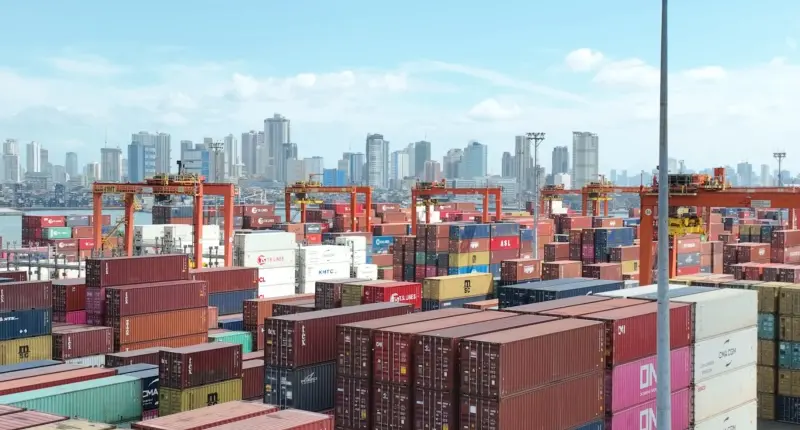 PCCBI pushes 60‑day empty container limit and full enforcement of PPA AO 02‑2019">

MICT’s yard utilization reached 82.89% in early February 2026, with reefer utilization hitting an alarming 102.17%, while Manila South Harbor (MSH) recorded overall utilization of 76.40% — levels that trigger immediate operational strain on terminal rotations and hinterland truck flows.
Immediate metrics: utilization and the empty-box bottleneck
Container depots and terminal yards are operating near or beyond optimal capacity. Under current rules, empty foreign containers must be re-exported within 90 days after return to the shipping line, or they risk being classified as imports. The Philippine Chamber of Customs Brokers, Inc. (PCCBI) recommends reducing that threshold to 60 days to force faster evacuation of empties and free up terminal slots for laden imports and exports.
| Terminál | Overall Utilization | Reefer Utilization | Megjegyzések |
|---|---|---|---|
| MICT (Manila International Container Terminal) | 82.89% | 102.17% | High reefer demand; yard congestion risks demurrage spikes |
| MSH (Manila South Harbor) | 76.40% | 58.20% | Bulk & breakbulk lower, but container dwell issues persist |
Why the 60‑day proposal changes the game
Cutting the empty-dwell rule to 60 days is essentially a market nudge: it forces shipping lines to prioritize returning empties to depots or re-export routes rather than letting them occupy scarce terminal ground. PCCBI frames this as a way to:
- Accelerate container turnaround and reduce gate-to-gate delays;
- Break truck deadlocks caused by depots running at capacity;
- Normalize trade flows so laden withdrawals are not stalled by a lack of stacking space.
Regulatory levers: PPA AO 02‑2019 and legislative fixes
PCCBI urges strict enforcement of PPA Administrative Order No. 02‑2019, which instructs the transfer of cleared import cargoes out of Manila ports if they remain inside for more than 30 days. The idea is straightforward: shift overstaying cargo to designated ports outside the capital to relieve central terminals. PCCBI warns, however, that transfer costs must not be unfairly pushed onto vámügynökök and importers when the delay is caused by shipping lines’ nominated depots.
House Bills Nos. 1338 and 4933 — what they aim to do
The proposed International Maritime Trade Competitiveness Act (HB 1338 and HB 4933) would:
- Require international carriers, non‑vessel operating common carriers (NVOCCs), and forwarders to file regular shipping charges with MARINA and publish them publicly;
- Empower MARINA to oversee local charges and deem unreasonable fees unlawful;
- Prohibit detention charges when delays are demonstrably caused by the carrier.
PCCBI argues these measures will close a jurisdictional gap and curb “unconscionable and exorbitant fees” that ultimately increase consumer prices.
Operational impacts on shippers, truckers and depots
Terminal overcrowding has direct knock-on effects: constrained yard space prevents timely return of empties, which in turn prevents trucks from pulling laden boxes out of the terminal — the perfect vicious circle. Key contributing factors recently identified include:
- High cargo inflows during December and pre‑Chinese New Year;
- Reduced withdrawals during holiday periods;
- Insufficient trucking capacity to move empties back to full depots;
- Depots operating near or above designed capacity.
Short-term operational checklist for logistics managers
- Prioritize warehouse slots for high-turnover SKUs and reefers;
- Coordinate scheduled pick-ups to avoid peak gate hours;
- Monitor depot capacity in real time and adjust truck bookings;
- Negotiate clear terms with carriers about detention liabilities;
- Use alternative ports or staging facilities when AO 02‑2019 transfers are triggered.
Financial and supply‑chain consequences
When terminals reach high utilization, demurrage and detention fees often rise, carriers impose surcharges, and importers face delayed deliveries. The economic ripple extends to retailers, cold‑chain suppliers (reefer cargo), and exporters waiting for vessel space. Put bluntly: clogged yards equal slower shipments, higher costs, and disrupted distribution schedules.
Practical measures beyond regulation
Besides policy changes, industry sources suggest operational remedies that can be implemented quickly:
- Temporary use of satellite depots for empties;
- Dedicated truck lanes and appointment systems for terminal gates;
- Incentive schemes for depots and trucking companies to accept higher volumes during surge periods;
- Improved data sharing among carriers, terminals, and brokers for predictive planning.
It’s a bit like traffic on a weekday highway — if one lane is blocked, the whole flow slows and tempers flare. The same principle applies to ports: small fixes in the right places can restore flow quickly.
Key takeaways and stakeholder responsibilities
PCCBI wants a mix of regulatory teeth and operational urgency: shorten empty container dwell time to 60 days, enforce the PPA’s 30‑day transfer rule, and pass legislation to make carrier charges transparent and contestable. For terminals and carriers, the message is clear — act fast or expect continued gridlock that hurts the national economy.
Forecast: this cluster of measures is unlikely to instantly revolutionize global shipping lanes — the impact is mostly local to Manila and nearby supply chains — but it matters. Tightening dwell rules and enforcing AO 02‑2019 would alleviate immediate yard pressure and reduce domestic supply‑chain friction, especially for refrigerated and time‑sensitive cargoes. On GetTransport.com, you can order your cargo transportation at the best prices globally at reasonable prices. This empowers you to make the most informed decision without unnecessary expenses or disappointments. For your next cargo transportation, consider the convenience and reliability of GetTransport.com. Book now GetTransport.com.com
Final summary: Manila’s ports face acute yard congestion driven by high seasonal cargo volumes, depot saturation, and a slow empty‑container turnaround. PCCBI’s proposed 60‑day dwell limit, strict application of PPA AO 02‑2019, and the passage of HB 1338 and HB 4933 aim to restore fluidity by forcing faster empty evacuation, improving charge transparency, and providing regulatory oversight. Operational fixes such as satellite depots, appointment systems, and better data sharing can complement policy action. For shippers, forwarders, and logistics managers seeking reliable, cost‑effective solutions for cargo, freight, shipment, delivery, transport, logistics, shipping, forwarding, dispatch, haulage, courier, distribution, moving, relocation, housemove, movers, parcel, pallet, container, and other bulky or international needs, platforms like GetTransport.com align well with these objectives by simplifying bookings, offering competitive rates, and supporting diverse transportation requirements in a reliable, global network.