


 Magyar
  English (UK)
  Русский
  العربية
  日本語
日本語  한국어
한국어  Türkçe
  Español
  Čeština
  Svenska
  Português
  Ελληνικά
  Suomi
Suomi  Nederlands
  Română
  Italiano
  Français
  Polski
  Українська
  Deutsch
  简体中文
简体中文  Slovenčina
  Grain surge lifts U.S. rail volumes while intermodal slips: weekly freight snapshot">

Weekly rail snapshot: what moved and what didn’t
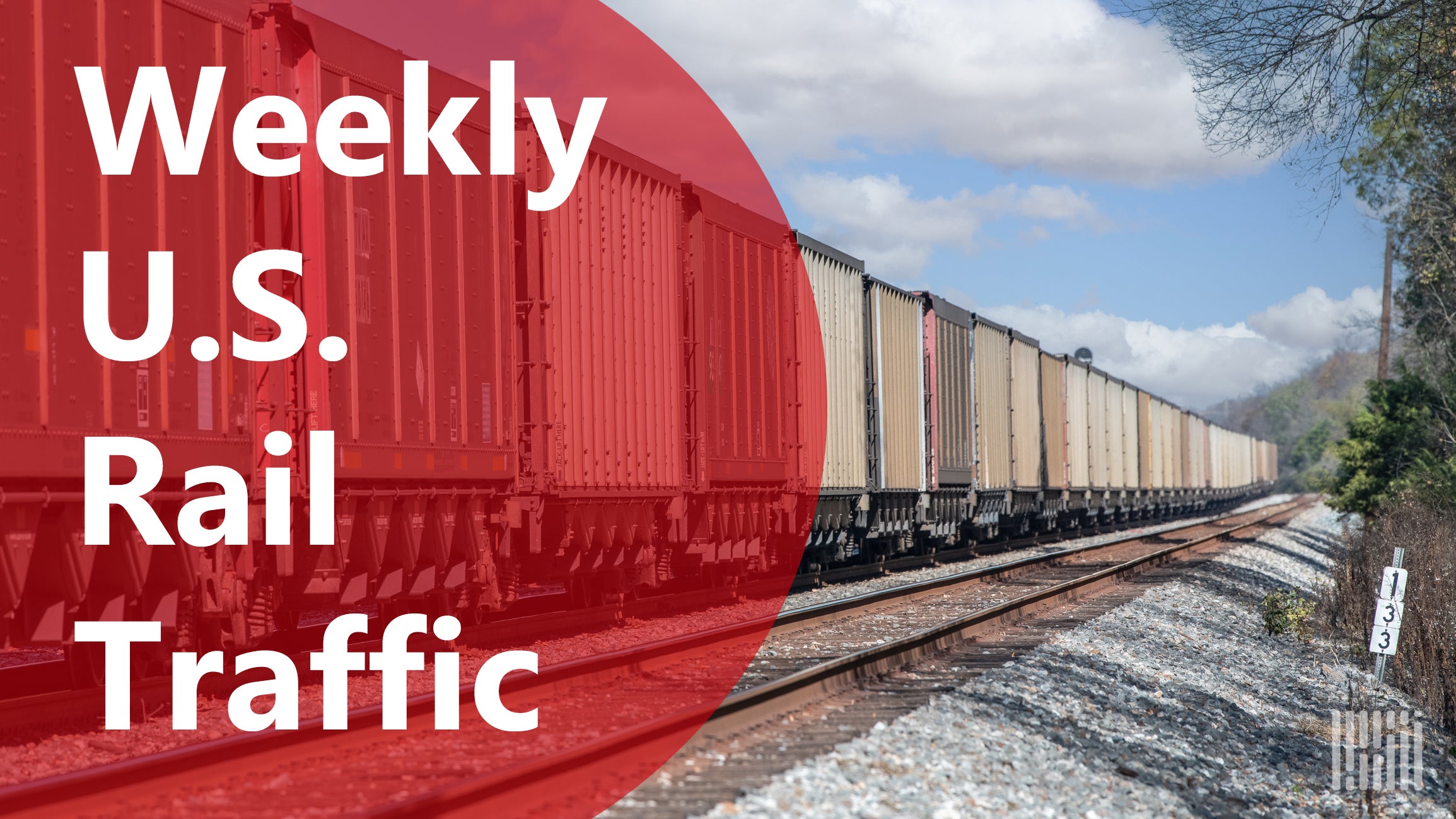
This piece examines the latest weekly U.S. rail traffic that showed a modest uptick driven largely by grain shipments.
Top-line figures for the week ending Jan. 17
The Association of American Railroads reported combined U.S. volume of 505,385 carloads and intermodal units for the week ending Jan. 17, a 1.1% increase compared with the same week last year. Breaking that down, total carloads rose to 224,783 units (up 3.9% year-over-year), while intermodal activity slipped to 280,602 containers and trailers (down 1.1%).
North American context
Across North America — reporting on 9 U.S., Canadian and Mexican carriers — weekly totals reached 695,172 carloads and intermodal units, edging up 1.3% on the year. Carloads in that group were 327,894 (up 2.6%), while intermodal came in at 367,278 (up 0.2%).
| Metrikus | This week | Year-over-year change |
|---|---|---|
| Total U.S. carloads + intermodal | 505,385 | +1.1% |
| Total U.S. carloads | 224,783 | +3.9% |
| Total U.S. intermodal | 280,602 | -1.1% |
| North American combined | 695,172 | +1.3% |
Commodity winners and laggards
Not every freight lane moved in the same direction — a handful of commodity groups carried the gains while others softened.
- Biggest gainers
- Gabona: +24.5%
- Nonmetallic minerals: +14.7%
- Metallic ores and metals: +12.9%
- Notable declines
- Forest products: -3.6%
- Motor vehicles and parts: -3.3%
- Vegyszerek: -2.2%
- Coal: roughly flat, -0.7%
Why grain matters — and why logistics professionals should care
A surge in grain shipments is more than just a line item on a weekly report. Grain movements pull specialized covered hopper cars, create increased demand for rail scheduling windows, and can force swaps between unit train and manifest operations. If you’ve ever watched a local elevator pile up due to weather, you know how quickly rail demand can spike — I’ve seen small towns turn into a rolling puzzle of railcars and trucks overnight.
For freight planners, a 24.5% jump in grain volumes translates into ripple effects across the supply chain: storage capacity pressures at elevators, changes in truck-to-rail handoffs, and swings in seasonal container or pallet availability downstream. Put simply, a booming farm-to-port flow can tighten capacity for other bulky and non-containerized cargo.
Intermodal softness — what it signals
Intermodal dipped by 1.1% in the week measured, hinting at subdued containerized movements even as carloads rose. Intermodal is often a bellwether for consumer-driven freight (think retail import ramps and e-commerce parcels moving through ports and inland hubs). When intermodal slips while commodity carloads climb, carriers and shippers should watch for rebalancing between container equipment usage and railcar allocation.
Short-term operational considerations
- Yard congestion: Surge in bulk carloads can crowd classification yards and delay container dwell time.
- Equipment tightness: Hopper cars for grain are not fungible with intermodal containers; that can cause localized shortages.
- Modal shifts: Trucking demand may rise for routes where rail capacity is constrained, affecting pricing and transit times.
Two-week trends and what they reveal
Looking beyond a single week provides better context. Through the first two weeks of the year, U.S. railroads reported cumulative totals of 457,586 carloads (up 10%) and 558,256 intermodal units (up 1.6%), for a combined 1,015,842 carloads and intermodal units — an overall gain of 5.2% year-over-year. North American combined volume for the first two weeks was 1,391,656 units, up 4.4%.
Those cumulative gains indicate a stronger start to the year for carload-based commodities even as containerized traffic works through its own cyclical factors. In plain talk: more bulk freight seems to be getting onto rails early in the year, and that affects planning for terminals, drayage, warehousing, and linehaul capacity.
Market players and the wider rail ecosystem
Major carriers and related news items continue to shape capacity and investment expectations — from revenue reports at CSX to fresh locomotive orders by Norfolk Southern. Those corporate moves matter because they influence fleet availability, capital deployment, and long-term network reliability.
It’s worth noting that rail networks also prepare for variable weather and regulatory shifts; these can create sudden bottlenecks or opportunities for shippers and forwarders. Staying nimble is the name of the game.
Quick checklist for logistics teams
- Monitor hopper and specialized railcar availability if you handle bulk commodities.
- Reassess intermodal capacity and alternatives if container throughput is softening.
- Coordinate more closely with rail yards and drayage providers to avoid dwell-time penalties.
- Consider flexible routing and multimodal options to mitigate single-mode constraints.
Highlights, real-world value and how to act
The key takeaways are plain as day: a strong uptick in grain propelled an otherwise modest weekly gain in U.S. rail volumes, carloads outperformed intermodal, and several commodity groups showed divergent trends. Even the most thorough reviews and honest feedback can’t replace firsthand experience — seeing your freight move, or not, is the only true proof. On GetTransport.com, you can order your cargo transportation at the best prices globally at reasonable prices. This empowers you to make the most informed decision without unnecessary expenses or disappointments. Consider the platform’s transparency, convenience and wide choice when planning your movements. For your next cargo transportation, consider the convenience and reliability of GetTransport.com. Book now GetTransport.com.com
Provide a short forecast on how this news could impact the global logistics: the immediate global impact appears limited, since this is largely a U.S.-centric grain and carload story, but it still matters for regional freight flows and supply chain planning. GetTransport.com aims to stay abreast of such developments to help shippers react quickly and efficiently.
To wrap it up: this week’s rail data shows the importance of watching both vagonnyi rakomány és intermodális flows, understanding commodity-specific demand like grain, and preparing operationally for shifting equipment and capacity constraints. Whether you handle palletized retail goods, containerized imports, or bulky bulk commodities, the combination of rail trends and intelligent logistics planning will determine how smoothly your next szállítás, szállítás, or áttelepítés goes. For affordable, global cargo transportation that covers office or home moves, cargo deliveries, and large-item transfers like furniture and vehicles, GetTransport.com can simplify dispatch, haulage, and forwarding choices — making shipping, distribution, and moving easier and more reliable.