


 Magyar
  English (UK)
  Русский
  العربية
  日本語
日本語  한국어
한국어  Türkçe
  Español
  Čeština
  Svenska
  Português
  Ελληνικά
  Suomi
Suomi  Nederlands
  Română
  Italiano
  Français
  Polski
  Українська
  Deutsch
  简体中文
简体中文  Slovenčina
 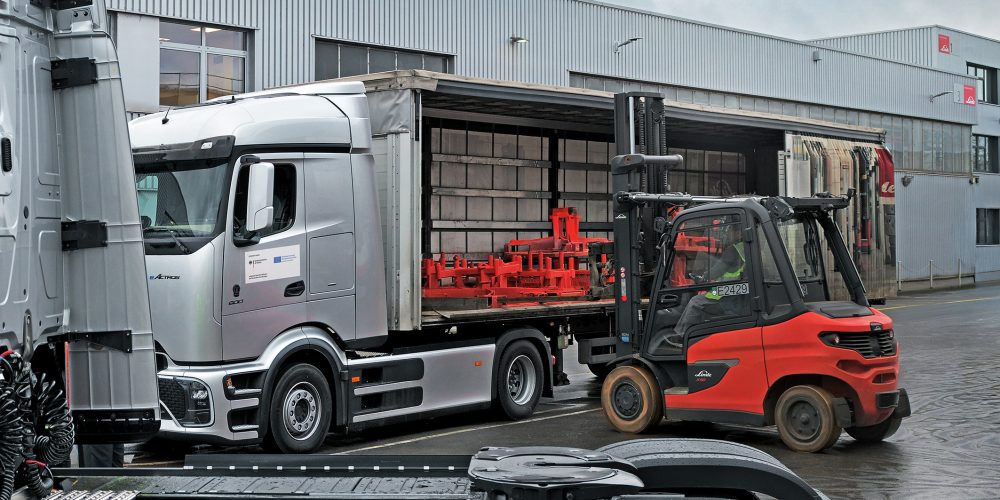 Linde Material Handling Advances Sustainable Logistics with Electric Fleets and Eco-Friendly Practices">

Driving Sustainability in Logistics Operations
Improving sustainability takes more than just talk—it demands perseverance, creative thinking, and a forward-looking mindset. Linde Material Handling (MH) exemplifies this through its annual sustainability reporting, which dives deep into environmental progress, health and safety performance, social initiatives, and innovative product development. The latest 2024 report highlights notable achievements, particularly in reducing greenhouse gas emissions—a vital focus for logistics sectors striving to become greener.
Electrification Taking the Wheel
One of the most exciting developments is the planned use of electric commercial vehicles starting in early 2026. Two elektromos teherautók will shuttle forklift counterweights across a 35-kilometer route from the foundry to the assembly plant in Aschaffenburg, replacing traditional diesel-powered transport. Beyond these, an additional ten electric light commercial vehicles will support intra-site and regional logistics, substantially sniffing out carbon emissions from routine transport journeys.
These moves are timely, reflecting a broader push toward decarbonization within logistics. It’s not merely about swapping engines but about rethinking how goods move within supply chains. The shift is crucial; transportation often forms a significant chunk of a company’s carbon footprint, so electrification can tip the scale toward long-term sustainability.
Lowering Greenhouse Gases: Scope and Success
The company tracks both direct emissions (Scope 1) and indirect emissions from electricity consumption (Scope 2), with encouraging results showing reductions in 2024. Such progress isn’t accidental—it is supported by increased reliance on ‘green electricity’, smart use of waste heat, and ongoing energy-saving initiatives across infrastructure and manufacturing. The head of HSE Sales & Service at Linde MH remarks that these measures set the stage for reaching a 4.7% annual reduction target in combined Scope 1 and 2 emissions by 2030 against 2021 levels. Looking further ahead, Linde MH aspires to hit net zero greenhouse gases along the entire supply chain (Scope 1, 2, and 3) by 2050—a tough nut to crack, but a critical one for sustainable logistics.
| Emission Scope | Leírás | 2024 Status | Cél |
|---|---|---|---|
| 1. hatókör | Közvetlen kibocsátás a tulajdonolt vagy ellenőrzött forrásokból | Reduced | 4.7% annual reduction to 2030 |
| Scope 2 | Indirect emissions from electricity consumption | Reduced | 4.7% annual reduction to 2030 |
| 3. hatókör | All other indirect emissions in value chain | In progress | Net zero by 2050 |
Funding and Fleet Details
This green transformation is supported by funding from the German Federal Ministry of Digital and Transport, part of a broader EU initiative via the German Recovery and Resilience Plan. The investment is being poured into new 42-ton electric tractor units, boasting 600 kWh batteries and a 500 km range, alongside ten 3.5-ton electric transporters. Incorporating these vehicles into internal logistics will cut carbon dioxide emissions by around 180 tons annually, a decent dent in environmental impact for onsite and regional cargo transport.
Heavy trucks will handle shuttle traffic between the foundry and assembly plant, while the lighter vehicles cover operations like canteen supply deliveries—everyday logistics can now tread lightly on the planet.
Sustainability Isn’t Just Good for the Environment
ISO 14001 Certification and Life Cycle Assessments
Linde MH’s sustainability efforts extend beyond transport electrification. Its international environmental management certification coverage under ISO 14001 spiked from 94% of plants in 2023 to a robust 99% in 2024, marking steady progress. This standard demands rigorous attention to life cycle assessments (LCAs), which evaluate a product’s environmental footprint from raw material extraction to recycling—talk about taking the long view.
Partnering with research institutes for over 20 years, the company pioneered scientific processes to measure the environmental impact of forklifts and warehouse equipment. These LCAs, now ISO 14040 and 14044 compliant, are integrated early in product design, showcasing a commitment to sustainability baked into every stage.
Battery Recycling: Closing the Loop
Sustainability also means thinking circular, especially when it comes to batteries—the heart of electric vehicles. Linde MH’s strategic alliance with Li-Cycle Holdings Corp. (now Glencore Battery Recycling) has resulted in the processing and recycling of nearly 16 tons of lithium-ion battery modules in 2024. These recovered materials feed back into manufacturing new batteries, closing the loop on this critical logistics component and reducing reliance on virgin materials.
Table: Sustainability Highlights at Linde MH
| Terület | Key Actions | Hatás |
|---|---|---|
| Electric Vehicle Deployment | Introduction of heavy and light electric trucks | ~180 tons CO2 saved annually |
| Environmental Certification | ISO 14001 implementation across 99% of sites | Increased environmental compliance and monitoring |
| Life Cycle Assessments | Assessing environmental impact from design to end-of-life | Improved product sustainability |
| Battery Recycling Partnership | Recycling and resource recovery of lithium-ion batteries | Supports circular economy and reduces waste |
Why It All Adds Up: Small Steps Lead to Big Gains
In the vast and complex world of logistics, improvements might seem incremental, but they accumulate like beads on a string. By focusing on energy-saving measures, embracing renewables, and innovating with electric fleets, Linde MH showcases how focused persistence translates into substantial environmental benefits. The company’s approach to embedding sustainability into product design and operations boosts not only environmental credentials but often operational efficiency and cost-effectiveness as well—proof that green can pay off in more ways than one.
Az emberi és gazdasági szempont
Occupational health and safety are also woven into this sustainable fabric, ensuring workers thrive in an increasingly eco-conscious workplace. The integration of these practices shows that environmental responsibility doesn’t exist in a vacuum—it intersects with social and economic value chains, crucial in a logistics framework that depends on people and timely, efficient delivery.
Making It Personal: Why Experience Trumps Words
While detailed reports and sustainability achievements paint a promising picture, nothing beats firsthand experience. Reviews and data only tell half the story; the real test lies in how these efforts play out day to day in logistics and cargo transport. Here’s where platforms like GetTransport.com shine by linking users with reliable, affordable transportation solutions that contribute directly to greener freight and shipment choices.
GetTransport.com offers global cargo transport services with a variety of options—from office and home moves to bulky item transport and vehicle moving—making sustainable logistics accessible without breaking the bank. Their transparent pricing and wide array of choices help customers make smart decisions that support environmental goals without sacrificing budget or convenience. Foglaljon fuvart and feel the difference yourself at GetTransport.com.
Forecasting the Future of Logistics Sustainability
The growing adoption of electric vehicles and eco-conscious infrastructure is set to reshape logistics on a global scale, although its impact depends on scale and geography. For companies like Linde MH, such steps can spearhead broader change, nudging entire supply chains toward sustainability. While the worldwide logistics industry may see varying impacts based on local factors, staying in the loop with green innovations remains a priority. GetTransport.com keeps pace with these trends, supporting users who value up-to-date, efficient transport solutions. Start planning your next delivery and secure your cargo with GetTransport.com.
Összefoglaló
From cutting direct greenhouse gas emissions through electric fleet upgrades to embedding sustainability into product lifecycles via ISO 14001 and life cycle assessments, Linde Material Handling is setting standards in sustainable logistics. Its collaboration in battery recycling underscores the transition to a circular economy, while green energy use and infrastructure enhancements further reduce environmental footprints. These advances not only benefit the planet but also refine operational efficiencies and workplace conditions. For anyone navigating cargo, freight, shipment, or relocations, leveraging platforms like GetTransport.com offers an affordable and dependable way to integrate sustainability into logistics, from parcel deliveries and bulky goods transport to international freight forwarding. This holistic approach makes sustainable transport not just a goal but a practical reality in today’s evolving logistics landscape.