


 Magyar
  English (UK)
  Русский
  العربية
  日本語
日本語  한국어
한국어  Türkçe
  Español
  Čeština
  Svenska
  Português
  Ελληνικά
  Suomi
Suomi  Nederlands
  Română
  Italiano
  Français
  Polski
  Українська
  Deutsch
  简体中文
简体中文  Slovenčina
  COVID-19 Vaccines Supply Chain – How Real Is the Cybersecurity Threat?">

Adopt zero-trust across all components now. Take decisive actions now. Segment critical assets, enforce MFA for all access to logistics portals, and rotate credentials quarterly. Limit lateral movement by isolating site admin interfaces and procurement portals. Track suspicious activity on each node, requiring proactive collaboration between security teams and suppliers to close visibility gaps. This practical approach yields measurable gains in containment time and reduces blast radius in real-world events.
Hacking attempts increased as criminals pivot toward partners and remote workers. Analysts said last quarter that credential theft remains a leading entry vector. Within compact networks, attackers probe low-privilege accounts and leverage software updates to pivot across sites. A robust plan covers people, processes, and technology; emphasize hálózatépítés with colleagues in small groups and ensure credible követés of user activity across portals. A webinar program helps employees and contractors stay current on alerts and response steps.
Key metrics to watch include MTTD under 12 hours, MTTC under 24 hours, and time to restore critical services within 48 hours. Maintain a live inventory of partner software with a simple tracking method; require SBOMs; enforce least privilege; isolate production and distribution systems; implement network segmentation; require encrypted backups; perform quarterly tabletop scenario exercises; run phishing simulations for all employees; deploy automated alerting for anomalous login times; require rapid revocation of access when personnel shift roles; schedule weekly reviews of access logs. For workers at suppliers, ensure ongoing networking training, and security team writes incident notes into a shared repository.
In morphowave scenario modeling, a single breach can cascade into partner networks, disrupting work queues and delaying deliveries. To limit risk, maintain security requirements within contracts, designate security champions at every site, and deploy rapid-response playbooks accessible via webinar drills. Collaboration among manufacturers, distributors, and retailers accelerates information sharing, tracking, and coordinated containment, reducing impact across a wider network.
Outline: COVID-19 Vaccines Supply Chain Cybersecurity
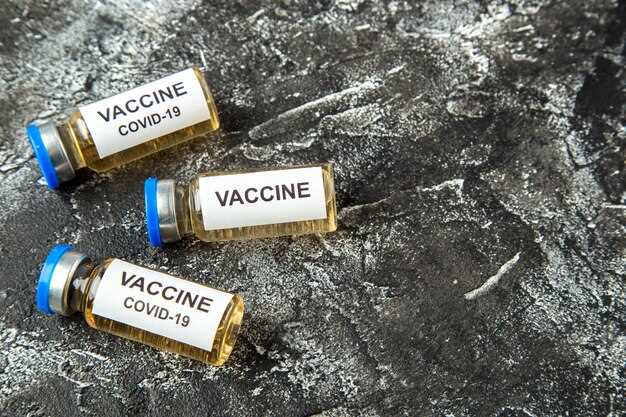
Recommendation: enforce zero-trust architecture across entry points, segment networks by facility, and require MFA for every worker and contractor; ready for immediate rollouts in warehouses and robotics-enabled lines; align access with capabilities and reducing blast radius; teams can begin today without disruption.
There are five threat vectors in this domain: supplier portals, ERP interfaces, WMS/TCM, robotics control nets, and remote maintenance sessions; monitor activity, enable anomaly detection, and conduct breach drills; publications and shared intel shorten detection cycles; went from hours to minutes in initial simulations; in a connected world, cross-team collaboration speeds response.
Entry controls: enforce least-privilege, role-based access, and continuous authentication; accessible controls for teams; adopt secure remote maintenance; order data and access logs must be signed and immutable; five critical entry points mapped to workstreams and robot-control domains; Specifically, implement privileged access management with segmentation and regular credential rotation.
Visibility, inventory, and maps: maintain live inventory across warehouses; build maps of data flows from supplier orders to infection indicators tested in simulations; infection indicators tested in simulations; risk resides in supplier catalogs; источник; emma led a postmortem on a recent incident.
Publications approach: rely on public reports and sector guidelines to shape baselines; ingest threat intelligence; align with common models; cross-team collaboration increases visibility and accelerates containment; workers on-site and remote operators gain accessible dashboards, reducing recovery time; parcel data feeds into inventory integrity checks.
Identify Critical Data Flows and Stakeholders in the Vaccine Supply Chain
Recommendation: Map critical data streams across logistics network, spanning devices at facilities, transport hubs, and end-point systems. Include entry points such as inspections and automated checks, including fulfillment updates, and identify who relies on each stream–partners, researchers, and operators.
Identify data types: environmental metrics, device fingerprints, lot and expiry data, authorization logs, and proof of inspections. For each type, specify which platforms handle it, which partner roles access it, and which devices contribute fingerprints. Ensure data provenance by linking entries to underlying transactions and component changes.
Stakeholders and roles: list manufacturers, distributors, cold-chain managers, labs, regulators, health networks, IT teams, and external researchers and platform vendors. Define each party’s part in data handling. Outline responsibilities, access rights, and incident response workflows so partners can respond quickly.
Governance and controls: map underlying risks across access, authentication, and automation. Deploy device management, networking hygiene, continuous monitoring, and platform-level inspections to limit exposure. Implement validation at entry points and enforce least-privilege access.
Operational steps: starting from minimal viable map, then expand data lines with additional types. Draft data-sharing agreements with partners, define cadence for updates, and tie data flows to business outcomes. Leverage Orion for cross-system analytics and fingerprint-based attestation to verify provenance.
Ransomware and Data-Tampering Risks in Cold Chain and Serialization Systems
Install airtight isolation between IT networks and OT devices in warehouses, enforce MFA and role-based access, and deploy tamper-evident signing for serialization records. Maintain offline backups for critical inventory data and validate integrity during every processing cycle.
Ransomware operators target large and small firms by exploiting weak credentials on networked devices, hijacking update channels, and launching hacking attempts through tricky attack vectors. A single compromised workstation can interrupt power feeds, corrupt track data, and disrupt inventory systems across multiple sites, risking accuracy of public health reporting.
Architecture should enforce segmentation between public interfaces, enterprise systems, and OT, plus redundant logging, immutable backups, and distributed ledgers for serialization. Linked monitoring feeds from existing sites empower executives to spot anomalies quickly; publications from government bodies guide architecture decisions. For existing firmware and devices, implement secure update practices and verify provenance.
Detection and response: apply anomaly detection, integrity monitoring, and rapid restoration procedures for sites, warehouses, and processing nodes. Routine drills with executives train teams; however, announced vulnerabilities require swift patches. If an incident occurs, isolated segments limit spread.
Operational controls: require registered suppliers to deliver signed updates, verify code provenance, and maintain an inventory of all devices on network. Public-private collaboration reduces risk; where possible, operate in linked, monitored environments rather than isolated pockets. This approach makes changes easy to implement.
Scenario snapshot: attackers may exploit a single entry point; layered defenses raise difficulty for intruders; but if access gains, quick isolation helps contain damage. In this landscape, where health data, track records, and serialization must stay accurate, a robust governance framework keeps stakeholders aligned, with linked publications guiding ongoing practices.
Zero-Trust, Access Controls, and Third-Party Risk Management Across Peers

Adopt zero-trust across peer interfaces; require explicit authentication, continuous authorization checks, and near real-time monitoring for each access attempt.
Context: in distributed ecosystems across worlds, enforce glove-level controls across contech vendors, suppliers, and research partners handling items and shipping. A glove becomes symbol of tight control. Controls extend throughout partner environments.
Policy design prioritizes role-based access, device posture, and session verification, with logging, anomaly detection, and networking safeguards baked into governance to support privacy, safety, and ready operations.
Remote operations rely on MFA, adaptive access, and continuous posture checks for remote workers; add additional guardrails and policy-driven revocation when risk signals appear. Organizations find this approach relatively scalable across multiple teams and regions.
Third-party risk management blossoms through ongoing vendor assessments, privacy impact reviews, and contractual controls; maintain an itemized inventory of partnerships and responsible owners. As mentioned, privacy protections support health objectives and public concerns, aligned with governments and health authorities. Costs stay manageable with transparent funding and cross-team collaboration.
Cost and funding: allocate additional funding for identity platforms, hardware tokens, monitoring, and training; remember that costs may be relatively predictable when governance is strong. Whole ecosystem safety improves as policy aligns with health and safety goals across teams and governments.
Education and outreach: run webinar series for teams, publish policy guidance on website, and share lessons with governments and organizations. Emphasize privacy, safety, and workers protection; ready status improves as teams adopt shared practices across distributed contexts.
| Terület | Akció | Mérések | Owner |
|---|---|---|---|
| Identity and access | MFA, glove-level controls, context-aware access | denied requests per 1,000; average session duration; time-to-terminate | Biztonság |
| Vendor risk | Ongoing assessments; privacy reviews; contractual controls | risk score; privacy incidents; coverage of clauses | Procurement |
| Remote ops | Remote access policy; device posture; conditional access | incidents; policy violations; readiness score | IT |
| Monitoring | Centralized logging; anomaly detection; audits | MTTD; false positives; audit findings | Biztonság |
| Oktatás | Webinars; updates to website; staff training | training completion; phishing susceptibility; policy adherence | Learning |
Regional Reshoring: Cyber Risk Profiles, Local Infrastructure, and Redundancy
A regionális termelés felé való gyorsított elmozdulás minimalizálja a hosszú szállítási útvonalakon való kitettséget; a fő munkavállalói központokat a lakóhelyek közelében helyezze el, telepítsen automatizált helyi adatközpontokat, és építsen ki redundáns hálózati kapcsolatokat több szolgáltatónál is, diverzifikált útvonalakon keresztül.
Ebben a kontextusban a kockázati profilok a helyi infrastruktúra minőségével változnak. London területe alacsonyabb késleltetést mutat az edge feldolgozásnál, míg a külső zónák magasabb meghibásodási kockázattal szembesülnek. Ellenőrizze a biztonsági ellenőrzéseket minden helyszínen, különösen a távoli hozzáférést, az OT/IT konvergenciát és a harmadik felek interfészeit. A kiberbűnözési esetekből, a korábbi incidensekből és a hackerek támadási kampányaiból származó bizonyítékok azt mutatják, hogy a már feltört hálózatok kaszkádszerűen terjedhetnek a területi hálózatokon; a pánikmentes válaszok a felkészült elszigetelési tervektől függenek a műveletek minden rétegében.
A redundancia terv három pilléren nyugszik: helyi feldolgozás, offline biztonsági mentések, diverzifikált szállítási kapcsolatok. Használjon automatikus feladatátvételt két regionális adatközpont között a működés fenntartásához a foglaltság ingadozásai vagy a szállítmány késedelmei esetén. A munkavállalók és operátorok lépésről lépésre haladó képzést kapnak az incidensekre való reagálásról, a londoni és howicki területekre szabott ellenőrzőlistákkal.
A logisztikai, gyártási és tengerészeti szervezeteknek csatlakozniuk kell egy regionális reziliencia projekthez, hogy megosszák a bizonyítékokat, tanulságokat és a kapcsolódó legjobb gyakorlatokat. Az elmúlt évek azt mutatják, hogy a támadók kihasználják az egyszeri telephelyfüggőségeket; a Maersk üzemeltetőinek feljegyzései azt mutatják, hogy a láncok diverzifikálása csökkenti a hatást. A támadási vektorok fejlődnek, folyamatos kockázatellenőrzést igényelve.
A kontextusgazdag mutatók konkrét előrelépési jeleket adnak. A lépések közé tartozik az eszközfeltérképezés, a támadási útvonalak számbavétele és a teljes helyreállítási idő célkitűzések meghatározása. Használjon automatizált ellenőrzéseket annak érvényesítésére, hogy a helyi biztonsági másolatok épségben maradnak-e a terhelési csúcsok vagy a kedvezőtlen események során. A kapcsolódó, vállalati szintű oldalaknak bizonyítékokon alapuló eredményeket kell jelenteniük, a londoni és howicki referenciákkal a folyamatos fejlődés ösztönzésére.
Gyakorlati incidens forgatókönyvek: észlelés, reagálás és helyreállítás valós időben
Azonnali javaslat: elkülönített detektáló csomópontok telepítése a kritikus épületeknél és árufuvarozási csomópontoknál; automatikus válaszparancsfájlok indítása az anomália jelek után öt-tíz percen belül; helyreállítási forgatókönyvek előretöltése a foglaltság zavarának minimalizálása és a helyreállítás felgyorsítása érdekében.
- Észlelés és riasztás: épületekből, árufuvarozási csomópontokból, tartalomtárakból származó nagyméretű telemetriai adatfolyamok összevonása; a jelek gyakran teszteredményekből, hozzáférési naplókból és fizikai érzékelőkből származnak; az események összevetése anomáliamodellekkel; az esetlegesen zajos adatokat alapszintű küszöbértékekkel szűrik; a hálózati szegmensek közötti redundancia biztosítja, hogy a riasztás még akkor is eljusson az incidenskezelő csapathoz, ha egy csatorna meghibásodik; irányítópultok a beszállítók, amerikai partnerek számára, beleértve a howicki telephelyet is; cél: gyors észlelés perceken belül.
- Azonnali reakciók riasztás esetén: a fertőzött hálózati szegmensek izolálása; a létesítmények közötti útvonalak megszakítása; a biztonsági mentési eszközök engedélyezése; átváltás redundáns adatútvonalakra; előre elkészített helyreállítási lépések kiválasztása és feladatok kiosztása a reagálóknak; a beszállítók és ügyfelek értesítése; tömör kommunikáció fenntartása az értelmezési hibák csökkentése érdekében; biztonsági ellenőrzések a vakcinakészletre és a tárolóhelyiségekre.
- Helyreállítás és tanulás: integritás validálása teszteléssel és tartalomellenőrzéssel; visszaállítás a biztosított biztonsági mentésekből; adatok hónapokra visszamenőleg ellenőrizve; a működés újbóli bevezetése elkülönítve, ellenőrzött módon; a kihasználtság és a közműterhelés monitorozása a túlterhelés megelőzése érdekében; incidens utáni kutatások a beszállítókkal és amerikai partnerekkel; az események dokumentálása, a kontrollok beállítása, a továbbfejlesztett redundancia és kockázatkezelési kontrollok implementálása; megosztani a helyszíni ellenálló képesség megerősítésére kapott gyakorlati megoldásokat, beleértve a howicki helyszín frissítéseit, a vakcinakészlet biztonsági intézkedéseit. Az előnyök közé tartozik a csökkent állásidő, a jobb tartalom integritás és a gyorsabb döntési ciklusok.