


 Magyar
  English (UK)
  Русский
  العربية
  日本語
日本語  한국어
한국어  Türkçe
  Español
  Čeština
  Svenska
  Português
  Ελληνικά
  Suomi
Suomi  Nederlands
  Română
  Italiano
  Français
  Polski
  Українська
  Deutsch
  简体中文
简体中文  Slovenčina
 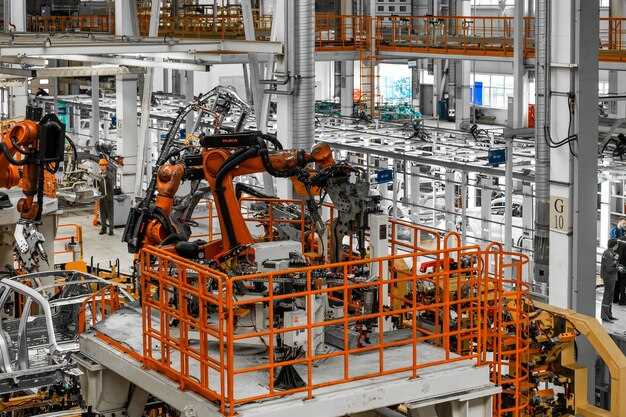 A Smart Factory forradalma – A gyártás átalakítása az Ipar 4.0-val">

A gyártás negyedik hullámában egy advanced olyan beállítás, ami összekapcsol robotic felfegyverkezve kibertest a rendszerek szállítanak knowledge érzékelőkből, kamerákból és energiamérőkből. Tervezze meg a kísérleti projektet úgy, hogy adatokat gyűjtsön a ciklusidőről, a hibaszázalékról és az energiafelhasználásról, és letöltés a műszerfalakat a felügyeleti konzolra. Kövesse nyomon környezetek például a hőmérséklet és a rezgés figyelésével, hogy megelőzzük az anomáliákat, mielőtt azok megzavarnák a termelést. Tekintsen a bevezetésre inkább egyenletes ritmusként, mint gyors tesztként; egy kis, kontrollált lépés tisztább eredményeket és jobban hasznosítható meglátásokat eredményez.
Adatvezérelt megközelítés alkalmazása: az OT és IT adatfolyamok egyesítése a következőkhöz: competitiveness és management láthatóságot. Egy tipikus gyártósor esetében a nem tervezett leállások az éves termelés 20-25%-át is elérhetik; a prediktív karbantartás és a rezgéselemzés ezt 15-30%-kal csökkentheti a próbaidőszak alatt. Használjon edge computingot a letöltés valós idejű metrikákat és tárolja az analitikákat egy felhőalapú adattárban. Ahogy skálázódik, szabványosítsa az adatcímkéket, hozzon létre knowledge bázis, és hetente publikál news tájékoztatókat az érdekelt felek számára a célkitűzések összehangolása érdekében. Hagyjuk, hogy a kísérletek úgy bontakozzanak ki, mint egy pityer hajnalhasadáskor, apró kísérleti győzelmeket alakítva kézzelfogható előnyökké.
Működés szempontjából határozzon meg egy 6 lépéses tervet: térképezze fel a vonal adatfolyamait, integrálja kibertest csomópontokat egy egyszerűsített MES-sel, valósítson meg egy 2-3 robotcellás klasztert, konfiguráljon keskenysávú biztonságos kapcsolatot, és hozzon létre irányítópultokat. A tervnek tartalmaznia kell egy 90 napos sikermutatót: 8-12%-os ciklusidő csökkenés, 5-8%-os selejtszám csökkenés, és a karbantartás reaktívról preventívre való átállítása 60 napon belül. Használjon környezetek amelyek támogatják a gyors iterációt és knowledge a csapatok és műszakok közötti megosztás, heti frissítésekkel a news és a tanulságok.
A fókuszálás révén advanced folyamatos visszajelzés, és egy robotic eszközkészlettel egy olyan rugalmas ellátási láncot hozhat létre, amely ötvözi az emberi ítélőképességet a gépi pontossággal. Hozzon létre egy könnyű irányítási réteget, és építsen be egy management ütemben, és képessé tegyék az operátorokat arra, hogy letöltés betekintést a műhelyszintű döntések javításához. Ezzel párhuzamosan ápolja a news csatornát a győzelmek megünneplésére és beágyazásra knowledge környezetekben és csapatok között, ami összehangolja az érdekelt feleket ma, és lényegében a kezelők és csapatok felé tolja a felelősséget.
Ipar 4.0 a gyakorlatban: SAP és Snowflake adatintegráció intelligens gyárak számára
Kezdje egy tiszta adatintegrációs mintával, amely összeköti az SAP S/4HANA-t a Snowflake-kel, hogy közel valós idejű elemzéseket biztosítson a gyártósoron. Ezzel katalógust és adatsármaztatást hoz létre a jogsértések megelőzése és egy megbízható nézet biztosítása érdekében a kezelők és a vezetők számára egyaránt.
Vezessenek be élvonalbeli adatcsatornákat, amelyek leegyszerűsítik az SAP modulokból származó adatok Snowflake-be való betöltését, lehetővé téve a skálázható hozzáférést az üzemcsarnokban dolgozók és a létesítményvezetők számára. Az adatszint egyesíti a beszerzési, a vásárlási, a gyártósori és a minőségi adatkészleteket a többfunkciós intézkedések és a gyorsabb döntések támogatása érdekében.
Íme egy gyakorlati kézikönyv az elméletek gyakorlati alkalmazására: a prototípus-ciklusok négy adathalmaz felhasználásával validálják az adatmodelleket, a negyedik iteráció pedig a predikciókra és a gyorsabb döntésekre összpontosít. Használja a gyártósori operátorok visszajelzéseit az adatmodellek finomításához, és iteráljon különböző forgatókönyvekkel a döntéstámogatás mögött meghúzódó motor élesítéséhez.
Ez a megközelítés a komplexitást úgy kezeli, hogy az SAP-t és a Snowflake-et egységes nézetbe hozza, tiszta adatkövetéssel, lehetővé téve a műveletek optimalizálását a gyárban és a létesítményekben, miközben minimalizálja a duplikált adatkezelést és csökkenti a biztonsági rések kockázatát ellenőrzött hozzáférés és auditálás révén.
| Stage | Data Sources | Tools | Eredmény |
|---|---|---|---|
| Bevitel | SAP S/4HANA, MES | Snowflake streamek, Dataflow | Valós idejű adathalmazok érhetők el az elemzéshez |
| Modellezés és prototípus-készítés | Beszerzés, Vásárlás, Termelés, Minőség | dbt, Python notebookok | Validált adatmodellek és betöltési minták |
| Elemzés és cselekvés | Operáció, Ellátási lánc | Analitikai munkaterhelések, BI irányítópultok | Azonnali döntések kerültek elő a területi csapatok számára |
| Skálázás és üzembe helyezés | Minden létesítmény | adatmegosztás, vezénylés | Létesítmények közötti betekintések, skálázható teljesítmény |
SAP ERP és Snowflake megfeleltetése: adatmodellek, kulcsok és összekapcsolások
Kezdj egy kanonikus adatmodellel a Snowflake-ben, amely összeköti az SAP ERP-t egy egységes analitikai réteggel. Állíts be RAW staging területeket a BKPF, BSEG, VBAK, VBAP, MSEG, MKPF táblákhoz és a kapcsolódó törzsadatokhoz; majd egy kifinomult adattárházat összehangolt dimenziókkal a Vevő, Szállító, Anyag, Üzem és Idő számára, plusz ténytáblákat a Pénzügy, Beszerzés, Értékesítés és Termelés számára. Implementálj surrogate kulcsokat minden dimenzióhoz (SK_Vevő, SK_Szállító, SK_Anyag, SK_Idő), miközben megőrzöd az SAP natúr kulcsait (KUNNR, LIFNR, MATNR, BELNR, VBELN) stabil azonosítóként a staging területen. Ez a Snowflake rugalmas számítási kapacitásával támogatott alap egyben alapot teremt a digitalizációhoz és a hálózatokon és gyártósorokon átívelő mesterséges intelligenciával támogatott elemzésekhez.
Az adatmodellek a finomított rétegben egy csillagsémával kezdődnek. Minden dimenzió helyettesítő kulcsot használ, míg a ténytáblák ezekre a helyettesítőkre hivatkoznak. A kritikus mesterek (Vevő, Szállító, Anyag) esetében használjon lassan változó dimenziókat (2. típus), hogy megőrizze az előzményeket, és fontolja meg a Data Vault 2.0 komponenst az SAP mesterek agilis változáskövetéséhez, amikor a környezet méreteződik. Ezek az adatláncok biztosítják a nyomon követhetőséget egy főkönyvi tételből vagy egy értékesítési dokumentumból az analitikai dimenziókig, lehetővé téve a konzisztens, több területre kiterjedő jelentéskészítést és a gyors visszacsatolási ciklusokat a működési döntésekhez.
A join minták gyakorlati megközelítést követnek: A FactFinancial a DimTime-hoz kapcsolódik a DateKey-en, a DimCustomer-hez az SK_Customer-en, a DimProduct-hez az SK_Product-en, és a DimCompany-hez a CompanyCode-on; a BSEG a BKPF-hez kapcsolódik a BELNR és GJAHR mezőkön, majd a megfelelő dimenziós sorokhoz szurrogát kulcsokon keresztül. Használjon belső join-okat a fő metrikákhoz és bal oldali join-okat a leíró attribútumokhoz, mint például partner adatok vagy adókódok. Optimalizáljon a gyakori predikátumok (Dátum, Üzem, Anyag) csoportosításával és a leggyakrabban használt összesítések materializálásával. Építsen ki olvasásra optimalizált nézeteket, amelyek megőrzik a nyers eredetiséget, miközben gyors elemzéseket biztosítanak az SAP eseményláncokon keresztül.
Operational governance and collaboration drive durability. Talk with business leaders to translate needs and changing demands into data products, establish delta loads and change data capture to keep SAP sources fresh, and implement AI-assisted data quality checks. Ensure role-based access and data lineage tracing, and incorporate shop-floor signals from xiaomis devices as a separate data source in a production line dimension and a related fact. This setup supports dashboards that reflect real, actionable insights and helps teams respond to evolving manufacturing scenarios while maintaining data integrity across the foundation.
Implementation unfolds in a practical, phased plan. Start with a 6–8 week pilot focusing on Sales and Financials to validate keys, joins, and performance; then extend to Procurement and Production. Define ETL/ELT pipelines with Snowflake Streams and Tasks, establish governance gates, and tune clustering keys for optimized query plans. Create a reusable mapping layer that links SAP sources to the canonical model, so you can scale the digitization effort without sacrificing reliability or speed. These steps lay a solid basis for advancing the smart factory vision with robust, AI-enabled analytics.
Real-time vs. batch pipelines: choosing the right approach for plant telemetry
Begin with a hybrid strategy: deploy real-time pipelines at the edge to operate safety alerts and control loops, alongside batch pipelines that digest historical data for long-term insights. This setup keeps safety checks immediate while enabling engineers and operations teams to analyze trends across environments and factories, boosting competitiveness and decision speed.
Real-time pipelines should target latency under a few hundred milliseconds, with robust fault tolerance and deterministic delivery. Push sensor data to an edge gateway where checks validate values, timestamp alignment, and data integrity before signaling safety actions or alarms. This approach reduces false positives and hold times, delivering intelligence to operators alongside augmented dashboards that provide clear, actionable views. Edge processing also limits network load, making operations easier in environments with intermittent connectivity.
For non-critical insights, route data to batch pipelines that accumulate streams into a central store for nightly or hourly processing. Batch analysis delivers enriched datasets, enabling improved modeling, capacity planning, and root-cause checks on events that real-time streams cannot explain. This approach shortened the cycle from anomaly to action by relating events to equipment history and operating conditions. Digitally tagging events, applying checks, and storing alongside telemetry gives factories and businesses a robust picture of needs and performance over time.
Implementation pattern: adopt edge-first with retry, then extend streaming to a centralized platform. Define data governance: retention windows, privacy, and access patterns. In practice, a reduced data footprint at the edge plus a shortened batch window can keep network load manageable, while still preserving improving intelligence and audit trails for digitally integrated factories and the broader organization.
Checklist for engineers evaluating pipelines: assess latency targets, data quality checks, and safety needs; map data paths alongside asset criticality; plan for failover between pipelines; ensure visibility across environments; align with strategy and training. By combining real-time speed with batch depth, businesses gain robustness and easier scalability, maintaining competitiveness across varied factories and production lines.
Master data governance: aligning BOM, materials, and production data
Implement a single source of truth for BOM, materials, and production data and appoint a cross-functional data governance board. This board meets weekly to approve changes, resolve conflicts, and align requirements across ERP, MES, PLM, and procurement systems.
Define a concise data model that links BOM headers and lines to material_master records, production routing, work centers, and supplier data. Specify item_id, revision, component_id, quantity, unit, lead_time, cost, and unit precision, then enforce clear linkage rules between BOM lines, materials, and operations to prevent existing silos on the floor.
Establish data quality rules and validation, with unique keys per domain, deduplication, and standardized units. Track completeness, accuracy, and timeliness, targeting 98% completeness for BOM data and 95% accuracy for procurement data. Introduce automated checks at data creation and periodic profiling during prototyping and ongoing operations to meet evolving needs.
Deploy data integration and lineage across ERP, MES, PLM, procurement, and internet-connected devices. Use APIs to synchronize BOM changes in real time and maintain an audit trail. Leverage digital twins to mirror production lines, enabling more precise planning and during prototyping to test governance before scale.
Define roles and processes: assign data stewards for each domain, implement approval workflows, and require versioned change requests. On the floor, empower immediate remediation workflows for anomalies to prevent costly misalignments in supply and production scheduling, and clearly document the costs of non-conformance to motivate ongoing improvement.
Set security, access, and standards: enforce role-based access, audit logs, and retention policies; adopt common codes and unit measures; address challenges such as legacy data, supplier substitutions, and part substitutions by embracing consistent master records across systems and teams.
Track metrics and establish a cadence for governance reviews: data completeness, cross-system consistency, time to publish changes, and the rate of mismatches resolved. An investment in master data governance yields tangible results on procurement cycles, reduced rush orders, and smoother production planning. Present a phased roadmap that starts with a focused pilot, includes prototyping milestones, and continues to scale beyond the initial deployment to large, complex operations.
Security and compliance: role-based access, encryption, and audit trails in Snowflake
Configure a unified RBAC framework in Snowflake to enforce least privilege and automate ongoing access reviews.
- Role-based access and provisioning: Define roles by function (data_engineer, data_scientist, compliance_officer, supplier_access) and establish a clear hierarchy. Grant USAGE on warehouses and databases, plus specific privileges (SELECT, INSERT, UPDATE) only where needed. This minimizes exposure and minimizes drift, while enabling talk with security and compliance teams to validate controls. Automates provisioning and revocation workflows, and extends the policy surface to masking policies and secured views. Regular, automated access reviews–quarterly or after major changes–support the goals of compliant data handling and reduce risk. This model would enable continuous governance.
- Encryption and key management: Snowflake encrypts data at rest and in transit by default. For stronger control, enable Tri-Secret Secure with customer-managed keys or BYOK, so encryption keys are effectively controlled by the company. This would help meet regulatory requirements and increase resilience, especially when data moves across networks during prototyping or supplier collaboration.
- Audit trails and monitoring: Use ACCOUNT_USAGE views (QUERY_HISTORY, LOGIN_HISTORY, ACCESS_HISTORY) to capture a complete activity trail. Export logs to external storage or a SIEM for automated monitoring, alerting, and forensics. Set retention periods and enable immutability where possible to support an informed conclusion and long-term compliance, while still enabling rapid investigations.
- Data masking and row-level controls: Apply masking policies to PII fields and use row access policies to enforce fine-grained access. This ensures sensitive data remains effectively hidden for unauthorized roles, improving privacy while preserving analytics. This approach helps some teams share data with confidence and talk through what each role can see, while keeping data protected.
- Networking and edge integrations: Enforce secure connectivity and restrict access through trusted networks. Use private connectivity or secure gateways to minimize exposure, and ensure supplier integrations follow the same controls. Infrastructure would seamlessly integrate networking, logging, and policy enforcement, even when devices such as xiaomis or kipiai and other computers act as data sources–thus preserving trust as data flows from edge to Snowflake. In environments with twins and other devices, standardize connection settings to prevent drift.
- Prototyping and extended governance: Run prototyping tests with synthetic data to validate access controls, masking, and auditing before production. Extend policy templates to cover new data stores and partner ecosystems (theyre common in a smart factory), and automate the rollout of changes to limit manual mistakes. The goal is to improve outcomes and ensure that security controls scale with the factory’s growth.
Conclusion: A unified, driven security posture in Snowflake–enabled by role-based access, robust encryption, and auditable trails–aligns with the goals of a secure, scalable manufacturing network. By talking with stakeholders, theyre teams, and supplier partners, and by carefully integrating xiaomis devices and other computers, the company would see tangible improvements in risk management and data collaboration. This approach essentially helps minimize risk while increasing informed decision-making for the organization.
Analytics playbooks: predictive maintenance, quality control, and throughput forecasting
Implement a cloud-native analytics playbook that connects sensor data from machinery to enable predictive maintenance, quality control, and throughput forecasting with real-time visibility across the plant floor. Start by unifying data from MES, ERP, SCADA, and edge devices, then enforce a security-first approach to protect sensitive process data.
- Predictive maintenance: Collect data from vibration sensors, bearing temperature, lubrication flow, motor current, and ambient conditions across the following machinery types to detect wear trends early. Apply cloud-native analytics models at the edge for real-time inference and in the cloud for retraining, using a combination of statistical methods and lightweight ML. Set detection thresholds that trigger maintenance actions before failures occur; track MTBF, MTTR, spare-parts usage, and overall equipment effectiveness (OEE). Target reduce unplanned downtime by 25-40% within 12 months, cut maintenance costs by 10-20%, and extend asset life. Ensure events are logged with actionable guidance and parts lists, so engineers can act quickly. Protect data through encryption, RBAC, and audited access while maintaining visibility across the organization; theyre ready to turn detections into proactive actions that minimize disruptions.
- Quality control: Use inline vision systems and sensors to monitor product attributes in real time. Run SPC with X-bar and R charts, track Cp/Cpk, and aim for a Cpk above 1.3. Connect quality data to production scheduling to minimize rework and re-inspection. Deploy automated defect classification and root-cause analysis, delivering alerts that prevent cascading failures on following lines. Real-time feedback can reduce defect rates from 0.5-0.8% to 0.2-0.4% on critical processes, while improving process capability and remaining inventory turns. Build a closed loop across the shop floor so improvements are replicable throughout the facility, enabling innovations that become standard and driving brighter visibility of where defects originate. Theyre making goods more consistent by surfacing actionable insights at the operator station and the control room.
- Throughput forecasting: Build dynamic models that fuse cycle time, line utilization, WIP, and demand signals. Use cloud-native data pipelines to scale to multiple lines and plants, with scenario analysis for following disruptions such as supplier delays or equipment downtime. Validate forecasts against historical data; aim for 3-7% error on weekly forecasts and update daily for near-term planning. Use the forecast to schedule shifts, maintenance windows, and raw-material orders, improving visibility for planners and operators. By incorporating events and external indicators, you create smoother goods flow and better capacity planning. Engineers and operations teams can contact the analytics team to tune parameters; theyre set to minimize stockouts and unnecessary overtime while maximizing throughput across the network.
Cost, ROI, and time-to-value: planning the SAP-to-Snowflake integration project

Start with a six-week SAP-to-Snowflake pilot to quantify cost, throughput gains, and time-to-value. Define KPI targets: data latency under 10 minutes for core SAP reports, up to a 2x uplift in ETL throughput for critical dashboards, and a 30% decrease in manual data handoffs. Lock a focused budget for cloud credits, the integration tool, and essential consulting. Capture an informed baseline by assessing data quality, mapping accuracy, and process bottlenecks.
Cost items include Snowflake credits, SAP connectors, data-modeling work, data-quality tooling, and operator training. Build a transparent cost model that separates upfront investments from ongoing cloud charges. Compute the payback period by comparing annualized savings from faster reporting, fewer manual steps, and lower rework rates.
ROI modeling uses a simple formula: (annual savings − ongoing costs) / upfront costs. Target a payback window of 6–9 months for a test module and 9–12 months for enterprise scope. Track the delta monthly and adjust the scope to protect value delivery.
Time-to-value plan follows phases: discovery and architecture, pilot implementation, phased expansion, and formal rollout with governance. Align data models, lineage, and metadata cataloging; set refresh cadence and automation; ensure secure access control and auditable change history.
Risk areas include data quality drift, SAP upgrade compatibility, schema changes, pipeline failures, and budget overruns. Mitigate with versioned schemas, automated tests, rollback options, and a weekly decision point with the project team. Involve workers and human operators in acceptance testing to catch practical gaps.
Monitoring and governance establish dashboards for latency, error rates, and cost trajectories. Use alerting to catch anomalies quickly and assign a data steward to maintain consistency. Communicate findings to the broader team with concise, actionable updates to keep everyone informed.
People and communication focus on training IT and business users; provide clear notes and visuals; designate a data owner to drive accountability across data flows. Use regular check-ins to maintain momentum and to ensure the right expectations are set for stakeholders.
Tool selection centers on a lightweight SAP-to-Snowflake integration tool with native connectors, robust error handling, and scalable load options. Verify incremental loading, fault isolation, and compatibility with security policies. Ensure the chosen tool can contribute to a predictable cost profile while supporting ongoing growth.
Success criteria include measurable improvements in data freshness, reporting speed, and predictable spend. Document lessons learned, and prepare reusable patterns for future data projects to accelerate reaping value from subsequent initiatives.