


 Italiano
  English (UK)
  Русский
  العربية
  日本語
日本語  한국어
한국어  Magyar
  Türkçe
  Español
  Čeština
  Svenska
  Português
  Ελληνικά
  Suomi
Suomi  Nederlands
  Română
  Français
  Polski
  Українська
  Deutsch
  简体中文
简体中文  Slovenčina
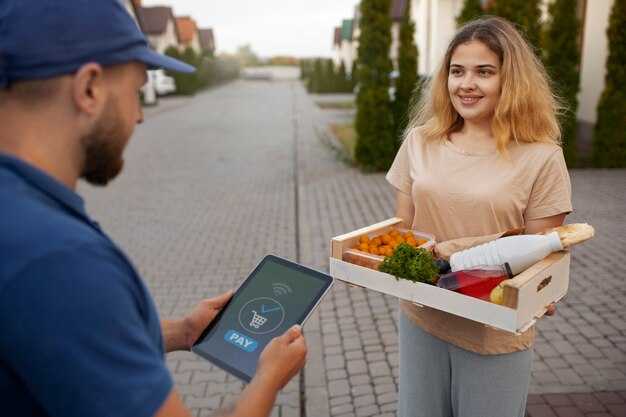
Start by drawing a tight delivery radius around each micro-fulfillment hub to guarantee 15-minute windows from order to doorstep, especially in dense city blocks where every minute counts. Build a little buffer for traffic and substitutions to avoid failed windows.
Then align inventory, orders, and routing with multiple micro-warehouses, including live inventory feeds, to keep everything fast and predictable.
Founders explain the move: since their $15M expansion, they have widened from a single city to three metro areas, opening around 20 micro-fulfillment hubs and carving a radius of roughly two miles per location. In march they began pilot tests in high-density pockets, and a deal with suppliers was taken to ensure shelf consistency. They compared their speed with amazon last-mile plays to identify right trade-offs. Competitors and players across markets tightened their promises as a response, pushing faster replenishment and more local assortments.
To test the model in your market, determine whether there is enough density to support 15-minute deliveries and whether unit economics allow profitable margins at scale. Track order velocity by neighborhood and measure the share of orders fulfilled within the target window. No bottlenecks appeared during the initial pilot, and customer satisfaction rose as delivery times improved. Focus on speed reliability, then compare results with a few known competitors and a handful of players in your city. If you can, start with a pilot in march and scale only when you hit the target.
Across the board, the key is clarity on delivery windows and inventory visibility. espanso networks deliver better coverage; fast service attracts repeat customers, and the $15M expansion underscores investor confidence. If you’re evaluating such a model, start with a crisp radius, then layer supply chain steps and local partnerships to sustain growth across multiple city blocks.
Decoding the 15-minute timeline: order, pick, pack, and doorstep delivery in minutes
To meet the promise, youre able to deliver a 15-minute window by coordinating four parallel stages and pre-staging the most common items. Start with order capture, then pick, pack, and doorstep handoff in clean handoffs that minimize idle time. This approach suits food-focused markets and can scale to multiple cities. Freshdirect-style practices show this is feasible where there is dense ground traffic and good route options.
Timeline breakdown
- 0-2 minutes – Order capture and validation: customers place orders via the app; the system confirms a 15-minute target window, checks stock in real time, and tells the customer the ETA; if a high-demand item is unavailable, the system suggests an alternative or notifies staff to adjust the cart, keeping the promise intact.
- 2-5 minutes – Pick: trained employees in temperature-controlled zones locate items for the current orders; pick rate of 6-8 items per minute per team is typical for a well-staffed micro-fulfillment area; items are scanned to the pick log and grouped by order to smooth the packing flow.
- 5-9 minutes – Pack: each order moves to a packing station with appropriate temperature packaging; seals and labels are applied, and a quick visual check ensures nothing is missing; prepared items are flagged in the system to avoid delays for the next batch.
- 9-12 minutes – Quality check and rider assignment: automated checks verify completeness; nearest rider is assigned based on current load and traffic; multiple riders can be in rotation during peaks to keep workloads balanced and on track.
- 12-15 minutes – Doorstep delivery: rider arrives at the place, delivers with a clean handoff, and the app confirms receipt or flags a reattempt if needed; delivery status updates back to the customer and the market team.
Practical setup and KPIs
- Capital and footprint: invest in compact micro-fulfillment hubs (2k–4k sq ft) with 1–2 cold rooms; each hub serves a tight radius to minimize last-mile time and maximize the number of deliveries per shift.
- People and roles: 6–12 employees per shift, cross-trained across intake, pick, pack, and delivery handoffs; shifts align with peak order windows to keep focus sharp and errors low.
- Process and quality: standard operating procedures for each stage; daily audits of pick accuracy and packing quality; use barcodes to reduce nothing-missed items and to speed up validation.
- Technology and efficiency: real-time stock visibility, lightweight order validation, and route optimization to assign deliveries to nearby riders; integrate with a best-in-class last-mile mindset to serve multiple orders in one trip when feasible.
- Market and readiness: explore whether dense urban markets support widespread 15-minute deliveries; there, the model reaches a critical mass of customers and can scale with additional hubs and riders; monitoring customer feedback helps refine the latest packaging and prep practices.
- Metrics and targets: aim for 95–98% on-time delivery within 15 minutes, packing accuracy above 99%, and a rider utilization rate that minimizes idle time; measure delivery distance per order and average order size to tune hub placement and staffing.
Network design: micro-fulfillment hubs, urban coverage, and last-mile routing
Deploy micro-fulfillment hubs within 4-6 miles of dense urban cores to cut last-mile time and protect fresh products. Focus on margins by stocking only high-velocity items that meet the needs of urban shoppers and retail partners. Use viera analytics to know where demand clusters and place an established network with the right radius to maximize coverage. The right location where demand is highest ensures efficiency, and it delivers instant deliveries with reliability, while employees are trained for quick picks and curb handoffs. That lean stock prevents margins taken by waste.
alabi-ajidagba, former retail executive, notes market issues and the billion-dollar opportunity ahead; the firm must focus on a tight team, while some employees furloughed during transition are brought back as volumes rise. Investors and partners expect a plan that can move fast in a market, including issues such as congestion and cost control. Think of this approach as complementary to established stores; think amazon as a benchmark, but a radius-driven, neighborhood hub model keeps control of products and quality while expanding reach.
Hub placement and urban coverage
Place hubs to cover 95% of urban population within a 3-mile radius, prioritizing dense grids and transit-accessible zones. Use a mix of compact automation and manual handling to keep costs predictable while sustaining high pick throughput. Align staffing with peak windows to avoid idle hours, reactivating former employees when volumes rise and furloughed roles return to support rapid restocking. Maintain a steady cadence with partners and investors, presenting a clear story about how micro-fulfillment expands reach without sacrificing margins.
Routing and last-mile efficiency
Adopt dynamic routing that continuously re-optimizes for traffic, weather, and order mix so deliveries stay within a tight 12-15 minute window in most urban cores. Use a mix of compact vans and micro-vehicles for the final leg, with a focus on keeping products fresh and customers satisfied. Build a responsive team that can scale quickly and adapt to shifting needs across the market, including cross-city expansions where the radius allows faster service and higher throughput. Track key metrics in real time to reduce delays and maintain a strong story for partners and investors.
| Metrico | Valore | Rationale |
|---|---|---|
| Hub radius | 2-4 miles | Max coverage with minimal travel time |
| Hubs city-wide | 60-75 | Balance density and cost |
| Orders/hour per hub | 130-180 | Demand capture per micro-fulfillment |
| Avg delivery time | 12-15 minutes | Competitive instant experience |
| Freshness index | 8.5-9.5/10 | Quality preservation during transit |
| Margins uplift | 18-25% | Inventory discipline and waste reduction |
| Market potential | 2-3 billion | Incremental value from speed and convenience |
| Radius coverage | 95% within 3 miles | Urban density alignment |
| Fleet mix | EV bikes + compact vans | Lower costs, faster turnarounds |
Technology and data: inventory visibility, ETA accuracy, and real-time capacity planning
Implement a unified data fabric that ingests signals from warehouse WMS, store POS, supplier feeds, and last-mile partners to create a single source of truth. Currently, visibility across their networks remains fragmented, slowing replenishments and skewing ETAs. Build a live inventory view for the right mix of warehouse, urban micro-fulfillment centers, and specialty stores, targeting 98% visibility for core SKUs with updates every minute. This mores discipline helps teams understand what’s actually on hand, making decisions faster and reducing the need for manual adjustments that slow the slope of throughput.
ETA accuracy hinges on end-to-end visibility of the delivery path. Tie ETAs to real-time path status–prep, dispatch, pickup, and last mile–and set a target MAE ≤ 3 minutes with 95% of 15-minute ETAs within ±4 minutes. Compare planned versus actuals weekly and monitor the forecast error slope to guide improvements. In pilots with Kroger and urban grocers, the variance dropped about 40% in the first quarter, and busy customers noticed shorter wait times that fed repeat orders.
Real-time capacity planning shifts from static schedules to dynamic allocation. Run continuous what-if scenarios that reflect traffic, store throughput, and courier availability, and display a live capacity dashboard refreshed every 5 minutes. Use alert thresholds at 90% utilization and 15% overage to trigger reallocation, park pallets in the dock when needed, and keep lanes clear for fast turnover. This approach can lift throughput by 15–25% and reduce idle time to single digits, while remaining prepared for different partner types and regions.
Operational governance ensures data quality and adaptability. Implement daily reconciliation, deduplicate SKUs, and maintain canonical mappings so comparisons across sources stay reliable. If a supplier didnt push a feed, flag the gap and hold ETAs until confirmed, avoiding incorrect promises. Bolt-on connectors let you expand without disrupting core systems. Outline a six- to eight-week rollout: start with warehouse visibility, then extend to store-level and cross-dock coordination, so startups can move fast without breaking existing services. Dream of a world where customers come to expect 15-minute windows, and seize the opportunity by aligning grocers, e-grocery networks, and prepared-food services around a single, trusted data backbone that could expand alongside the business.
People and partnerships: recruiting drivers, training routines, and incentive structures
Recruiting and onboarding

Build a balanced driver slate: insiders who know the system, drivers from nearby city gig pools, and former retail staff who understand shelves and items. Before market launch, run a three-week onboarding track that includes two paid practice shifts and a field audit–plus a snow-day drill to test reliability. Theyre a mix of backgrounds, but everything in the playbook stays consistent so the operation works. Adding flexible shifts toward weekend demand helps cover rushes without burning people out. From the start, pair experienced insiders with newer drivers so theyre prepared for different routes and conditions. Know the place: instacart guidelines shape item prep, substitutions, and pickup timing to keep deliveries smooth. We reduce down time by pairing drivers with clear, repeatable tasks. Also clarify what each person should do in difficult conditions.
To refine recruitment, implement a fast two-pass interview plus a real ride-along that reveals what drivers can handle. If a candidate couldnt commit to the schedule, they wont be considered for the market launch. Use referrals from current drivers to expand insiders and reduce turnover. The goal is not just to hire more people, but to build a team that works well under pressure and toward reliable deliveries.
Incentives, metrics, and growth
Set a clear, three-tier incentive plan: base pay, per-delivery bonuses, and a quality premium tied to on-time rates and item accuracy. The sense is simple: rewarding consistent performers toward higher coverage during peak hours. Promising outcomes toward city expansion depend on transparent targets that teams can see and repeat. Use weekly dashboards to show each driver’s impact, from the city center to farther routes, so insiders know what theyre making and where to focus effort.
Offer gear stipends and a straightforward referral program; three successful referrals in a quarter unlocks a larger raise. Collaborate with local fleets and partners to scale capacity during snow weeks or holiday rushes, keeping service levels high for deliveries. If someone couldnt meet the baseline, the system routes them to coaching and lighter shifts to raise capability.
Expansion playbook: market selection, funding use, milestones, and risk controls
Recommendation: target williamsburg first, secure a warehouse near a park, and staff with a compact team of employees to run a 24/7 operation. Start with a pilot that ended in 4 weeks, and take notes from early orders; that plan took shape after targeted feedback from local shoppers and drivers, then measure order velocity, coverage, and the ability to serve more orders before expanding to other neighborhoods.
Market selection targets dense, high-velocity areas. Start in williamsburg, then move within nearby neighborhoods that share density and wallet share. In the past, quick, localized deployments outperformed bigger bets. Whats next depends on whether the market sustains a pipeline of 1,000 weekly orders; if so, scale to a second district. To guide decisions, review anonymous feedback from customers and drivers, track service levels, and compare with what retailwire reports about major players. The plan borrows insights from gladkoborodov and Pavel, and keeps capital aligned with the promise to serve more households with consistent speed.
Funding use focuses on three streams: capex for a scalable warehouse footprint, opex for a lean operations team, and tech investments for route optimization and customer services. Allocate capital to lease a warehouse, pick-and-pack gear, and last-mile software, while reserving a buffer for snow season and surge periods. Hire additional employees only after hitting mid-term milestones, and track unit economics by park, client type, and inside the Williamsburg market. Use anonymous data to inform decisions and show progress to investors and partners.
Milestones: finalize lease, assemble core employees, launch pilot, hit 2,000 weekly orders, and extend to a second park within 6–9 months. Risk controls: implement robust routing, inventory checks at the warehouse, and a weather contingency for snow days. Use anonymous feedback channels, set service-level targets, and maintain a reserve capital line to absorb disruptions. If a partner or supplier issue ended unexpectedly, switch to alternate vendors quickly and revalidate the unit economics before continuing expansion. Keep investors informed with a simple, transparent dashboard and whats next plan clarifying next markets and milestones.