


 Italiano
  English (UK)
  Русский
  العربية
  日本語
日本語  한국어
한국어  Magyar
  Türkçe
  Español
  Čeština
  Svenska
  Português
  Ελληνικά
  Suomi
Suomi  Nederlands
  Română
  Français
  Polski
  Українська
  Deutsch
  简体中文
简体中文  Slovenčina
  3PL Warehouse Safety – A New Standard with Autonomous Forklifts">

Deploy these systems to gain higher throughput and lower risk in daily operations. These machines improve cycle times and reduce human exposure in high-traffic areas, creating a steadier status for your teams.
These machines cut cycle times by 15-40% in typical pallet moves, because they follow optimized routes and avoid human blind spots. Yet you must manage these limitations: perception in wet floors, load variations, and signage clutter. Build a plan including on-site training, dedicated charging zones, and a clear safety norma for interactions with human staff.
Ruolo of leadership is to define the workflow, map the product flow, and update status in your WMS to reflect real-time location of goods and machines. Use autónomas units to move the product from receiving to staging, into storage, and toward fulfillment while keeping humans in sight lines. These steps provide flexibility and reduce bottlenecks.
To maximize safety, combine prevention strategies with training: daily checklists, visual and audible prompts, and supervised trials before going fully live. These actions reduce incident rates and show ROI within 6-12 months. Sites that have already piloted automation report fewer near-misses and smoother shift transitions.
In regions where local regulations permette autonomous operations, start with a single aisle or dock and scale as you verify reliability. The norma includes a risk assessment, signage, and dedicated lanes so these machines operate directly alongside humans without dead zones. Into the plan, align with your fulfillment schedule and keep the status up to date.
What Are Autonomous Forklifts? Practical Guide for 3PL Safety
Implement a one-warehouse pilot in a single zone ahead of full rollout to validate sensor reliability, path accuracy, and safe human-robot interactions; use outcomes to refine procedures before broader deployment.
Autonomous forklifts are machine-powered trucks that navigate warehouses without a human driver, guided by sensors, mapping, and automation software to move material efficiently and with minimal manual input. They operate in controlled environments and can reduce repetitive tasks, but require clear safety rules and reliable data to maintain performance across warehousing operations.
To reduce risks, establish layered safety: clearly defined routes, physical barriers, geo-fencing, and emergency-stop integration; implement automatic detection of pedestrians and workers nearby. Ensure that every interaction plan is documented and practiced, and include a supervisor or observer when trucks share space with people in high-traffic zones to maintain safe operations. Use continuous feedback to adjust speeds, distances, and stopping tolerances so safety outcomes improve consistently.
Operational design should specify where autonomous trucks run: loading docks, narrow aisles, and receiving areas, with deep integration to the warehouse management system to receive real-time task assignments. Include additional sensors such as LiDAR and cameras to extend environmental coverage, and set environmental conditions thresholds so machines can operate without sudden halts. Where manual tasks are replaced, ensure workers have clear roles, training, and recovery options, keeping cumplimiento and safety as the core priority while avoiding disruption to critical material handling processes.
People involvement remains essential: train operators, supervisors, and maintenance staff to monitor performance, perform quick inspections, and respond to alerts. Track metrics for greater throughput, safety incidents, and equipment uptime to demonstrate that autonomation adds value without compromising safety. Maintain a plan to scale across warehouses while protecting workers and ensuring that all procedures are followed consistently, with a focus on environmental stewardship and responsible automation adoption.
Autonomous Forklift Types in 3PL
Adopt a two-tier mix of autonomous forklift types aligned to tasks: autonomous counterbalance forklifts for floor-to-pallet moves, and autonomous reach trucks for high-rack zones, starting with a pilot in receiving. This approach will provide consistent throughput and reduce worker exposure to heavy lifts. To ensure safety, map the environment with real-time positioning, install guard zones, and train staff to work alongside machines so they move forward onto new processes ahead.
Autonomous counterbalance forklifts (ACF) handle general pallet movement from dock to staging. They offer payloads up to 3,000–4,000 lb (1.4–1.8 t), with speeds around 5–7 mph. They rely on avanzados navigation features (LIDAR/SLAM) to plan routes and stay aligned with aisles in real-time. In environments with limited GPS, the navegación engine updates maps continuously, allowing the unit to move ahead without missing a beat. They consistently advance onto the next pick or put-away step, accelerating throughput and improving accuracy.
Autonomous reach trucks (ART) serve high-rack zones where pallet heights exceed standard aisles. They typically carry 1.5–2.5 t payloads and extend reach to get pallets off upper levels, increasing storage density and reducing walking distances for operators. Their narrow-aisle operation fits 2.4–2.6 m aisles, and the units maintain forward-facing travel to simplify task sequencing. Real-time task updates keep the robot aligned with the pick window and reduce travel time by significant margins.
Autonomous pallet jacks (APJ) excel in line-side replenishment and order-picking support in expanded elevations, moving loose pallets around with payloads around 500–1000 kg. They are compact, easy to deploy, and complement larger units by handling short-range hops, loading docks, and staging points. APJs provide real-time feedback to the WMS and can extend longer operation hours with optimized battery management, reducing manual handling for the worker and improving pick rates.
Across all types, safety features dramatically improve environment safety: obstacle detection, speed limits that adapt to pedestrian zones, automatic braking, and geo-fencing. They provide visibility through dashboards and real-time alerts, enabling supervisors to intervene if a workflow stalls. Significant gains come from coordinating inventory movement in real-time with WMS and by standardizing task assignments so workers consistently receive clear directions about next steps–from inbound receipt to outbound dispatch–and from the automation stack rather than manual routes.
Start with a controlled pilot in a single zone, such as the receiving dock, before scaling to the entire facility. Use a data-driven cadence: track throughput, accuracy, dwell time, and incident rate for at least two weeks, then adjust allocation of ART versus ACF versus APJ. Ensure alignment with safety policy, operator training, and maintenance windows. The result is a longer-term reduction in handling time and a steadier, more predictable flow that supports growth from peak seasons to steady operations.
Sensors and Safe Navigation Protocols
Install a layered sensor suite and Safe Navigation Protocols that immediately establish zone-based speed caps and geofencing. In entornos with humanos on the floor, this minimising risk without sacrificing throughput. The architecture includes redundancy so operations continue when a sensor momentarily fails, a feature that supports automatización and keeps safety at the center. These measures made warehousing safer for employees and help them focus on higher-value tasks, while enabling the talent pool to grow in capability.
Sensor stack includes LIDAR (range up to 40 m with 2 cm accuracy), stereo cameras (1080p, 60 fps), ultrasonic arrays (0.2–4 m), and inertial/motion sensors. All data feed a fusion engine on edge hardware, delivering navigation commands within 50 ms and minimising false positives. This setup reduces blind spots in warehousing environments and supports safe operation even in dim aisles, without requiring extensive changes to existing workflows.
Protocols include dynamic path planning, pedestrian detection, velocity adaptation, and explicit no-go zones around loading docks and high-traffic crossings. The system uses predictive models to anticipate human movement and replan routes in real time; these rules become implemented across the network, providing a unified safety baseline beyond a single facility. These measures, when in place, ensure workers and robots share the floor with confidence, and the control logic includes a clear emergency-stop option.
Performance data from pilots: in five facilities, the collision rate fell by 42% within six months, and near-miss reports decreased 35%. Sensor uptime exceeded 99.5%; maintenance downtime stayed under 2%. The data found throughput rose by 12% as routes stabilised and tasks aligned with occupational safety goals. This evidence supports minimising risk in warehousing without sacrificing efficiency.
Implementation and training plan: roll out in phases, starting with a core zone and expanding to full-site coverage. Form a cross-functional team–safety, IT, operations–to tune sensors, maps, and rules; collect feedback from employees and adjust. Invest in talent development focused on automation literacy and occupational safety, so teams can manage automatización assets and respond to alerts. This approach keeps entornos safe and helps the workforce grow, turning safety investments into measurable gains rather than cosmetic changes.
Pedestrian and Vehicle Interaction Rules in Shared Aisles
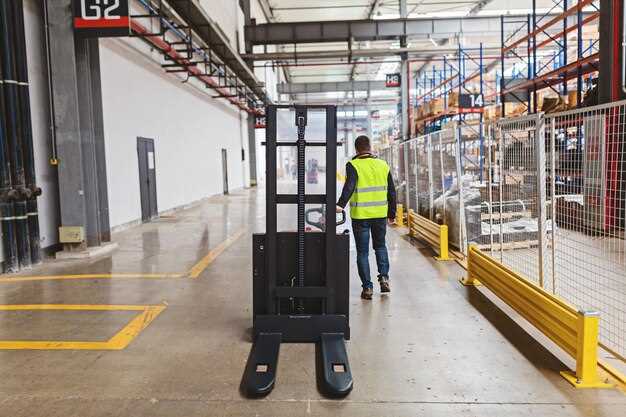
Enforce a fixed speed limit of 5 km/h in shared aisles and require pedestrians to use clearly marked walkways, significantly reducing accidents and injury risk.
- Install clearly marked pedestrian paths and physical separators to create a large, safe corridor for people and material handling equipment, minimizing dangerous interactions.
- Position high-visibility PPE and reflective material on all staff, with lantern-style indicators on forklifts to improve detection even in low-light shifts.
- Use sensor-driven warning systems that trigger audible alerts and slow-down commands when a vehicle approaches a pedestrian, a solution that provides immediate feedback without interrupting operations.
- Implement a layered communication protocol: eye contact, hand signals, and then audible warnings, ensuring pedestrians stay alert and operators respond promptly.
- Establish coordination rules for shifts to prevent crowding in high-traffic zones; stagger breaks and material movements to reduce peak-pileups and avoid bottlenecks.
- Develop a rapid incident-response process: document accidents or near-misses, analyze root causes, and adjust controls to prevent recurrence, thereby increasing health protection for all workers.
- Design aisles with strategic width and turn radii; allocate large cross-aisle intersections for crossing, enabling vehicles to slow gradually rather than stop abruptly.
- Incorporate automated controls and a central systems dashboard that permite real-time escalation to supervisors if a rule is violated, improving oversight without slowing core operations.
- Treat safety training as an ongoing investment: include occupational safety modules, autonomous forklift interactions, and drills that simulate common conflict scenarios in shared aisles.
- Monitorare le metriche di performance come incidenti, quasi-incidenti e tempo necessario per sgomberare una corsia per misurare i miglioramenti e superare le linee di base di sicurezza nel tempo.
Protocolli di Deployment: Gestione delle Zone e Pianificazione delle Attività
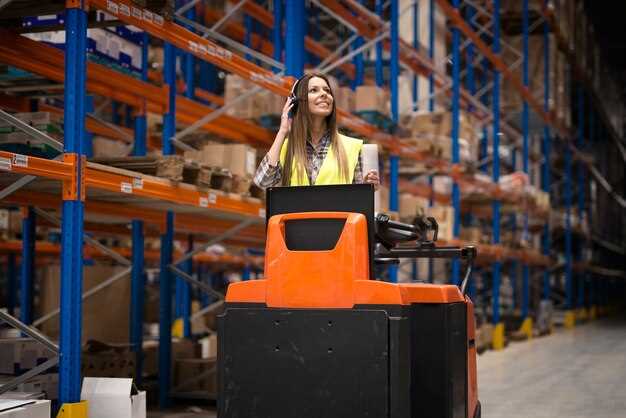
Definire zone non sovrapposte e pubblicare una dashboard di stato in tempo reale per i lavoratori per prevenire conflitti tra i flussi di trasporto e inventario. Vincolare ogni zona a regole di accesso chiare, marcatori di confine e rilevamento dei bordi basato su lidar per garantire una separazione sicura. Tale configurazione riduce il traffico incrociato e supporta operazioni fluide.
Configurare dello scheduler di attività per assegnare il lavoro in base a priorità e finestre di consegna, verificando al contempo la predisposizione della zona, lo stato della batteria e la posizione dell'inventario. Rilasciare un'attività solo quando la zona è libera, il veicolo ha una carica sufficiente e il percorso è privo di pedoni. Questa configurazione consente una produttività più fluida e riduce i tempi di inattività.
Integrare sensori in un sistema unificato, con lidar e telecamere che alimentano una mappa della zona in tempo reale che si aggiorna man mano che l'inventario si sposta. Qui, gli operatori vedono lo stato in tempo reale e possono intervenire se necessario. Questa visibilità aiuta l'azienda a ottimizzare il flusso di lavoro e supporta la sicurezza e l'innovazione.
Utilizza routine di automatizzazione per gestire controlli di routine, la gestione di casi limite e l'evitamento di collisioni. Prima di ogni rilascio, verifica che il percorso sia libero e che il rischio per i pedoni che attraversano sia minimizzato; assicurati che un lavoratore sia presente per le zone ad alto rischio. Implementa un protocollo di sicurezza che attivi allarmi acustici e visivi e che inserisca arresti di emergenza se compaiono anomalie. Lo stato deve riflettere se una zona è sicura per il funzionamento, contrassegnando chiaramente le sezioni critiche.
Checklist di implementazione: selezionare una zona pilota, allinearsi con le operazioni correnti, formare il personale e sostituire le mappe obsolete con il nuovo modello di zona. Programmare un test controllato, misurare i tempi di consegna, l'accuratezza dell'inventario e gli incidenti di sicurezza; investire in questo protocollo produce miglioramenti misurabili. Passare all'implementazione completa solo se i KPI raggiungono gli obiettivi e lo stato rimane positivo.
Formazione, Manutenzione e Procedure di Emergenza
Adottare un ciclo di formazione formale e standardizzato che combini teoria, pratica e simulazioni basate su scenari per carrelli elevatori autonomi. Iniziare con 2 settimane di onboarding per i nuovi operatori e il personale che interagisce con i flussi di trasporto, come primo traguardo, seguite da aggiornamenti trimestrali per mantenere le competenze aggiornate. Monitorare il time-to-competence e i tassi di completamento per garantire che le competenze critiche siano acquisite prima che le corsie di lavoro diventino operative, e proseguire con onboarding, pratica e aggiornamenti.
Il contenuto riguarda i protocolli di igiene, la sicurezza sul lavoro e le interazioni sicure tra pedoni e veicoli nelle zone di movimentazione dei materiali. Utilizzare esercitazioni guidate e linee guida supportate da norme, con benchmark attuali tratti da Deloitte per definire obiettivi strategici e consentire miglioramenti. Non si scherza con il rischio; la sicurezza è una responsabilità condivisa e non c'è spazio per il rischio, attraverso coaching continuo e possibili aggiustamenti.
Il piano di manutenzione prevede controlli giornalieri dei sensori e dei dispositivi di sicurezza, calibrazione settimanale dei sistemi critici, aggiornamenti software mensili e revisioni trimestrali della manutenzione predittiva. Mantenere un registro centralizzato di sistemi e materiali per tracciare modifiche, sostituzioni e cronologia delle calibrazioni, assicurando che i dati siano aggiornati per audit e indagini.
Procedure di emergenza: definire i comandi di arresto, arresto sicuro, blocco-etichettatura ed i percorsi di evacuazione. Installare una segnaletica chiaramente visibile e garantire una rapida comunicazione tra la sala controllo ed i team sul campo. Eseguire esercitazioni trimestrali utilizzando scenari realistici che coinvolgano carrelli elevatori autonomi e pedoni lungo i corridoi di traffico per convalidare i tempi di risposta ed il coordinamento.
Metriche e miglioramento continuo: monitorare MTBF, MTTR e tassi di incidenti; definire obiettivi strategici e consentire miglioramenti. Collegare i risultati agli investimenti futuri in formazione, sensori e programmi di manutenzione per ridurre i tempi di inattività e migliorare la resilienza operativa, investendo in aggiornamenti continui che supportino il flusso di materiali e la sicurezza nelle operazioni correnti.