



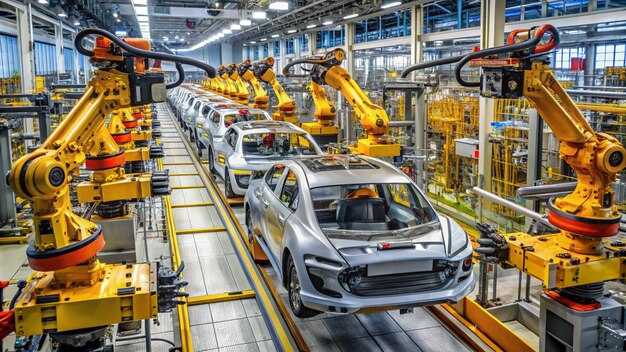
Start today by prioritizing a cloud-based analytics investment that targets reductions in cycle times of 15–25% across assembly, stamping, and paint shops. These data-driven capabilities empower the most efficient plants to pinpoint bottlenecks in real time, driving continuous improvement and delivering higher quality. In this setup, the cloud-based layer becomes the backbone for connecting sensors, MES, and ERP to support cross-functional teams and transportation planning.
These capabilities explore how automation, AI, and connected systems reshape production with massive data streams. By analyzing sensor data from 100+ machines, facilities reduce unplanned downtime by 25–40% and shorten changeovers by 20–30% through standardized setups and quick-change tooling. This leads to faster times to market and more reliable delivery for customers.
The seven sections highlight best practices that strengthen established processes and streamline investment decisions. For example, many company lines now use cloud-based predictive maintenance for critical assets, cutting spare parts stock by 15–25% while reducing unexpected shutdowns. The takeaways show how even mid-sized plants can achieve results by starting with a single cell and expanding to a connected network.
These insights help secure ROI planning and justify budgets. Track metrics such as cycle time, throughput, scrap rate, and maintenance cost per hour, then share the results on linkedin to fuel peer learning and attract talent to the team. More manufacturers report improved collaboration with suppliers when data is shared via a cloud-based platform, which strengthens transportation planning and overall resilience.
You cant overlook the momentum: start with a 60-day pilot in one plant, connect that cell to two suppliers, and publish a simple dashboard. The best results come from iterative learning: scale once you validate gains in throughput, quality, and energy use. This approach gives your company a clear path to broader adoption and a stronger case for investment across teams.
7 Ways Manufacturing Technology Has Transformed the Auto Industry
1. Adopt modular robotics for flexible assembly to meet demand fast Begin with a standardized, auto-focused robotics layer that can switch models with minimal retooling. This approach can cut production cycle times by 15-25%, reduce scrap by up to 20%, and shorten downtime between different models. Operators gain through intuitive interfaces, while maintenance teams benefit from remote diagnostics, lowering maintenance costs. The outcome: more throughput and better alignment with demand from customers and dealers.
2. Digital twins and simulation for planning and quality Use digital twins to model line behavior, run what-if scenarios, and create accurate forecasts for when demand shifts. By simulating changes before they touch the shop floor, manufacturers cut downtime by 10-20% and lift first-pass yield by 5-8%. This approach supports compliance and traceability, ensuring that assembly steps meet rigorous standards. For auto-focused plants in european chains, digital twins help align production with diverse regulatory regimes while lowering risk for customers.
3. Additive manufacturing for parts and tooling Use 3D printing to create jigs, fixtures, and low-volume parts, enabling on-demand creation and reducing inventory. In pilot programs, tooling lead times dropped by 30-50% and component weight decreased by 20-40%, boosting energy efficiency in assembly and reducing transport costs. This approach helps in european markets and other regions where custom trims are common, creating options for different markets while maintaining high compliance standards.
4. AI-powered analytics for quality, compliance, and supply chain Collect sensor data across lines and use AI to spot defects, predict failures, and enforce compliance in real time. These insights improve defect rates by 2-6% and reduce scrap in critical assemblies. The system also maps suppliers and chains for resilience, whether sourcing from regional suppliers or global partners, helping factories in the largest markets stay on plan and meet customers' expectations. These AI-driven solutions offer actionable guidance for operators. They deliver more confident production schedules and smoother after-sales support.
5. Collaborative robots and safer human-robot collaboration Co-bots work alongside operators on repetitive tasks, freeing people for high-skill work and problem solving. Thanks to this collaboration, injury risk drops and throughput rises by 15-25% in high-volume lines. Clear safety protocols and ergonomic design enable faster changeovers, whether you build sedans, SUVs, or EVs. Auto-focused teams report steady gains in consistency across shifts, and they benefit from more engaged teams who see direct results from their work.
6. Real-time traceability and energy-aware manufacturing End-to-end visibility lets managers track components from supplier to floor, enabling quick responses to quality issues or delays. Real-time data supports traceability for compliance and recalls, reducing risk and cost. whats driving the shift includes demand visibility, energy tracking, and supplier performance across european chains, ensuring production stays aligned with customers' expectations.
7. Sustainable energy and cost optimization across production networks Manufacturers optimize energy use through smart HVAC, heat recovery, and scheduled loads for high-demand periods. Across plants, energy per vehicle falls by 12-25% as automation coordinates with facility systems. The result: lower cost per unit, better margins, and stronger resilience in an ongoing supply environment. By weaving energy efficiency into design and factory floor operations, they can meet customer demand more reliably while expanding capacity in european markets and other regions.
Robotics and Automated Assembly for Precision and Speed
Adopt modular robotic cells in critical zones such as body-in-white, welding, and final assembly, and adapt them to different models and their brands including xpeng. Set a target: 30% cycle-time reduction and 20% rework decrease within six months. Standardize grippers, sensors, and software interfaces, which simplifies changeovers and sustains efficiency across operations. This strategy supports making a shift toward higher predictability and faster response to model mix changes.
Here, the approach explores vision-guided cobots paired with electric actuators to handle varied parts. Use devices such as force-sensing grippers and high-resolution cameras; expect placement accuracy of ±0.15 mm in fixed tasks and ±0.25 mm during motion, lifting first-pass yield by several points and trimming scrap in assembly. The result is a smoother flow and less manual intervention on the line.
Decisions regarding automation should follow a clear guide: run two pilot cells on different lines, measure OEE, track cycle time and scrap rate, and document lessons learned. This guide keeps the path to fully automated operations data-driven, repeatable, and scalable across the manufacturing floor. A digital twin can forecast bottlenecks before they appear.
Emerging capabilities, including collaborative robots and smart sensors, broaden the spectrum of what a single station can handle, enhancing competitive stance. The shift toward integrated robotics reduces ergonomic risk and speeds up launches for new models, helping brands meet tight schedules. xpeng-led programs illustrate how a modular approach supports different architectures from compact sedans to SUVs.
To добавить real-time diagnostics into the monitoring stack, and actively track device health, energy use, cycle times, and yield. Here in the shop floor, devices and controllers on the line provide a concise picture of performance and guide continuous improvement.
AI-Driven Quality Control and Predictive Maintenance
Implement autonomous AI-driven quality control across the main production line to enhance defect detection and reduce unplanned downtime that affects delivery. Connect all inspection data to a single software platform to enable real-time alerts, auto-recording of events, and a clear paper trail for audits.
- Define the point of inspection and determine critical features that matter most (dimensional accuracy, surface finish, torque, seal integrity) and set targets using data-driven KPIs such as defect rate, yield, and MTBF.
- Install AI vision and sensor fusion at line-side stations to detect defects at the source, with autonomous triggering of rework or stop gates and immediate operator notification that keeps operators aligned with the issue.
- Centralize data in the software backbone, ensure high-quality recording, timestamping, and metadata, and establish a contact protocol with maintenance and quality teams.
- Use vibration, thermal, and electrical sensors to feed predictive maintenance models; schedule maintenance before failure and minimize ripple effects on throughput.
- Rethink your maintenance approach: move from reactive fixes to condition-based actions with automated job cards and work orders; выполните integration steps with existing ERP/MES systems.
- Track performance metrics on a monthly basis: target scrap reduction of 15-25% and uptime improvements of 10-30% in the first year; ROI typically falls within 6-18 months depending on line complexity.
- Address EV-focused manufacturing by applying the same QA and maintenance discipline to electricvehicles battery modules, power electronics, and drivetrains; growth in mobility demands robust, scalable AI QA to manage board-level and module-level testing.
- Leverage industry examples including xpengs as a reference for high-tech vertical integration; position your system as an alternative to traditional QC with broader data coverage.
- Plan for scale to the largest assembly lines: start with a pilot on a critical line, then expand to multiple lines, ensuring consistency in data schema, workflow integration, and supplier contact for model updates.
This approach helps determine root causes faster, supports continuous improvement, and aligns manufacturing with the shift toward high-tech autonomous processes in EV and mobility markets.
Digital Twins and Simulation to Cut Development Time
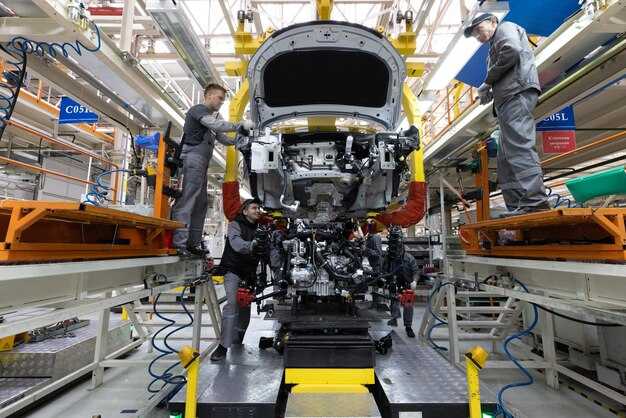
Adopt a cloud-based digital twin for each platform and run continuous simulations to cut development time by 30–40% in the first year. Pair the twin with a subscription software suite so engineers iterate quickly without large upfront investments, and capture a digital thread from design through testing.
Where to begin: build a lean twin that mirrors the core assembly process, feed it with real materials data, and connect it to your ERP and MES so changes propagate automatically. Validate design decisions virtually before touching the shop floor, reducing sunk costs and accelerating time to market. If you share this model with editors and data stewards, you gain a single source of truth that keeps sales and manufacturing aligned across the market.
Advancements in cloud computing, AI-driven analytics, and software integrations raise the value of this approach. Investors see a likely ROI as teams cut physical prototyping, shorten the road from concept to production, and improve change responsiveness for each program. Investments in sensors and data pipelines create a moving feedback loop that fuels continuous improvement, while materials data stays current and traceable.
Plunkett editors note that the industrys shift toward digital twins is accelerating as manufacturing teams standardize data formats, improve interoperability, and share models with suppliers and customers. Beginning at the beginning, establish data governance, common materials libraries, and a clear change-management plan to maximize value for each program and for the market overall. Execute a quick pilot для выполнения задачи – выполните выполнимость задачи, then scale across programs to amplify the impact on development time and market readiness.
| Stage | Time Reduction | Key Actions |
|---|---|---|
| Design validation | 25–40% | Virtual tests, CAD-to-twin linkage, materials data |
| Process simulation | 20–35% | Factory layout, line balancing, co-simulation with soft constraints |
| Prototype optimization | 40–60% | Digital thread, sensor-ready models, predictive ideas |
| Production ramp | 15–25% | Remote verification, closed-loop feedback to design |
Flexible, Modular Manufacturing for Rapid Model Changeovers
Adopt a modular, cell-based line with standardized quick-change interfaces and pre-assembled fixture kits to reduce model-changeover times by 40% within six months. Build 4–6 cells per line, each with plug-and-play devices, a common tooling rail, and a shared control profile that maps to the model's bill of materials. Assign owners for their cells to ensure accountability.
Capitalize on a centralized changeover planner that pulls from a single model library, ensures consistent settings, and auto-validates tolerances. Use cross-trained teams and a documented sequence so operators can swap from one model to another in minutes rather than hours. Specifically, standardize tool receivers and clamps, and use a single software template to apply the same recipe across models.
Capture insights from real-world usage: measure changeover time, scrap rate, and uptime per model. Tie changeover triggers to demand signals from marketing and coverage data, so the line shifts preemptively as volumes shift. In chinaautomarket, this approach boosts market coverage and reduces inventory risk; it also lets teams expand offerings faster.
The technology stack should combine flexible controls, standardized devices, and modular jigs. These innovations drive consistent quality across variants and support faster expansion into new models. Rely on a universal interface for conveyors, grippers, and sensing devices so spares and replacements come from most suppliers, reducing downtime.
To stay competitive, align supplier chains around common modules and programming blocks. This reduces part variety, lowers tooling counts, and shortens delivery cycles. Track KPIs like changeover time, model throughput, and chain utilization to demonstrate progress.
plunkett notes that modularity represents a practical path to expand capacity while preserving quality, shaping competitive dynamics and giving brands room to capture more insights from each model launch. Start small with a pilot cell, then scale by adding modules as demand spikes, always documenting learnings and updating the model library.
Connected Data Ecosystems for Real-Time Transparency and Traceability
Adopt a cloud-based data ecosystem that links makers, suppliers, testing labs, and editors to deliver real-time transparency and end-to-end traceability for every vehicle component.
This architecture uses standardized data contracts and APIs to ensure consistent semantics across ERP, MES, PLM, and supplier portals, so the data flow means faster, more accurate decisions and stronger traceability across the market.
Dashboards provide strategic visibility for management and editors; this represents cycle times, testing outcomes, lot traceability, and supplier performance across vehicles and components. When data quality is kept high, results are much faster to act on and recalls decline while on-time delivery improves.
Implement in four steps: connect core systems to the cloud-based data fabric; codify data contracts to guarantee consistent semantics; publish event streams for testing, quality, and shipments; build ready analytics dashboards and editors-friendly workflows. This approach also yields ready solutions and scalable playbooks for industrys adoption, increasing transformation across the market and keeping suppliers aligned with makers.
Put governance in place with role-based access control, data lineage, and retention policies to protect IP while enabling trusted sharing with suppliers; keep an audit trail for compliance and performance metrics; cloud-based platforms offer scalable testing and continuous improvement loops.
Track KPIs such as data completion rate, time to trace, number of integrated suppliers, and part-level visibility across the market; measure efficiency gains and the impact on management decision cycles; schedule weekly reviews with makers and editors to adjust schemas and data quality rules, ensuring the transformation keeps moving.