


 Italiano
  English (UK)
  Русский
  العربية
  日本語
日本語  한국어
한국어  Magyar
  Türkçe
  Español
  Čeština
  Svenska
  Português
  Ελληνικά
  Suomi
Suomi  Nederlands
  Română
  Français
  Polski
  Українська
  Deutsch
  简体中文
简体中文  Slovenčina
 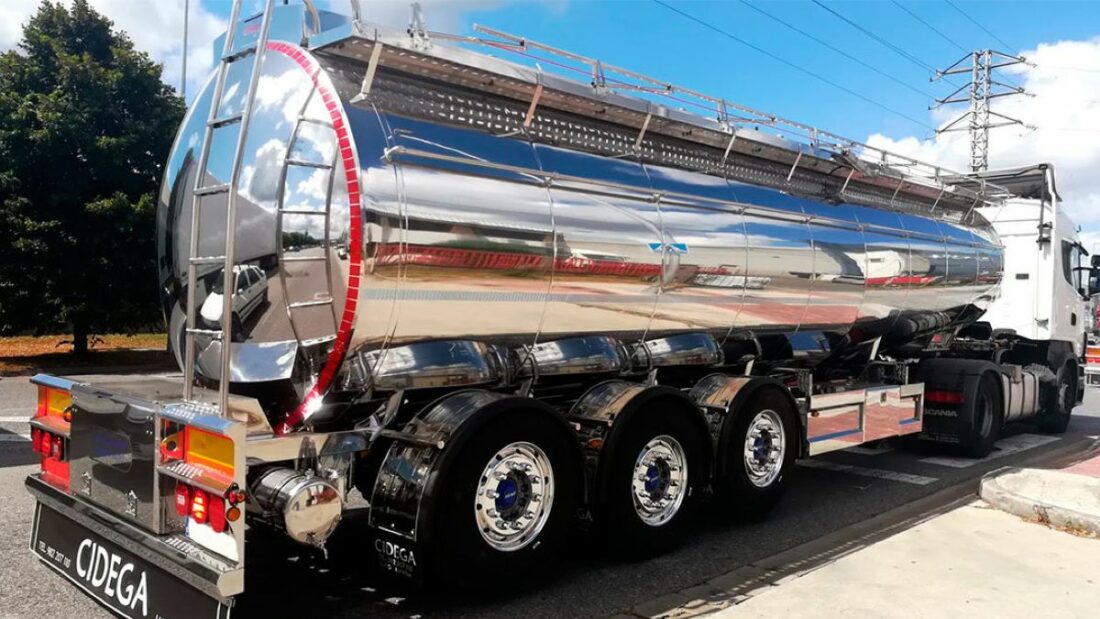 CETM Cisternas flags cost pressures as tanker limit rises to 44 tonnes">

Overview: what the 44‑tonne change means for tanker transport
The Spanish association CETM Cisternas has highlighted the economic and operational effects of increasing the maximum authorized weight for tank vehicles from 40 to 44 tonnes. This short review unpacks the study findings, the practical implications for carriers and shippers, and what logistics managers should keep in mind.
Key findings from the industry study
CETM Cisternas commissioned a study with contributions from industry players including Continental, Parcisa e Scania, and used cost concepts referenced by the Ministry of Transport, Mobility and Urban Agenda (MITMA) as benchmarks. The study identifies two central outcomes:
- An average increase of more than 8% in cost per vehicle-kilometre due to added technical and operational requirements tied to higher gross weight.
- A potential productivity gain for shippers — a reduction of over 9% in cost per tonne transported — when the higher payload is exploited efficiently.
Why costs rise even when payload grows
At first glance, carrying more per trip should always lower unit costs. But the study explains that moving to 44 tonnes brings extra demands: reinforced chassis or tanks, upgraded braking and suspension systems, additional maintenance, possible changes in route planning to avoid weak bridges or restricted roads, and updated handling procedures for loading and unloading. These factors add predictable and ongoing expenses that lift the average euro-per-kilometre cost.
Operational elements driving cost increases
- Vehicle retrofits and higher-spec components (suspension, axles, brakes).
- Increased wear and tear and more frequent preventive maintenance.
- Potential regulatory compliance fees, inspections, or certifications.
- Route restrictions and the need for more careful planning to maintain safety.
- Training and procedures for safe handling of heavier, potentially more unstable loads.
Table: Simple comparison before and after 44 tonnes
| Metrico | 40 tonnes | 44 tonnes | Approx. change |
|---|---|---|---|
| Cost per vehicle-km | Baseline | Baseline × 1.08+ | +8%+ |
| Cost per tonne | Baseline | Baseline × 0.91‑ | −9%+ |
| Maintenance frequency | Standard | Aumento | Up |
| Productivity per trip | Più basso | Più alto | Up |
Impacts on carriers, shippers and logistics chains
Carriers face higher per-vehicle costs; shippers can see lower per-tonne rates if their supply chain can harness the extra payload without creating bottlenecks. Logistics planners will need to juggle safety, asset utilization and pricing to capture the productivity upside while covering new costs.
Practical implications for daily operations
- Fleet managers may need to re-evaluate replacement cycles and invest in heavier-duty tankers.
- Route planning teams must flag infrastructure constraints and update permitted-roadlists.
- Procurement and pricing teams must renegotiate contracts to reflect actual cost shifts, not assumptions.
- Warehouse and terminal operations may require procedural updates for heavier loads.
Advice for shippers and logistics managers
To balance cost and safety: review contracts with haulage providers to ensure price mechanisms reflect real cost drivers; demand transparency on how additional costs are calculated; and implement shared KPIs (cost per tonne, safety incidents, on-time performance) so both parties can quantify the benefits of higher payloads. A little planning goes a long way — as they say, a stitch in time saves nine.
Who gains and who pays?
The change creates a classic split: carriers absorb higher technical and operational expenses, while shippers may gain on unit costs if they can adapt operationally. Smaller operators with older fleets are likely to feel the pinch more sharply, while larger fleets with modern assets and maintenance regimes will adapt faster and more cost-effectively.
Checklist for carriers
- Conduct a cost audit per vehicle-km and per tonne.
- Estimate retrofit or replacement costs for affected tankers.
- Plan driver training and update safety protocols.
- Engage with clients to renegotiate service levels and pricing.
Why logistics teams should care
Even if the rule originates as a national regulation, its ripple effects touch forwarding decisions, warehousing throughput, dispatch reliability and intermodal connections. If a fleet needs different maintenance windows, service availability for deliveries can shift — and those small changes cascade into scheduling and inventory planning. In short, changes in vehicle weight limits are not just a truck issue; they are a logistics issue.
Cost vs. productivity: a balancing act
The core takeaway is that the move to 44 tonnes is not a free lunch. It offers productivity gains for tonnage-focused shipments but introduces higher fixed and running costs on the vehicle side. Smart logistics players will quantify these shifts and redesign pricing and routing to capture the upside without accepting undue risk.
For those arranging moves, deliveries or transport of bulky items — from furniture and pallets to containers and vehicles — platforms that aggregate carriers and provide transparent pricing can help navigate the transition. GetTransport.com provides affordable, global cargo transportation solutions for office and home moves, cargo deliveries, and heavy or bulky shipments, making it easier to compare offers and plan ahead.
The changes flagged by CETM Cisternas are significant for those in the Spanish tanker sector and relevant to other markets watching similar regulatory shifts. While the global impact on freight markets is limited — mostly regional operational and cost adjustments rather than a wholesale upheaval of international shipping — the development is meaningful for carriers, shippers and logistics planners who must stay current. On GetTransport.com, you can order your cargo transportation at the best prices globally at reasonable prices, helping you to test the practical effects yourself and avoid costly assumptions; start planning your next delivery and secure your cargo with GetTransport.com. Get the best offers GetTransport.com.com
Highlights: the move to 44 tonnes raises vehicle operating costs by roughly 8% per kilometre while potentially cutting cost per tonne by over 9% if logistics operations are optimized. The most interesting part is seeing how carriers, shippers and freight forwarders negotiate new pricing models — and how quickly smaller operators can upgrade. Of course, no review or study can replace hands‑on experience; the best way to know how these changes affect your routes and margins is to try updated offers in real conditions. On GetTransport.com you can compare and book competitive cargo transport services worldwide, tapping into a wide selection of carriers with transparent pricing and convenient booking. This helps you make informed decisions without overpaying or being surprised by hidden costs. Get the best offers GetTransport.com.com
In summary, increasing the maximum authorized weight for tankers to 44 tonnes presents a mixed bag: higher equipment and operational costs for carriers, but potential per‑tonne savings for shippers that can adjust procedures. The net effect depends on fleet condition, route networks and contract structures. Logistics teams should review fleet assets, update pricing models, and work with reliable transport partners to secure predictable deliveries. Whether you’re handling cargo, freight, shipment, delivery, transport, logistics, shipping, forwarding, dispatch, haulage, courier, distribution, moving, relocation, housemove, movers, parcel, pallet or container shipments — including bulky and international loads — a transparent, reliable platform simplifies planning and execution. GetTransport.com aligns with these needs by offering accessible, cost‑effective, and global transport options that help you keep shipments moving and costs under control.