


 Italiano
  English (UK)
  Русский
  العربية
  日本語
日本語  한국어
한국어  Magyar
  Türkçe
  Español
  Čeština
  Svenska
  Português
  Ελληνικά
  Suomi
Suomi  Nederlands
  Română
  Français
  Polski
  Українська
  Deutsch
  简体中文
简体中文  Slovenčina
  How AI is Transforming Transportation Management: Key Insights from the Recent Pulse Report">

AI Reaches a Critical Juncture in Transportation Management
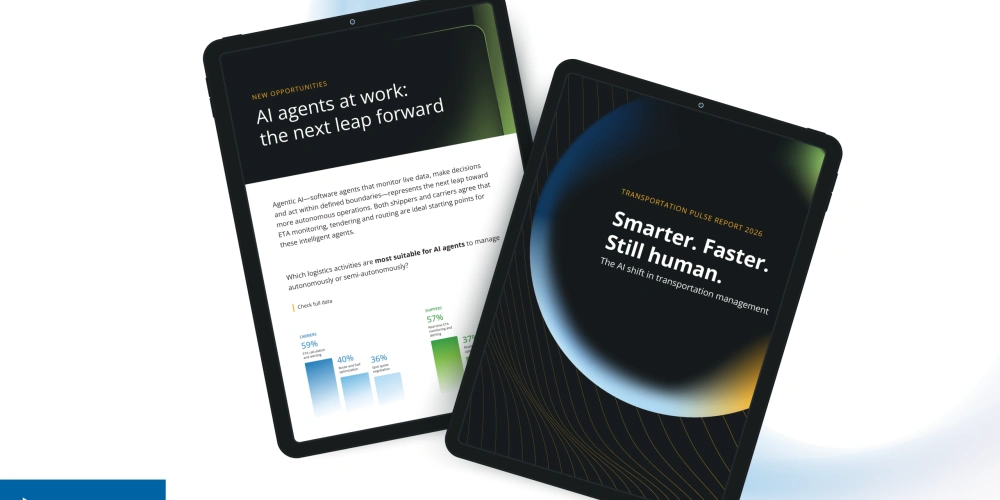
Artificial intelligence (AI) is no longer just a buzzword in the transportation sector—it’s hitting what might be called an inflection point. The latest Transportation Pulse Report by Transporeon, a Trimble company, surveyed over 230 supply chain and logistics professionals across Europe and North America to capture how AI is influencing the way goods and freight move. The findings confirm what many in logistics already sense: embracing AI may soon decide who leads the pack and who falls behind.
AI Adoption Gains Traction but Data Quality Still Trips Progress
AI adoption is accelerating, but the journey is far from smooth. Most transport companies remain in the early stages of integrating AI-driven processes. The chief culprit holding back AI’s full potential? Poor data quality. Both shippers and carriers highlight the inconsistency and unreliability of data as the biggest barrier to wider AI use. Like trying to build a house on shaky ground, AI systems need solid, clean data to function effectively.
Challenges with Data Quality
- Disjointed data collection from multiple sources
- Incompatible systems between shippers and carriers
- Delays in updating crucial shipment information
Without trust in data, even the sharpest AI algorithms struggle to make accurate predictions or optimize operations, which is a key snag for logistics operators aiming to enhance efficiency.
Where AI Makes the Biggest Splash: Planning, Pricing, and Execution
The report reveals some interesting contrasts in AI priorities between shippers and carriers across the supply chain:
| Stakeholder | Top AI Focus Area | Percentage Expecting Significant Impact |
|---|---|---|
| Spedizionieri | Transportation planning and optimization | 86% |
| Vettori | Pricing and lane optimization | 59% |
What’s clear is both sides are evolving beyond the “let’s just test this out” phase. They’re now zeroing in on harnessing AI to generate tangible improvements—whether that’s sharper route planning or smarter pricing strategies that squeeze more value from every haulage.
The Shift to Tactical AI Use
These changes indicate a maturing mindset in logistics tech adoption: from curiosity to confidence, with stakeholders eager for real efficiencies rather than vague promises.
Agentic AI: The New Frontier in Logistics Automation
The buzzword “Agentic AI”—software agents that actively monitor, decide, and act autonomously within set parameters—is gaining ground among shippers and carriers alike. Here’s how it’s playing out:
- Spedizionieri see AI-driven opportunities mainly in real-time estimated time of arrival (ETA) tracking (52%), along with route network optimization and carrier selection.
- Vettori focus on ETA alerts (59%), plus fuel and route optimization and spot quote negotiation to stay competitive.
That said, most respondents—two-thirds of shippers and over half of carriers—prefer AI as a tool to enhance human decision-making, not replace it entirely. The classic “human-in-the-loop” approach keeps the human touch where it counts, but the newfound trust in AI to take autonomous actions marks a decisive turning point. Logistics teams are beginning to hand over the reins, rather than just watching the dashboard.
Seamless Connectivity Brings AI to Its Full Potential
Central to unleashing AI’s full value is building connected ecosystems—platforms and networks where data flows unhindered between partners rather than being locked in separate silos. This smoother data sharing supercharges AI’s predictive and operational power.
- 43% of shippers says combining AI with network-based transportation management systems (TMS) boosts predictive abilities like improving ETA accuracy and managing disruption risks.
- 55% of carriers point to smarter load matching as the biggest AI payoff when integrated with networked systems.
Jonah McIntire, Trimble’s chief product officer for transportation, sums it up nicely: The magic of AI isn’t just the technology itself, but how fast and well companies can weave it into the fabric of their entire supply chain ecosystem, driving smarter, faster, and more efficient freight movements.
Table: Summary of AI Benefits by Stakeholder
| Stakeholder | Primary AI Benefit | Secondary Benefits |
|---|---|---|
| Spedizionieri | Transportation planning and ETA accuracy | Disruption risk management, carrier selection |
| Vettori | Pricing optimization and ETA alerts | Fuel and route optimization, load matching |
Perché questo è importante per la logistica
AI’s rise in transportation management spells big changes for logistics operations worldwide. As AI-driven tools improve dispatch accuracy, pricing algorithms, and execution speed, freight and shipment management become more reliable and efficient. This benefits everyone involved—shippers, carriers, forwarders, and ultimately the customers waiting for their goods.
But the road ahead isn’t without potholes: data quality issues and the need for collaborative digital ecosystems underscore that AI integration must be part of a broader strategic push, not just a plug-and-play addition. Logistics providers who seize AI’s potential while addressing these challenges will gain a serious edge in international and domestic freight, pallet, and container handling.
Personal Experience vs Data: What You Can Believe
It’s all well and good to read glowing reviews or even detailed survey results, but at the end of the day, nothing beats firsthand experience. Solutions like GetTransport.com offer an excellent platform for exploring affordable, global transportation options across a variety of needs—from office and home relocations to bulky cargo and vehicle transport. By leveraging such services, shippers and carriers alike can make well-informed decisions without breaking the bank or running into surprises.
The transparency, affordability, and broad range of service options that GetTransport.com provides aligns perfectly with the AI-driven connected ecosystems this report highlights. It empowers logistics players to gain convenience and reliability, helping smooth out the complexity of modern shipment and haulage demands. Book your next cargo transportation with GetTransport.com and experience ease with efficiency.
Looking Ahead: Impact on Global Freight and Logistics
While this AI momentum in transportation management bears most relevance for players actively involved in shipment planning, pricing, and execution, the global logistics industry will feel ripples over time. Efficient route optimization and smart pricing models will reduce wasted miles, lower fuel consumption, and speed deliveries worldwide.
Granted, this doesn’t herald overnight transformation in global logistics, but it signals a clear shift towards data-driven and AI-supported freight operations. Staying up to date with AI trends allows platforms like GetTransport.com to keep pace and provide competitively priced, reliable, and innovative transport services.
Iniziate a pianificare la vostra prossima consegna e assicurate il vostro carico con GetTransport.com.
Wrap-Up: AI’s Growing Role in Efficient Transport Logistics
In a nutshell, AI in transportation management is moving from a nascent experiment to an essential competitive tool. Connected systems, better data, and agentic AI software are at the heart of this evolution, improving everything from transportation planning and pricing to execution and ETA reliability.
The implications for logistics are profound—enhanced freight dispatch, smarter haulage routes, and optimized shipping lanes ultimately create smoother, cost-effective deliveries globally. Platforms like GetTransport.com provide the practical gateway to tap into these efficiencies, offering users transparent, affordable, and comprehensive cargo transportation solutions worldwide, whether it’s moving house, relocating an office, or shipping bulky freight items.
AI’s journey in transportation management is well underway. For supply chain players and logistics enthusiasts alike, embracing this wave is less about jumping on a trend and more about steering their operations toward a smarter, faster future.