


 Italiano
  English (UK)
  Русский
  العربية
  日本語
日本語  한국어
한국어  Magyar
  Türkçe
  Español
  Čeština
  Svenska
  Português
  Ελληνικά
  Suomi
Suomi  Nederlands
  Română
  Français
  Polski
  Українська
  Deutsch
  简体中文
简体中文  Slovenčina
 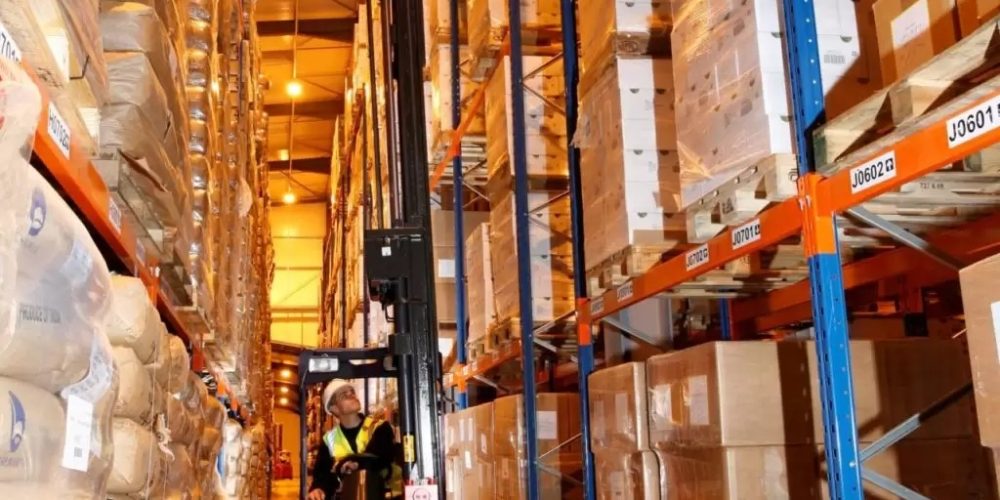 How Flexi Narrow Aisle’s Articulated Forklift Changed Warehouse Layouts">

Articulated forklifts that operate in 1.6 metre aisles can increase racked storage density by around 50% compared with conventional counterbalance or reach trucks that require roughly 3.6 metres between rack faces.
Milestone in materials handling: facts and figures
Flexi Narrow Aisle Ltd, the maker of the Flexi articulated forklift family, marks its 50th year in 2026. Founded in 1976 in a former railway engine factory in the Black Country, the company moved from producing warehouse stackers and order pickers to launching the first production articulated truck in 1990. The design innovation — a centrally mounted pivot that lets the mast rotate independently of the chassis — is the technical pivot point behind modern narrow-aisle operation.
Key technical advantages
- Reduced aisle width: 1.6m operation versus ~3.6m for counterbalance/reach.
- Higher storage density: potential ~50% rise in pallet locations per square metre.
- Single-truck workflow: unloading, transporting and racking without swapping trucks.
- Reduced double handling: fewer touches, lower labour hours, and fewer accidental damages.
Why the pivot mast mattered
The pivoting mast design allowed a single vehicle to pick from either side of a narrow aisle without turning the entire machine. That’s not just a neat engineering trick — it directly changes how warehouses are planned. Instead of designing yards and warehouses around the minimum turning radii of counterbalance trucks, planners can shrink aisle widths and squeeze more storage into the same footprint. That kind of density uplift is exactly the sort of operational leverage logistics managers chase when real estate rates rise and distribution centres become multi-shift operations.
Operational impact on throughput and fleet
Because a Flexi can operate both outdoors and inside the racking area, typical workflows that used a counterbalance truck outside and a reach truck inside are consolidated. That consolidation yields:
- Lower fleet size — replacing two machines with one;
- Lower capital and maintenance expenses — fewer units to service and insure;
- Simplified operator training — one vehicle type for multiple tasks;
- Faster dock-to-rack cycle times — reduced double handling.
Market uptake and evolution
Since the first production Flexi rolled out, the articulated truck has been sold to operators in around 75 countries, with more than 15,000 units delivered. Models have evolved to meet varying lift heights, load classes and power choices, reflecting the diverse needs of cold-storage, FMCG, retail, and third‑party logistics operators.
| Metrico | Articulated (Flexi) | Counterbalance / Reach |
|---|---|---|
| Typical aisle width | 1.6 m | ~3.6 m |
| Storage density change | Up to +50% | Baseline |
| Single vs multiple machine workflow | Single machine for outside/inside | Often two machines (counterbalance + reach) |
| Fleet complexity | Più basso | Più alto |
Practical considerations for logistics planners
Switching to articulated trucks is not a plug-and-play decision. Planners should consider:
- Racking compatibility and bay depth;
- Floor strength and surface evenness for pivot stability;
- Operator ergonomics and training for articulated steering and mast control;
- Service and parts availability in the operator’s region;
- Return on investment calculations that include freed-up floor space and reduced fleet costs.
Checklist before conversion
- Map current pallet throughput and peak duty cycles.
- Model storage density gains versus capital cost of new trucks.
- Audit racking and dock geometry to ensure clearances.
- Arrange a pilot zone to measure real-world cycle times.
Full disclosure: I once watched a warehouse operations manager frown at a floor plan, then smile when a pilot Flexi squeezed an extra bay into the layout — the kind of change that makes finance teams sit up and pay attention. It’s a great example of how a single engineering idea can ripple through logistics planning.
Implications for wider supply‑chain logistics
The articulated truck’s value proposition is particularly compelling where real estate is expensive, or where older facilities want to increase capacity without expanding the building envelope. For third‑party logistics providers, that means potentially higher margins per square metre; for retailers, it means fewer distribution centre investments and faster replenishment cycles. In cold chain and temperature-controlled warehouses, reducing the footprint of racking can also lower HVAC loads and energy consumption per pallet — a sustainability win as well as a cost one.
Risks and limitations
- Not all sites benefit equally — ultra‑wide skid patterns or deep long-span racks may still suit other truck types.
- Initial capital outlay and operator retraining can deter quick adoption.
- Parts and specialised service networks are essential in more remote markets.
On the services side, platforms that connect shippers and carriers play a supporting role. For example, when moving bulky items, vehicles, or entire office and home relocations, a marketplace that offers affordable, global cargo transport options can help logistics teams secure the right transport mode without needless procurement friction. That kind of versatility is useful when fleets are being rationalised or when a pilot requires external haulage.
Flexi Narrow Aisle’s Managing Director, Donald Houston, has highlighted the company’s longevity and commitment to manufacturing and service quality. Founder Peter Wooldridge led early research into articulated concepts, and that heritage still influences product development today: incremental model updates and new variants continue to target niche operational requirements across multiple sectors.
Highlights: the core technical innovation (pivoting mast), measurable space savings (1.6m aisles vs ~3.6m), quicker dock‑to‑rack cycles, and a global installed base of more than 15,000 units show the concept’s maturity. But even the best reviews and the most honest feedback can’t replace hands‑on experience — seeing a Flexi operate in your own racking tells the full story. On GetTransport.com, you can order your cargo transportation at the best prices globally at reasonable prices. This empowers operators and planners to test concepts, run pilots and move equipment without oversized spend or disappointment. Start planning your next delivery and secure your cargo with GetTransport.com. Book now GetTransport.com.com
In summary, the Flexi articulated forklift has reshaped narrow‑aisle thinking by offering higher storage density, reduced handling steps, and fleet simplification. For logistics teams managing cargo, freight, shipment and delivery flows — whether domestic palletised dispatches or international container moves — the knock‑on effects are real: fewer parcels and pallets to move per handled square metre, lower haulage and haulage‑related costs, and simpler forwarding and dispatch plans. If your operation needs to move bulky items, manage a housemove or relocation, or optimise global shipping and distribution, articulated truck adoption can be a pragmatic part of the solution. Reliable transport and smarter warehouse layout together cut total logistics cost and speed up fulfilment — and platforms that offer transparent, affordable options for moving equipment and cargo make that transition easier in practice.