


 Italiano
  English (UK)
  Русский
  العربية
  日本語
日本語  한국어
한국어  Magyar
  Türkçe
  Español
  Čeština
  Svenska
  Português
  Ελληνικά
  Suomi
Suomi  Nederlands
  Română
  Français
  Polski
  Українська
  Deutsch
  简体中文
简体中文  Slovenčina
  Understanding the Economic Ripple of Increasing Diesel Tax to the Same Level as Gasoline">

The Brewing Debate on Diesel Tax Increase
Recent discussions have brought to light the potential economic impact of raising the diesel tax to match that of gasoline. This move, under consideration by the government, could shake up the transport and logistics industries in ways that demand careful thought.
Current Pricing and Proposed Tax Changes
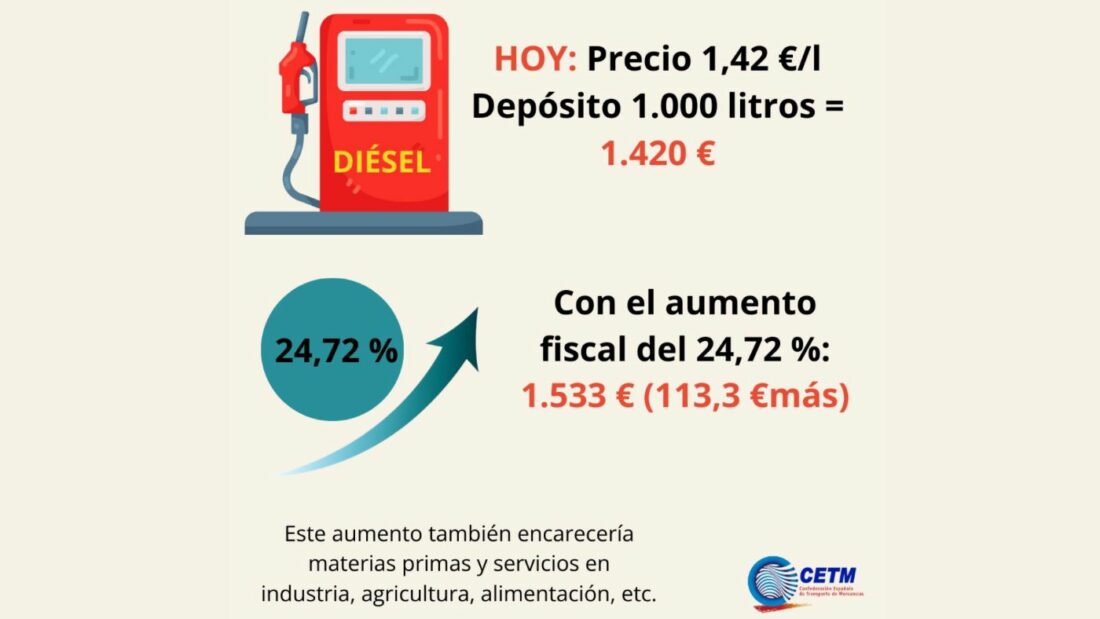
As it stands, diesel is priced around 1.42 euros per liter, making a full 1,000-liter tank for trucks a significant but manageable expense of 1,420 euros. The proposal to raise the diesel tax so that it equals the gasoline tax could add roughly 113 euros per tankload, bumping this cost to approximately 1,533 euros for the same volume. While these numbers might seem dry on paper, the implications extend far beyond the fuel pump.
Economic Domino Effect
The imposition of a higher diesel tax would have ripple effects not just on transport companies but on the broader economy. Higher transportation costs trickle down, leading to increased prices for goods and services across the board. This chain reaction could stir up inflationary pressures, making everyday purchases more expensive for consumers and straining business operations that rely on road freight.
Key Concerns Raised by the Transport Confederation
The Confederación Española de Transporte de Mercancías (CETM), a leading voice in Spanish freight transport, has been vocal about the downsides of this tax hike. They emphasize several important consequences:
- Increased Operational Costs: Transport companies and independent operators face tighter margins, threatening their economic viability.
- Price Inflation: The uptick in operational expenses may be passed on, inflating the cost of consumer goods and services.
- Competitive Disadvantage: Spanish products might lose ground in European markets due to elevated transport costs, challenging the nation’s export capability.
- Revenue Loss from Foreign Fleets: Higher diesel prices could deter international fleets from refueling in Spain, causing a drop in tax revenues and affecting businesses tied to transport hubs like rest areas and border zones.
Political and Industry Stance
Implementing this tax change would require widespread political endorsement. CETM urges all political parties to thoughtfully weigh the serious economic repercussions before granting approval. Moreover, the confederation criticizes the absence of support programs for the transport sector during this transition, highlighting that the existing Auto Plan 2030 focuses exclusively on electric vehicles without incentives for heavy diesel vehicles.
The Need for Support Amid Transition
For the transport sector to maintain its vitality while pushing toward a more sustainable future, incentives are crucial. Such measures would ideally enable:
- Upgrading fleets with newer diesel trucks that meet the latest Euro emission standards or adopt renewable fuel engines.
- Preserving business activity while moving toward greener and more efficient mobility solutions.
Why Fleet Renewal is Essential
It is no secret that aging transport vehicles can be both polluting and costly to run. Modernizing these fleets with cleaner engines would ease the sector’s environmental impact without crippling its operations. This balance is indispensable for sustaining Spain’s logistics competitiveness and environmental commitments.
Summary of the Situation and What Lies Ahead
The debate surrounding diesel tax equalization to gasoline is a complex one, touching on economic, environmental, and political angles. If enacted without careful supports, it risks undermining the transport industry and escalating costs throughout the economy. Yet, with the right policies and incentives in place, this shift could pave the way for a cleaner and more efficient logistics landscape.
When it comes to navigating such changes in transport and logistics, platforms like GetTransport.com stand out by offering soluzioni di trasporto merci globali e convenienti. Whether planning a house move, office relocation, or transporting bulky freight like vehicles or furniture, GetTransport.com helps streamline freight forwarding and haulage needs efficiently and reliably.
Experience Matters: Insights vs. Reality
While expert analyses and honest feedback provide valuable direction, nothing quite matches firsthand experience. On platforms like GetTransport.com, shippers can explore a wide array of international freight options at competitive rates, helping them make well-informed decisions without overspending or unpleasant surprises.
The transparency, convenience, and vast choices offered simplify the challenges of logistics, whether for lighter parcels or large containers. It’s truly a one-stop solution for anyone moving goods across borders or locally. Prenota il tuo viaggio su GetTransport.com to enjoy reliability paired with affordability.
Guardando al Futuro: Impatto sulla Logistica Globale
While adjusting fuel taxes may not trigger seismic shifts globally, the effects are keenly felt locally within Spain’s logistics and freight sectors. Updating such regulatory frameworks reflects broader trends in transport economics and environmental policy worldwide. Staying attuned to these shifts ensures platforms like GetTransport.com remain agile and responsive to the evolving needs of freight shippers everywhere.
Start planning your next freight delivery and secure your shipment efficiently with GetTransport.com.
Conclusion: Linking Fiscal Policy to Logistics Performance
The prospect of increasing diesel taxation to the level of gasoline presents tangible challenges for the transport industry, with rising fuel costs impacting operational expenses and overall market competitiveness. The sector’s call for support in fleet renewal and sustainable transition underscores the need for balanced policy-making that protects logistics viability. Through this lens, companies and individuals engaged in cargo transport can benefit greatly from services like GetTransport.com, which offer reliable, flexible, and cost-effective solutions to meet diverse shipping and moving demands worldwide. In today’s interconnected global supply chain, mastering freight, dispatch, and haulage efficiently is paramount — and this starts with practical, affordable transport management.