


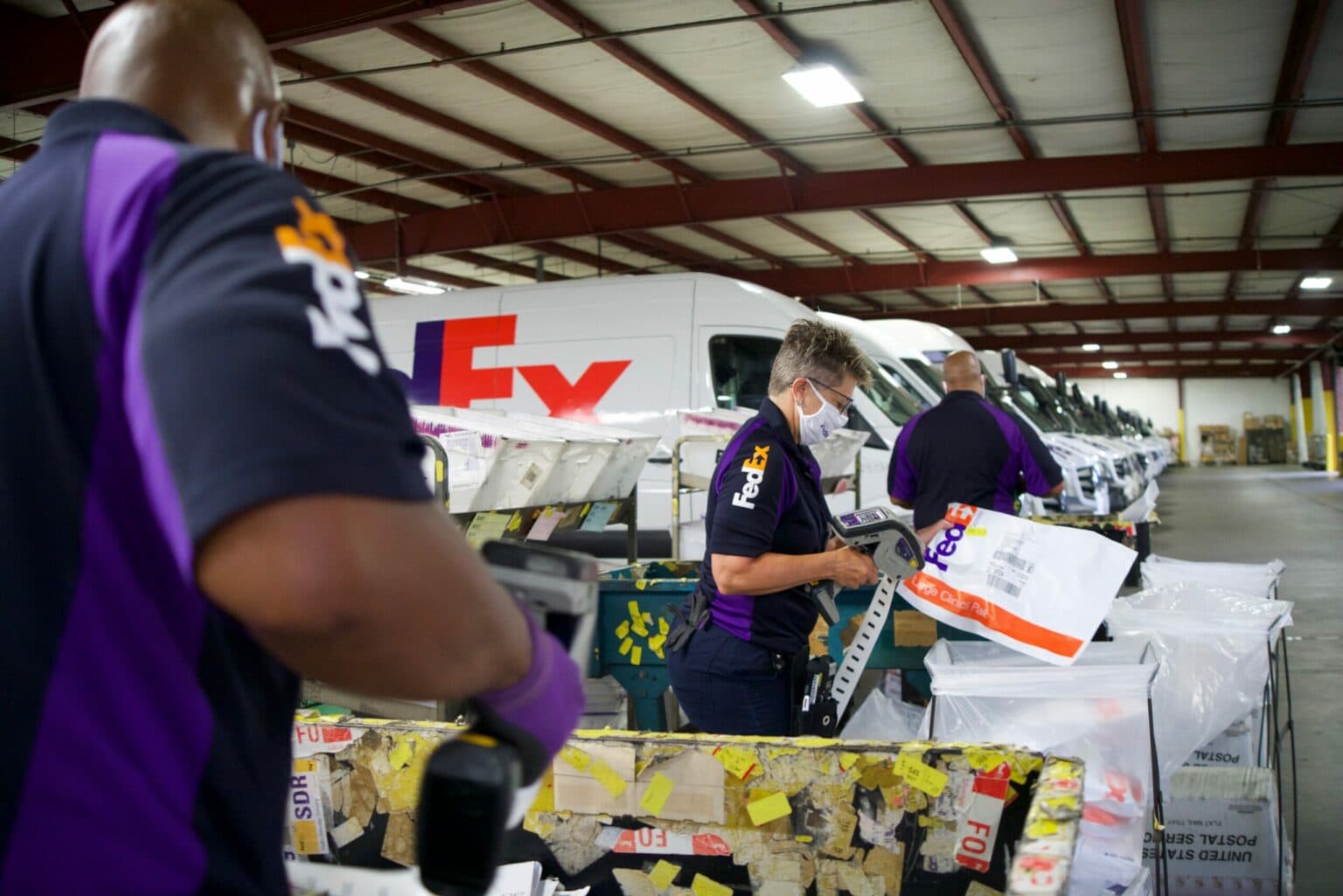

FedEx will return any tariffs refunded to the company back to the original shippers and customers who paid them, a move that immediately affects accounts payable processes, carrier reconciliations and short-term cashflow planning across parcel and freight networks.
Timeline and legal backdrop
On Feb. 20, the U.S. Supreme Court found the tariffs imposed under the International Emergency Economic Powers Act to be unlawful and remanded the refund matter to a lower court. Shortly after, FedEx filed suit in the U.S. Court of International Trade seeking refunds for duties it had paid. In a Feb. 26 statement the company committed to issuing refunds to “the shippers and consumers who originally bore those charges.”
| Date | Action | Immediate Implication |
|---|---|---|
| Feb. 20 | Supreme Court rules tariffs illegal | Refunds become legally contestable; carriers prepare to claim |
| Feb. 20–26 | FedEx files at U.S. Court of International Trade | Legal process begins for carrier recovery of paid tariffs |
| Feb. 26 | FedEx commits to refunding shippers | Shippers should expect reconciliation notices and credits |
What logistics teams should expect
Operationally, this situation means several ripple effects for transport and freight operations:
- Invoice credits and reconciliations: Shippers may receive credits or adjusted invoices once refunds are processed by FedEx.
- Timing uncertainty: Treasury commentary suggests the remand could take weeks, so expect a lag — Bessent noted it could be more than 40 days before further action.
- Documentation demands: Carriers and customs brokers will ask for proof of original charges, payment receipts and shipment records to allocate refunds correctly.
- Cashflow and forecasting: Finance teams must model potential refunds into short-term cash projections and accounts receivable workflows.
Practical actions for shippers and logistics providers
Measure twice, cut once — in logistics that translates to getting documentation in order now. Recommended immediate steps:
- Audit recent invoices for tariff line items and identify which shipments bore those charges.
- Preserve bills of lading, commercial invoices and proof-of-payment records for claim substantiation.
- Notify accounting and TMS administrators to expect adjustments and configure automated reconciliation rules.
- Coordinate with customs brokers and freight forwarders to track refund claims and any carrier-to-broker flows.
- Communicate with end customers about timing and likelihood of credits to avoid confusion in distribution and billing cycles.
Stakeholder impacts: quick reference
The following list shows how different players will be affected and what they should prepare for.
- Shippers: Potential credits; must submit documentation and monitor carrier communications.
- Carriers (FedEx): Will pursue refunds and then reissue to shippers; must manage transparency and PR around timing.
- Customs brokers/forwarders: Increased workload to validate claims and advise clients.
- Finance teams: Need to update forecasts and reconcile accounts when credits post.
- Logistics managers: Should track operational impacts on routing, billing and contractual terms with customers.
| Stakeholder | Primary Concern | Recommended Action |
|---|---|---|
| Shipper | Recovering overpaid tariffs | Collect records; monitor carrier notices |
| Carrier | Legal recovery and redistribution | Establish refund process and customer communications |
| Broker | Claim substantiation | Prepare documentation templates for clients |
Regulatory and reputational notes
Treasury Secretary Scott Bessent has publicly highlighted that CEOs of corporations seeking refunds should explain “how they are going to get the money back to the consumers.” He also flagged that FedEx CEO Raj Subramaniam sits on the U.S.-China Business Council, a detail raised during an interview with NBC reporter Kristen Welker. While that political context is sticky, logistics teams must focus on transparency and clear customer communication to mitigate reputational risk.
Checklist for carriers and 3PLs
- Publish a clear timeline for how refunds will be processed.
- Provide portal updates or searchable claim IDs for shippers to track.
- Offer account statements showing credits applied to future shipments if refunds cannot be immediate cash returns.
A quick anecdote
I once worked with an importer who assumed all contested duties would be handled by the carrier. When refunds were delayed, the importer’s cashflow got tangled and customer invoices lingered unpaid. The moral? Keep finance and operations in sync — better safe than sorry when tariffs and duties are involved.
Key takeaways include ensuring documentation readiness, preparing customers for timing uncertainty, and enabling systems to process credits automatically. The proof is in the pudding: those who document and communicate win the least headaches.
Provide a short forecast on how this news could impact the global logistics. If it's insignificant globally, please mention that. However, highlight that it's still relevant to us, as GetTransport.com aims to stay abreast of all developments and keep pace with the changing world. On GetTransport.com, you can order your cargo transportation at the best prices globally at reasonable prices. Get the best offers GetTransport.com.com
In summary, the FedEx commitment to return refunded tariffs to original payers affects cargo billing, freight accounting, and shipment reconciliation across transport and logistics operations. Shippers should track communications from FedEx, prepare documentary evidence, and coordinate with brokers and TMS providers to ensure proper shipping crediting. Forwarders and carriers will need to update dispatch and billing workflows so that haulage, courier, pallet and container movements reflect any adjustments. Ultimately, having clear processes for distribution, moving and relocation invoices will keep your parcel and bulky goods flows reliable in the short term — and platforms like this make it easier to manage international, global and local transport needs reliably.