


 Italiano
  English (UK)
  Русский
  العربية
  日本語
日本語  한국어
한국어  Magyar
  Türkçe
  Español
  Čeština
  Svenska
  Português
  Ελληνικά
  Suomi
Suomi  Nederlands
  Română
  Français
  Polski
  Українська
  Deutsch
  简体中文
简体中文  Slovenčina

Secure diversified capacity immediately: shift 20–30% of time‑sensitive loads off the most constrained rail corridors, pre-book open intermodal slots and truck windows, and increase safety stock by 10–15 days. Certo gateway lanes fill first; prioritize contracts that allow rapid reallocation and subscribe to daily terminal notices so operations teams can act within hours.
Operational metrics from spring show heightened pressure at key junctions around los angeles, where crews and locomotives were redeployed and some segments suffered acute shortages of engine power. Recovery since covid eases has not returned throughput to prior norms, and a handful of chokepoints remain challenging for bulk commodity flows.
Shift practical responsibilities among supply chain actors: carriers must publish transparent acceptance windows, shippers should commit to steady weekly volumes where possible, and terminals need clear queue rules. Many american buyers were early adopters of flexible contracts; use those playbooks now. Track two KPIs (on‑time pickup rate and weekly delay minutes) because the fact is firms that adjust allocation within seven days cut average delays substantially. The central question procurement teams face takes precedence: which contracts permit immediate reroute and which lock loads in place?
Treat this as an operational sprint: run scenario simulations twice weekly, negotiate spare engine clauses where feasible, and keep contingency trucking lanes open. Relief can lose steam even as pandemic pressures ease, so expect congestion to continue in select corridors and build contractual options that trigger within 48 hours. For immediate alerts and terminal-level slot releases, subscribe to carrier feeds and maintain one point person empowered to execute reroutes.
Rail operators’ capacity allocation and prioritization rules
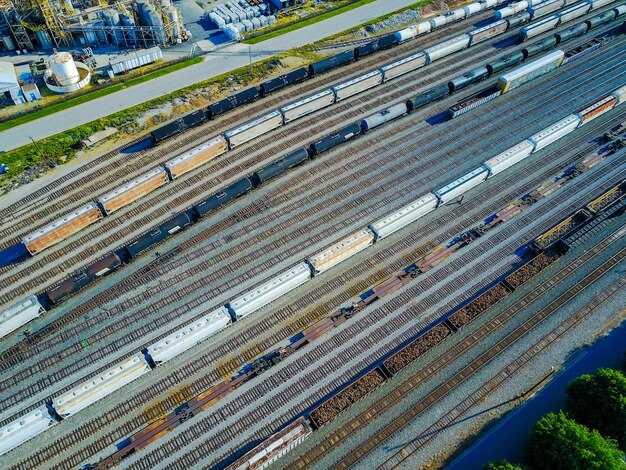
Prioritize time-sensitive agricultural and energy shipments above less time-critical intermodal loads using a transparent scoring matrix tied to measurable triggers.
Use a weighted scoring matrix: perishability/time-sensitivity 40%, contractual priority 25%, network-impact score 15%, revenue-per-car 10%, dwell-risk 10%. When corridor utilization exceeds 82% for three consecutive days, enforce rationing: Class A receives 60% of available weekly train slots, Class B 30%, Class C 10%. Publish weekday and weekend allocations and print the daily allocation schedule, assembling manifest lists as shown above in the shipper portal so carriers and terminals can plan moves.
Set hard operational rules at ramp and yard nodes. Hold origin dwell targets at <=24 hours for Class A, <=48 hours for Class B. Require ramps to confirm transfers and trailer pick-up windows within 6 hours of arrival; if a trailer or load is not moved within the window, apply a surcharge that increases margin for higher-priority bookings. Track on-time performance, fill rate and dwell in a public dashboard and require shippers to subscribe to slot alerts for rapid adjustments.
Adopt trade-focused prioritization for commodity chains with systemic impact: prioritize coal-to-power, grain exports and petroleum feeds that support refinery flows, especially on congested east corridors and at chokepoints such as Cincinnati and major intermodal places outside central suburbs. During pandemic-induced peaks, operators must reserve minimum throughput for these chains to avoid downstream plant shutdowns; operators should quantify the reservation (for example, 20–25% of pre-congestion capacity) and adjust weekly based on demand data.
Implement dynamic secondary markets for unused capacity: allow shippers to auction non-critical slots 48–72 hours before departure at a visible price curve, with proceeds shared 70/30 between carrier and terminal for infrastructure upkeep. Use objective transfer rules to move loads to alternative ramps or short-haul truck carriers when rail slots are constrained, ensuring legal and safety paperwork is moved electronically to avoid delays during manual handoffs.
Require real-time conversation channels between operations centers, major shippers and terminal managers with defined escalation timelines: first response within 30 minutes, resolution path within 4 hours for Class A disruptions. Record every diversion and moved load, and publish weekly after-action data showing how many loads were transferred, which ramps were affected, and the net margin impact per commodity so stakeholders can price risk and plan inventory differently than before.
Apply capacity penalties and incentives tied to behavior: charge for excessive dwell having no operational justification, rebate when shippers consolidate loads to reduce unit train fragmentation, and offer reduced fees for routing that frees congested ramps. These rules make allocation predictable, reduce difficult bilateral bargaining during peaks, and sustain flow for trade-sensitive commodities.
How railways decide which freight receives limited train slots
Allocate slots first to cargo that maximizes revenue per TEU while meeting safety rules and binding contracts.
Adopt a transparent scorecard that weights objective criteria: revenue per TEU (35%), contractual commitments (25%), safety and regulatory status (20%), time-sensitivity (10%) and network utilization impact (10%). Require shippers and merchants to submit pre-classified manifests and proof of obligations; publish aggregated scores so bidders see why a request wins or loses.
An esri mapping study suggests congestion on asian coastal corridors and links from china to inland hubs reduced usable slots by roughly 12–18% during peak months; use those overlays to re-time sailings and align train departures with vessel windows to avoid missed interchange and double-handling.
Operational constraints that drive allocation include available locomotives, crew hours, terminal berth capacity and maintenance blocks. For context: a mid-size ferrovia running 200 daily freight paths that faces a 15% slot contraction must reassign about 30 paths – prioritize lanes where moving one additional train raises profit margins most and where running the service avoids empty reposition moves.
Use market mechanisms to reflect scarcity: reserve 60% of scarce slots for contracted lanes, auction 25% for short-term spot demand, and hold 15% for emergency, hazardous or government-mandated cargo. Allow merchants to procure priority access through fixed-fee contracts or dynamic bidding; require higher deposits for noncompliant bookings so the system does not accept anything that fails safety or equipment checks.
For commodity shippers, apply simple tactics to save capacity and cost: consolidate consignments to full trainloads, accept off-peak sailings, convert some loads to slower schedules where economico loss is minimal, and coordinate container counts in TEUs with terminal operators so equipment is used efficiently.
Recognize institutional limits: capitale to add trains and crews is scarce during downturns, and continued congestion creates operational challenges that turn allocation into puzzles. Pull together multiple data sources – bookings, telematics, port windows, local labor rosters – and publish a daily slot ledger that shows running utilization and the rationale for allocation decisions.
Actionable checklist: require pre-classified bookings 72 hours before departure; launch weekly mini-auctions for 20% of scarce slots; publish monthly utilization by commodity and teus; and direct shippers to alternative routings when slot probability falls below 30%. These steps reduce disputes, help merchants plan trade with china and asian partners, and protect safety and long-term profit while the market remains challenging.
Temporary booking, cancellation and rebooking procedures for shippers
Book confirmed slots at least 14 calendar days before departure and request a 48–72 hour flexible window to allow cancellation or rebooking with minimal fees.
Cancellation policy: waive fees for cancellations submitted more than 72 hours before the scheduled gate time; apply a 25% fee for 24–72 hour cancellations and a 50% fee for under-24-hour cancellations; treat no-shows as full-charge events with storage costs starting at $150/day. Use timestamped EDI or email confirmations to prove submission times and avoid disputes.
Rebooking rules: allow one free rebook per shipment if the delay stems from rail infrastructure delays, terminal congestion or documented crew shortages; charge a flat $75 rebooking fee for subsequent moves within the same 7‑day window. If a strike or severe east/west corridor congestion comes into effect, grant automatic priority rebookings for perishable or time-sensitive shipments after receipt of formal notice from the carrier.
Terminal transfers and yard moves: define transfers as a separate line item. For intra-terminal transfers schedule at least 72 hours lead time; for cross-terminal transfers (east to western hub or vice versa) schedule 7–10 days. Apply transfer costs based on distance and lift: $120 minimum for terminal transfers, plus $0.45/ton-mile for cross-terminal road moves. Keep records of transfer confirmations to support claims related to delays and shortages at terminals.
Operational component list every shipper must keep: (1) a primary rail contact and one backup at each terminal; (2) electronic manifest and booking confirmations with cut-off timestamps; (3) a contingency budget of at least 5–10% of expected freight costs to absorb rush rebookings and storage; (4) weekly monitoring of core corridor capacity and planned maintenance that could affect scheduling. Update contact lists each january and circulate to carriers and carriers’ agents–источник: conrails operational bulletin and customer advisories.
Routing and priority guidance: move time-sensitive loads on corridors with lower historical delays; western corridors generally report fewer weekday bottlenecks while the east shows spikes during harvest months and when power or crew shortages occur. For high-value or perishable shipments, buy priority rebooking slots where available and document why the shipment is part of critical supply for industries such as food, chemicals and manufacturing.
| Azione | Finestra raccomandata | Fee / note |
|---|---|---|
| Initial booking | ≥14 days | Standard tariff; request flexible window |
| Cancellation (waiver) | >72 hours | No fee with EDI/email proof |
| Cancellation (reduced) | 24–72 ore | 25% fee |
| Cancellation (late) | <24 hours | 50% fee; no-shows billed full |
| Rebooking (first) | Within 7 days | Waived if carrier-attributable delays |
| Rebooking (subsequent) | Within 7 days | $75 flat |
| Terminal transfers | 72 hours–10 days | $120 min + distance charge |
If capacity chaos at terminals could lead to extended delays, escalate shipments to a unified (united) response team and request daily status updates; monitor carrier advisories, maintain backups with secondary carriers, and keep financial models that quantify how delays and transfers increase costs and erode margins so you can negotiate credits or schedule priority moves with data-backed claims.
Use of priority surcharges and premium services by bulk exporters
Adopt a two-tier priority surcharge structure: Priority A at 12–18% (or $1.50–$3.50/tonne) guarantees departure within 48 hours and arrival window commitments; Priority B at 5–8% (or $0.50–$1.50/tonne) guarantees loading within five business days. Require a minimum monthly volume commitment per shipper (suggested 5,000–30,000 tonnes) to secure a slot and scale discounts at 50k, 100k and 250k tonne bands.
Embed measurable service-level agreements in contracts: specify dwell-time targets, on-time arrival by terminal, and liquidated damages for missed commitments. Use weekly railcar counts and GPS trailer telemetry as the source for performance audits, and publish a monthly scorecard to give every buyer and seller a transparent view. A recent industry publication showed priority shipments reduce terminal dwell by roughly 30% on congested corridors; track that metric internally to justify surcharge levels.
Shift operational practices to match premium pricing: deploy dedicated block trains or reserved lanes on the busiest corridors to southern ports and chicagos rail hubs, and schedule night loading to reduce peak congestion penalties. Where railcar supply limits capacity, supplement with intermodal trailers for short-haul moves and use repositioning credits with the railroad to lower empty-miles costs. For cross-border flows, negotiate parallel priority windows with canadian carriers to avoid transfer delays at the border.
Price the surcharge for commercial viability: model pass-through scenarios showing how a 10% freight premium alters delivered cost and consumer prices; most bulk commodities translate a 10% freight premium into roughly 1–3% change in retail-facing cost, depending on margins and processing steps. Offer optional cost-sharing structures so smaller shippers who cannot afford full surcharges buy into pooled priority slots under a cooperative agreement.
Anticipate market reaction and manage opposition: expect ambivalence among independent shippers and vocal opposition from firms that value flexibility over guaranteed slots. Counter that by offering trial periods, pro-rated refunds when targets miss, and documentation that shows how priority service reduces spoilage, demurrage and inventory carrying costs. Use pilot programs in the united states and canadian corridors to gather hard data before scaling.
Calculate payback and plan for the future: require each exporter to run a 12-month scenario comparing current delays, expected surcharge spend, and avoided costs such as demurrage, lost sales and extra storage; adopt priority only where payback falls inside 9–18 months. Communicate results to downstream consumer channels so buyers understand benefits and pricing implications, and update the program quarterly as the railroad capacity picture changes.
Required documentation and notification windows to secure carriage
Submit booking confirmations, bills of lading, and HAZMAT declarations at least 14 days before the requested rail departure and attach consignee EIN, equipment numbers, and a preferred pickup window to lock a provisional slot.
Use a 7–14 day notification window for short-haul domestic moves on single-owner tracks; allow 21–45 days for intermodal moves that touch fragmented local networks or multiple terminals. Only during low-demand months can carriers accept shorter lead times; expect peak handling in january to add 5–7 calendar days to standard windows. For accelerated service, provide complete paperwork and payment authorization 48–72 hours ahead and budget a 30–60% surcharge on terminal access and switching costs.
Send structured shipment data via EDI or encrypted CSV and copy it by email to both the terminal gate and railroad interchange coordinator. Required fields: BOL number, UN class for hazardous cargo, commodity code, gross weight, pallet count, seals, and emergency contact with 24-hour phone. Include commercial invoice, packing list, customs release or bond, phytosanitary certificates where applicable, and a signed carrier terms page.
Expect variation by geography: California ports and major hubs such as cincinnati enforce stricter cutoffs and often reject incomplete submissions; American Class I carriers mark late or incomplete files as non-conforming and deny interchange until corrected. Local terminal yard capacity and overworked planners drive these rejections, so track confirmation receipts and request written responses within 12 hours of submission.
Measure performance monthly and supply rolling three-month forecasts; attach a one-page manifest for each trainset to speed acceptance at terminals and speed-of-service negotiations. Allocate capital for demurrage exposure and model costs per commodity to decide when accelerated lanes are afforded. Adopt three simple strategies for improvement: standardize a carrier-ready document packet, automate EDI/email transfers, and assign a single planner per lane to reduce error rates and shorten response times.
Logistics adjustments commodity firms can deploy

Move 10–20% of the busiest, at-risk rail loads to private truck fleets inside a 150-mile radius and open local transload points within 0–48 hours of a confirmed service disruption.
-
Route and capacity controls
- Set weekly mode-allocation targets: keep at least one unit train lane while shifting 10–15% of manifest loads to trucks or containers to reduce congestion between origin and port.
- Use a four-corner hub approach: place small transload yards near key origins (e.g., four-corner regional nodes) so each origination point stays within 100–200 miles of an alternate terminal.
- Negotiate simpler nomination windows with carriers and railroaders to cut booking friction; require 48‑hour roll confirmations which trigger alternate routing automatically.
-
Inventory and scheduling levers
- Hold a tactical buffer of 7–14 days of finished commodity stock for the busiest SKUs; adjust replenishment cadence so each shipment smooths weekly peaks rather than daily spikes.
- Prioritize loads by margin and spoilage risk; move low-margin, long‑haul freight into pooled containers and reserve rail for high-density, long-distance flows that preserve capital efficiency.
-
Asset and capital deployment
- Invest $0.5–2M per modular transload site (land, basic conveyors, gate) where local land and labor are available; expect payback in 12–36 months on networks that divert steady loads from stalled rails.
- Maintain a small private container pool sized for 2–4 week surge demand; reuse containers across lanes to lower empty reposition miles and relieve port congestions.
-
Collaboration and operational playbooks
- Work directly with railroaders and shortline partners to map choke points and create failover paths for predictable loads; document which alternate route absorbs specified car types during failures.
- Share live telemetry and ETA feeds with carriers and local trucking partners so dispatch decisions reflect actual rail performance, not schedules.
-
Containers, loads and handling
- Convert some bulk loads into containerized units where handling and end-customer requirements allow; containers reduce dwell and spread risk across modes.
- Standardize packaging logic so each container or load transfers between truck and rail in under 3 hours at transload points, cutting gate time and labor variability.
-
Risk, environmental and performance trade-offs
- Quantify environmental impact per ton-mile for mode choices and include that metric in routing decisions; rail typically yields lower greenhouse gas per ton-mile, so retain long-haul rail where available and reliable.
- Model cost of delay versus increased road haul capital and fuel: if measured failures exceed X hours per month on a lane, shift a fixed share of loads until on-time metrics improve.
-
Practical staff and process changes
- Train planners to adapt quickly: create a two-page playbook that covers alternate carriers, transload sites, container pools and contact lists so planners can act in minutes.
- Align KPIs between commercial, operations and finance so trade-offs between working capital, capital spend and service levels follow a single logic model.
-
Measurable targets and review cadence
- Track three KPIs daily: dwell hours at origin, percent of loads delayed >24 hours, and alternative-mode share; review and adjust thresholds each week.
- Run quarterly scenario drills for the busiest lanes to validate transload throughput, local trucking capacity and container availability under realistic disruption assumptions.
Adopt these steps to adapt capacity between rails and roads, preserve service for customers, reduce losses from systemic failures and shape improved, simpler operational choices that keep natural demand flows working while you invest capital where it yields the highest return.