




Recommendation: Implement a centralized, automatic control layer in one step to synchronize tasking fleets and robotics, moving goods with precision and reducing waste in large warehouses by up to 20% within the first year.
By wiring operations into a single data layer, the system streamlines receiving, put-away, picking, packing and dispatch, enhancing throughput and reducing idle time. The fact remains that real-time visibility lets planners optimize each route, whereas common patterns show shorter travel distances and lower energy use in moving fleets.
Practical steps: assess capacity and set a phased plan, combining automated storage, robotics and centralized planning. In the first phase, install sensors and a control dashboard; in the second, deploy autonomous mobile robots and automatic storage modules; in the final phase, scale to multiple warehouses. This approach helps teams perform reliably at scale, whereas some facilities chase point solutions. chapter emphasizes holistic ROI.
Implementation tips for success: start with a large aisle network mapping and step-by-step integration, align tasking rules with safety policies, and set guardrails for robot supervision. Use centralized scheduling to prevent conflicts between fleets and ensure each robot acts in concert with human operators. Track metrics like pick rate, dock-to-ship time and energy per move to prove value within 90 days.
As a result, adopting this approach drives efficiency and smart logistics across distribution networks. The combination of centralized control, robotics and automatic systems supports moving goods faster while reducing waste and improving service levels across each zone. The approach is popular among retailers and manufacturers seeking reliable, scalable performance.
Warehouse Management and DC Automation: Practical Insights for Smart Logistics
Start with a visual screen dashboard approach in the warehouse: deploy dashboards in the office and on the floor that show order status, location, and truck readiness. This intuitive setup supports relevant decisions and accelerates delivery planning. Run a 4-week pilot to measure how utilization improves, targeting a 12-18% decrease in search time and an 8-12% decrease in idle dock time to unlock more compact picking zones. This setup can allow faster alignment and informed decisions.
Introduce cobotics stations for basic tasks: picking, packing, replenishment. Place compact, shared automation cells near the storage area to support individual operators. This approach significantly boosts speed and delivery reliability, while it offers uniformity across shifts. Track results with analysis to confirm gains.
Use shared analytics to monitor storing and utilization across zones; display the data on visual screens to highlight hotspots and capacity. This analysis enables decisions about uniformity in storage layout and necessary moves, and helps decreases in travel time for trucks.
Delivery planning benefits from intuitive interfaces that let office staff and floor teams work together; the approach offers a feasible path to scalable automation while minimizing challenges. Keep the screen updated and align into a compact, uniform process that can be replicated across sites; this ability to reuse configurations makes transitions smoother.
Spotlight on Warehouse Management and Distribution Centre Automation: Driving Productivity and Smart Logistics; - Supply Chain as a Service

Adopt a modular WMS with a real-time dashboard and a cobot to automate picking and palletized handling; this setup will boost throughput by 20-35%, decrease errors, and decrease cycle times across typical operations. They should pilot automated palletizing in the first phase and then scale to other zones to maximize gains. A cobot augments the picker, enabling safer, faster handling in high-velocity zones.
With Supply Chain as a Service (SCaaS), businesses access best-in-class automation without heavy capital expenditure, improving financial flexibility and freeing teams to focus on growth. SCaaS delivers enhanced visibility through a dashboard that communicates current status to operators, suppliers, and customers, helping to reduce delays and improve service levels for shopping orders and B2B shipments alike.
- Real-time visibility: the dashboard pulls data from WMS, ERP, and automation devices to show on-time shipments, inventory accuracy, and palletized flow, enabling proactive decisions and clear communication.
- Automation and cobots: automated picking and palletizing support operators, allowing them to handle high-volume tasks without fatigue. They should work alongside human workers to maintain safe, high-speed operations.
- Pallets handling: optimize pallets movement and palletized flows, including put-away and storage, to reduce travel time and improve scanning accuracy, which lowers delays and simplifies yard management.
- just-in-time principles: synchronize inbound receipts with outbound shipments to limit stock buffers, decreasing carrying costs while preserving service levels for orders and pharmaceuticals.
- Industry considerations: for pharmaceuticals enforce serialization, temperature control, and audit trails; for shopping channels prioritize speed, accuracy, and flexible fulfillment options.
- Map current processes and collect volume data to determine the main bottlenecks and automation scope.
- Run a two-week pilot in a high-velocity zone with 1-2 cobots and automated palletizers to validate gains before scaling.
- Integrate WMS with ERP and the SCaaS provider so real-time data flows across systems and teams.
- Launch a staged rollout by zone or function (receiving, put-away, picking, packing) to manage risk and cost.
- Monitor KPIs on the dashboard and adjust routing, scheduling, and staffing based on current trends and demand signals.
By combining automation with a serviced model, an organization can reduce friction, improve customer satisfaction, and sustain a lean logistics backbone for both B2B and B2C channels.
Automated Storage and Retrieval Systems (AS/RS): capacity, layout design, and ROI considerations
Opt for a shuttle-based AS/RS with centrally managed put-away and voice-directed guided picking to maximize density, reliability, and scalability across a global market. Use modular cells that align with separate inbound, storage, and delivery areas. In networks that span regions, this approach aligns with the market demand, balancing service levels and capital use.
Capacity and density: AS/RS leverages vertical space to store items, boosting throughput while reducing floor footprint. Typical installations achieve 40–60% space savings versus manual pallet racking. Choose a configuration that supports storing in multiple zones, with multi-height levels, independent shuttle paths, and robust inventory control that tracks every location in real time. Plan for diversity of SKUs, since diversity increases complexity; design aisles and automation to adapt to varying product sizes and packaging. Include energy-efficient drives and a central control layer to coordinate put-away and retrieval along demand peaks. This approach yields much storing capacity while keeping energy use in check. The plan includes a centralized data backbone that supports real-time visibility and reduces errors in operation and billing when integrated with the broader supply chain.
Layout design details:
- Zones: create dedicated put-away, storage, and retrieval zones with separate staging areas to reduce cross-traffic and errors.
- Flows: align inbound and outbound routes along a central spine, placing docks near the AS/RS to speed delivery and minimize handling along the line.
- Guided services: implement voice-directed picking to improve accuracy, shorten training time, and support distributed labor markets.
- Shuttle integration: use shuttle-based retrieval to move pallets along automated aisles; plan for called third-party maintenance and local support to sustain reliability.
- Scalability: adopt modular cells that can expand as volumes grow from emerging markets; maintain network flexibility for future extensions.
- Energy and reliability: select energy-efficient drives and redundant paths to maintain performance during peak demand while controlling operating costs.
ROI considerations: Investments cover AS/RS hardware, control software, conveyors, put-away and shuttle systems, and ERP/TMS integration. Include training and change management as part of the package. Cost drivers include maintenance contracts, spare parts, energy usage, and software updates; plan for third-party services to minimize downtime and maximize uptime. Benefits include labor reductions in storing and retrieval, faster delivery cycles, improved order accuracy, and reduced billing disputes stemming from errors in the chain. Measure pallet throughput per hour, pick accuracy, order cycle times, and space utilization to quantify results. With adequate volume, payback ranges from 2–4 years; for smaller networks, it may extend to 4–6 years depending on energy costs and service agreements.
Real-time Inventory Tracking with RFID, IoT sensors, and digital twins
Deploy RFID tagging with edge IoT sensors and a digital twin to gain real-time, item-level visibility across floor zones and bulk storage. This approach, supported by dematic platforms, enables identification of movement in inbound docks, put-away lanes, picks, and outbound shipments, reducing manual checks and errors.
Place RFID readers at critical chokepoints and attach IoT sensors to pallets and containers to capture location, temperature, humidity, and shock. The digital twin mirrors the actual floor layouts, enabling route planning, slotting optimization, and proactive deviation detection. The resulting intelligence supports fast decisions and easier exception handling.
Assess value with concrete metrics: inventory accuracy, order fill rate, and cycle time; use particular SKU groups, including large items and bulk bundles, to pilot changes; run what-if scenarios in the digital twin to evaluate layout adjustments before they go live. This approach helps you identify gaps early and minimize risk.
Industries such as automotive parts, consumer electronics, and cold-chain logistics gain from real-time tracking; the system scales to handle tens of thousands of events daily and supports large and small items alike. The components–RFID tags, antennas, readers, gateways, IoT sensors, cloud analytics, and the digital twin–work together to deliver continuous insight and smarter route planning.
Implementing successfully starts with mapping floor layouts to align RFID coverage with storage zones and picking corridors, then integrating with existing workflows and ERP/WMS data. Add governance for data quality, security, and role-based access, and build dashboards that highlight inventory accuracy, dwell times, and bottlenecks. The combination of identification, intelligence, and enabling technologies supports faster decisions, reducing misplacements and elevating throughput across multiple industries.
WES and WMS: ensuring seamless integration, data flow, and operator interfaces
Recommendation: adopt an API-first WES-WMS integration with a shared data model and event-driven updates. This approach provides a single source of truth for orders, inventory, and tasks, enabling scanners to feed real-time activity into the system and keeping picking, packing, and shipping aligned.
Data flow should be designed to run seamlessly. Implement event streams to push updates between systems, and apply a verification layer to check criteria before records move downstream. analytics-driven dashboards surface recent insights into throughput, bottlenecks, and exceptions, guiding staff to actions that improve performance. in asrs environments, the WES can trigger storage or retrieval tasks and the WMS confirms location changes in real time, reducing misplacements and redundant moves.
Operator interfaces should be focused and intuitive. Provide role-based screens for pickers, packers, supervisors, and logistics planners; integrate with scanners to capture activity and update task status with minimal clicks; show clear verification prompts and escalation paths when issues arise. Such interfaces should support offline or intermittent networks, so activity remains coherent during connectivity dips.
| Criterion | Implementation approach | Benefit |
|---|---|---|
| API standardization and data dictionary | Versioned APIs, canonical data models for orders, inventory, tasks | Reduces mapping effort and speeds onboarding |
| Event-driven data flow | Streaming updates via Kafka or similar, with idempotent handlers | Realtime visibility and better synchronization |
| Verification and data quality | Pre-consumption checks, reconciliation jobs, exception handling | Lower error rates and smoother handoffs |
| Operator interfaces | Role-based dashboards, scanner integration, guided actions | Improved productivity and fewer coaching needs |
| Analytics and KPIs | Analytics-driven metrics, dashboards, alerts for throughput, accuracy, and uptime | Focused improvement opportunities and higher-value work |
These steps align with a market that seeks reliable, scalable automation and easy integration as part of transformation efforts. By linking WES and WMS through coherent data flows and intuitive interfaces, warehouses improve accuracy, shorten cycle times, and support e-commerce growth with predictable performance.
Autonomous Mobile Robots for picking, packing, and sorting
Start with a flexible AMR fleet that uses modular grippers and software-driven path planning. Deploy 6-8 AMRs in one facility to handle picking, packing, and sorting, and expand to other locations as layouts evolve. In pilot runs, this setup can reduce travel time by up to 40% and increase throughput by 20-35%. The truth on the floor is that amrs handle routine routes while workers address exceptions with rapid, hands-on responses.
To maximize accuracy and speed, choose the best software platform that supports zone-based routing, priority handling, and real-time updates. Configure pick-to-pack flows by assigning dedicated amrs to high-turn SKUs and by using sorting modules at packing stations. Use fixed zones to cut cross-traffic and to simplify maintenance of layouts. Track metrics such as pick rate, error rate, and travel distance to quantify increases in performance.
Scale across locations with standard interfaces to shipping providers and the warehouse management system. For large-scale deployments, enforce common layouts and data models so a single control layer can orchestrate amrs across sites. The system improves overall visibility, reduces delays, and shortens handoff times between picking, packing, and sorting.
Invest in ongoing updates and training; choose providers who offer remote software updates and on-site support, and align with workers for seamless exception handling. Monitor the reality of operations through clear dashboards and adjust configurations accordingly. Thanks
Cross-docking, yard management, and last-mile handoffs in smart DCs
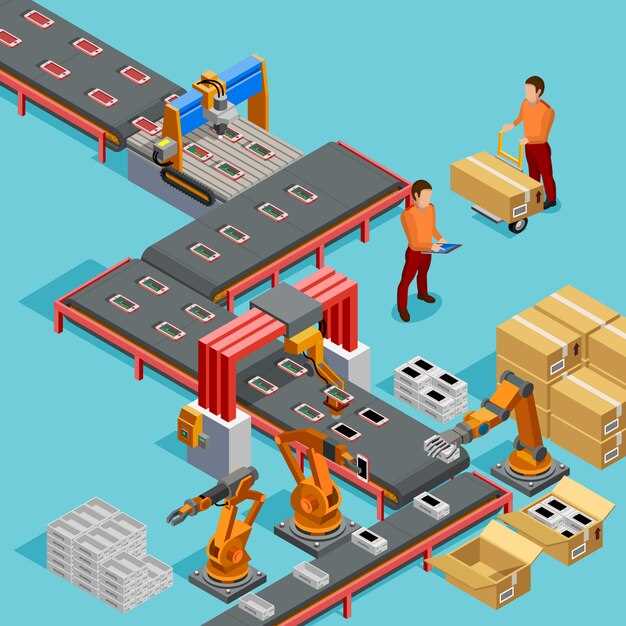
Implement a unified cross-dock workflow driven by a single logic layer and handheld scanners to automate verification of items against outbound orders. Put-to-store items get priority, those with direct store demand skip intermediate handling, and carry-only what fits the dock window. This enables faster decision-making and provides traceability across the dock. This reduces misplaced stock and accelerates the flow from receiving to outbound.
Design a smart yard management layer that sequences trailer arrivals, gates, and yard moves with a digital plan updated every 10-15 minutes. Align docking windows with picker and loader capacity, and use controlling rules to keep lines short. In peak seasonal periods, forecast volumes and adjust slots to protect service levels, aiming for a 15-25% reduction in trailer dwell time and a rise in throughput while ensuring visibility for the office team.
Handoff to last-mile carriers happens through a carrier-facing portal that provides real-time status, automated handoff notes, and scan-confirmed pallet transfers. After pallets are ready, the system triggers pickup notifications and updates both the warehouse floor and the logistics office; this enables faster pickup and improves ETA accuracy.
Identify gaps by tracking KPIs such as dock-to-load time, yard dwell, misrouted pallets, and order accuracy. Use a continuous control loop to adjust routing logic and address root causes, for example door mismatches or late label scans. Improved consistency lowers rework and strengthens customer satisfaction.
Adopt an integrated stack that connects scanners, software, ERP, and WMS; the office dashboards surface exceptions and opportunities. Existing processes stay aligned while streamlining cross-dock, yard, and handoffs. The potential uplift in productivity scales with seasonal demand and logistics complexity, helping you make better use of assets and crew time.
Run a practical pilot in a single DC: focus on one cross-dock lane, one yard zone, and one last-mile handoff. Measure dock-to-outbound performance over three to four weeks, then adjust control rules and repeat in another facility. This approach improves efficiency, helps stay within target costs, and yields actionable data for broader adoption.