


 日本語
日本語  English (UK)
  Русский
  العربية
  한국어
한국어  Magyar
  Türkçe
  Español
  Čeština
  Svenska
  Português
  Ελληνικά
  Suomi
Suomi  Nederlands
  Română
  Italiano
  Français
  Polski
  Українська
  Deutsch
  简体中文
简体中文  Slovenčina

Adopt vessel-specific AI for voyage planning and predictive maintenance to cut fuel use and emissions, starting with pilots on regional routes. This approach turns data into updates, leaves room for scaling across cargo types, and connects decisions with supplier initiatives to deliver measurable gains.
Most gains come from integrating connected data streams into cargo operations and maintenance planning. Vessel-specific sensor readings tune engine loads to cargo weight, enhancing predictability and avoiding spikes that leave fuel on board. Updates from regional supplier dashboards feed this loop, shortening maintenance cycles and improved emissions stewardship.
Regional optimization initiatives turn momentum into tangible gains, increasing schedule reliability and sustainability. By routing into optimized paths, crews gain visibility into alternative routes that minimize ballast and fuel spend. This approach supports cargo integrity, with cases from early adopters showing most ports cutting idling time and boosting on-time departures.
dont rely on guesswork; this framework blends vessel-specific analytics with supplier initiatives, turning updates into actions that support emissions targets and sustainability goals in cases across multiple routes and cargo types. Most operators report improved margins after cross-functional adoption, and this approach scales from pilot vessels into entire fleets without heavy capex, leaving room for ongoing enhancements in regional corridors and supply chains.
Practical AI applications across voyage, fleet, and port operations

Invest in a real-time voyage optimization engine linking weather, AIS, cargo details, port slot data; expect 8–15% fuel savings and smoother schedules, delivering significant market gains.
Deploy predictive maintenance powered by machine learning on engines, propellers, and deck gear; fewer unplanned repairs, tighter maintenance windows, and longer asset life.
Port operations rely on AI-guided berthing, yard traffic, and container handling; models optimize load, inventory flows, deliveries, streamline tasks toward optimal throughput, shortening dwell times and increasing line utilization.
Powered by provided data from a market network of partners, a company aligns vessel schedules with trade demand; Technologies from their suite enable greener, smoother performance while ensuring regulation compliance.
Cross-functional roles, patrick and shefali, pilot trans-pacific routes with load optimization, inventory checks, and faster deliveries; dont rely solely on dashboards to judge growth trends.
Route optimization and voyage planning to cut fuel spend and delays
Implement dynamic routing and voyage planning that integrates real-time weather, currents, port time windows, and load priorities to cut fuel spend and delays.
A centralized office data hub links fleet management, suppliers, regansupply, and warehouse operations, delivering significant visibility for route selection and flow optimization.
Most gains come from weather- and currents-aware routing, minimizing stops, and load optimization that lowers idle time in ports, while keeping a tough safety margin.
kapadia emphasizes relying on robust chains of data from office, regansupply, and warehouse; this yields most value when combined with route change that adapts usage patterns.
getty benchmarking dashboards for fuel usage offer quick comparisons across lanes and weather scenarios; this informs decisions on speed and load strategy.
Management must implement continuous cycle to solve routing conflicts, adjust flow, and test new routes; instead of fixed plans, run iterative simulations that reflect unpredictable weather and port congestion, so shipping teams respond efficiently.
Leaves of schedule changes should be communicated across office, suppliers, and regansupply to maintain alignment, while KPIs track delays avoided and fuel usage saved.
Adopting algorithms that favor speed optimization yields 8–12% fuel spend cuts on typical lanes, with higher margins on long-haul legs crossing predictable currents; pace alignment between legs reduces idle time and leaves contingency options.
Robust load-usage forecasting supports leaves in voyage plans, preventing unexpected detours and maintaining change control across office, shipping, and regansupply networks.
With this approach, operators gain predictable performance, enabling more resilient flow management across chains and supplier networks, even under unpredictable conditions.
Predictive maintenance to prevent failures and extend asset life
Implement a vessel-specific predictive maintenance program using sensor data to anticipate failures before they disrupt transit schedules. This approach delivers actionable forecasts and supports decision-making across crews, operators, and port authorities. This enables their teams to act swiftly. This accelerates benchmarking across industry stakeholders.
- Data foundation: collect high-quality metrics from propulsion, power distribution, hull monitoring, deck machinery, and ballast systems; apply normalization, time alignment, and cross-check with historical maintenance records provided by operators; align with getty benchmarks for good forecasts.
- Forecast-driven triggers: translate forecasts into maintenance windows; set risk thresholds on critical assets; schedule during upcoming port calls or cargo cycles to minimize disruption.
- Decision-making loop: run scenario analyses to adjust action plans; tie spare parts distribution to transit plans across networks; track what drives risk changes to improve accuracy over time.
- Asset health visibility: deploy dashboards that present vessel-specific risk scores, remaining useful life estimates, and feature-level explanations for why alerts fired; keep a log for governance and continuous learning.
- Adoption path: adopt phased rollout starting with two vessels, then scale across most of fleet; create a centralized data network that enables cross-asset learning and faster iteration; measure mean time between failures and up-time improvements to justify further investment.
- Trans-pacific example: optimize maintenance during trans-pacific legs by syncing forecasts with weather routing, fuel planning, and port schedules; distribute tasks through a distribution network so technicians reach sites with minimal travel.
- Outcomes and benefits: what users gain includes increased reliability, better sustainability alignment, and overall margin improvement; good forecasts minimize unplanned events and extend asset life, delivering what matters most to customers and operators.
AI-powered fuel management through real-time consumption analytics
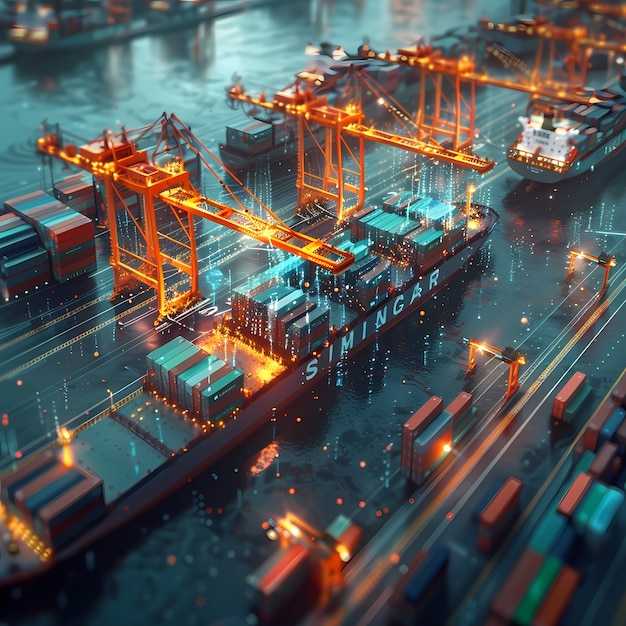
Adopt AI-powered fuel management via real-time consumption analytics to cut fuel burn by 8–12% on trans-pacific runs, supported by engine-room meters, GPS, weather, and load data.
Blueprint starts today: implement data-pipeline linking sensors, fuel-flow meters, speed logs, and voyage plans into unified analytics service. This enables optimizing speed profiles, ballast planning, and engine trims, delivering fuel-efficient decisions on deck. For oocl fleets, early pilots on long routes validate gains and accelerate scale across assets. Assign tasks to patrick and office staff to maintain updates.
Office dashboards deliver updates to patrick and regansupply teams, while images from sensors validate savings and help unloading planning, deliveries, shipments scheduling, and satisfaction improvements.
Risks include sensor reliability, data latency, and regulatory constraints; mitigate via redundant sensors, edge computing, and cross-verify with weather forecasts. Real-time alerts flag anomalies, enabling faster interventions and preventing unscheduled emissions spikes. This approach supports reach across long-haul legs, enables long-term optimization, and offers measurable satisfaction gains for customers.
enhanced visibility into fuel usage strengthens task reach and faster response.
| メートル | Baseline | ターゲット | Actions |
|---|---|---|---|
| Fuel burn rate | 60 t/day | 52 t/day | Adjust speed profiles; optimize trimming; AI-guided decisions |
| 排出量 | 180 t CO2/day | 150 t CO2/day | Route optimization; load minimization; weather windows |
| Deliveries reliability | 88% | 95% | Carriers updates; synchronized unloading |
| Shipments on-time | 85% | 93% | Predictive maintenance; port-call sequencing |
| Unloading efficiency | 72 min/ship | 60 min/ship | Automated yard moves; image-guided loading |
Smart crew planning and overtime reduction via AI-driven schedules
Adopt AI-driven scheduling to align shifts with forecasted load and regulatory updates, delivering smoother rosters and overtime lowering.
- Data inputs include vessel call patterns through ports, routing, energy usage, cargo load projections, crew availability, and rest requirements; AI uses these to craft balanced shifts that minimize idle time and avoid overstaffing.
- Shifts optimization ensures workload balance across vessels and crews, requires minimal manual adjustments, supports smooth handovers, and lowers fatigue through better pairings.
- Overtime management relies on rest rules and regulatory updates baked into schedule generation, lowering overtime exposure across crews.
- rotterdam pilot: In rotterdam, a six-month pilot delivered overtime reduction of 18% and load balance improvement of 14%.
- Implementation roadmap: integrate AI engine with office systems, enable automated updates to rostering, run daily scenario tests, monitor shifts and energy usage, adjust models accordingly.
- Metrics to track include overtime reduction, smoother handovers, regulatory compliance incidents, load balance, energy usage, and task coverage rate.
- Benchmarks: techtarget references show rostering improvements, with energy usage reductions up to 20% in long-range deployments.
Warehouse robotics adoption in ports: current uptake and scale challenges
Recommendation: pilot a 15-vehicle AMR pallet-flow in a single terminal zone to lift throughput by 20% within 12 weeks; track time per move, idle time, and fuel-efficient routing; compare against manual flow to justify scale; share results with supplier networks during a regional conference; kate and operations teams should lead learning loops, optimizing routes, and avoiding bottlenecks in common transit flows.
Current uptake among major hubs shows robotics in warehouse zones at 32% of top 60 ports, rising from 18% five years prior. Main scale challenges include legacy TOS integration, fragmented data chains, and limited payload capacity for heavy loads. Ports report 12% downtime due to sensor outages and maintenance windows; optimizing maintenance schedules is critical to avoid cascaded disruptions.
Recommendations for scalable adoption include standardizing data models, reusing modular hardware, prioritizing fuel-efficient routes, aligning with transit schedules, and building shared learnings across worlds and industries. Choosing common platforms reduces vendor lock-in; analysis shows faster ROI when pilot scope includes inbound, outbound, and yard management.
For sustainable benefits, adopt a data-driven approach measuring reduction in idle time and smoother flow across inbound, cross-dock, and outbound paths; from initial 3‑month learning phase, scale to 2–3 zones per port, leveraging centralized analytics to avoid drift.
Risks include vendor dependency, cyber threats, and equipment misalignment with human workload. A robust risk plan relies on independent verification, cross-supplier sharing, and continuous improvement loops; leadership from manufacturing and operations helps sustain momentum and avoid backsliding. kate will lead a cross-functional group to drive learning, share insights, and optimize flow across worlds of logistics and manufacturing.