


 日本語
日本語  English (UK)
  Русский
  العربية
  한국어
한국어  Magyar
  Türkçe
  Español
  Čeština
  Svenska
  Português
  Ελληνικά
  Suomi
Suomi  Nederlands
  Română
  Italiano
  Français
  Polski
  Українська
  Deutsch
  简体中文
简体中文  Slovenčina

Guarantee a transparent, farm-gate floor price tied to a living-income benchmark and pay it quarterly – do this now so producers stop losing ground while buyers count short-term margins. Set the floor at a minimum of $2 per person per day for households dependent on cocoa, adjust it with CPI and climate costs, and publish payments to farmer accounts within 30 days of shipment.
Data from field surveys show many smallholders earn below subsistence levels: median cocoa incomes can fall under $1.50 per day during low-price months, with seasonal price fluctuation that erodes savings and basic needs. Strengthen local farmer cooperatives, require contracts containing clear cashflow terms, and route premiums into accounts controlled by farmer committees. Lead buyers – from mars to swiss-owned brands and others – must disclose volumes, premiums, and timing so communities see the difference between promises and payments.
Targeted investments deliver measurable results: allocate roughly $300 per hectare over three years to restore soil, plant shade trees, and build basic infrastructure such as water points and drying platforms. Complement that with training programs that increase yields by 20–40% in three years and create alternative short-term incomes so families survive low-price days. Establish buffer funds that smooth 12–18 month price swings and require buyer contributions calibrated to purchase volumes, with independent audits and public accounts which list disbursements to farmer groups.
Work with named community leaders like akwah to pilot transparent models that scale: co-finance agroforestry plots, digitize payments to reduce leakage, and contract fixed minimum volumes to reduce forced sales to intermediaries. These specific steps produce a measurable difference for millions and shift the system away from charity rhetoric toward durable, accountable change across the cocoa-producing world.
Behind “Responsible” Chocolate: Cocoa Farmers’ Bleak Future & an Unsustainable Food Industry – Can Cacao Farming Long a Driver of Deforestation Really Become Sustainable?
Set a binding living-income price floor for cocoa and require payment transparency under national law within 180 days; this prevents short-term buying practices that push farmers into deforestation to protect livelihoods and stabilises income for cocoa-growing households.
Data-driven context: most smallholders in Ghana, Côte d’Ivoire and parts of indonesia and the cameroons continue to report stagnant or falling income despite rising retail chocolate sales. An investigative article showed that farmgate returns often amount to a single-digit share of the final bar, and accounts from field visits describe bleak seasons when families work extra days just to cover school fees. Reports also document forced labour on some farms, which worsens social risk along the chain.
- For governments: implement a public programme that sets a living-income benchmark on a per-hectare basis and links it to export licences; require routine environmental due diligence across the whole basin of production to curb new forest clearance.
- For buyers (cargill and peers): pay a binding premium into farmer cooperatives, fund agroforestry seedlings and climate-resilient planting material, and report monthly traceability data so auditors can verify origin without relying on self-reported claims.
- For donors and NGOs: support technical-extension work at scale, including soil-restoration trials and crop diversification pilots that reduce dependence on cocoa income across up to three seasons at a time.
- For certification systems: shift standards from checkbox audits to outcome metrics – percentage of households above the living-income line, hectares of reforested land, and verified absence of forced labour – measured on a multi-year basis.
Operational specifics that matter: require corporate buyers to place at least 30% of procurement under long-term contracts tied to farmer-first pricing; mandate satellite monitoring and ground spot-checks for deforestation; and create a complaints mechanism paid for by the private sector but administered by an independent body. A pilot supported by a french NGO and local cooperatives, which christophe and alliot helped design, showed improved crop yields and reduced clearance after two seasons when those elements combined.
Measure results quarterly and publish open datasets so civil society can hold actors to account; without transparent accounts, certification risks becoming greenwash. Practical targets: increase farmer income by a measurable tranche (for example, a 40% rise from baseline within three years), restore degraded plots across the basin, and cut new forest conversion to cocoa by 75% on a landscape basis.
Operational funding comes from three sources: a modest levy on exporters, compulsory corporate contributions tied to market share, and redirected development finance. Companies that resist change would face procurement restrictions and reputational consequences; companies that cooperate would receive predictable supply and lower climate risk. These steps convert painful reality into trackable progress and give cocoa-growing communities a sustainable pathway forward – thanks to coordinated policy, corporate accountability and targeted field work.
Smallholder farm economics and household resilience
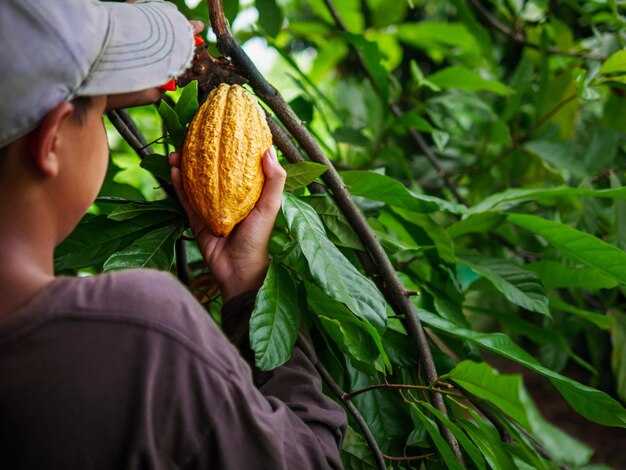
Shift at least 40% of seasonal sales into staggered cash reserves and diversified revenue streams to stabilize household income within one year.
Reduce risk that the majority of beans are sold at harvest by scheduling three regular sales windows: immediate cash (20%), mid-season contracts (40%), and end-of-year storage sales (40%). This mix improves monthly cash flow, creates a steady buffer for a family, and lowers forced sales during low-price weeks.
Form or join local cooperatives and community savings groups so producers pool transport, drying and storage costs, negotiate better prices with buyers such as Nestle or independent french traders, and split upfront input costs. Organisations can provide templates for simple contracts and record-keeping that ensure fairly distributed margins and regular payments to members.
Invest in low-cost agricultural measures that cut post-harvest losses from heat and humidity: solar driers, raised ventilated storage, and shaded agroforestry rows. These measures improve bean quality, extend storage life by weeks, and increase the price per kilo. Track quality metrics each year and pay premiums to farmers whose lots meet the standard.
Use small-scale value addition to capture more profits: on-farm fermenting and community wet mills boost local employment, raise outbound prices by 10–30% and give families steadier cash. Train two members per village in basic processing and bookkeeping, and set up a rotating schedule so processing runs fairly and relaxed, not rushed at peak.
Secure access to short-term cash through invoice financing, community guarantees, or seasonal credit lines tied to post-harvest storage. Negotiate contracts at regional conferences where buyers and producers come together; document terms here so disputes reduce and cash flow becomes predictable.
Monitor five indicators quarterly: percent of crop sold at harvest, average price/kg, days of household food reserves, number of regular buyers, and net profits per hectare. Share that data in community meetings and short reports so each family sees the story of change and adapts practices that sustain the local ecosystem and incomes.
Real income breakdown: cocoa yield, farmgate price per kg, and alternate income streams

Act now: target rehabilitated yields to 800 kg/ha, secure a farmgate price of $1.80–$2.20 per kg through cooperative negotiation, and establish three alternate income streams (plantain intercrops, beekeeping, timber/NTFP sales) so households do not depend on cocoa alone.
Concrete baseline: most smallholder plots average ~400 kg/ha dried beans. At a farmgate price of $1.30/kg that generates $520/ha gross revenue; typical annual on-farm cash cost runs $300–$420/ha (fertiliser, labour, post-harvest), leaving a net of roughly $100–$220/ha. Improve yields to 800 kg/ha and push price to $2.00/kg and gross rises to $1,600/ha; after a one-off rehabilitation cost of $350/ha in year one and recurring costs near $420/ha, net farm income can become ≈$830/ha – a four- to eight-fold increase compared with current nets for many producers.
Alternate streams with measured returns: plantain intercrops deliver between $300 and $450/ha/year in cash sales; beekeeping (5–10 hives) adds $120–$240/ha/year from honey and pollination services; managed timber or pulse pruning yields lump-sum payments of $200–$600 every 3–7 years depending on access to markets and share agreements. Combining two alternates typically delivers an extra $420–$1,050/ha/year, which covers input cost hikes and builds buffers for climate-vulnerable seasons.
Operational recommendations: form or join cooperatives that sign a price agreement with buyers to raise farmgate per kg and reduce middlemen margins; demand transparent cost breakdowns so premiums actually deliver to producers rather than faux labels that stop meaningful flows. Donors and organisations must deliver low-cost rehabilitation loans under clear repayment terms, provide seedlings and training, and link farmers to processing buyers to capture extra value per kg of product.
Policy and equity actions: prioritise protecting marginalised producers and peoples who lack access to finance; allocate technical-extension funds specifically for women and youth, and set contract clauses that share risk between buyers and farmers during price drops. In 2025 etoua announced an agreement with alliot and regional organisations to deliver seedlings and market access pilots; those pilots show how focused efforts and clear deliverables increase income share for smallholders and reduce incentives for deforestation. Farmers believe structured contracts and transparent cost-sharing does more than rhetoric: they become durable income pathways that secure future livelihoods.
Seasonal cashflow management: meeting input, labor and school-fee cycles
Allocate 25–30% of peak-harvest receipts immediately into three locked buckets: inputs (35%), labor (35%) and school fees (30%). For labor, pay contractors 40% at planting, 40% at mid-season and 20% at harvest; this schedule keeps crews available and reduces last-minute borrowing during difficult months and allows you to meet school-fee cycles without emergency sales.
Create a cashflow calendar across seasons that maps expected receipts, input delivery and school-term dates. Many nations require term payments in January and September – publicly post the calendar at co-op offices and the town noticeboard so members see them; a two-minute training video that shows how to schedule mobile transfers improves compliance and reduces late fees.
Here are three concrete risk tools to use immediately: 1) maintain a short-term buffer equal to 10% of annual incomes; 2) negotiate forward-sale clauses with your cooperative to smooth erratic prices; 3) secure input-credit matched to harvest flows. Field surveys showed farmers who align repayments to harvest months cut default risk materially. Also diversify buyers across at least three outlets so one cash shock won’t collapse your cycle.
Avoid faux premiums and vague promises from buyers: require contracts that make quality thresholds and price increases clear and verifiable. Link premiums to publicly available price indices and timestamped quality checks in the chain. If producing costs or agricultural input prices increases by 15–30% off-season, adjust advance schedules and price-sharing clauses thats fair to both farmers and buyers.
Organize village savings groups or fair cooperative advances that allow members to access small loans for school fees at low cost; though interest reduces immediate cash, theyre cheaper than emergency high-interest credit. Best practice across districts is to set two redistribution times per year and to encourage governments to pilot matched seed and fertilizer grants timed to planting seasons to increase purchasing power and reduce seasonal borrowing.
Access to finance: microcredit, input loans and risk of debt traps
Require financial literacy training and cap loan exposure at 30% of a farmer’s projected harvest revenue before disbursing microcredit or input loans.
Microcredit programs in cocoa regions commonly charge 20–40% APR; input loans for seedlings, fertilizer and agrochemical packs typically range $50–$300 per hectare. Set maximum nominal rates at 18% APR for seasonal input loans and 12% APR for asset loans (e.g., tools, fermentation boxes). Link repayment schedules to harvest calendars so repayments occur after sale windows, and avoid daily- or weekly-deduct models that reduce cash available for household needs.
Mandate group-based vetting plus individual accounts to reduce coercion. Require cooperatives or organisations that disburse funds to submit a standardized affordability calculation: expected yield (kilograms per hectare), current farmgate price, production costs, and a 20% buffer for climate shocks. Example: if expected yield is 600 kilograms at $2/kg, gross revenue is $1,200; total seasonal loan service (principal + interest) must not exceed $360 on a basis of 30%.
| Loan type | Typical terms | Risk | Policy recommendation |
|---|---|---|---|
| Microcredit (general) | 6–24 months, 20–40% APR | High default, pressure sales | Cap APR 18%, require training, enforce income cap 30% |
| Input loan (seasonal) | 6–12 months, in-kind or cash | Crop failure leads to rollover debt | Harvest-tied repayment, index insurance, limit to proven area |
| Asset loan | 12–36 months, lower rate | Asset repossession risk | Lower APR (≤12%), flexible grace period, training requirement |
Require environmental safeguards: prohibit loans that finance clearing of rainforests or expansion into protected zones. Make loan approval conditional on a short farm plan showing how the purchase improves production per hectare without expanding cultivated area. Reported gains from targeted inputs and training can lift yields from 400–600 kilograms/ha to 900–1,200 kilograms/ha; tie eligibility to measurable yield improvements after two seasons.
Protect communities by demanding transparent contracts in the local language, an explicit dispute-resolution clause, and written consent for any buyer-linked repayment deduction. Recommend that chocolate giants and donor organisations shift at least 40% of market-facing input funding to grants for the most vulnerable producers during climate crisis years to avoid forcing higher debt levels that drive deforestation.
Use index-based weather insurance as a standard add-on where climate risk is high. Require lenders to publish default rates, effective APR, and recovery methods annually so your community can compare providers. When repayments are stopped by force or rollovers exceed two consecutive seasons, freeze new lending to that borrower group until an independent audit completes.
Train extension agents on cash-flow calendars and simple bookkeeping (entries for kilograms harvested, price received, input costs), and make that training a mandatory condition for loan access. These measures improve loan performance, protect farmer livelihoods and reduce the chance that short-term credit turns into chronic debt.
Organizing for market power: cooperative models, buyer negotiation and cost-sharing
Form federated cooperatives that sign multi-year offtake agreements with buyers and create a jointly funded price-stabilization pool. Require buyers to cover 60% of upfront input costs (seedlings, fertilizers, basic processing equipment) while cooperatives cover 40%; set a contractual price floor at the recent median market price plus a 20% quality premium, and trigger renegotiation if worldwide prices increase more than 15% in a year. Buyers such as mars and cargill already run programme frameworks; insist that any programme designed with a buyer specify contributions, audit rights and a public timetable for payouts so producers receive predictable income rather than irregular spikes.
Organize governance around three accountable bodies: an elected producers’ council, an independent financial trustee and a technical unit linked to a local academy for agronomy and post-harvest training. Pooling transport and drying facilities reduces costs for remote areas and typically lowers per-ton logistics spending by 15–25% in comparable schemes. Train 1 lead farmer per 50 members in climate-resilient pruning and shade management to limit heat damage and root loss; monitor yield and income data quarterly and publish summaries members can read online or at the cooperative office.
Negotiate buyer agreements that include: a climate risk premium tied to objective indicators (temperature anomalies, rainfall deviation), a quality-premium schedule, and a cash-flow schedule that frontloads 30% of contract value at planting. Add a clause that activates a crisis top-up if harvest income drops more than 20% year-on-year because extreme heat or pest outbreaks reduce yields. Use third-party verification for traceability and require buyers to fund a social protection buffer managed by a sociale organization; governments can match up to 25% of that buffer under agreed incentive schemes.
Design cost-sharing and incentive metrics around measurable targets: raise cooperative members’ income by 20–30% within three years through better pricing, higher yields and reduced post-harvest losses; track increases in net income per hectare, not just farm-gate prices. If disputes arise, escalate to an independent mediator specified in the agreement; cant members be excluded without due process. Implement quarterly financial reports, publish expenditure line-items for the stabilization pool, and commission an external evaluation after year three to assess effectiveness and inform contract renewal.