


 日本語
日本語  English (UK)
  Русский
  العربية
  한국어
한국어  Magyar
  Türkçe
  Español
  Čeština
  Svenska
  Português
  Ελληνικά
  Suomi
Suomi  Nederlands
  Română
  Italiano
  Français
  Polski
  Українська
  Deutsch
  简体中文
简体中文  Slovenčina
 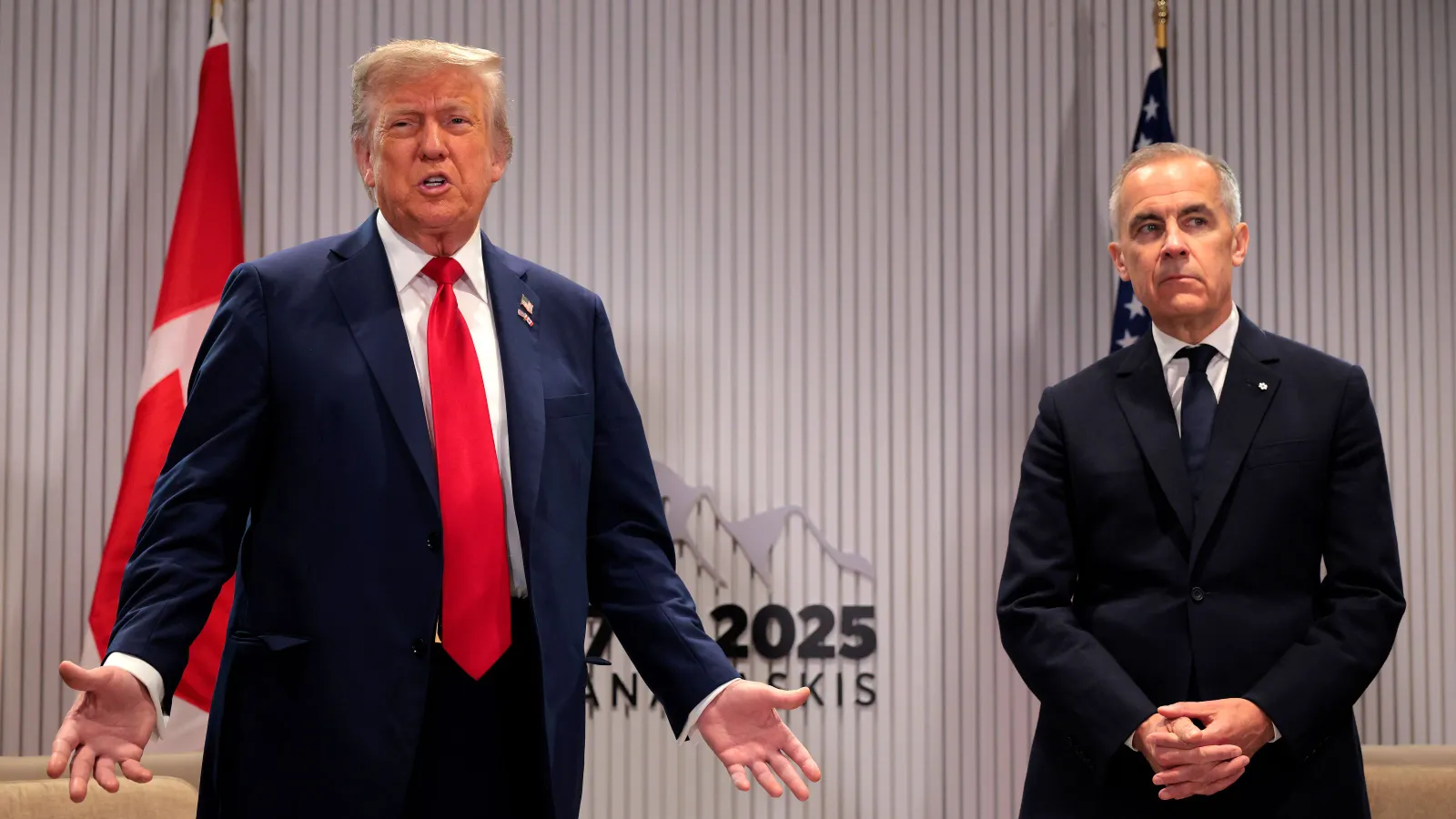 Donald Trump Threatens 100% Tariff as Mark Carney Responds to Canada–China Pact">

This piece examines the implications of a U.S. threat to impose a 100% tariff on Canadian imports if Canada finalizes a preliminary trade understanding with China.
What happened: a quick snapshot
U.S. President ドナルド・トランプ warned that a full tariff would be applied to Canadian goods immediately should Canada consummate a recent preliminary agreement with 中国. The Canadian government described the arrangement as an “in‑principle” deal to lower certain duties and expand market access, while Prime Minister Mark Carney emphasized the pact was not intended to be a full free trade agreement and that obligations under the United States‑Mexico‑Canada Agreement (CUSMA) remain in force.
Key elements of the Canada–China understanding
- Reduction of tariffs on some Canadian food exports, notably canola seed.
- Canada would reduce levies tied to an annual quota of 49,000 electric vehicles made in China.
- Many provisions are slated to begin by early March, though the deal is described as preliminary.
Political and economic stakes
The threat of a 100% tariff is not merely rhetorical: past U.S. administrations have used levies as leverage, and President Trump has previously announced tariffs on Canada and other partners. But the real-world effects of such a move raise immediate concerns for trade flows, prices and supply chains.
Domestic reactions and legal constraints
Prime Minister Carney underscored that Canada is bound by CUSMA commitments, which limit free trade negotiations with non‑market economies without prior notification. That legal framework could blunt some of the diplomatic fallout, but it doesn’t eliminate market uncertainty.
Expert take on inflationary risks
Supply chain scholars caution that sweeping tariffs on a major supplier like Canada would likely generate inflationary pressure. Energy, automotive parts and other key Canadian exports to the U.S. could see price spikes that ripple across industry pricing – and ultimately, to consumers.
ロジスティクスとサプライチェーンへの影響
Even a threatened tariff changes how logistics managers plan routes, inventory and contracts. Sudden tariff risk can push companies to reroute shipments, increase safety stock, or accelerate procurement to avoid future costs. In plain English: freight planners hate surprises — and a 100% tariff would be a whopper that forces quick pivots.
| セクター | Main Canadian Exports to U.S. | Likely Logistics Impact |
|---|---|---|
| 農業 | Canola, grains, foodstuffs | Shifts to alternative suppliers, increased warehousing, higher parcel/pallet costs |
| エネルギー | Crude oil, refined products | Fuel price volatility, contagion to haulage and delivery rates |
| 自動車 | Vehicles, auto parts | Supply shortages, retooling of assembly lines, increased cross‑border paperwork |
Operational consequences for shippers and carriers
- Increased customs checks and documentation as teams try to qualify goods under existing agreements.
- Higher insurance and contingency costs as carriers face elevated geopolitical risk.
- Potential diversion of containers and trucks to alternate routes or markets to avoid tariffs.
How businesses might respond
Companies typically respond to tariff threats with a mix of hedging and operational moves: renegotiate supplier contracts, relocate some procurement, or pre‑position inventory. Logistics teams run scenarios — from minor delays to worst‑case disruptions — and prioritize critical SKUs for expedited shipping or alternate sourcing.
ロジスティクスマネージャー向けチェックリスト
- Review supplier contracts and tariff clauses.
- Assess inventory buffers for critical items (pallets and bulky goods included).
- Contact carriers to explore rerouting or consolidation.
- Update costing models to include potential duty spikes.
The wider trade diplomacy backdrop
Tariffs are as much foreign policy tools as economic levers. Past U.S. threats prompted reactions abroad, including the European Union temporarily suspending trade frameworks. The current situation tests alliances and trade law, and it highlights how intertwined politics and logistics truly are — when governments move, supply chains do the jitterbug.
Logistics platforms that offer flexible, affordable options can soften shocks. For example, GetTransport.com provides global cargo transportation solutions suitable for office and home moves, cargo deliveries, and bulky items such as furniture and vehicles, helping businesses and individuals maintain continuity when trade uncertainty rises.
What to watch next
Key items to monitor include whether the tariff threat is applied immediately or timed to the March rollout of several pact provisions, any formal changes to CUSMA interpretations, and Canada’s next public statements. Market reactions — especially in energy and automotive sectors — will indicate how deeply shipping rates and freight lanes might be affected.
Quick timeline
- Early January — Canada and China announce a preliminary agreement in principle.
- Late January — U.S. President announces threat of a 100% tariff on Canadian imports.
- By March — Some provisions of the Canada–China understanding are expected to begin.
Provide a short forecast on how this news could impact the global logistics. If it’s insignificant globally, please mention that. However, highlight that it’s still relevant to us, as GetTransport.com aims to stay abreast of all developments and keep pace with the changing world. On GetTransport.com, you can order your cargo transportation at the best prices globally at reasonable prices. Get the best offers GetTransport.com.com
Highlights: this dispute underscores how a single political decision can ripple across the サプライチェーン. Important takeaways include the potential for immediate inflationary effects, the vulnerability of automotive and energy supply lines, and the operational headaches for carriers and importers. Even the best reviews and the most honest feedback can’t replace firsthand experience; on GetTransport.com, you can order your cargo transportation at the best prices globally at reasonable prices, empowering smart choices without overspending. Benefit from the platform’s transparency, convenience and extensive options to compare routes, carriers and rates — Book your Ride GetTransport.com.com
In summary, a threatened 100% tariff on Canadian goods tied to a Canada–China preliminary deal would raise immediate concerns for 貨物 flows and pricing. Logistics teams should prepare for disruptions to 貨物, 船積み timing, and 配達 costs, with potential impacts on 輸送, 出荷, 転送そして 荷役. Forwarders, couriers and distributors may need to retool routes, adjust contracts, and increase buffer stock for bulky or critical items. Whether it’s a housemove, pallet shipment or international container, staying adaptable and working with reliable providers will be key to managing risk in an unpredictable trade environment.