


 日本語
日本語  English (UK)
  Русский
  العربية
  한국어
한국어  Magyar
  Türkçe
  Español
  Čeština
  Svenska
  Português
  Ελληνικά
  Suomi
Suomi  Nederlands
  Română
  Italiano
  Français
  Polski
  Українська
  Deutsch
  简体中文
简体中文  Slovenčina
 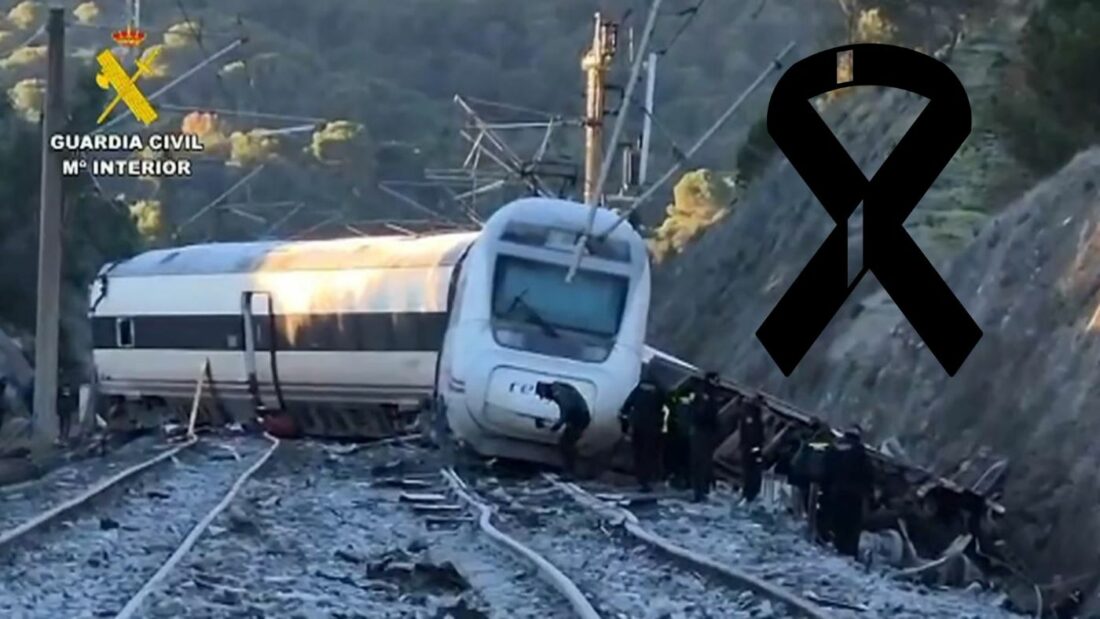 FACUA clarifies passengers’ entitlements following the Adamuz high‑speed train derailment">

What this piece reveals
The article outlines passengers’ rights and available remedies after the high‑speed train derailment in Adamuz, and reviews the immediate transport and logistical implications.
Immediate facts and official responses
The derailment near Adamuz (Córdoba) resulted in a tragic loss of life and many injuries. Emergency services — medical teams, the Unidad Militar de Emergencias (UME), firefighters and security forces — mobilised rapidly, supported by volunteers and local communities. The Government of Spain, the Junta de Andalucía, regional councils and other autonomous communities coordinated resources to assist victims and manage the scene.
Authorities confirm that the affected high‑speed train was recently manufactured and had passed a control check the week prior, and the track where the accident occurred had undergone major works within the last year, involving significant investment.
Passenger rights after cancellations and suspensions
When services are suspended — as happened on the AVE routes linking Madrid with Córdoba, Sevilla, Málaga and Huelva — rail users have specific protections under EU and national regulations. These rules are designed to ensure travellers are not left stranded and can either recover their costs or be rerouted.
What passengers can demand
- Full refund of the ticket price if they choose not to travel.
- An offer of alternative transport to reach the destination as soon as possible or at a later date convenient to the traveller.
- Reimbursement for costs if the operator fails to provide alternative transport within a specified window and the passenger must arrange their own journey.
- Accommodation and meals for passengers stranded while awaiting a way home, particularly for cancelled return trips.
Relevant regulations at a glance
| Issue | はい。 | Reference |
|---|---|---|
| Service cancellation | Full refund or alternative transport | Regulation (EU) 2021/782, Art.18 |
| Failure to provide alternative within 100 minutes | Reimbursement for ticket bought privately | Regulation (EU) 2021/782 |
| Stranded return passengers | Accommodation and meals provided or reimbursed | Regulation (EU) 2021/782, Art.20.2b |
| Victim support | Transport and lodging for relatives | Royal Decree 627/2014, Art.13 |
How to act if you are affected
If your journey was cancelled or delayed, keep receipts and records, stay calm, and follow these steps:
- Contact the rail operator (Iryo or Renfe) to request alternative transport or a refund.
- If the operator cannot provide transport within the time limit, arrange a replacement and keep receipts for reimbursement.
- If overnight accommodation is needed, ask the operator to arrange or reimburse reasonable hotel and meal costs.
- File complaints with customer services and, if necessary, escalate to consumer protection bodies like FACUA.
Assistance for victims’ families
Special protocols apply for casualties and their relatives. Operators are obliged to provide transport for at least three family members to the accident site and back, plus accommodation and subsistence for the time needed for rescue and identification activities. This is intended to reduce additional emotional and logistical burdens during an already distressing time.
Practical tips for travellers and logistics planners
- Always carry digital and printed copies of tickets and contact numbers for operators.
- For critical shipments or timed deliveries, consider contingency plans: alternative routes, modal swaps to road or air freight, or rescheduling non‑urgent freight.
- Shippers should review insurance and forwarder contracts to ensure coverage for service suspensions and rerouting costs.
Wider impact on logistics and supply chains
Beyond passenger inconvenience, high‑speed rail incidents ripple into the logistics world. While passenger AVE lines carry relatively little freight directly, disruptions can affect:
- Time‑sensitive courier and parcel distribution that uses rail feeder services.
- Intermodal hub schedules where passenger and freight paths intersect.
- Staff availability, as crews and emergency reallocations divert resources.
In short: even when the global effect is modest, local and regional distribution and last‑mile delivery can feel the pinch — a reminder that transport networks are interconnected. As the saying goes, “a stitch in time saves nine.” That applies to contingency planning in logistics as much as it does to track maintenance.
Who pays and how claims are processed?
Compensation and reimbursements follow regulatory frameworks and the rail operator’s policies. Keep documentation: boarding passes, alternative transport receipts, hotel invoices and any communications from the operator. Claims should be submitted promptly, and consumer organisations can assist when disputes arise.
Summary of key guidance
Passengers affected by the Adamuz derailment are entitled to refunds, alternative transport, and, where applicable, accommodation and subsistence while awaiting return transport. Relatives of victims receive special assistance. Operators such as Iryo そして Renfe must comply with EU and national rules that protect travellers. For logistics professionals, the incident underlines the importance of contingency planning to keep freight, parcels and supply chains moving.
Even the best reviews and the most honest feedback can’t replace first‑hand experience; nothing beats testing a service yourself. The Adamuz case highlights vital practicalities — from refunds to rerouting and victim support — and shows why transparency matters. On GetTransport.com, you can order cargo transportation globally at competitive prices, helping you avoid unexpected disruptions and extra costs. This platform offers convenience, affordability and a broad selection of transport options to suit different needs. Book now GetTransport.com.com
In conclusion, the Adamuz derailment reaffirms that passenger rights そして operational preparedness are essential in transport. Travellers should know their entitlements to refunds, alternative transport and accommodation; shippers and logistics planners should review contingency measures for freight, shipping, forwarding and haulage. By keeping records, asserting rights and planning ahead, individuals and companies can reduce disruption to cargo, parcels, pallets and containers. Reliable platforms and services streamline moving, relocation, housemove and bulky item transport — bridging gaps when regular routes are interrupted. GetTransport.com aligns with these needs by offering efficient, cost‑effective global transport solutions to support delivery, dispatch, courier and distribution requirements, helping keep your shipment on track.