


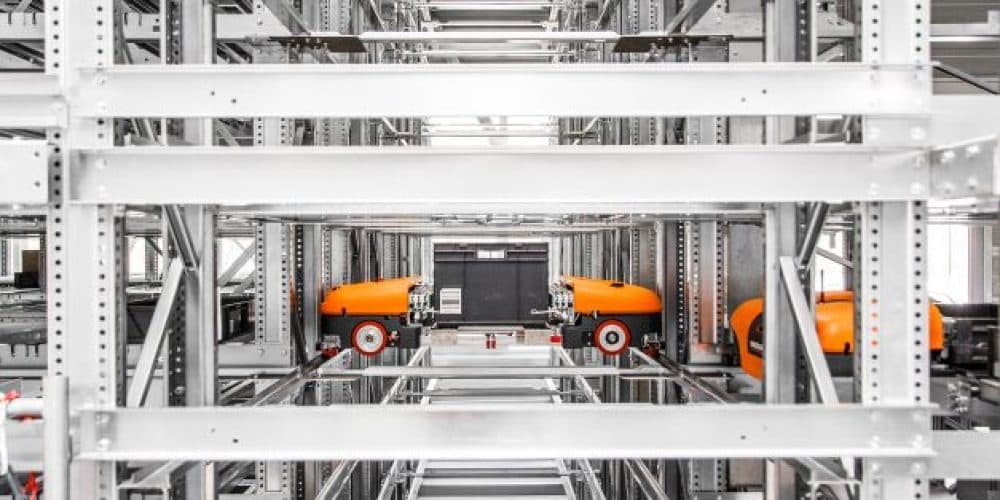

Effective April 1, 2026, Toyota Industries Corporation will launch Toyota Automated Logistics (TAL), merging the warehouse automation operations of Bastian Solutions, Vanderlande’s Warehousing business, and viastore into a single global brand and service platform.
Leadership footprint and regional responsibilities
The executive lineup is organized by region: Hitoshi Matsuoka will serve as CEO, Central; Thomas Hibinger takes the role of CEO, EMEA and APAC; and Aaron M. Jones will be CEO, Americas. That leadership structure positions TAL to coordinate multi-timezone projects, integrate engineering resources and unify lifecycle services worldwide.
What the regional model means for operations
Consolidating regional management under proven automation executives reduces friction when scaling projects from pilot to enterprise. Expect faster decision cycles on design standards, harmonized software releases across control platforms, and centralized SLA governance to ensure uniform uptime and order-accuracy metrics irrespective of geography.
Quick reference: regional roles
| Region | CEO | Primary focus |
|---|---|---|
| Central | Hitoshi Matsuoka | Global integration, brand governance |
| EMEA & APAC | Thomas Hibinger | Scalable solutions, regional deployments |
| Americas | Aaron M. Jones | Project delivery, aftermarket services |
Capabilities and market drivers
The combined entity brings together mechanical systems, robotics, warehouse control software, and lifecycle support under one umbrella. Key drivers fueling uptake of such consolidated offerings include the ongoing demand for next‑ or same‑day delivery, higher throughput targets, and zero‑tolerance order accuracy across e‑commerce and retail fulfillment networks.
- Scalable systems — modular conveyors, shuttle systems and robotics that can grow with volume.
- Intelligent software — unified WCS/WMS interfaces and analytics for predictive maintenance and inventory optimization.
- Lifecycle services — integrated spare parts, retrofits and remote support to minimize downtime.
Why consolidation matters to logistics teams
When a single vendor can deliver end‑to‑end automation — from conveyors to control software and remote diagnostics — logistics managers gain simpler procurement, clearer warranty terms, and consolidated KPIs for throughput, fill rate and equipment availability. In short, fewer vendors, fewer headaches — as the saying goes, "one throat to choke" can be a painful cliché, but sometimes it saves weeks in coordination.
Integration challenges and practical risks
Merging three engineering cultures and software stacks is not plug‑and‑play. Expect a phased harmonization plan that will involve:
- Standardizing communication protocols between PLCs, robots and WMS.
- Aligning service contracts and spare parts inventories.
- Mapping legacy warranties to new lifecycle offerings.
Operational teams should budget for transitional risks: temporary slippages in project timelines, retraining costs for service technicians, and potential integration bugs during the first global software release. On the bright side, once complete, unified engineering can accelerate rollouts and reduce per-site deployment costs.
How TAL’s offering maps to typical logistics requirements
| Logistics need | TAL response |
|---|---|
| Fast throughput | High-density shuttles and robotics allied to tuned WCS algorithms |
| Order accuracy | Automated picking, vision systems and closed-loop quality checks |
| Scalability | Modular systems allow stepwise investment aligned to demand |
| Aftermarket support | Global lifecycle services and remote diagnostics |
Supply chain implications
For carriers, 3PLs and retailers, TAL’s entry as a single-source automation provider affects procurement and planning. Capital expenditure cycles may compress as customers opt for integrated automation rather than piecemeal upgrades. For freight and haulage, better-synchronized dock and yard operations driven by automated loaders and digital slots could smooth dispatch and reduce dwell time.
Operational anecdote — from the field
I once sat with a warehouse operations manager who joked that integrating three vendors felt like organizing a wedding: everyone meant well, but someone always forgot the rings. With TAL’s unified approach, that same manager expects fewer surprise invoices and a single roadmap for upgrades — which, for logistics teams juggling deliveries and returns, is nothing to sneeze at.
Immediate actions logistics teams should consider
- Audit current automation contracts and map overlap with TAL’s announced capabilities.
- Model transitional costs for software harmonization and technician retraining.
- Engage early with regional TAL representatives to align rollout windows with peak season planning.
Key takeaways and next steps
TAL represents a strategic consolidation that promises standardized systems, unified software, and global lifecycle services. For shippers and fulfillment operators, this can translate into more predictable uptime, simplified vendor management, and potentially lower total cost of ownership over multi‑site deployments. That said, integration risks and short-term transition costs will be real and should be planned for.
The most interesting parts of this development are the potential for global standardization of warehouse automation, the consolidation of technical support networks, and the likely acceleration of automation adoption among midsize logistics operators. However, even the best reviews and the most honest feedback can’t truly replace hands‑on experience: testing a full end‑to‑end implementation remains essential. On GetTransport.com, you can order your cargo transportation at the best global prices, enabling you to test new supply chain flows without oversized expenditure. The platform’s transparency and convenience—covering office and home moves, cargo deliveries and transport of large items like furniture, vehicles and bulky goods—help logistics planners trial changes with lower risk. Book your Ride GetTransport.com.com
In summary, TAL’s combination of Bastian Solutions, Vanderlande Warehousing and viastore under Toyota Industries signals a move toward more integrated, scalable automation that directly affects cargo handling, freight throughput, shipment accuracy and distribution strategies. Whether you manage a single depot or global fulfillment networks, monitor TAL’s harmonization roadmap, model the impact on transport and haulage cycles, and consider how consolidated automation suppliers might reduce complexity in shipping, forwarding and relocation planning. For practical transport needs and budget‑conscious logistics, GetTransport.com offers a reliable way to arrange shipment, delivery and moving services—helping teams convert strategy into action while keeping costs in check.