


 日本語
日本語  English (UK)
  Русский
  العربية
  한국어
한국어  Magyar
  Türkçe
  Español
  Čeština
  Svenska
  Português
  Ελληνικά
  Suomi
Suomi  Nederlands
  Română
  Italiano
  Français
  Polski
  Українська
  Deutsch
  简体中文
简体中文  Slovenčina

Convert 60% of drayage trucks to battery-electric models within five years and deploy 50 MW of terminal charging and 20 MWh of on-site storage by 2028. This targeted recommendation prioritizes terminals and corridors that move the highest container volumes, reduces reliance on natural-gas backup generators, and creates a clear timeline for operators and utilities where capital and permitting efforts align.
Start procurement now: net-present-cost modeling shows fleet operators save 20–35% on fuel and maintenance per truck over a 10-year asset life versus diesel; electrifying 1,200 yard tractors and replacing 300 heavy loaders with electric equivalents will avoid 35,000 barrels of fossil fuels annually. Use the whmr metric (Watt-hours per mile, regional baseline 1,200 Wh/mi) to set performance targets, and require vehicles to meet or beat that efficiency before subsidy disbursement.
Pair hardware with clean supply: contract 40 MW of renewable on-site solar and 30 MW of grid-sourced offshore wind to guarantee low-carbon charging, and install smart meters so charging peaks do not raise local heat on distribution feeders. Structure the initiative so utilities and private developers share upgrade costs; allocate grants only to projects that demonstrate secured supply contracts or interconnection agreements already approved by the grid operator.
Measure outcomes with clear environmental KPIs: reduce terminal scope 1 emissions by at least 70% and cut NOx and diesel PM exposure for adjacent neighborhoods by an estimated 60% within seven years, which equates to roughly 120,000 tCO2e avoided over a decade. Require quarterly reporting on vehicle kilometers, charger uptime, grid sources, and operational metrics justifying continued incentive payments, and phase incentives down as total-cost-of-ownership parity for trucks and loaders is reached.
Port of Oakland: Roadmap to an All-Electric, Zero-Emissions Port
Require mandatory shore-power hookups and a port-wide heavy-duty charging infrastructure by 2028: install 50 MW of DC fast chargers at two major locations (Truck Gate and Berth 57) and pair them with storage systems totaling 100 MWh to smooth peak loads and limit grid upgrades.
Electrify cargo-handling equipment and drayage fleets with clear targets: 40% of heavy-duty yard tractors and top handlers electrified by 2026, 75% by 2030. Use interim hybrid replacements only where battery lead times or range make full electrification unviable, and mandate purchase rules so new equipment orders after 2025 favor zero-emission models. Give priority access to berths for operators who comply, linking compliance to fee reductions and expedited permits.
Upgrade the local グリッド using a two-track approach: fast capacity upgrades at primary substation points and smart charging controls to shift demand to off-peak hours. Deploy 100 MWh of BESS for frequency response and peak shaving, and program chargers to use on-site storage during morning peaks. These measures reduce the physical footprint of upgrades and cut interconnection costs.
Address supply-chain limits by contracting with responsible suppliers that disclose mining practices and battery recycling plans. Prioritize vendors who manufacture components in the U.S., creating jobs for Americans and making the transition economically viable. Track content and recycling rates annually and require manufacturers to commit to buy-back or take-back programs so batteries are reused or processed domestically.
Design finance and policy tools that work together: a mandatory compliance timeline, targeted grants for small operators, and time-limited rebates for large fleet conversions. Charge differentiated berth fees to incentivize low-emission practices and create a port electrification fund financed by a modest surcharge on shipowners and cargo owners; reinvest funds into workforce training and quality control for installations.
Start pilot projects this quarter to demonstrate technical success – for example, electrify one container crane, one on-dock truck fleet, and a 乗客 ferry slip to prove shore power alignment. Use data from pilots (energy use, uptime, maintenance hours) to scale deployments; peers have already shown reductions in diesel use that the port can adapt.
Set operational metrics and enforcement: report annual NOx and PM reductions with targets of 50% NOx reduction by 2030 and fleet electrification percentages published quarterly. Establish penalties for noncompliance and fast-track permits for operators willing to convert sooner. Allocate staffing to monitor charging network uptime and safety inspections so installations are done to code.
Mitigate workforce and technical challenges with hands-on training programs (400 certified technicians by 2027) and partnerships with community colleges. Support displaced diesel technicians with transition apprenticeships focused on battery systems and grid integration, making skills transfer direct and practical.
Protect cargo flows by optimizing charging schedules for units 輸送 export containers and heavy loads, and reserve rapid-charge lanes for time-sensitive freight. Encourage modal shifts to electrified on-dock rail and electrified drayage to reduce truck dwell times and queueing at a single location.
Communicate clear milestones and celebrate quick wins to maintain momentum: publish quarterly progress dashboards, highlight operators who convert early, and show measured air-quality improvements so the community sees the tangible benefits of the plan. Begin implementation immediately with pilots, scale to large deployments by 2030, and use data-driven adjustments to sustain long-term progress.
Onshore power supply – step-by-step site selection, interconnection requirements, and permitting timeline
Select berths within 150 m of existing high-voltage feeders and reserve 800–1,200 m² for transformer banks, switchgear, cable trenches and a 1–2 MWh battery to enable battery-electric peak shaving and ensure continuous service for ships.
Site selection steps – practical checklist: 1) Map feeder capacity and reserve sites with ≥5–20 MW available per berth depending on ship mix; 2) prioritize berths with radial distribution feeders to minimize system upgrades; 3) limit cable length to <150 m when possible (prefer <80 m where soils or steel structures increase installation cost); 4) verify geotechnical conditions in target areas and allocate room for corrosion-resistant design because salt spray shortens steel lifecycle; 5) allow space for future expansion (adjacent plots sized for larger transformers or additional BESS); 6) evaluate community exposure to diesel toxics and choose sites that maximize local reduction in PM and NOx; 7) collect as-built drawings and photo records of existing utilities before design.
Interconnection requirements – technical actions: contact the utility immediately and submit a preliminary load forecast (weeks 0–2). Request a Distribution Feasibility Study (4–8 weeks). Expect a System Impact Study (3–9 months) covering load flow, short-circuit, harmonics and protection coordination. Required hardware and parameters: medium-voltage connection at 4.16–11 kV (select per local grid standard and ships’ compatibility), 5–20 MVA transformers per high-demand berth or modular 2–8 MVA units for staged build-out, medium-voltage XLPE cables sized for 1.0–1.5 p.u. continuous current, automatic synchronization, revenue-grade metering, neutral grounding arrangements and fault current limiting. Design to meet IEC/ISO 80005 for high-voltage shore connection and local utility rules; include relay settings, SCADA telemetry, and a fast-acting transfer scheme for islanding when a BESS supplies the load.
Protection, studies and equipment timelines: short-circuit and coordination study 4–6 weeks after impact study starts; harmonic study 3–4 weeks; protective relays, switchgear and transformer spec finalization 6–10 weeks. Order long-lead equipment early: large transformers 40–52 weeks, packaged switchgear 20–36 weeks, BESS units 26–52 weeks, factory-tested shore connection panels 12–20 weeks.
Permitting timeline – parallel path recommended: submit environmental review (CEQA or NEPA scope) and cultural resources survey within month 0–2; typical environmental review and public comment take 6–12 months for categorical/EA and 12–18 months for EIS/complex sites. Building and electrical permits issue in 8–16 weeks after final design. Coastal, port district or harbor commission approvals can take 6–12 months; utility easement agreements and right-of-way clearances generally require 3–9 months. Expect cumulative permitting and interconnection milestones to span 12–30 months if managed concurrently; plan a 24-month program from initial utility contact to first energized berth for medium-complexity projects.
Cost and sizing guidance: budget $3–15M per berth for shore-power infrastructure with HV conversion, transformer, cabling and shore connection hardware; distribution or transmission upgrades add $1–20M depending on proximity and the need for new feeder lines; BESS adds $500–1,200/kWh installed depending on chemistry and balance-of-system. For a regional program serving larger container or cruise ships, scale transformer banks and feeder capacity to aggregate peak demand (example: three berths at 5 MW each → plan for 15–20 MW aggregate with 1–2 hours of BESS for smoothing and cycle life management).
Operational design and future-proofing: they should adopt modular designs that support both 50 Hz and 60 Hz ships via frequency converters or dual-frequency provision; include space and conduit routes for future renewables and on-site plants (PV or fuel cell tie-ins). Design BESS with cycle life of 3,000–6,000 cycles depending on chemistry and a target depth-of-discharge that balances degradation and useful throughput. Run a duty-cycle model across seasonal port calls to size BESS energy (MWh) and power (MW) to reduce peak demand charges and maximize reduction in in-port emissions.
Community, regional coordination and procurement options: engage community groups early, present quantifiable emission reductions and live monitoring plans, and show photo documentation of baseline air quality. They must align with regional power planners so renewables and plants in the grid can play into shore-power scheduling rather than relying on overseas fuel imports. Evaluate procurement options including utility-owned upgrades, port-funded turnkey contracts, or third-party developers that can own and operate equipment under long-term service agreements.
Decision points and quick wins: begin with a single pilot berth sized for typical ship demand (1.5–5 MW) to prove interoperability and community effect; then scale to adjacent berths using the lessons learned. For ports with competing berth priorities or public fights over land use, quantify benefits in dollars-per-ton of emissions reduction to support approvals. Use clear words and metrics in public documents so stakeholders in Bergen, other countries and regional authorities can compare options.
All-electric drayage and terminal fleets – procurement specifications, depot charging layout, and maintenance protocols
Specify 300–450 kWh battery packs and 150–350 kW CCS DC charging as baseline for Class 8 drayage tractors, require 3-year bumper-to-bumper warranty plus 8-year/1,000,000-mile battery warranty, and mandate telematics that report state-of-charge, cycle count, and individual cell voltages every 5 minutes.
Procurement specifications: require payload equal to diesel baseline ±5% and a minimum usable range of 120 miles under full-load port cycles (typical round-trip 60–80 miles). Set total cost of ownership targets: ≤$0.60/mi after incentives over a 10-year lifecycle. Specify regenerative braking limits, motor continuous power ≥300 kW, peak torque ≥4,500 Nm, and ambient cold-start performance to −20°C. Require fast-charge acceptance curve that allows 10–80% in 45 minutes for a 400 kWh pack and a thermal management system that maintains cell temperatures within 20–40°C under rapid charge sequences.
| 項目 | 仕様 | Rationale |
| Battery capacity | 300–450 kWh | Supports two-shift drayage duty without mid-shift recharge |
| Charger power | 150~350 kW DC | Swift turnaround and opportunistic charging at depot |
| Transformer sizing | Total charger kW × 1.5 margin; install 1.2 MVA for 12×250 kW chargers | Handles peak simultaneous starts and future expansion |
| ESS (cells) | 500–2,000 kWh lithium-ion storage, modular cells | Peak shaving, demand charge reduction, grid resilience |
| 保証 | 3-year vehicle, 8-year battery | Limits lifecycle risk, aligns with federal grant expectations |
Design depot charging layout with pull-through bays, 14 ft clear lane width, 45–60 ft bay depth for tractor-trailer turns, and charger pedestals placed every 12–16 ft along parking rows to create abundance of usable spaces. Reserve a 20% buffer of charger spaces beyond fleet count for turnaround and visitor trucks. Place power cabinets and ESS racks adjacent to chargers with 6 ft service clearances and mark HV cable trays above lanes to keep ground level clear for operations.
Specify electrical distribution: install substation tap or pad-mounted transformer sized at 1.5× estimated peak, implement site-level energy management with battery energy storage cells capable of supplying 30–50% of peak charge load for 15–30 minutes, and deploy real-time load control that defers noncritical chargers when local plants report low renewable output. Coordinate with utilities and apply for mandatory interconnection studies early; document images and one-line diagrams for permit packages.
Operational rules: assign dedicated charging windows by shift (overnight fill + opportunistic mid-shift top-ups) and set state-of-charge targets–start shift ≥85% SOC, reserve 15% SOC buffer for emergency returns. Use dynamic charging allocation: prioritize vehicles with lowest remaining range and route next departures to closest available charger, track cell-level degradation and rotate high-use modules across vehicles to equalize wear.
Maintenance protocols: perform HV system inspection every 1,000 miles, coolant system inspection and top-up every 6 months or 10,000 miles, and full battery diagnostic (capacity, internal resistance, cell balancing) quarterly. Maintain spare parts inventory equal to 10% of fleet for high-failure items: inverters, contactors, coolant pumps, and two spare charger pedestals per 25 trucks. Train technicians to OSHA and manufacturer HV certification annually and require firmware update windows during low-demand hours with rollback capability.
Compare lifecycle maintenance: electric drivetrains reduce routine service tasks versus diesel engines–no oil changes, no transmission overhauls, and ~70% fewer moving parts in the motor assembly–so schedule axle and brake inspections based on duty hours rather than fixed mileage to capture regenerative braking effects. Track mean time to repair (MTTR); target ≤4 hours for charger faults and ≤24 hours for vehicle HV system replacements.
Grid and community integration: engage local community and port stakeholders to align charging schedules with periods when renewables are abundant; coordinate with nearby generation plants and municipal demand response programs to reduce demand charges and lower environmental emissions. Quantify benefits: a 100-truck deployment charging primarily overnight can cut local NOx and PM by >80% compared with diesel baseline, improving health outcomes and supporting regional economy goals.
Data and procurement governance: require open telematics APIs, provide anonymized duty-cycle images and logs for 12 months, and include a decommissioning plan for cell recycling compliant with federal and state regulations. Gordon found in a 30-truck pilot that a 25% spare-charger ratio and 600 kWh ESS reduced peak utility demand by 42% and increased vehicle availability to 96%–use those metrics when sizing systems for scale.
Specify acceptance tests: full load charge test, vehicle-to-charger handshake stress test, thermal runaway isolation verification, and a 30-day operational acceptance period with performance KPIs (availability ≥95%, charge time within 10% of spec, telemetry uptime ≥99%). Make maintenance records mandatory for warranty claims and require suppliers to commit to parts availability for at least 8 years.
Operational integration – charging schedules, load management strategies, and software controls to minimize demand charges
Shift 80% of depot charging into a single overnight window (23:00–05:00) and cap aggregate site draw below the utility demand threshold; for a 50-truck fleet averaging 150 kWh/day per truck that means scheduling ~6,000 kWh overnight and limiting concurrent DC fast charging to ~800 kW to avoid a new demand peak.
Size battery energy storage with a simple formula: storage (kWh) = target peak shave (kW) × shave duration (h). Example: to shave 500 kW for 2 hours you need 1,000 kWh. Use storage equal to 20–30% of fleet daily energy as a rule of thumb for mixed depot schedules – plus onsite PV for daytime partial recharge to lower grid draws.
Employ an energy management system that ingests 15‑minute telemetry from chargers, vehicle telematics and utility meters, then applies a sliding-window demand cap and predictive scheduling. Configure the software to: prioritize earliest-departure and minimum-state-of-charge requirements, enforce soft-start ramp rates (10–30 seconds) to prevent instantaneous spikes, and throttle individual chargers to a configurable current limit per vehicle class.
Integrate APIs with fleet management so the scheduler recognizes each vehicle’s planned route and desired state-of-charge; here use a combined queueing and priority algorithm that balances fairness and operational needs. Provide driver interfaces that show expected available SOC and required plug time, providing transparency for drivers and reducing late plugging that creates daytime demands. Train the ops team to review daily demand curves and adjust schedules based on seasonal load and tariff changes.
Reduce demand charges by layering controls: demand capping, battery peak-shaving, pre-conditioning at depot (cooling/heating while off-peak) and controlled Opportunity Charging tied to departure windows. Monitor real savings: demand-charge rates commonly range $10–$30/kW‑month, so lowering a 1,000 kW peak by 40% yields $4,000–$12,000/month. Factor in hardware and software costs and aim for 3–6 year payback for combined BESS and EMS investments; include community engagement and regulatory alignment (fueleu targets and local ordinances) in the business case to make electrification viable and cleaner than legacy diesel engines and hybrid interim solutions while avoiding noisy turbine backup options that affect wildlife and nearby residents.
Document designs and operational images, capture baseline meter data over 30 days, and iterate: run A/B schedules for two weeks, measure demand-savings, then lock preferred rules. Track KPIs – peak kW reduction, $ demand-charge savings, percent of energy charged off-peak, and uptime – and report weekly to the project team and community stakeholders to demonstrate progress and sustain support for longer-term change from steel chassis diesel fleets to sustainable electric trucks.
Practical infrastructure choices that increase throughput – charger types, redundancy planning, and phased deployment options
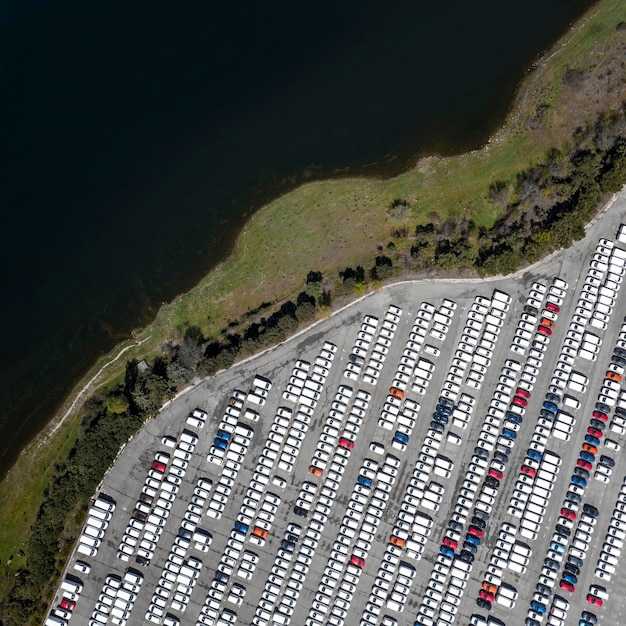
Install a mixed fleet: deploy 50–150 kW depot chargers for overnight top-ups, 150 kW mid-duty chargers for short-stay trailers, and 350 kW+ pantograph or high-power CCS dispensers at staging lanes; size initial supply at 2–4 MW for a 10–20 vehicle shuttle operation and plan for modular 2 MW increments so you can move capacity as utilization rises.
Choose charger types by duty cycle and space: use 350 kW CCS or pantograph where average dwell ≤30 minutes, 150 kW CCS where dwell 30–120 minutes, and 50–100 kW for overnight depot charging. Calculate throughput with this formula: vehicles/day per charger = (operational hours × 60) / average dwell minutes. Example: one 24-hour 350 kW charger with 30‑minute average dwell = 48 vehicles/day; ten chargers = 480 vehicles/day and ~3.5 MW simultaneous peak demand. Verify supply: add 20–30% headroom for peak shifting, losses and HVAC.
Plan redundancy to ensure availability targets of 98–99% uptime. Adopt N+1 for charger banks and N+2 for critical substations; keep 10–20% spare chargers on site and a ring main with dual feeders so a single fault doesn’t disrupt lanes. Add a BESS sized to cover peak shaving and seamless handover during transformer maintenance – a rule-of-thumb is 0.25–0.5 kWh per kW of installed charger capacity for a 15–30 minute ride-through. If chargers are single-sourced, the system wouldnt meet availability targets; diversify OEMs to reduce correlated failures.
Phase deployment using clear triggers and regional constraints: Phase 0 (pilot, 3–6 months) = 2–4 chargers, local grid study, site photo documentation and traffic-flow test; Phase 1 (scale, 6–12 months) = add 20–40% of projected fleet demand, meter upgrade, BESS install; Phase 2 (full roll-out, 12–36 months) = expand in 2 MW modular blocks tied to port expansion permits. Use utilization indicators (charger occupancy >60% sustained for 30 days, average queue >1 vehicle, whmr rising) to take the next phase. Account for regional permitting timelines (permit, environmental, and grid interconnection typically 60–180 days each) in the schedule.
Design the site for natural, flowing vehicle movement: separate ingress/egress lanes, staging areas sized for peak platoons, and pull-through positions to reduce reversing time. Define what to measure in O&M with detailed electrification indicators: average dwell, queue length, energy per session (kWh), charger fault rate, and peak supply intensity (kW). Use those KPIs to take corrective actions – e.g., add a portable 150 kW charger when queue length exceeds design limits for two weeks.
Supply-side advances to adopt: modular substations, shared transformer contracts with utilities, on-site generation paired with BESS, and smart load management that schedules charging over 15-minute intervals to flatten peaks. For success, document baseline metrics (photo evidence, whmr, kWh/session) and track reduction in idling and fuel use and emissions over time; many ports see a 50–80% reduction in local diesel consumption depending on grid intensity. Keep the design state-of-the-art but pragmatic: different assets have a different role, and the approach you choose will determine how quickly throughput improves and how smoothly fleets move through the port.
Funding and stakeholder actions – grant pathways, utility rate negotiation checklist, and workforce transition measures
Recommendation: Assign a dedicated grant manager and an executive sponsor (example: Gordon, port operations lead) to build a three‑tier funding pipeline: immediate (0–12 months), near‑term (1–3 years), long‑term (3–7 years); this swift action reduces delays and lets projects begin as soon as funding commitments arrive.
Grant pathways and practical targets – Compile an inventory of candidate projects (charger pads, yard tractors, shore power, on‑site storage) with detailed design and cost estimates before applying. Target federal PIDP awards for heavy infrastructure ($5–50M typical), EPA/DERA for diesel replacement projects ($0.5–10M), state HVIP/Cal eVIP vouchers for vehicle purchases (voucher amounts commonly $30k–$150k per unit depending on class), and local air district grants for infrastructure ($0.1–2M). Expect match requirements of 10–50%; plan to use port reserves, tax‑exempt bonds, or private co‑funding to cover match. For each application include: 12‑month energy and load profile, environmental checklist, procurement plan, and workforce development plan to qualify for higher award points. Combine smaller grants with philanthropic or corporate funding to cover early design costs so construction can begin when larger awards arrive.
Finance structures to close gaps – Use on‑bill financing and utility on‑site PPA models to convert capital into operating expenses for chargers and storage; target grants to cover 30–50% of capital and use muni bonds, low‑interest loans, or vendor financing for the remainder. For cargo handling equipment swaps, negotiate performance‑based leasing where OEMs cover battery replacement risk. Justify public funding requests by quantifying diesel tonnage replaced and NOx reductions per project.
Utility rate negotiation checklist – Provide the utility with a detailed 12‑month, 15‑minute‑interval inventory of current loads and projected EV charger loads for the coming 5 years. Propose a commercial EV tariff or bespoke tariff that: (1) shifts most charging to off‑peak TOU windows, (2) caps demand charges with a blended demand credit, (3) offers a 5–10 year fixed energy price for high‑utilization charger hubs, and (4) allows submetering so cargo handling tenants can be billed to their accounts. Model and present scenarios showing that adding a 1MW fast‑charge cluster plus 1MWh storage sized at 25–35% of peak reduces demand charges by 20–40% and lowers total site energy costs by 10–15%. Request pilot tariff approval and a waiver or phased approach for standby charges during the first 24 months of operation to address lack of historical EV load data. Document interconnection costs, required transformer upgrades, and potential grid upgrades in the application; negotiate cost‑sharing or deferral with the utility.
Stakeholder negotiation tactics – Form a coalition of tenants, cargo owners, labor groups and nearby ports to present aggregated demand forecasts; utilities respond faster to grouped, quantified requests. Use binding MOUs that commit tenant charging schedules, load management participation, and telemetry data sharing to secure better rates. Present case studies and cost models showing how the proposed tariff reduces diesel use and total operating cost for tenant fleets, then ask for a commitment letter from the utility within 90 days of submission.
Workforce transition measures – Run a skills inventory of current diesel technicians and operations staff to quantify gaps. Create training modules: high‑voltage safety, battery systems, telematics, and charger maintenance. Set measurable targets (example: train 300 people in 36 months; convert 70–80% of diesel technicians to electric roles within 18 months). Budget $6k–$15k per trainee for certificate courses and on‑the‑job mentoring; secure grant funding to cover 50–100% of tuition for displaced workers. Partner with community colleges, unions, OEMs, and workforce boards to provide apprenticeships tied to port projects and place trainees into port operations and cargo handling roles once certified.
Retention and hiring practices – Offer wage progression during training (pay 60–80% of prior wage) and guarantee interviews for upgraded roles on funded projects. Prioritize local hiring and create expanded apprenticeship quotas for groups from environmental justice communities. Track outcomes with quarterly metrics: trainees enrolled, certifications earned, placements, and retention at 12 months.
Implementation milestones and accountability – Set quarterly milestones: complete project inventory and designs (Q1), submit priority grant packages (Q2), finalize utility negotiations and pilot tariffs (Q3), begin construction on awarded projects (Q4). Use a public dashboard to report progress, funding awarded, diesel reduced (metric tons/year), and people trained. This detailed, actionable approach aligns funding, rate structures, and workforce development so ports can deploy sustainable, most efficient electric operations and measure real progress toward a zero‑emissions future.
References, opportunities, recommendations and global challenges – key data sources, replication checklist, and international barriers to scale
Mandate a phased deployment target: require 50% battery-electric terminal tractors and drayage trucks by 2028 and 100% zero-emission cargo-handling equipment by 2035, with interim January baselines and quarterly live performance reporting to evaluate effect and supply constraints.
Key data sources and citations to collect now:
- Port operational logs (container moves per hour, equipment hours, fuel use) – use a January baseline and update live.
- Utility interconnection studies and grid operator demand curves – measure peak power demands and seasonal variability.
- Vehicle and charger manufacturers’ test data – modular charger throughput, battery-electric range, cycle life; include hybrid options where relevant.
- Regulatory databases: local port rules, regional emissions inventories, American and Europe standards, and tariff schedules.
- Supply-chain registries for batteries and rare minerals; supplier lead-times and stock levels to assess lack or growth in supply.
- Independent datasets: IEA/IRENA reports, US DOT modal data, Eurostat freight statistics, and specific port case studies (Port of Oakland datasets, WHMR registry entries, and Getty outreach imagery metadata for stakeholder materials).
- Surrounding land-use and community health monitors (air quality sensors) to quantify local effect and compare areas near the port with regional averages.
Replication checklist (step-by-step, measurable):
- Define scope: list types of vehicles and equipment to electrify; record current counts and utilization hours per unit.
- Perform grid capacity study: document available power, interconnection time, and upgrade costs; set a maximum per-phase load in kW.
- Design modular infrastructure: specify charger types, spacing, and storage (kWh) per bay so expansion happens with minimal downtime.
- Procure with performance clauses: require battery-electric units to meet uptime ≥ 95% and maintenance intervals in hours; include hybrid as a stopgap where full electrification is not yet feasible.
- Create financing plan: combine grant, concessionary loan, and private capital; model total cost of ownership and payback years under realistic electricity prices and demand charges.
- Implement workforce training and parts supply chain mapping; track what training has been done and what remains.
- Install telemetry and live dashboards that use standardized sources and formats to compare front-line performance between ports.
- Set performance triggers: if utilization > 85% and charging queues form, deploy additional modular storage or chargers within 6 months.
Specific recommendations to improve rollout and lower risk:
- Prioritize high-use equipment first (yard tractors, top handlers) where the effect per unit is significant and payback is fastest.
- Integrate on-site storage to shave peak power demands and reduce grid upgrade costs; size storage to cover at least two peak shifts on day one and scale modularly.
- Use standardized procurement templates and shared fleet contracts across surrounding ports to reduce per-unit price as demand is growing.
- Require transparent data-sharing agreements so case studies from one port inform others; publish detailed performance metrics quarterly.
- Adopt a mixed-technology strategy: deploy battery-electric where route predictability supports it and hybrid where long-range flexibility remains required.
International barriers to scale and practical mitigations:
- Variable rules and permitting timelines: different countries and municipalities impose inconsistent permit durations; mitigate by creating a permit playbook and engaging regulators early.
- Grid constraints and higher interconnection costs in some areas, especially outside core American or Europe markets; address by pairing projects with modular storage and negotiated time-of-use agreements.
- Lack of local supply and longer lead times for batteries and chargers; reduce risk through pooled procurement, multi-sourcing, and inventory buffers for critical spare parts.
- Different emissions accounting methodologies that affect eligibility for subsidies; map each jurisdiction’s rule set and quantify the net present value under each scheme before committing capital.
- Workforce skill gaps in maintenance and operations for battery-electric systems; deploy targeted certification programs and apprenticeships tied to procurement contracts.
- Raw-material concentration in supply chains that raises geopolitical risk; include alternative chemistry evaluations and plan for second-life battery use to improve circularity.
What to monitor and report (minimum dataset):
- Energy consumed (kWh), diesel avoided (L), CO2e reduced (t) – reported monthly and normalized per container moved.
- Charger uptime, average queue time, and peak power draw; track storage state-of-charge and dispatch events.
- Vehicle uptime, mean time between failures, and total cost of ownership components, reported in detailed tables.
- Local air quality changes in buffer areas and community health indicators.
Case examples and transferability notes:
- When a port front-runner converted 40% of yard tractors to battery-electric, average fuel spend dropped by ~30% and operational noise in surrounding areas fell measurably; replicate by matching duty cycles rather than vehicle counts.
- In regions where power supply is constrained, ports used modular storage plus evening charging to shift load; that strategy reduced required grid upgrades by more than half in the case reviewed.
- European regulations on emissions reporting differ from American standards; build a mapping table to translate results so funders can compare performance across regions.
Final practical notes:
- Document every procurement and permit step so other ports can reuse successful language and avoid repeated delays.
- Publish data in machine-readable formats and link to WHMR entries or equivalent registries; include Getty metadata only for outreach images.
- Track what has been done, what is going to happen next, and what options remain if supply delays or rules change.
- Plan for the future by updating strategy annually, prioritizing battery-electric deployments where duty cycles match and using hybrid types as an interim option where they do not.