




Adopt a combined strategy now to shield your operations from Brexit-related delays. Build modern, teams that manage cross-border flows, warehouse capacity, and customs checking processes. Use a type of transport mix that includes road, rail, and short-sea to optimize for both cost and speed, and maintain a flexible vehicle plan that can shift with demand. Track performance in real time so you can see the proving results and adjust quickly.
Implement a certificate program for key sellers and suppliers, so shipments carry valid paperwork. Build a certification framework covering product types and country-of-origin rules, and require checks upon entry. Maintain a centralized registry to improve visibility and create certainty for partners and customers.
Enhance visibility with a digital tracking platform that provides real-time status for each consignment and checking steps at origin and destination. Use pre-clearance options where available to shorten handling times, and coordinate vehicle movements with carriers to streamline handoffs. Border authorities are increasing checks, so document control and staff training stay current to reduce delays.
Structure your planning around demand signals: segment customers by service level, location, and risk, and keep buffer stock near key ports to respond rapidly upon demand spikes. Build a flexible roster of carriers and sellers, with a clear escalation path for exceptions. Run quarterly scenario drills to test your strategy and improve resilience.
Maintain ongoing training for logistics teams and refresh certification records so every shipment meets the latest standards. Create a routine of checks and audits to sustain certainty for customers, suppliers, and regulators. With this disciplined approach, you boost reliability and unlock new opportunities across markets.
Landbridge Alternatives: Balancing Speed and Complexity
Adopt a two-tier approach: deploy ai-powered, frictionless data exchange for cross-border shipments and secure immediate clearance for low-risk cargo, while maintaining mandatory checks for higher-risk flows to protect compliance and security.
Establish a gb-eu data backbone that standardizes documents and delivers proof of compliance at speed. Use machine learning to perform classification of consignments and to flag exceptions before loading, reducing dwell time and avoiding retroactive penalties. We configure the system so the relevant rule applies to each shipment. brexit adjustments are embedded, so the gb-eu framework becomes the reference for cross-border routines between the two sides, helping avoid confusion and maintain consistent operations.
Between the GB-EU boundary, frictionless data exchange reduces delays, but operators should map between documentation sets and classification schemas to prevent misclassification. The system tags trailers with a digital clearance label, speeding up loading at the dock and enabling real-time visibility for shippers and receivers.
Mandates and proofs: implement a mandatory data schema that covers origin, cargo description, HS classification, and transport mode. Use ai-powered checks to verify documents against customs rules and to provide proof of compliance for audits.
Operationally, pilots should focus on high-volume lanes first, such as London to Rotterdam, and Birmingham to Dublin, to validate the model and demonstrate immediate gains. These pilots should track key metrics: time-to-clearance, dwell time, and cross-border incident rate, and report impact on trailer throughput and transport cost per mile.
Transformation at scale requires a phased rollout: start with digital trailer loadings and e-document templates, then expand to ai-powered risk scoring for cross-border traffic, and finally implement retroactive relief where audits reveal earlier misclassification.
To keep complexity manageable, create clear governance: a mandatory change-control board, well-defined API standards, and a quarterly review of gb-eu regulatory updates.
Assess Transit Time Trade-offs: Landbridge vs Rail and Road
Recommendation: Build the backbone on rail along the Landbridge for bulk shipments, and attach road legs for final-mile delivery to the UK. This mixed approach typically delivers door-to-door transit in about 14–21 days, whereas pure Landbridge rail can stretch to 18–28 days and fully road-based routes may exceed 25 days.
Landbridge rail offers predictable schedules with fixed departure windows. From origin in Asia to major European hubs like Hamburg or Duisburg, door-to-door transit commonly runs 12–16 days; when the destination is the UK, add 2–5 days for declarations and border checks, totaling roughly 14–21 days. This path minimizes handling events and port congestion, but it requires reliable capacity on the rails and timely coordination with hubs and carriers.
Rail and Road combined routes shift some load to road legs where speed matters. Rail segments to central hubs typically take 9–14 days; the remaining last-mile by road (including cross-border segments) adds 1–5 days, yielding total door-to-door transit around 10–19 days. This option increases flexibility, helps meet urgent orders, and allows adapting to traffic or weather disruptions by rerouting on roads freely.
Cost and capacity considerations: Landbridge rail offers lower unit costs per pallet, especially for large orders, but capacity can tighten during peak seasons and schedule gaps trigger delays. A mixed Rail+Road path adds flexibility with potentially faster last-mile delivery, but at higher handling costs and variable road conditions. For orders sized 2–5 pallets or 1–2 TEUs, a combined approach often saves 2–5 days versus rail alone. Annually review routes and infrastructure to confirm capacity and reliability; ensure a mandate to standardize shipping declarations, sanitary documentation, and verification steps across suppliers. Verifying documents upfront reduces rejection risk and keeps transit predictable, enabling adaptation to disruptions.
Practical steps: build a decision model that compares Landbridge rail versus Rail+Road based on order size, deadlines, and risk tolerance. Avoid generic assumptions; assess specific orders to pick the best mode. Use a data dashboard to monitor transit times, route reliability, and infrastructure status; update monthly or annually. Track the combined effects of routes, freight declarations, and sanitary checks and adjust plans accordingly. Potentially reroute inland road legs to bypass bottlenecks and maintain SLA commitments. This approach supports adaptation and helps teams meet customer expectations more consistently.
Document and Compliance Toolkit: Declarations, Certificates, and Vetting

Begin by establishing a centralized, pre-shipment checklist that ties every declaration, certificate, and vetting step to a clear purpose and deadline. This move, simplifying the process, serves speed for cross-border moves and reduces paperwork for exporters and their teams. Include trailers and other road transport notes where relevant, so planners see the full picture from loading to gate.
Declarations underpins smooth operational status across borders. Use accurate commercial invoices, packing lists, and export/import declarations. Record only current data, and tag each item with its intended purposes and destination territory. A well‑structured declaration register supports fast checking and minimizes rejection risks by making the link between document and shipment explicit.
Certificates confirm compliance for borders, markets, and customers. For food, attach health and sanitary certificates when required; for other goods, include origin or conformity certificates when asked. Implement a pre‑shipment verification that aligns documents with the receiving authority’s scheme rules. This approach reduces rejection chances and keeps the movement of goods on track while protecting the environment and consumers.
Vetting covers the supplier network and operations history. Verify registrations with customs or trade authorities, confirm scheme enrollment (such as a trusted exporter program), and check exporter status and risk indicators. Regular checks affect expansion plans by ensuring that selling into the target territory remains secure and reliable for buyers and buyers’ networks alike.
Handling and formats matter. Maintain tidy paperwork, enable secure electronic copies, and standardize file naming to quick‑reference folders. A secure data channel minimizes misfiling and keeps information ready for audit checks and border review. When documents are ready, this foundation supports faster processing and fewer slowdowns across your network.
Process flow assigns a responsible owner for each document type, sets clear deadlines, and tracks status. If a document is missing or a status changes, trigger an alert to prevent slowdowns in the move. Streamlining these steps helps service teams serve customers more efficiently, and it supports expansion into new markets without compromising compliance.
| Document Type | Purpose | Responsible Party | Timing / Trigger | Key Checks | Status |
|---|---|---|---|---|---|
| Commercial Invoice & Packing List | Record value, quantity, and purpose for the shipment | Exporters / Logistics Lead | Pre‑shipment; updated if terms change | Accuracy of item descriptions; unit prices; country of origin | Pending / Approved |
| Declaration of Trade (Import/Export) | Legal basis for customs clearance | Compliance Officer | Before loading; at customs submission | Correct HS codes; territory requirements; status flags | Pending / Approved / Rejected |
| Origin & Conformity Certificates | Proof of origin; market conformity | Quality Assurance / Supplier | Pre‑shipment | Scheme alignment; validity; signatures | Pending / Approved / Rejected |
| Health/Sanitary Certificates (Food) | Food safety compliance for destination market | Quality Assurance / Regulatory Liaison | Pre‑shipment; renewal as needed | Correct product codes; crop/farm origin if applicable; territory rules | Pending / Approved / Rejected |
| Exporter Registrations & Vetting Records | Verification of eligibility to sell into territories | Compliance / Trade Liaison | Onboard or quarterly refresh | Registration status; scheme enrollment; supplier history | Active / Suspended |
Checklist items above target a clear path for move plans, ensuring paperwork aligns with scheme requirements and territory rules. This approach supports expansion, reduces risk of paper‑based bottlenecks, and keeps the network of exporters and logistics partners aligned with the environment and customer expectations. Use the table as a living guide: update statuses, notes, and next steps after each shipment cycle to drive ongoing improvement.
Mitigate Delays at Entry Points: Scheduling, Containers, and Peak Windows
Lock in dedicated pre-arrival slots with the port operator to guarantee unfettered access for high-priority consignments. Align with suppliers and carriers to reduce variability and protect slots during peak windows. Schedule a meeting with stakeholders to align on timing and responsibilities, then review the plan daily.
To reduce delays at entry points, implement a general framework that leverages best practices across scheduling, containers, and peak windows:
- Scheduling discipline: implement a rolling forecast of entry slots per port, updated daily after a short review with the operator and customs.
- Containers and handling: adopt standardized container sizes (20', 40'); ensure security seals and verification data are consistent to speed checks.
- Peak window management: map port-specific peak windows and trigger buffer days; reallocate trucks and storage during spikes.
- Facilities and access: leverage dedicated facilities with extended hours and reserved lanes to minimize cross-docking delays.
- Standards and adoption: review and adopt data standards in manifests, labels, and EDI feeds to reduce verification time.
- Verification and capabilities: implement automated checks at the gate and in-yard to catch mismatches early; this creates more reliable transiting ops.
Review progress monthly at a dedicated meeting; compare performance to the table of metrics to ensure continued improvement and maintaining competitive standards.
Cost-Risk Modeling for Alternatives: Tolls, Duties, Insurance
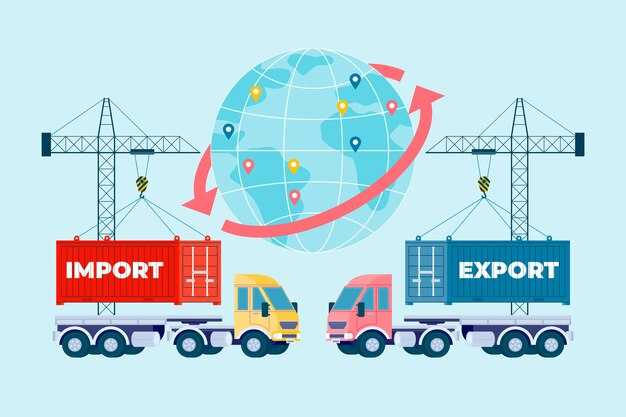
Start with a three-lever cost-risk model covering tolls, duties, and insurance for GB-EU operations. Set up daily data feeds from carriers and ports, and review outcomes monthly via a clear dashboard. Build route-specific profiles by shipment categories so the model covers real costs and risk exposure. Use the model to compare options and protect margins from fines.
Focus on cross-functional teams: logistics, finance, and risk, working together to quantify tolls, duty, and insurance characteristics by corridor. Align with professional standards and mutual reviews to validate assumptions. Use an optimal mix of routes to reduce exposure while maintaining service levels. Structure supplier options to avoid over-reliance on one of several competitors.
Inputs and data: toll schedules by port and bridge, gb-eu border crossings; duties by product categories; insurance types, cover limits, deductibles, and claims handling. Include fines exposure, penalties and de-risking measures. Add heavily regulated regimes and volatility checks; use daily checks for volatility and monthly aggregation to spot trends.
Decision rules and actions: if daily costs for an alternative route stay 8-12% below the base for two weekly checks, switch to that route. If duty estimates rise beyond a set threshold, adjust the supplier mix or re-price products. Invest in data quality and mutual insurer partnerships to lower risk. Track trends in fines and compliance performance, and review monthly with the teams to ensure the collection remains accurate.
Data and Tech Levers: Real-Time Tracking, eDocs, and Routing Analytics
Implement real-time tracking across all vehicles now to cut delivery variance by 15-25%, reduce exception handling time by 20-30%, and plus automated alerts for deviations. Provide access to a single dashboard for internal teams and agents, helping your operations thrive.
Real-time tracking captures GPS location, speed, dwell time, and telematics readings. This base data includes historical patterns that feed routing models and ETA forecasts, enabling dynamic rerouting and 8-20% improvements in on-time performance. Integrations with your TMS and ERP transfer data across internal systems, reducing data silos.
eDocs remove manual handling for permits, insurance certificates, and customs docs. The flow of electronic documents includes auto-validation and standardized templates, cutting processing time from days to hours and reducing manual touches by 60-80%, with secure access for internal teams and external agents.
Routing analytics, based on historical and live data, optimize flow and reduce friction points. They consider traffic, weather, road closures, and detention risk, offering green route options to lower emissions. Typical gains include 6-12% shorter distances, 5-12% fuel savings, and 4-10% higher on-time performance.
Adopt a unified integration layer that connects carriers, internal systems, and agents. It should enforce role-based access, support retroactive corrections and additions to the data model, and reduce complexity by presenting a single source of truth. This foundation improves understanding and enables transfer of knowledge across teams, incorporating learned patterns from pilots with the broader network.
Real-time visibility also strengthens resilience for cross-border flows, enabling rapid incident response and smoother retroactive audits. The combination of data access and green routing reduces friction, helping base operations understand the trade-offs and thrive in a post-Brexit environment.