


 日本語
日本語  English (UK)
  Русский
  العربية
  한국어
한국어  Magyar
  Türkçe
  Español
  Čeština
  Svenska
  Português
  Ελληνικά
  Suomi
Suomi  Nederlands
  Română
  Italiano
  Français
  Polski
  Українська
  Deutsch
  简体中文
简体中文  Slovenčina

Set up real-time risk mapping for your top suppliers and activate a two-week contingency plan within 24 hours. This concrete action reduces disruption exposure across every link in the flow by enabling rapid re-routing, alternate sourcing, and prioritized allocation of scarce capacity.
Climate change often increases the frequency and severity of events such as heavy rainfall, drought, heat waves, and wildfire smoke, with regional variations that hit manufacturing and distribution differently. These changes affect uptime, energy demand, and transportation windows, while carbon-intensive routes can worsen emissions if not managed. Translate risk into a clear schedule for manufacturing processes and delivery commitments.
Strengthen the flow by diversifying transportation options and building redundancy in regional hubs. Map quay facilities and inland links to identify single-point failures, then shift volumes to alternative routes during disruptions. Maintain buffer stock at critical locations to keep every essential product moving when a port or highway closes.
Engage with an institute and regional industry groups to share real-time weather and climate projections, supplier performance data, and risk signals. Build clear action plans that align procurement, manufacturing, and distribution processes; transparency across teams improves preparedness and ensures that implications are understood and acted on effectively.
Concrete guidelines: aim for 2-4 weeks of critical inventory at regional warehouses and 3-5 days of safety stock for fast-moving items; set thresholds for transportation alerts and route changes in real time. Track carbon intensity of core routes and target a 10-20% reduction in emissions over three years while preserving service levels. These steps reduce exposure to climate-related shocks and keep production and distribution resilient.
Implications for every sector depend on your network’s complexity and your preparedness. Regular reviews of supplier diversification, contract language, and contingency expenditures will help you respond more quickly to events and minimize disruption. Action owners should report progress to leadership with practical metrics and a cadence that suits your industry reality.
Proactive resilience playbook: Ports must adapt, not react to climate change, facing climate-driven shocks
Adopt a proactive resilience playbook now: embed climate adaptation into every decision, from yard operations to lender negotiations, and maintain service levels despite shocks.
Current climate trends produce increasingly frequent disruptions that ripple throughout global supply chains. Disruptors are intensifying, and reactive fixes fail to protect margins, safety, and reputation. A structured adaptation approach reduces impacts on every stakeholder and provides support to operators, communities, and customers.
- Governance and decisions: Establish a resilience board with cross-functional representation from operations, safety, finance, engineering, and key customers. Define decision rights, link incentives to reliability, and keep safety at the center of every choice.
- Scenario and planning: Build a climate scenario library covering river flood, coastal surge, extreme waves, and multi-port rerouting. Run simulations to test maintaining throughput under disruptions and varying demand, and update plans after each event.
- Physical resilience: Invest in flood defenses, elevated storage, modular quay configurations, and redundant power for critical systems. Apply sustainable design in new terminals, cranes, and fuel infrastructure to reduce long-term risk.
- Operations and routing: Create flexible berthing windows, pre-arranged rerouted cargo paths, and diversified hubs to avoid bottlenecks. For automotive shipments, ensure secure handling and preserved component integrity throughout the journey.
- Data and warning systems: Deploy real-time climate monitoring, river and weather data, and maintenance of sensors along the port corridor; feed warnings into dispatch and yard management systems to speed response.
- Supply chain integration: Collaborate with factories, businesses, suppliers, and customers to align production calendars with port capacity; use shared dashboards to anticipate disruptions and rerouted flows.
- Financial resilience: Engage lenders and insurers early; publish risk disclosures; maintain liquidity buffers and cost-sharing mechanisms to weather waves of disruptions.
- People and safety: Train teams for rapid response; rehearse drills for flood, fire, and incident scenarios; ensure safety protocols are maintained during all events.
- Performance metrics: Track current performance, including disruption duration, rerouted volumes, and safety incidents; monitor impacts on business continuity and overall risk posture.
- Capital planning and partnerships: Seek funding for adaptation projects as part of sustainable investment programs; leverage public-private partnerships to accelerate improvements.
Benchmark against Swiss port resilience frameworks to set ambitious targets and accelerate adoption. By embedding adaptation into every layer of port operations, automotive and other sector supply chains gain predictability, lenders gain confidence, and factories can maintain just-in-time production even in volatile weather patterns.
Identify critical nodes and exposure across facilities, ports, and last-mile networks
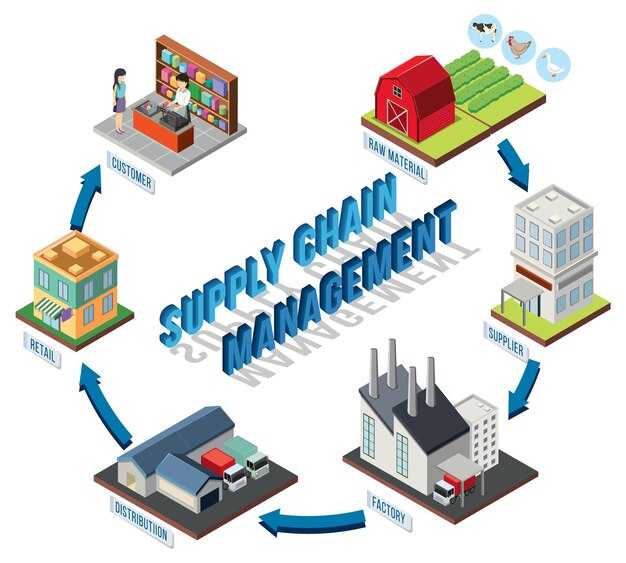
Begin with a node-by-node map of facilities, ports, and last-mile networks, assign an exposure score between 0 and 100, and direct investing to the top five exposure points across supply chains. Focus on hubs that connect regional economies and global flows, such as Rotterdam, key railways corridors, and river terminals that feed downstream demand.
Use a data-driven model to quantify downtime risk, contingency costs, and the capacity to reroute cargo during storms, floods, or heat waves. A complex network means a single outage can ripple across many customers, raising costs and eroding service levels. Align this view with a regional plan that situates responses where assets are most vulnerable, while ensuring that like-minded assets in other regions can pick up demand during interruptions.
Engage Cooperman for scenario planning to test climate shocks and disruption patterns. Integrate these insights with a transition plan that shifts toward more flexible routing, diversified suppliers, and nearshore options, so the system remains resilient even as waves of change disrupt traditional flows. This approach helps protect economies beyond a single corridor and supports continued demand growth while keeping downtime at bay.
| ノード | タイプ | 所在地 | Throughput/Capacity | Exposure drivers | Downtime risk | 冗長性 | Recommended actions |
|---|---|---|---|---|---|---|---|
| Rotterdam Port Terminal A | Port | ロッテルダム、オランダ | 15 million TEU/year | Storm surges, sea-level rise, congestion pressures | Medium-High | Medium | Enhance berthing capacity, invest in dredging, diversify hinterland routes, develop quick-switch lanes for peak periods |
| Regional Distribution Center – South Region | 施設 | Southern region, near major demand centers | 1.2 billion items/year | Heat stress, energy outages, riverine flood risk | Medium-High | 低い | On-site generation, multiple energy suppliers, cross-docking, robust cold chain with backup power |
| Railways Freight Corridor Hub | 鉄道 | Northern cross-border corridor | 0.8 billion tonne-km/year | Weather closures, heat, landslides | Medium | Medium-High | Alternate routes, buffer stock at feeder facilities, electrification where viable |
| River Terminal – Rhine Segment | River terminal | Rhine river corridor (DE/NL) | 0.5 billion tonnes/year | Flooding, ice, navigation seasonality | 高い | 低い | Flood protection, seasonal mode-shifting to rail, diversified supplier access |
Incorporate climate scenarios into capacity planning and inventory buffers
Implement climate-informed capacity bands and dynamic inventory buffers by region and product family. Ground these in a library of plausible climate trajectories and tie buffer levels to service targets.
Build a scenario library using local climate signals: flood exposure, extreme heat, drought, and supply-chain disruption probability. Attach each scenario to facility and route and set trigger thresholds for buffer adjustments.
Define buffer levels as days of cover or percentage of monthly demand, with higher cushions in zones with greater exposure. Use a tiered policy to gradually adjust buffers as exposure rises or falls.
Link climate inputs to planning systems with near-real-time data streams, enabling rapid recalibration of capacity allocations and stock positions when forecasts shift.
In practice, assign cross-functional teams to run monthly tests that simulate multiple shock events across zones and revise capacity commitments and stock targets accordingly.
Establish governance with procurement, manufacturing, and distribution leads to translate climate inputs into concrete actions across suppliers and networks, and share non-sensitive signals to improve alignment.
Monitor KPIs such as service levels, fill rate, and asset utilization to validate the approach and adjust the model as climates evolve, with a clear cadence for updating scenarios and buffers.
Upgrade port and facility resilience: drainage, flood defenses, and temperature controls
Install modular drainage and flood barriers at quay edges within 90 days, with real-time water level sensors and redundant pumps that trigger automatically during heavy rain or storm surge. This action reduces floods and protects lines, outdoor storage, and cargo against waves and wind-driven events.
For a southeast coastal corridor, coordinate with regional authorities to create a unified defense around the port and surrounding agricultural region, acknowledging global climate variability that raises flood risk. Data feeds from weather services and on-site sensors feed a real-time dashboard used by their operations teams to adapt quickly to evolving conditions.
Also, assign governance to port authority and anchor tenants to ensure ongoing readiness across events and keep adaptation rapid.
- Drainage optimization and water management: map low spots, install trench drains and permeable surfaces, connect to retention basins with controlled outlets, and provide backup power and solar charging for pumps. Stores and handling zones should drain within hours after rainfall to prevent ponding that disrupts operations.
- Flood defenses for quay and perimeter: place modular barriers along the quay and yard edges, integrate automated gates and watertight doors, elevate electrical rooms and critical equipment, and ensure rapid deployment after warning signals.
- Temperature controls for storage and interiors: upgrade HVAC with redundancy, insulate walls and roofs, deploy climate monitoring in warehouses and outdoor yards, and apply passive cooling for non-critical zones to reduce energy use while preserving product quality.
- Operational readiness and risk management: pre-stage critical containers and equipment in elevated zones, reroute shipments during events, maintain backup power and fuel, and strengthen visibility across their lines with real-time data to support decision-making under disruptions.
- Testing, drills, and adaptation: conduct quarterly simulations for floods and wind shocks, run live drills with carriers and suppliers, review lessons learned, and update equipment and procedures to reflect new climate data in the region.
Establish cross-supply visibility: shared weather data, vessel schedules, and cargo status
Adopt a cross-supply visibility platform that pools shared weather data, vessel schedules, and cargo-status signals into a robust, single view across partners. This eliminates blind spots, improves action speed, and provides an advantage to teams that need to respond to climate-driven shifts. The system consistently translates feeds into clear tasks for loading, routing, and carrier coordination, with analytics that translate signals into action and reduce downtime before disruptions arise. This approach supports a proactive stance beyond the port and into the broader network.
Integrate regional weather feeds from trusted meteorological services and port authorities, plus live vessel ETAs and cargo status from carrier systems. Use standardized data formats and APIs to ensure seamless data exchange and reduce integration toil. Dashboards should overlay weather risk by region, track vessel schedules against planned routes, and display cargo status by port and leg. Set frequent alerts at predefined thresholds so operations can take action immediately, like rerouting to avoid congestion, supported by high-confidence analytics that help optimize routing and reduce emissions.
These capabilities support regional resilience for southeast corridors and coastal communities. Sharing weather data beyond the port boundary helps both suppliers and local communities prepare for events such as heavy rain, drought, or wildfires that are disrupting operations. With cross-supply visibility, you can anticipate threats, adjust inventory buffers, and reduce downtime. The approach ensures continued service, even when climate-induced changes disrupt patterns, and it helps reduce unnecessary idling and shipments that contribute to emissions.
Actionable governance: define data-sharing terms among partners, assign clear ownership, and establish response playbooks. Implement role-based access and audit trails so data remains secure while enabling rapid collaboration during disruptions. Analytics should quantify risk exposure and provide recommended actions, such as diverting a vessel, rescheduling loading windows, or reallocating inventory to nearer ports, thereby reducing disruption costs and improving regional reliability.
Implementation milestones: deploy a pilot covering a key corridor in the southeast, validate data latency under 5-10 minutes during peak periods, and measure improvements in container-dwell time and on-time performance. Expand to additional ports and partners as analytics demonstrate robustness, and continuously tune thresholds to reflect seasonal weather patterns and shifting climate risks such as wildfires and heavy storms. This steady addition of data and capability builds an ongoing, data-driven advantage that supports operations, communities, and supply-chain stakeholders in the long run.
Design adaptive routing and contingency strategies: modal shifts and flexible supplier networks
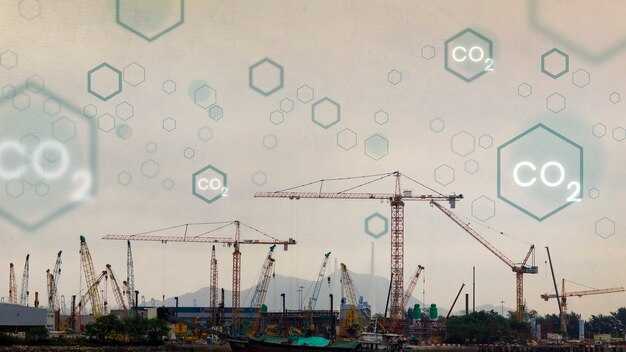
Adopt adaptive routing across the supply network now by pairing modal shifts with a flexible supplier network to reduce exposure to climate risks. Map critical supply lines, qualify alternative carriers, and pre-approve backup suppliers in high-risk zones to protect the resource base across countries and reduce reliance on a single path. Target a 40% reduction in single-source exposure within 24 months, unlocking a billion dollars in cost avoidance and improving resilience.
Prioritize multimodal transport for key components, using rail for long-haul segments and sea for steady volumes; reserve air for time-sensitive items and emergencies. This quickly yields responses that are effectively robust during storms and seasonal disruptions, while keeping emissions in check and maintaining cost discipline.
Develop a flexible supplier network across countries and regions, with 3-4 alternate sources per critical part and nearshore options to reduce reliance on a single country. This worldwide approach provides a high global advantage, keeps lines open throughout climates, and protects the resource base.
Use scenario planning and digital dashboards to simulate river flood risks and other climate impacts along key corridors; define trigger responses and route changes to protect zones and maintain production. Maintain physical stock for critical lines and quick re-routing to minimize downtime.
Address site safety: keep floors dry to avoid suds and slipping hazards, and ensure supplier facilities maintain robust water-management practices to prevent damage from heavy rainfall.
Industry examples: boeing and automotive players show how improving collaboration and direct communication with suppliers allows teams to respond quickly and directly and effectively.
Conclusion: This approach supports sustainability, reduces emissions, and delivers a high global advantage by strengthening supply networks and protecting resource flows.