


 日本語
日本語  English (UK)
  Русский
  العربية
  한국어
한국어  Magyar
  Türkçe
  Español
  Čeština
  Svenska
  Português
  Ελληνικά
  Suomi
Suomi  Nederlands
  Română
  Italiano
  Français
  Polski
  Українська
  Deutsch
  简体中文
简体中文  Slovenčina
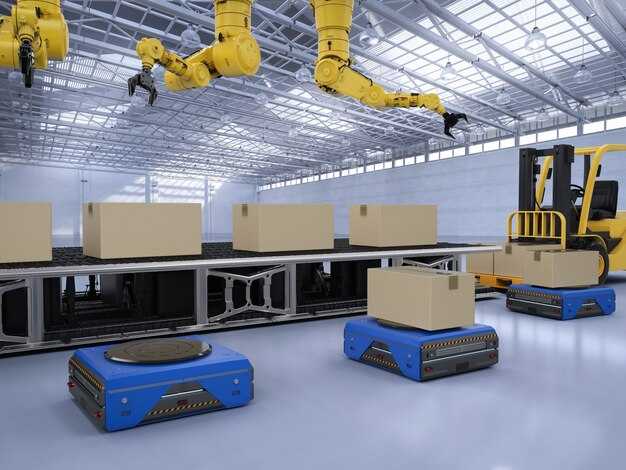
Choose robotics-enabled picking that reduces travel distance by up to 30% and shortens dispatch cycles by roughly 20%. This decision supports a faster transition from manual workflows to automated processes, delivering a clear reduction in handling time alongside their teams’ daily routines. This shift minimizes disruptions for them. Analysts said that pairing robotics with real-time data shapes your warehouse’s tempo for all tasks.
Compared with traditional manual picking, the leading systems increase accuracy and throughput. For example, a pick-to-light with AMRs can achieve accuracy above 99.5% and boost throughput by 20–351万トン on mixed SKUs, while minimizing picker travel time. Vision-guided picking with fixed or mobile robotics reduces errors and shortens decision time for replenishment, with a typical reduction in average travel of 25–40%. As of 2025, these gains are being realized across sectors.
Alongside hardware, robust software support matters. A system that integrates with your WMS, ERP, and labor-management platforms accelerates the transition and cuts manual rework. The term ‘modular architecture’ shapes how you add new SKUs or reconfigure routes. Their analytics dashboards reveal bottlenecks in order processing and forecast maintenance needs, keeping uptime vital for ongoing dispatch cycles, and vice versa for data exchange with partners.
When choosing among the three options, look for a clear pilot plan, measurable KPIs, and strong support for a phased transition that aligns with your processes. Favor a solution with flexible robotics integration that shapes workload across shifts and SKU shapes, while offering cost visibility and a favorable term for ROI. With the right vendor, the dispatch cycle becomes more predictable and your team experiences less disruption during the transition.
Overview of benefits and practical considerations
Start with a three-month pilot of an optimized automated picking module in the large zone to validate speed gains and accuracy before full-scale rollout. A modern system would benefit from a staged approach, aligning equipment, software and people with the heaviest workloads and creating a clear term for ROI.
Seeing tangible gains in throughput, optimized systems improve utilization of every asset and thereby contribute to shorter orders cycle. The right layout places fast-moving SKUs near the outbound dock, where travel is minimized and pick rates rise, and uses computer-guided routes to reduce mis-picks. The setup also uses automated item sampling with shelf sensors, eliminating routine manual tasks and freeing operators for exceptions and replenishment.
- Speed: automated picks can boost orders-per-hour in high-volume zones by 1.5x–2x, depending on SKU variety and packing requirements.
- Accuracy: targeted pick-path optimization reduces error rates below 0.5% in many installations; performance improves with well-defined routing and real-time inventory data.
- Equipment and maintenance: select modular equipment with standard interfaces; plan preventive maintenance every 3–6 months and monitor power consumption to avoid outages.
- Integration and data: connect the warehouse control computer to your WMS and ERP to synchronize orders, prioritization, and replenishment; ensure data fidelity to maximize utilization over months and years.
- People and training: train staff to manage exceptions and re-route workflows as layouts change; automation should support operators, not replace them entirely in routine tasks.
In the elazary case, a mid-sized distributor paired powered mobile carriers with a central computer and an optimized routing engine. After several months of staged deployment, they reported a 20–25% increase in speed and a 99% order accuracy, while reducing labor hours in the term of the project. Their approach shows how seeing results early helps teams adjust processes and expand use cases across additional zones.
System A: Goods-to-Person (GTP) with AS/RS and robotic arms
Recommendation: Implement System A as the core pick flow; it minimizes travel and increases picking throughput. GTP moves items from AS/RS bins directly to fixed stations, alongside a workforce that can verify and pack without walking between zones.
System design uses tall AS/RS towers to hold much inventory in dense bays; robotic arms retrieve and place items, adapting to shapes and sizes. The technology supports mixed shapes and totes, keeping throughput high while reducing handling steps. A paluska area is reserved for fast replenishment and occasional bulk moves.
Operational flow keeps the pickers at fixed stations while the automated layer handles retrieval and putaway. Pickers verify items and pack, often aided by handheld scans. Travel between zones is minimized, with ongoing monitoring to sustain accuracy and pace.
For planning, start a pilot in two zones to validate cycle times and accuracy, then scale to additional zones alongside a calculated maintenance window. Ongoing training keeps the workforce proficient, while analytics show where to adjust rack shapes and robot routines.
Performance snapshots show accuracy in validated runs around 99.5–99.9%, with travel time cuts of 50–70% and throughput gains once implemented across all zones. The system handles much things–bulky pallets, small parts, and irregular shapes–with the same pick-and-pack cycle, ensuring reliable results. This setup enhances reliability and reduces workforce fatigue by keeping operators focused on value-added tasks, while the automated layer supports picking alongside them.
System B: Autonomous Mobile Robots (AMRs) for order picking
Recommendation: deploy 4–6 AMRs in the busiest picking zone for just a 90-day pilot to quantify near-term impact: a reduction in walking distance of 40–60%, an uplift of 15–30% in picks per hour, and precision improvements tracked throughout shifts with real-time monitoring.
These robots act as hands-free partners for pickers. They carry totes, ferry items to the pick area, and then return for a new task, allowing pickers to concentrate on selection where accuracy matters most. The motion and robotics stack delivers reliable docking, obstacle avoidance, and smooth lane transitions, reducing congestion in crowded aisles.
- Near-term benefit: higher throughput as AMRs handle travel between zones, while pickers stay focused on item selection.
- Precision and tracking: precise localization throughout the warehouse keeps goods aligned with orders and reduces mis-picks; real-time tracking informs decisions across shifts.
- Deployment flexibility: units can be deployed in multiple zones and reconfigured as SKU mix changes, supporting gradual scale without costly downtime.
- ROI and attractiveness: the reduced travel and labor strain create measurable benefit over 12–18 months, making it attractive to finance and marketing teams.
How it integrates: AMRs connect to your WMS and picker workflow, receive orders, and deliver items to designated zones. The system supports hands-free confirmation, barcode or OCR verification, and sensor data feeds that keep motion safe and predictable. Vendors offer a solution that aligns with existing processes so teams can maintain continuity while learning the new dynamics.
- Assess zone complexity and SKU distribution to target the initial deployment where it delivers the fastest ROI.
- Run a 90-day pilot with a small fleet, gather metrics on reduction in travel, picks per hour, and accuracy, then refine routes and docking points.
- Scale to additional zones gradually, updating SLAs and maintenance plans to sustain gains over years.
In summary, System B provides a compelling, attractive, and practical AMR-based approach to order picking by combining hands-free operation with precise, trackable motion, delivering measurable benefit and supporting decisions throughout the operation.
System B: Integration, deployment steps, and data flow
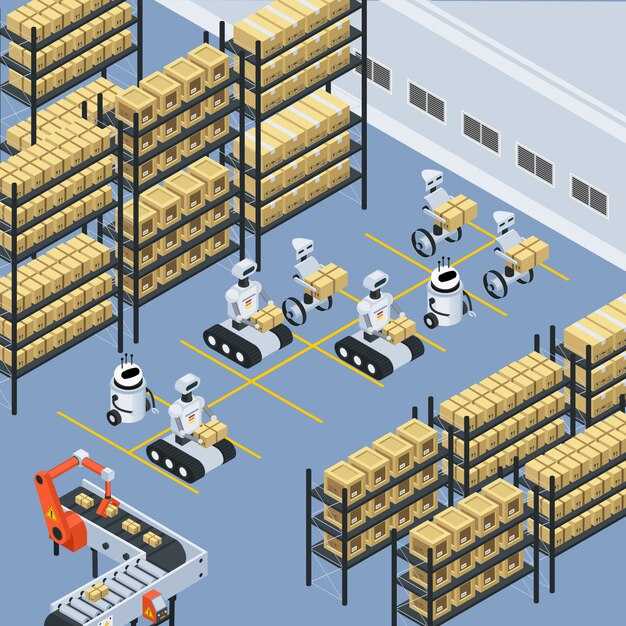
Start by mapping data interfaces across all systems to reduce latency and improve decisions. Align near-term milestones with clear metrics to ensure four core deployment steps stay on track.
System B stitches WMS, yard management, robotics controllers, conveyor subsystems, and analytics into a single orchestration layer. It uses raas hosting for scalable services and leverages technologies from engineering teams to standardize data models, events, and security. This approach greatly enhances cross-system visibility and helps maintain consistent decisions across the warehouse floor.
1) Define データ contracts between systems: WMS, TMS, ERP, sensor networks, and picker devices; specify fields, timing, error handling, and versioning. Establish agreed semantics for task, gather, and conveyor events so routines remain predictable for operators.
2) Choose middleware and data buses: implement standardized APIs, event streams, and a central catalog. Use goramp to gather telemetry from conveyors and pickers in near real time, enabling faster routing and proactive maintenance.
3) Plan deployment in four phases: development, testing, staging, production. Validate interfaces with automated tests, parallel pilots with raas-based services, and lock down rollback procedures. Keep security and data governance in focus as data moves through the pipeline.
4) Validate with pilots in real-world corridors: measure throughput, accuracy, and pick rates; adjust routing logic based on trends and feedback. Use dashboards to track vital metrics and feed learning back into the system to boost reliability.
Data flow overview: edge devices and scanners feed data into local gateways; the orchestration layer, built on scalable technologies, merges inputs, computes task assignments, and issues instructions to pickers and conveyors. The data lake stores history for trends analysis, while the raas layer provisions components for rapid scaling. Operators gain near real-time visibility, enabling better decisions and faster fulfillment while routine checks prevent drift.
System C: Robotic picking with AI vision and bin-picking
Adopt System C when throughput is your top priority and you aim to cut labor cost per pick; it delivers a fast payback in mid- to high-volume operations. Industry analysts said it scales with SKU variety and expands well across sites.
The approach combines robotic picking with AI vision and bin-picking. An AI vision module identifies items and orientation in real time, while a versatile end effector handles bin extraction with adaptive grip. The two components form a robust combination that reduces human touch, raises safety, and keeps the workflow steady during peak shifts, while protecting product quality.
In pilot deployments, average throughput per cell runs 700–1,100 picks per hour, with cycle times of 2.8–4.2 seconds per pick and error rates under 0.3%. When SKUs are stable and bin contents are predictable, much of the variance comes from item size and packaging; a well-tuned camera setup and gripper can push the upper end toward 1,300 picks per hour. This data supports sizing of lines and expansion plans for future growth.
Cost and ROI: capex around $0.6–1.4 million for a two-robot line plus integration, with typical labor savings of 40–60% and throughput-driven revenue uplift. The average performance under standard assortments yields a payback of roughly 12–18 months for many e-commerce and 3PL sites; longer if SKU mix is more complex. The shift in labor moves employees from pick tasks to exception handling, so the team can reallocate time to value-added activities.
Safety and reliability: The system minimizes manual lifting, with stacked safety sensors and gentle collision avoidance. reliable equipment and redundant sensors keep downtime low; routine data from the equipment informs predictive maintenance and reduces unexpected failures.
Implementation and data: The system ships with an API bridge to major WMS and ERP; elazary provides an integration blueprint, and goramp adds a data layer for live throughput, batch quality, and health metrics. The provided analytics dashboard lets the team monitor cycle time, bin fill level, and occupancy in real time, thereby enabling faster decision-making. For the future, pair System C with modular racking and label-driven bin routing to keep processes lean and scalable across multiple sites.
Cross-system benefits: accuracy, throughput, and labor optimization
Deploy a unified cross-system evaluation now to lift accuracy and throughput while reducing manual work. Run a 12-week pilot that compares three automated picking systems across seven product families and two shift profiles to capture real-world motion, handling, and error patterns, and use enhanced data collection to drive decision-making.
Accuracy gains come from sensor fusion, precise gripper control, and item recognition. Projected results show error events falling from a typical manual rate of 0.5–1.2% to 0.05–0.2% with automation, and the highlight is a dramatic drop in mis-picks across all seven product families. Includes calibration steps, inspection checkpoints, and ongoing tuning to keep performance stable as volume varies.
Throughput gains come from parallel motion and batch handling. Look at typical throughput: manual pickers deliver 800–1,200 units/hour; deployed systems reach 1,400–2,600 units/hour per picker, with higher-volume setups exceeding 3,000 units/hour for standardized SKUs. Each deployed solution also supports motion optimization and routes that reduce travel time by 15–40% depending on layout.
Labor optimization reduces headcount and shifts. Replacing repetitive, high-precision tasks with automation shifts your workers toward exception handling and quality checks. Provided data from pilots shows staffing reductions of 25%–45%, depending on product mix and order profiles. Your team gains capacity to handle peak volume without overtime.
According to telemetry gathered during pilots, cross-system integration delivers a clear ROI. The blend of robotics, automation, and intelligent motion technologies provides reliable product flow and lower error rates. The ongoing gather of motion, handling, and volume metrics gives you a data-driven view for sizing and staffing decisions. Just-in-time dashboards help you look at what matters and react quickly to changes in weight, fragility, or package size.
| システム | Accuracy | Throughput (units/hour/picker) | Labor reduction | Deployment time (weeks) | 備考 |
|---|---|---|---|---|---|
| System A | 99.8% | 1,400–1,800 | 28% | 6 | Best for mixed SKU; robust gripper and easy maintenance. |
| System B | 99.9% | 1,800–2,200 | 34% | 8 | High-volume items; faster set-up and calibration. |
| System C | 99.95% | 2,350–3,000 | 42% | 9 | High accuracy; optimized for fragile goods. |
ROI, implementation timeline, and maintenance planning
Implement a 90日間パイロット in one warehouse to validate savings before a full-scale roll-out. This approach lets you quantify ROI by comparing baseline metrics to results after enabling technologies, then scale to other warehouses.
To compute ROI, track measurable benefits: labor cost reductions from faster picks, accuracy improvements reducing returns, and throughput gains. If average cycle times drop 20-30% and picker productivity rises 15-25%, payback falls into the 9-18 month range, depending on capex and ongoing maintenance. To ensure accuracy, collect data from WMS, wearables, and pick-path analytics, accurately reflecting performance; these sources here help you quantify the value of each improvement. When technologies deliver gains, the result is smoother processes and less rework, which is increasing efficiency without a disruptive switch in operations. However, results vary by product mix, batch sizes, and seasonality. Therefore, set right expectations and monitor progress with weekly delta reports. Also consider technological upgrades in sensors and robotics to sustain gains, especially where automation scales across multiple warehouses.
Then plan a structured rollout in three phases: discovery and requirements gathering, configuration and integration with WMS, and training plus go-live. A compact pilot takes 6-10 weeks; full deployment across multiple warehouses typically runs 4-9 months depending on network complexity and data migration requirements going smoothly. Build performance gates with clear acceptance criteria and call-outs for key operators, ensuring picker involvement from the start. This approach aligns with the picking scenarios your teams face daily, especially in high-volume periods.
Maintenance planning ensures uptime and predictable costs. Build a maintenance calendar with preventive checks, sensor calibration, battery swaps, and spare parts stocking; assign a dedicated call center contact for escalations. Schedule quarterly reviews to adjust intervals based on actual usage and wear, and maintain an average maintenance window of 2-3 hours per month per site. Include remote diagnostics and on-site response within 24-48 hours. These steps help warehouses operate with the right technical support, and they reduce unplanned downtime for all processes, especially when you run continuous cycles with high picker activity and rapid SKU changes. If issues arise, a dedicated call line remains available for critical problems.