



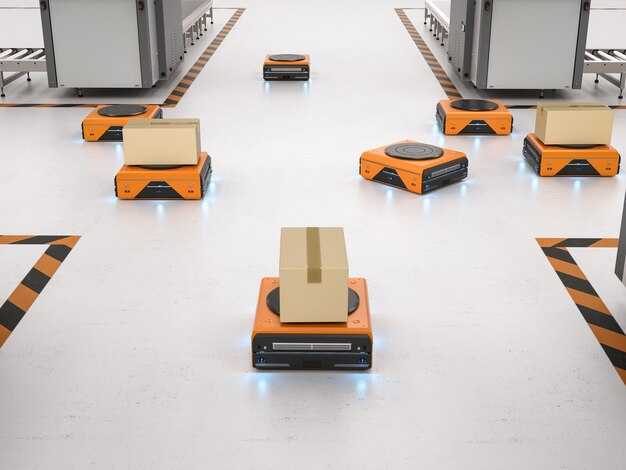
Recommendation: Designing a modular floor plan paired with real-time data collection accelerates long picking tasks and reduces unnecessary move, while improving safety. In practice, start with high-frequency zones and implement flexible cell layouts that adapt to demand, creating productivity gains and capacity headroom. Leverage logisticstech and digital twins to compare scenarios before scaling.
Implementation note: In contrast to rigid, single-path setups, flexible configurations enable rapid reallocation without downtime. Implementing modular conveyors, reconfigurable pick zones, and roaming assets lets you move resources toward peak demand and maintain service levels. Focus on intuitive interfaces and standardized data feeds to minimize rework and preserve flexibility across shifts.
Data-driven operations: Build real-time monitoring for throughput, capacity, and safety indicators. Collect data on cycle times, path length, dwell times, and error rates; use these metrics to inform adapting routing and zone layouts. This digital discipline helps create safer environments and leveraging productivity across the supplychain. This data supports decisions about future capacity.
Concrete numbers from pilots show gains: throughput +12% to +28% within 8–14 weeks; picking accuracy up to 98.5%; capacity headroom +20% to +35% during peaks; safety incidents down 15% to 40% after redesigning work zones. Apply these ranges to set targets, then run controlled tests to validate on your floor.
Share this: Flexible vs Fixed Warehouse Automation – The Evolution of Logistics
Adopt a modular, hybrid setup that scales with demand and product variety; invest in adaptable equipment and cross-trained operators to reduce headcount while maintaining service levels. Focus on fast, high-volume orders and e-commerce flows, then extend to changing SKUs. This approach protects time and boosts today’s success by delivering reliable orders with consistent quality.
Recommendation: start with a core, single-line spine for production handling and add reconfigurable modules to handle changing processes. Measure impact on time, rates, and order accuracy; track customers' satisfaction and reduce delays between steps in processes.
Key features to optimize ROI today: easy-to-reconfigure equipment, real-time monitoring, and straightforward integration with e-commerce and ERP data. Between rigid lanes and adaptable picks, choose solutions that can be swapped within minutes, not days, to cut investment risk and accelerate time-to-value.
| Approach | Key Benefits | Investment Notes |
|---|---|---|
| Hybrid core | reduces headcount while increasing throughput and reliability | moderate capex, faster payback |
| Modular zones | handles changing products and higher orders with minimal downtime | scalable, incremental investment |
This shift lets customers receive faster orders, while operators gain flexibility to manage varied product cohorts, producing real improvements in production rates and overall efficiency.
Total Cost of Ownership: Capex, Opex, and Payback
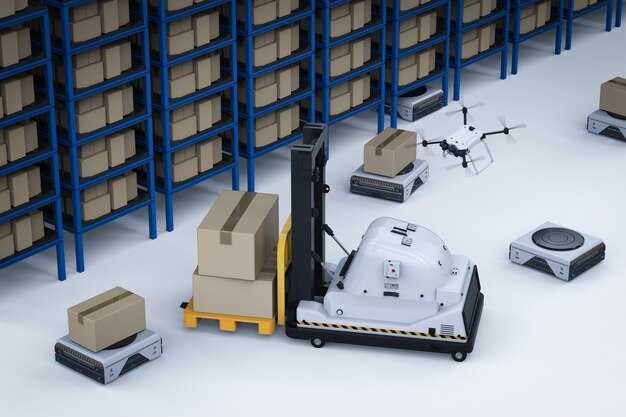
Go with a hybrid Capex-Opex plan and set a payback target of 18–30 months for major automation assets across warehouses serving e-commerce and retail.
Capex for autobaggers and related packing stations typically ranges from $50k to $200k per unit, depending on features, integration complexity, and control depth.
To shorten payback, design modular, scalable architectures and bundle software licenses into operating budgets; reserve 20–40% of initial spend for services, remote monitoring, and software updates. theyre designed to maximize utilization during peak seasons and minimize idle time during slow periods.
Opex drivers include maintenance contracts, energy, consumables, and downtime reduction; regional rollouts benefit from service contracts with bahasa-language manuals to keep headcount lean and costs predictable during seasonal waves.
Example: A company running 4 warehouses in e-commerce and retail cut headcount by 8–12 workers per shift as autobaggers took routine task load, while downtime fell 15–25%, delivering payback of 22–28 months depending on seasonal times and product mix.
Limitations cover ceiling height, power supply, and skill gaps; task complexity, product mix, and legacy systems limit speed of integration; project scope should share expected benefits across tasks and times to avoid overly optimistic projections.
Future outlook favors scalable, service-oriented approaches that align with future demand, enabling the same assets to handle seasonal peaks while preserving service level at hand and service cost per product family.
источник: industry study notes ROI ranges and emphasizes that automation in large networks lowers downtime and raises throughput; multilingual support including bahasa improves maintenance outcomes.
Scalability and Reconfiguration: From Fixed Lines to Flexible Cells
Adopt modular cell layouts now; restructure into adaptive clusters that can scale within a quarter and trim retooling time, eliminating bottlenecks at peak demand. Map processes by SKU family, place high-velocity items into neighborhood towers, and keep slow movers in secondary cells to minimize travel through facility aisles.
Real-time data from amrs and asrs informs dynamic slotting, shrinking travel and cost while boosting pick velocity and fulfillment rates. Equipment choices align with brands offering modular components; this reduces integration risk and lowers total cost of ownership by enabling cross-docking and shared tooling.
Seasonal swings in demand call for politika-driven planning that lets teams add flexibility without sacrificing accuracy. политика обновления маршрутов должна добавить устойчивость к сезонным пиковым нагрузкам, поддерживая supplychain. Transition steps should address training, safety, and change management to avoid disruption.
Between traditional layouts and modular cells, equipment ecosystems must support fluid transitions. Select brands with compatible interfaces; emphasize tower-based picking modules, shared conveyors, and scalable racking to maximize real throughput and minimize downtime.
Implementation plan: run a two-zone pilot, modify WMS to allocate tasks to cell teams, train operators, and monitor real-time metrics. Track cost per order, pick value, fulfillment rate, and supplychain lead times; use lessons to expand to other facilities gradually.
Risks exist: difficult to scale across sites; mitigate by phased rollout, investing in staff cross-training, and maintaining real-time monitoring via telemetry from amrs and asrs. Maintain a focus on sustainable gains, avoiding dependency on traditional bottlenecks that limit peak performance.
Throughput and Cycle Time: Matching Automation to Demand
Start with modular robotics cells that scale with demand; set baseline cycle times per pick lane and verify throughput in units per hour to meet large demands. Build with equipment that can be added quickly, ensuring downtime stays manageable, making future capacity expansion easier.
In designing layouts, capture data on pick rate, travel time, and queue length; use that data to provide rules for reallocation of robots and shuttles when bottlenecks appear, making adjustments faster, and satisfying requirements.
Demand curves require concrete targets: cycle times in 6–12 seconds per pick for dynamic zones; sometimes demand spikes, such as promotional periods; throughput of 1,000–2,000 picks/hour per module; 4–6 modules can reach 4,000–12,000 picks/hour.
Reliability grows from redundancy and proactive maintenance. Combine robotics with rugged equipment paths, parallel sorters, and sensors that flag wear; track downtime weekly and aim for 2–3% in steady state; schedule maintenance in off-peak windows; intelligence from edge analytics guides adjustments. Operators become happier.
In traditional layouts, bottlenecks slow order flow; logisticstech integration helps design modular cells that adapt to swings and reduce downtime. Implement a staged plan: map demands, pilot in a single zone, add modules, and use data to tune pick zones and staffing; include additional buffers to absorb spikes, чтобы keep service levels high and provide value to businesses.
Downtime, Maintenance, and Spare Parts: Minimizing Operational Risk
Implement a real-time condition-monitoring program tied to a tiered spare-parts cache for critical items such as autobaggers, sorters, and installation components; coordinate with factory maintenance teams to align parts availability. Target MTTR under 2 hours on high-volume lines and achieve spare-parts fill rate above 98% for top-10 failure modes. If a fault occurs, then repair crews deploy immediately from this cache.
Map failure modes by task and location: where downtime originates during packaging, palletization, and line release; take corrective actions swiftly to protect products; assign redundancy at bottleneck stations; deploy vendor-managed inventory with rapid access to spare belts, sensors, and other additional items. As lines evolve, this framework scales with additional factory expansions.
Leveraging real-time dashboards to track rates of failure, MTBF, and lead times; accelerate speed of recovery and deliver insightful analytics to management; tie results to warehousing throughput while controlling cost.
Source китайский motors, sensors, and drives for high-volume lines; diversify with regional suppliers to reduce single-source risk; establish cross-dock buffers and large spare-parts pools; provide quick modify options so installation teams can modify configurations to suit evolving line layouts.
Decision framework for transitions: classify parts by criticality, set milestones for transition from legacy modules to new designs, assign task owners, and measure recovery time after any incident. Address different line configurations.
Projected impact: downtime duration cut by 28%, spare-parts cost reduced by 12%, and fill-rate for critical items exceeds 98% during high-volume activity; warehousing throughput improves, boosting overall operational resilience.
Data, Integration, and Real-Time Visibility: Signals and Dashboards
Implement a unified signals layer with a single source of truth and real-time dashboards to cut decision time by 30–40% in peak seasons.
- Signals architecture captures inbound orders, item-level inventory, internal movements, carrier updates, sensor readings, labor status, and equipment health. Latency target: often under 2 minutes for critical paths; data freshness at least 99.5% during seasonal spikes. Zebra-striped indicators highlight exceptions, enabling quick triage. Signals in place support multi-brand scenarios and high-volume SKUs, while sustaining footprint by sampling non-critical metrics during off-peak periods.
- Integration approach links ERP, order management, catalog, e-commerce platforms, and demand signals via standard connectors. Defining entry points for ingestion–receiving, put-away, picking, packing, outbound staging, returns–clarifies data flow. Implementing robust field mapping, deduplication, and data quality checks reduces mismatches across systems. Maintain a 90‑day window for dashboards with archival rules to preserve performance.
- Dashboards and signals visualization emphasize futuristic, high-signal views with features like real-time alerts, trend reports, and operational boards by brand and location. Seasonal views adjust thresholds automatically to align with demands. Reports can be daily, weekly, or on-demand; allow drill-down from brand to SKU to location. User experience relies on concise widgets, color-coded statuses, and filters by region, channel, and high-demand periods.
- Implementation and governance follows a three-phase path–entry, scale, sustain. Start with a core set of signals and thresholds in place for e-commerce demands, then scale across facilities and channels, finally embed continuous optimization with cross-functional governance. Lead with fast wins in high-impact brands, then broaden scope to multiple channels. Metrics targets include 60% reduction in manual checks, 20–25% drop in mis-picks, and 12–18% savings in expediting costs within six months.
- Limitations and skills cover data gaps from legacy systems, lag in carrier updates, sensor outages, and misalignment between planning calendars and execution. Mitigate by assigning clear owners, building fallback dashboards, and rehearsing exception response playbooks. Skill-building plan includes data engineering basics, dashboard design, and analytics storytelling to raise decision quality. Focus on entry points like tagging top-5 brands, standardizing alert queues, and establishing seasonal SKUs to reduce noise.
Daily report blocks highlight anomalies and delays for quick action.
In practice, aligning data signals with organizational management creates a sustainable competitive advantage. By tracking success metrics, brands can report progress to executives with tangible savings and improved experience across channels. A well-orchestrated signals layer supports scale, improves overall place of operations in the market, and enhances customer experience in e-commerce flows.
What matters is accuracy of data and speed of action.