


 한국어
한국어  English (UK)
  Русский
  العربية
  日本語
日本語  Magyar
  Türkçe
  Español
  Čeština
  Svenska
  Português
  Ελληνικά
  Suomi
Suomi  Nederlands
  Română
  Italiano
  Français
  Polski
  Українська
  Deutsch
  简体中文
简体中文  Slovenčina

Recommendation: Start by mapping vendors’ emissions data to contracts and appoint a senior governance lead to own the process. This first step creates a single source of truth and access to supplier data for procurement, finance, and sustainability teams, with a strong governance frame that invites open collaboration from partners, stronger than scattered reporting.
heres how the 소개되었습니다 rules translate into value for global supply chains: compliance becomes trackable across four pillars: governance, risk management, metrics, and disclosure controls. For mid-sized teams, this means creating a patchwork of data sources into a coherent flow and prioritizing access for senior stakeholders.
To operationalize this, implement a 스텝-by-step data program that enables you to track supplier emissions against standards. Build a central data platform that access data from vendors and partners in a consistent format. This open approach reduces friction when dealing with cross-border vendors and strengthens trust with senior management and customers.
Governance should rest on a clear 제안 aligning internal controls with SEC expectations. Form a cross-functional committee (sustainability, legal, procurement, finance) with a first charter and a cadence to review data quality, risk signals, and disclosures. The committee publishes quarterly updates and tracks progress against a small set of standards that are practical for suppliers to meet, including mid-sized vendors.
For vendors and partners dealing with diverse regulatory regimes, adopt open data formats and standard vocabularies to reduce translation errors. The approach helps ensure consistency and access to critical insights across regions. It also supports due diligence and makes it easier for senior executives to see where remediation is needed and how to allocate resources.
In practice, expect a notable reduction in cycle times for disclosures, a clearer view of climate-related risk, and a tangible uplift in supplier collaboration. Start with a pilot involving 3–5 mid-sized vendors, then scale using a reusable template and a living governance charter that opens the door to continuous improvement.
How the SEC’s New Climate Disclosure Rules Will Impact Global Supply Chains: Compliance, Risk, and Transparency in a Potential Legal Limbo–Will the Rules Become Reality?
Implement a phased readiness plan now: map suppliers by sectors and categories, install greenhouse tagging for climate-related data, and build standards-aligned data collection to ensure compliance if the rules become mandated.
Currently, the SEC’s disclosures will reveal risk exposure across categories and business units, clarifying where governance and data quality must improve and what metrics matter most for downstream reporting.
To bridge gaps, focus on building capabilities by integrating procurement, logistics, and manufacturing systems into a single reporting layer; equip teams with standardized templates to quantify emissions, energy use, water intensity, and other climate measures, and pursue adaptable strategies.
Tagging suppliers by climate risk levels helps focus action across sectors, supporting investments and enabling transparency with customers and regulators. Firms face a mix of pending rules and internal priorities after the initial rollout.
Adopt a mandate-aligned strategy: establish clear governance, ensure traceable data, and develop compliance programs that scale with pending guidance and evolving standards.
This approach turns risk into opportunities by increasing efficiency, expanding collaboration with suppliers, and building resilience across larger and more complex supply chains.
Who Must Disclose and Which Entities Are Affected
Identify whether your securities are registered with the SEC and establish a disclosure plan now by mapping each legal entity in your chains to the filing requirements.
These are the core groups that must disclose, and entities that are affected:
- Registrants with SEC-registered securities, including U.S. public companies and foreign private issuers.
- Smaller reporting companies (SRCs) with scaled requirements and phased timelines.
- Subsidiaries and consolidated groups; disclosures cover your consolidated operations and significant suppliers and business units, with any material intercompany relationships.
- Joint ventures and other entities where your company has control or significant influence, when included in the filing.
What must be disclosed and how to apply it:
- Governance: describe how the board and executive management oversee climate-related risks and opportunities; include the process used to identify material risks and how they are integrated into the legal and compliance stack.
- Strategy and planning: explain the impacts on your business model and strategy; show how climate considerations are integrated into planning, capital allocation, and supply-chain decisions, with direct links to operations.
- Metrics and targets: presented as GHG emissions data (Scope 1 and 2; Scope 3 where applicable), energy use, intensity metrics by product or revenue, and the data collection formats you will use.
How to implement and coordinate:
- Establish a data map of your legal entities, directly including open lines with major suppliers, to define scope and reporting boundaries.
- Open collaboration with internal teams (legal, operations, procurement) to apply consistent definitions and data collection formats.
- Scratch out data gaps by creating a centralized process for collecting supplier data and validating entries; use standardized formats.
- Planning: Establish a planning cadence and a routine meeting with governance, risk, and finance leaders to align on strategy and updates.
- Present a clear plan to regulators and investors, using open formats and a consistent narrative throughout the report.
Increasingly, regulators focus on supply chains and data quality; this section presents obstacles and how to address them:
- Data gaps from suppliers or complex ownership structures; address with phased data requests and supplier onboarding.
- Cross-border data collection and privacy rules; implement harmonized data templates and secure transfer methods.
- Format variability across entities; standardize via a single reporting format and save as common formats (CSV/Excel) to ensure consistency.
- Regulatory uncertainty and evolving proposals; monitor regulators and adapt plans through frequent updates and governance meetings.
Bottom line for your setup:
This approach emphasizes the link between governance, planning, and supplier data; data will be reported directly by the company and presented in formats that regulators can review. The data reflect the breadth of your global operations and chains, and your team should maintain scratch planning, with regular updates, in a meeting to keep the process moving while you address obstacles from data gaps to privacy concerns. The current proposal aligns with the expectations of regulators and explains how your planning will adapt through the coming year.
Data Points and Documentation: Emissions, Scope 1-3, and Supply-Chain Metrics
Start by establishing a cleaner single source of truth (srcs) for emissions data across the entire supply chain by year-end 2025. This backbone will allow you to account for discrepancies and align data governance with strategic goals, providing investors with reliable, comparable metrics tied to contracts and operations.
Set governance with aligned roles and clear responsibilities. Assign directors to oversee data integrity, manage contracts, and ensure data-sharing obligations are embedded in supplier agreements. This approach strengthens managing processes and keeps cost under control while enabling transparent reporting. This alignment reduces difficult trade-offs between cost and data quality.
Define procurement practices that require emissions disclosures from suppliers and capture Scope 1-3 emissions with a structured data dictionary that describes each data point, unit, and calculation method. Track all relevant sources (srcs) across facilities, fleets, suppliers, and products, and ensure the level of detail supports scenario analysis and year-over-year comparable reporting.
Document data lineage, quality checks, and control points to minimize inaccurate disclosures. Maintain a structured file of source documents, verification notes, and audit trails to help directors and regulators assess compliance. When gaps appear, flag them and outline corrective actions within the governance framework introduction.
| 데이터 포인트 | Scope Coverage | Definition | Owner/Responsible | Data Source (srcs) | 빈도 | 참고 |
|---|---|---|---|---|---|---|
| Emissions (Scopes 1-3) | All scopes | Total GHG emissions from direct operations (Scope 1), energy-related activities (Scope 2), and other indirect emissions (Scope 3) within boundary. | Chief Sustainability Officer / Directors | Meters, utility bills, supplier disclosures, emission factors | Quarterly | Aligned with GHG Protocol; enable comparability across year and suppliers. |
| Scope 1 Emissions | 스코프 1 | Direct emissions from owned or controlled resources | Facilities Operations | On-site meters, fuel records | Quarterly | Audit-ready; include fugitive emissions where relevant. |
| Scope 2 Emissions | 스코프 2 | Indirect emissions from purchased electricity, steam, heating, cooling | Energy/Facilities | Utility invoices, smart meters | Quarterly | Present both location-based and market-based where possible. |
| Upstream Purchased Goods & Services (SC3) | Scope 3 Upstream | Emissions from goods/services purchased from suppliers | Procurement | Supplier disclosures, product data | Annual | Engage tier-1; extend to tier-2; tie to contracts. |
| Upstream Transportation & Distribution | Scope 3 Upstream | In-bound logistics emissions | Logistics/Transportation | Carrier data, freight invoices | Quarterly | Coordinate with contracts; use srcs for data sharing. |
| Use of Sold Products | Scope 3 Downstream | Emissions during product use by customers | Product/Ops/Marketing | Model inputs, customer usage data | Annual | Model-based; update with usage patterns. |
| End-of-Life Emissions | Scope 3 Downstream | Emissions from disposal/recycling of sold products | 지속 가능성 | Waste records, recycling data | Annual | Include circularity assumptions. |
| Data Completeness | All scopes | % of contracts with emissions data disclosures | Supply Chain / Compliance | Contract database | Quarterly | Target 90% by year-end 2025. |
| Data Quality / Accuracy | All data | Quality score from reconciliation checks | Internal Audit | Internal records, third-party verifications | Quarterly | Flag inaccuracies; implement corrective actions. |
| Documentation Level | All data | Metadata completeness and data lineage | Data Governance | Data dictionary, lineage records | Annual | Structured documentation to support regulators and investors. |
| Scenario Readiness | All scopes | Ability to run climate risk scenarios and quantify exposure | Risk Management / Directors | Scenario models (incl. tilley scenario) | Annual | Provide input for governance reviews and reporting. |
Data Governance and Systems Integration for Reliable Reporting
Establish an integrated data governance program anchored by a central data catalog and a cross-functional governance council to ensure SEC climate disclosures are accurate, complete, and auditable. Define required data objects, establish data ownership, and implement a data quality scorecard and status dashboard that tracks completeness, timeliness, and lineage.
Navigating regulatory expectations across states and international regimes requires mapping data sources across operations and supplier networks, including supplier data portals and contract data. Align with paris Agreement benchmarks to shape the scope of reporting and identify which data elements drive the most material implications for disclosure across industries.
Adopt a systems integration plan that selects a platform with robust data lineage, metadata management, and secure APIs; integrate ERP, sustainability data systems, procurement, and third-party risk portals. Leverage technologies such as ETL/ELT, data pipelines, and cloud-native data stores to create an integrated data layer, with a clear transition path to phased data loads and rollback options. Another capability is automated reconciliation between source data and disclosures to reduce manual effort.
Mitigate risk through standardized data definitions, automated checks, and regular assessment of data quality. Maintain immutable audit trails to satisfy judicial scrutiny, support regulatory inquiries, and explain any scope changes. Establish measures to document data provenance and the rationale for materiality decisions, reducing disputes and easing the audit status for disclosures.
These governance measures yield eased status across disclosures, and reshaping oversight of climate metrics in real time. Track data completeness, timeliness, and accuracy with dashboards that span industries and states, including new york. The integrated approach could mitigate financial and operational risk and support board-level decisions during the transition.
Compliance Timeline, Filing Procedures, and Third-Party Verification
Appoint a dedicated project lead with expertise and deference to regulators to establish clear accountability across operations and the supply chain; this structure ensures responsible decisions from day one.
Here is a practical 12-week timeline that mid-sized firms can tailor to their filing window: Week 1–2 finalize governance and roles; Week 3–6 gather data from internal teams and suppliers on emissions, energy usage, and materiality factors; Week 7–9 reconcile data, run internal checks, and draft disclosure sections; Week 10–11 engage a verifier or confirm internal controls and revise for clarity; Week 12 secure board sign-off and submit. This plan assumes you are equipped with a data-management framework and supplier data streams; adjust for late inputs by aligning requests with supplier cycles and including interim targets in reporting. This plan acknowledges demanding timelines.
Filing procedures require a consolidated package that includes governance overview, risk disclosures, scope of metrics, and any assurance statement. Build on reporting principles and include a data appendix with source documents and version history, and keep a clear narrative tying governance to performance. Use robust controls to verify inputs and ensure the data included in the filing matches the narrative, with a formal review checklist to prevent omissions.
Third-party verification strengthens credibility. Select an independent verifier with demonstrated independence, proven expertise in climate reporting and supply-chain disclosures, and a track record with regulators. Request a scoping letter that outlines approach, assurance level, data access, and timeline; give the verifier access to internal and supplier data where needed, and require a final verification report that becomes part of the filing. A proactive verifier schedule reduces last-minute pressure and improves reliable results across the operations.
To maintain momentum, implement quarterly data requests, codify supplier expectations, and equip teams with dashboards that inform reporting and ongoing operations. heres a concise approach to keeping control: map data owners, set milestones, and gather feedback to refine the process; this keeps teams informed and makes reporting a strategic capability, so compliance becomes integral to board planning and future initiatives.
Navigating Legal Uncertainty: Preparing for Shifts in Rule Finalization
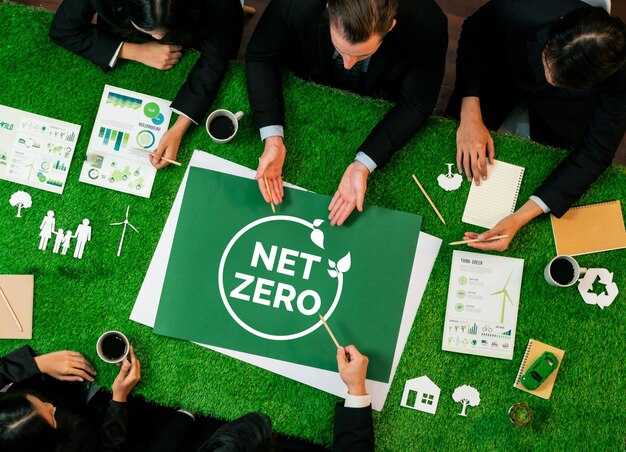
Start with a 90-day readiness sprint that maps anticipated rule finalization milestones to contracts, data tagging, and disclosure controls. Establish a cross-functional lead and a lightweight dashboard to monitor progress against the expected timelines, ensuring your teams place timely updates where business units can act quickly.
From day one, leverage regulators’ feedback to shape targeted strategies across sectors and surface issues before final rules land, drive better compliance outcomes.
Dealing with shifts in finalization, maintain a two-layer policy library and a change log so you can verify issue impacts and adjust contracts and tagging rules without disrupting operations.
tcfd-aligned governance strengthens credibility; focus on high-risk sectors–energy, manufacturing, logistics–with targeted reporting templates, focused risk scoring, and evidence packs.
Place governance at the core: designate a responsible executive, require sign-off on changes in supplier contracts, and set clear controls for data quality and stability.
Obstacles will appear; counter them with scenario planning, ongoing regulators feedback loops, and a simple escalation path so issues do not stall progress. This might require reallocation of resources, particularly during high-severity changes.
Ahead of finalization, tagging critical data by supplier, product type, and geography enables quick verification and streamlined reporting. Aim for less ambiguity in data fields through standardized tagging.
Keep a concise, iterative communication plan that clarifies what to do when new guidance arrives, from the initial alert to the final update, so your teams stay aligned and the resilience of your supply chain stays intact.