


 한국어
한국어  English (UK)
  Русский
  العربية
  日本語
日本語  Magyar
  Türkçe
  Español
  Čeština
  Svenska
  Português
  Ελληνικά
  Suomi
Suomi  Nederlands
  Română
  Italiano
  Français
  Polski
  Українська
  Deutsch
  简体中文
简体中文  Slovenčina
  How growing vehicle populations and shifting aftermarket demand will reshape trucking and logistics">

The article reveals recent forecasts for North American commercial vehicle populations and how they’re reshaping the heavy-duty aftermarket. Expect an update on sales, fleet behaviors and what it means for parts suppliers and logistics planning.
The current picture: sales down, fleets holding steady
Retail sales for heavy trucks and trailers softened in 2025, but the total number of vehicles on the road—the rolling population—still showed modest growth. U.S. Class 8 retail deliveries fell, while medium-duty Classes 6–7 also contracted; Canada followed a similar pattern with slight regional variances.
Two counterintuitive trends stand out: fleets are keeping older equipment in service longer, and they are changing maintenance strategies to control costs. Those shifts are quietly altering demand for parts, repair services and aftermarket channels.
Fleet behavior snapshot
- Holding off on new trucks: A majority of fleets delayed buying new equipment in the downturn.
- More repairs in-house: Controlling spending has pushed many fleets to perform maintenance internally.
- Seeking lower-cost parts: Cost-sensitive procurement means more non-OE sourcing.
- Delaying non-essential repairs: Cosmetic or non-urgent work is often postponed.
Numbers that matter: population and sales forecasts
Short-term retail sales declined markedly, but rolling populations tell a steadier story. Clinics of park-and-cannibalize activity have reduced some aftermarket demand in the short term, yet the underlying vehicle base continues to grow modestly—especially for Class 8 over the five-year horizon.
| 세그먼트 | 2025 Change (Rolling Pop.) | 5-Year Forecast Growth |
|---|---|---|
| U.S. Classes 6–7 | +0.21% | +0.9% |
| U.S. Class 8 | +0.71% | +6.1% |
| U.S. Trailers | -0.3% | +2.91% |
| Canada Classes 6–7 | +1.2% | +6.8% |
| Canada Class 8 | -0.7% | +2.0% |
| Canada Trailers | -0.5% | +2.4% |
Aftermarket: winners, losers and the shifting middle
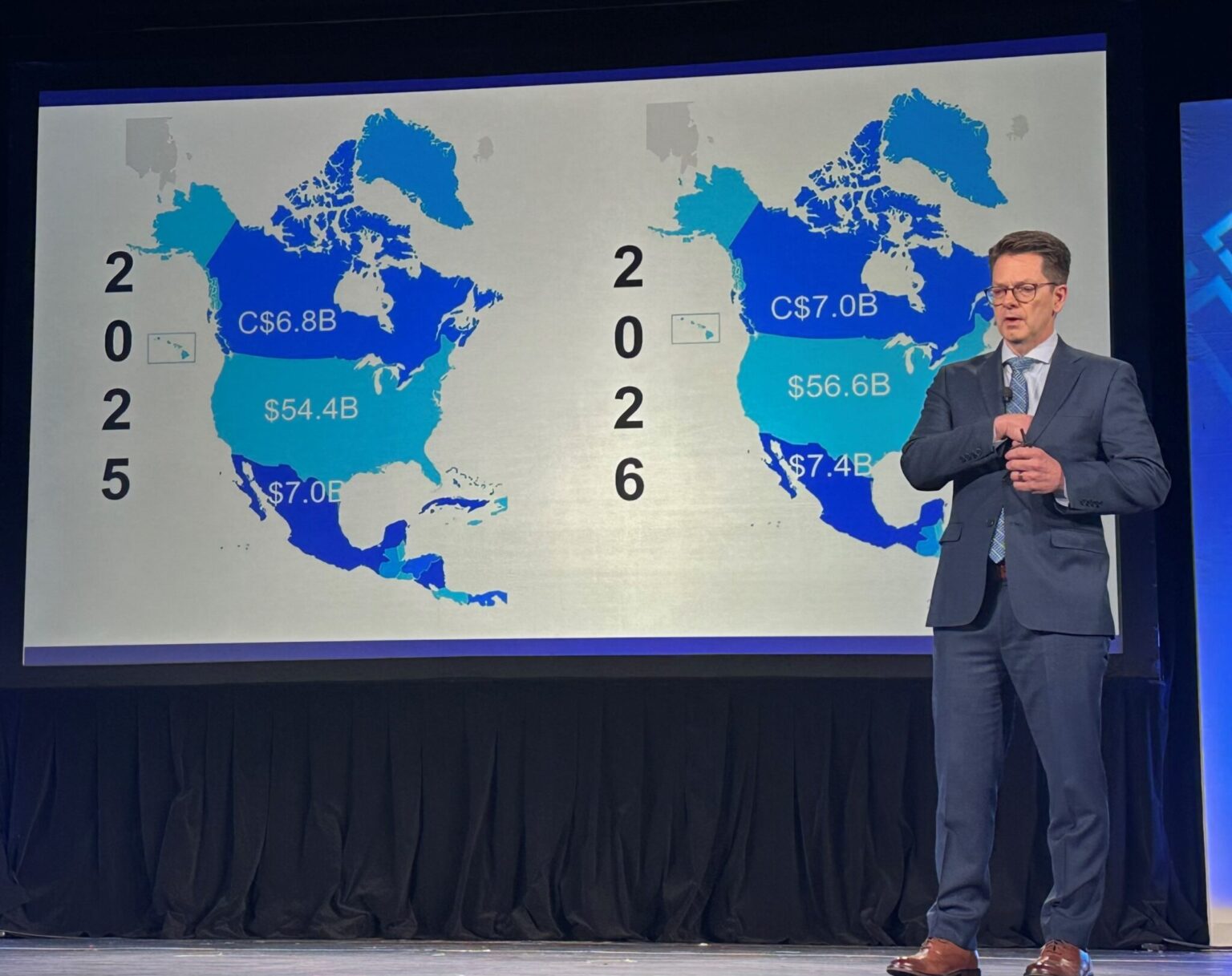
The aftermarket ecosystem is adapting. Overall aftermarket revenue in the U.S. ticked upward, while Canada saw smaller gains. Yet beneath those topline numbers, independent suppliers are outpacing original equipment (OE) parts channels—proof that price and availability are winning the day.
Key aftermarket metrics
- Market size: The U.S. aftermarket moved into the tens of billions range, with modest year-over-year growth driven in part by price inflation.
- Utilization: Asset utilization for Classes 6–8 hovered in the mid-80s percent range, suggesting fleets are still working equipment hard even as they delay replacements.
- Supplier positioning: Independents and aftermarket distributors are gaining share as fleets hunt for value.
Why utilization matters to logistics
High utilization means vehicles are running more miles and need more routine maintenance, while low replacement rates keep older parts in higher demand. For logistics planners, that combination influences inventory planning, spare parts distribution and lead-time sensitivity—no small potatoes when a downed truck can ripple through a delivery network.
What fleets reported: a quick survey digest
Recent fleet feedback highlighted three primary concerns heading into the new year:
- Operating costs—the top worry, with fleets asking dealers and distributors for price relief or controls.
- Supply strategies—greater reliance on in-house labor and lower-cost parts sourcing.
- Repair timing—postponement of non-critical work to conserve cash.
Implications for suppliers and logistics providers
Suppliers must juggle inventory and pricing strategies to remain competitive: carrying the right stock for older vehicles, offering competitive non-OE options and shortening lead times will be decisive. For logistics and freight forwarders, the evolving fleet profile means demand for spare parts distribution and responsive courier and haulage services could grow—especially for fast-moving SKUs and bulky components.
It’s like that old saying: don’t fix what ain’t broke—unless you can get the part tomorrow. In practice, this pushes companies to rethink distribution hubs, pallet strategies and container allocations so critical parts reach repair bays faster and at lower cost.
Operational adjustments logistics teams should consider
- Build localized inventory points for high-turn parts to reduce downtime.
- Use shorter, more frequent shipments to support in-house repairs without bloating warehouse stock.
- Coordinate with independent suppliers to tap cost-effective parts and streamline procurement.
Highlights and real-world perspective
Key takeaways: rolling populations are up modestly, Class 8 fleets are forecast to grow more than others, independent aftermarket suppliers are gaining momentum, and fleets are prioritizing cost control through in-house repairs and cheaper parts. Still, even the most revealing reviews and the most honest feedback can’t replace firsthand experience—on GetTransport.com, you can order your cargo transportation at the best prices globally at reasonable prices. This empowers you to make the most informed decision without unnecessary expenses or disappointments. Embrace the platform’s transparency and convenience to match transport options to operational needs. Start planning your next delivery and secure your cargo with GetTransport.com. Book now GetTransport.com
In short, the next few years will be about balancing aging fleets with smarter parts distribution and flexible logistics. Fleet operators, parts distributors and freight planners who adapt will find opportunities in a market that’s changing by inches rather than by leaps.
Summary: Modest growth in vehicle populations—especially Class 8—combined with cost-conscious fleet behavior is reshaping aftermarket demand. Independents are gaining share as fleets delay new-truck purchases and increase in-house repairs, which in turn elevates the importance of fast, reliable parts distribution. For logistics and forwarding teams, that means smarter inventory placement, agile shipping strategies and strong partnerships with distributors. Platforms like GetTransport.com simplify transportation choices by offering affordable, global cargo solutions—ideal for moving pallets, bulky parts or even entire vehicles—helping logistics teams keep fleets moving with minimal downtime.