


 한국어
한국어  English (UK)
  Русский
  العربية
  日本語
日本語  Magyar
  Türkçe
  Español
  Čeština
  Svenska
  Português
  Ελληνικά
  Suomi
Suomi  Nederlands
  Română
  Italiano
  Français
  Polski
  Українська
  Deutsch
  简体中文
简体中文  Slovenčina
 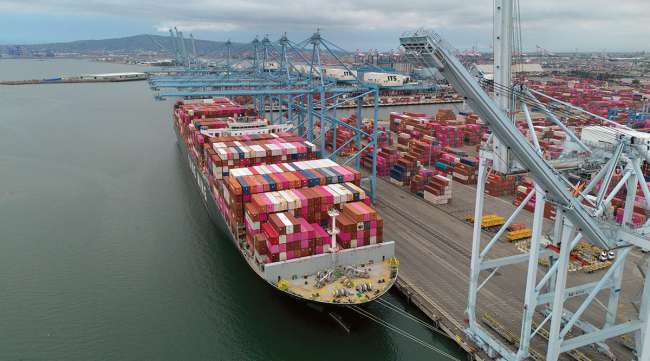 Global Freight Flows in Flux: Understanding Trade Policies, Capacity Challenges, and Tech Innovations Impacting Logistics">

Unpacking the Current State of Global Freight and Trade Tariffs
The international freight landscape is currently in a state of flux, stirred by fluctuating tariffs and evolving trade policies that are generating waves across supply chains worldwide. These changes have created an environment less about steady sailing and more about navigating choppy waters for shippers and transport operators alike.
Supply chains, especially those connected to U.S. imports, have felt the brunt of shifting tariff structures. Businesses find themselves in a holding pattern, reluctant to make sweeping alterations until the dust settles on trade configurations. This pause leads to short-term firefighting strategies instead of long-term restructuring.
Unpredictability: The Freight Industry’s New Normal
Adaptability has always been a hallmark of the logistics sector, but unpredictable policy changes breed uncertainty that even robust supply chains struggle to absorb. Constant updates to tariff rules challenge companies’ abilities to effectively plan, causing many to stick to existing supply routes while bracing for potential shifts.
This volatility has led to surges in port activity ahead of expected tariff increases, followed by noticeable slowdowns once the new trade barriers take effect. Freight flows are literally riding a rollercoaster, demanding exceptional flexibility from everyone in the transport chain.
Table: Impact of Tariff Uncertainty on Freight Activity
| Scenario | Effect on Freight |
|---|---|
| Announcement of Tariff Increase | Surge in port and freight activity |
| Implementation of Tariff | Slowdown in import volumes and supply chain delays |
| Suspension or Adjustment of Tariff | Renewed uncertainty; cautious investment decisions |
Business Responses to Trade and Operational Challenges
Logistics providers and cargo owners are demonstrating prudence by delaying significant investments amid an unclear outlook. The extended downturn in freight rates has squeezed motor carriers, yet some firms are strategically investing in assets and expanding service portfolios despite the pinch.
For example, inland cargo movers are broadening their offerings beyond traditional drayage by integrating rail options to counteract disruptions and improve route flexibility. These hybrid transportation solutions reflect a growing trend in logistics: blending various modes and technologies to keep goods moving efficiently.
Strategic Adaptations in Freight Logistics
- Investment in multimodal transport (rail, truck, intermodal hubs)
- Expansion of private truck fleets for greater supply chain control
- Close collaboration with customers to tailor adaptive transport solutions
- Focus on cost-effective asset utilization and profitability
Trade Policy Shifts and Their Ripple Effect on Freight Patterns
Should businesses reroute production away from traditional hubs, particularly China, the entire flow of global cargo — especially those bound for North America — is expected to shift. Such a strategic pivot would rebalance freight volumes, often moving from West Coast gateways toward East Coast ports.
Meanwhile, cross-border freight within North America finds itself under review, with trade agreements up for negotiation, potentially influencing customs processes and distribution networks.
Major Initiatives and Industry Watchpoints
- Temporary suspension of fees on certain foreign vessels docking in U.S. ports
- Ongoing review of the U.S.-Mexico-Canada trading agreement (USMCA)
- Proposed mergers in rail freight operators potentially reshaping intermodal transport
Capacity Constraints and Equipment Costs: The Trucking Industry’s Balancing Act
The trucking sector continues to feel the aftershocks of pandemic-era disruptions, marked by an appetite for private fleet expansions that have pushed market capacity beyond demand levels. This phenomenon dampened freight rates over multiple years but recently faces upward pressure from tariffs and rising equipment costs.
New tariffs on imported medium- and heavy-duty trucks as well as material levies on steel and aluminum have elevated production costs, anticipating tighter equipment availability ahead. Such cost dynamics herald a reshuffling of freight distribution back to traditional for-hire carriers as private fleets downsize.
Key Trucking Industry Trends
| 팩터 | 산업 영향 |
|---|---|
| Private fleet expansion post-pandemic | Excess capacity, depressed freight rates |
| Tariffs on truck components and materials | Increased manufacturing costs and equipment scarcity |
| Reduced Class 8 truck production | Fleet reduction by carriers, more load for for-hire providers |
Security Challenges: Battling Cargo Theft Amid Complexity
Freight operators face not just shifting routes and costs but also an alarming rise in cargo theft, targeting valuable shipments with increasing sophistication. This industry-wide menace drains resources and diverts attention from core logistics functions, demanding a collaborative approach across shippers, carriers, and authorities.
Addressing cargo security is no small feat—it’s a collective responsibility that calls for innovative systems and shared vigilance to guard freight as it journeys through complex networks.
The Rise of Artificial Intelligence in Freight and Logistics
Innovations in artificial intelligence are becoming vital tools for shippers and logistics providers attempting to tame unpredictability. AI-powered data analysis enhances decision-making by parsing extensive information on costs, routes, and environmental impact, which would be overwhelming for human planners alone.
Forward-thinking companies establish centralized data hubs to consolidate operational insights, allowing for scenario modeling and adaptive planning that keep pace with rapid market shifts and help optimize multimodal transport choices.
How AI Advances Logistics Efficiency
- Data centralization for integrated supply chain visibility
- Scenario planning to anticipate disruptions and route changes
- Optimization of transportation costs and carbon footprint
- Enhanced customer insights enabling agile service adjustments
요약 및 전망
Global freight logistics find themselves at a crossroads as evolving trade policies, tariff impacts, and capacity challenges redefine traditional supply chain configurations. Uncertainty remains the watchword, compelling freight providers to navigate a landscape characterized by fluctuating volumes, tightening equipment availability, emerging security risks, and digital transformation.
Amid these challenges, flexible, integrated transportation solutions and advanced technologies like artificial intelligence are key to maintaining reliable and efficient cargo delivery worldwide.
When it comes to managing these complex freight needs, platforms like GetTransport.com offer versatile and affordable options for a broad range of logistics requirements. Whether you’re planning office or home moves, shipping bulky goods, vehicles, or navigating complicated international cargo routes, GetTransport.com provides a streamlined, global platform that simplifies the dispatch and haulage process—saving time and cutting costs in this fast-changing environment.
It’s clear that even the most thorough reviews and honest feedback pale in comparison to firsthand experience. Luckily, with a service like GetTransport.com, customers gain access to an extensive global network for cargo transportation at some of the best prices around. This transparency and convenience empower businesses and individuals to make informed decisions, ensuring their shipments move smoothly without unnecessary expenses or headaches. Book your Ride with GetTransport.com and unlock reliable, cost-effective transportation solutions tailored just for you.
Looking ahead, while these shifts might not revolutionize global logistics overnight, staying abreast of policy changes remains essential. The ripple effects on supply routes, capacity, and freight forwarding cannot be ignored. GetTransport.com continually adapts to these changes, helping clients secure and plan their shipments efficiently through an ever-evolving marketplace. Start planning your next delivery and secure your cargo with GetTransport.com.